
What’s actually slowing this PC down?
Pick the symptom - the matching free tool is one click away.
iTechGuides is reader-supported. When you buy through links on our site, we may earn an affiliate commission. As an Amazon Associate I earn from qualifying purchases. Learn more
The Top 5 Best Rental Property Management Software in 2024 are TurboTenant, Buildium, AppFolio, DoorLoop, and Rentec Direct—but the best choice depends on portfolio size, accounting needs, and budget. TurboTenant suits DIY landlords, Buildium fits professional small and midsize managers, AppFolio targets larger operators, DoorLoop emphasizes approachable workflows, and Rentec Direct focuses on value.
This is a 2024-focused comparison of software for primarily long-term residential rentals. Pricing changes frequently, and current vendor pages checked in August 2026 show that some historical prices have increased, become quote-based, or gained additional minimums and transaction fees.

“Best” does not mean one platform wins for every landlord. A free tool for a single rental and a professional system for hundreds of units solve different operational problems. The rankings below use portfolio fit, feature coverage, accounting depth, implementation, scalability, pricing transparency, and the risk of hidden costs.
Key takeaways
- TurboTenant is the strongest starting point for DIY landlords who want a free core product covering listings, applications, screening, rent collection, and maintenance requests.
- Buildium is the most balanced choice for small and midsize professional managers that need accounting, owner portals, maintenance, reporting, and support.
- AppFolio is designed for larger or more complex portfolios; its current pricing page states that Core requires a 50-unit minimum and minimum spend.
- DoorLoop is a practical all-in-one option when onboarding, migration assistance, portals, maintenance, accounting, and support matter.
- Rentec Direct is a value-oriented choice for smaller landlords and managers seeking payments, screening, bookkeeping, portals, and website tools.
What does rental property management software do?
Rental property management software combines some or all of the workflows used to advertise properties, screen applicants, execute leases, collect rent, manage maintenance, communicate with residents, and maintain financial records.
#1 Best Overall

- Rental Property Management Software
- Easily Input and manage unlimited contacts including tenants and managers with status and details for followup Configure, save, filter, sort and group reports across standard and user-defined data fields.
- Store building and property information including insurance, notes, pictures and details Manage Lists of landlords, tenants, rooms, apartments down to the street level Easily manage landlords and Vendor details
- Includes accounting dashboard for invoices, payments and expenses
Common functions include rental-listing syndication, lead and applicant management, tenant screening, lease templates and e-signatures, recurring rent collection, late-fee reminders, maintenance requests, work orders, tenant portals, owner portals, property-level bookkeeping, bank reconciliation, inspections, vendor management, mobile access, financial reporting, and integrations with payment, accounting, screening, insurance, and other services. No product in this comparison should be assumed to include every function on every plan.
The important distinction is between landlord software and professional property-management software. A DIY landlord may mainly need listings, applications, screening, leases, payments, and basic expense tracking. A management company may also need trust accounting, owner statements, permissions, bulk actions, staff workflows, maintenance dispatch, multiple entities, data migration, and API access. A feature list is therefore less useful than a feature list matched to the operator’s portfolio.
Quick comparison: which rental property management software is best?
| Software | Best for | Free plan or trial | 2024 pricing signal | Core strengths | Main drawback | Current pricing status |
|---|---|---|---|---|---|---|
| TurboTenant | DIY landlords and small portfolios | $0 core plan; paid upgrades available | Premium was reported at $9.92/month in June 2024 | Listings, applications, screening, leases, payments, maintenance | Advanced accounting and premium functions require upgrades | Official page checked in August 2026 shows Free at $0, Essentials at $12.42/month annually, and Pro at $16.58/month annually |
| Buildium | Small and midsize professional managers | 14-day trial; no credit card required | 2024 reports placed entry pricing around $55/month, but sources differed on unit entitlements | Accounting, leasing, maintenance, portals, reporting, HOA support | Transaction, setup, screening, e-signature, inspection, and other fees | Essential from $62/month, Growth from $192/month, and Premium from $400/month on the current official page |
| AppFolio | Larger portfolios and complex operations | Quote and demo model | 2024 coverage reported roughly $1.50–$5 per unit/month plus minimums | Accounting, bulk workflows, analytics, integrations, APIs, specialized housing tools | Unit and minimum-spend requirements | Current page is quote-based; Core requires a 50-unit minimum and minimum spend |
| DoorLoop | Approachable all-in-one management | Verify current offer | 2024 coverage reported $59/month for the first 20 units | Portals, rent collection, accounting, reporting, work orders, onboarding | Plan limits, document storage, integrations, and payment fees require verification | Official pricing page is available, but a reliable current dollar figure was not exposed in the research crawl |
| Rentec Direct | Value-conscious landlords and smaller managers | Two-week trial was reported in 2024 | 2024 coverage reported $45/month for 25 units | Payments, screening, bookkeeping, reporting, portals, website tools | Confirm current pricing, included features, and setup requirements | Official pricing page is available, but a reliable current dollar figure was not exposed in the research crawl |
The historical figures in this table are date-labeled because 2024 prices are not current quotes. The product positioning is an editorial, use-case-based synthesis rather than a claim of independent hands-on testing. Historical product coverage is available in TechTimes’ June 2024 comparison and the 2024 TurboTenant comparison.
The Tool Desk
Outbyte Driver Updater FREEFix the driver behind crashes, sound loss and screen glitchesFind Drivers →Outbyte PC Repair FREERepair Windows errors before they cause bigger problemsFix Now →How were these five platforms selected?
The shortlist evaluates software by the operational problems it solves rather than by an unexplained universal score. The main criteria are feature coverage, total cost, portfolio fit, implementation, accounting depth, tenant and owner experience, scalability, and pricing transparency.
- Feature coverage: leasing, payments, screening, maintenance, accounting, reporting, portals, and communications.
- Total cost: subscription fees, unit minimums, monthly minimums, payment processing, screening, e-signatures, bank-account setup, inspections, onboarding, and add-ons.
- Portfolio fit: whether the platform makes economic and operational sense for one to five units, 5–50 units, 50–500 units, or specialized and enterprise portfolios.
- Accounting depth: whether the product offers basic income-and-expense tracking or more professional capabilities such as property ledgers, reconciliation, owner statements, general-ledger controls, tax reporting, and trust accounting where applicable.
- Implementation: trials, data import, migration, training, onboarding, support, and the effort required to configure the system.
- Scalability: additional users, permissions, bulk actions, multiple entities, bank accounts, integrations, and API access.
The original 2024 coverage is useful historical evidence but should not be treated as a definitive ranking. One June 2024 article visibly labels TurboTenant as “#1” and then skips to “#3” for Rentec Direct, leaving its intended five-item order unclear. This comparison corrects that problem by assigning each product a specific best-fit use case.
1. Is TurboTenant the best free rental property management software?
TurboTenant is the best starting point for DIY landlords who want a free or low-cost workflow for listings, applications, screening, leases, rent collection, and basic maintenance. The current official pricing page lists a Free plan at $0 per month, Essentials at $12.42 per month when billed annually, and Pro at $16.58 per month when billed annually. The same page says the Free plan includes unlimited listings, applications and screening, online rent collection, and maintenance requests.
TurboTenant’s 2024 coverage also emphasized property marketing, rental applications, lease generation, showing scheduling, maintenance management, a mobile app, and unlimited properties in the free tier. A separate June 2024 comparison described accounting, e-signatures, and online rent collection and reported a historical Premium price of $9.92 per month. The 2024 price should not be confused with the current annual-billing prices on the official TurboTenant pricing page.
What does TurboTenant include?
TurboTenant is designed around the DIY rental workflow: market a property, receive applications, screen applicants, prepare a lease, collect rent, and track maintenance. Pro currently adds income verification, free ACH payments, accounting insights, and automated transaction tracking according to the official pricing page.
What are TurboTenant’s limitations?
The $0 label does not mean every service or transaction is free. Screening, payment, lease, and other service charges should be checked individually, and advanced accounting is positioned as a paid capability. A free landlord platform may also be a poor fit for trust accounting, complex owner reporting, large teams, sophisticated permissions, or highly customized workflows.
State-specific lease products are not a substitute for local legal advice. Lease requirements, screening rules, security deposits, late fees, notices, and payment practices vary by state and locality.
Who should choose TurboTenant?
Choose TurboTenant if you manage a small portfolio and want to advertise units, screen applicants, sign leases, collect rent, and handle basic maintenance without paying for a full professional management system. Skip TurboTenant if the central requirement is complex property accounting, extensive owner reporting, advanced permissions, or enterprise automation.
Do these 3 things before closing this tab:
1Scan for outdated or missing drivers - takes under a minute2Clear out junk files and repair common Windows errors3Fix the driver behind crashes, sound loss and screen glitches2. Is Buildium the best professional property management software for small managers?
Buildium is the strongest all-around choice for small and midsize professional property managers who need accounting, leasing, maintenance, portals, reporting, and support in one system. Buildium is a more appropriate starting point than a lightweight landlord app when an operator manages properties for owners, coordinates staff or vendors, or needs formal financial workflows.
Rank #2
Buildium’s official pricing page currently lists Essential from $62 per month, Growth from $192 per month, and Premium from $400 per month, plus a 14-day free trial that does not require a credit card. The official page also lists additional charges for certain screenings, e-signatures, electronic funds transfers, bank-account setup, inspections, and other services. Check the current Buildium pricing and fee table before calculating a budget.
What does Buildium do well?
Buildium covers the broad set of workflows expected in professional property management: accounting, leasing, maintenance, online portals, communications, reporting, and owner-facing operations. The platform is also positioned for HOAs and community associations, which makes it broader than software built only for a self-managing owner of single-family rentals.
2024 comparison coverage reported an Essential tier starting at $55 per month and higher tiers reaching $375 per month. Another 2024 article described the $55 plan differently, including a unit threshold that was not consistently verified across sources. Historical unit limits should therefore not be treated as universal without archived first-party evidence.
Why can Buildium cost more than its advertised subscription?
Buildium’s subscription is only one part of the total cost. The current official fee table gives examples including incoming EFT at $2.35 per transaction, outgoing EFT at $0.99, credit-card payments at 2.99%, and a $99 bank-account setup fee. Plan allowances and rates differ, so a manager should model actual payment volume, bank accounts, screenings, signatures, inspections, and users rather than comparing only the monthly headline.
Who should choose Buildium?
Choose Buildium if you operate a professional management business, need owner statements and maintenance workflows, support multiple properties or associations, and can budget for transaction and add-on charges. Buildium may be excessive for a landlord with one or two units who only needs listings, screening, leases, and rent collection.
3. Is AppFolio the best software for large rental portfolios?
AppFolio is the best fit in this shortlist for larger portfolios and complex property operations that require scalable accounting, bulk workflows, analytics, integrations, or specialized housing support. AppFolio is not a sensible default for a small landlord because the current official pricing page states that Core requires a 50-unit minimum and minimum spend.
AppFolio’s current product structure includes Core, Plus, and Max tiers. The official page identifies capabilities such as accounting, marketing, work orders, inspections, affordable housing, student housing, advanced analytics, API access, leasing CRM, and dedicated customer-success support across the product structure. Current public dollar amounts are not displayed on the accessible page; prospective customers must request a quote through the official AppFolio pricing page.
Recommended Free Tools
What did AppFolio cost in 2024?
2024 comparison coverage reported approximately $1.50 to $5 per unit per month, with add-on services potentially increasing the total. Another 2024 source reported a historical Core price of $1.50 per unit with a $298 monthly minimum, a Plus minimum of $960 per month, and a Max minimum of $7,500 per month. Those figures are historical and should not be presented as current prices.
Why is AppFolio’s per-unit price easy to misunderstand?
A per-unit rate does not reveal the actual bill when a monthly minimum or unit minimum applies. A small portfolio can owe the minimum even when multiplying the per-unit price produces a lower number. Add-ons, specialized modules, payment services, integrations, and higher-tier capabilities can also change the effective cost.
Who should choose AppFolio?
Choose AppFolio when you manage at least dozens of units and need advanced accounting, reporting, bulk operations, integrations, APIs, or support for multiple property types. AppFolio is a poor fit for a landlord with a few units or a buyer whose main goal is inexpensive listing and rent collection.
4. Is DoorLoop the easiest all-in-one rental management platform?
DoorLoop is a strong choice for landlords and small management companies that prioritize approachable all-in-one workflows, onboarding, migration help, portals, maintenance, accounting, and support. DoorLoop’s 2024 coverage described tenant and lease tracking, rent collection, accounting, reporting, owner portals, work orders, maintenance, mobile access, onboarding, training, support, migration, and QuickBooks integration.
Free tools Windows power users keep installed
One-click scans. No signup required.
A June 2024 comparison reported DoorLoop starting at $59 per month for the first 20 units. That is a historical pricing signal, not a current quote. DoorLoop’s official pricing page is available, but the current dollar figure was not reliably exposed in the research crawl. Verify plan limits, unit counts, billing terms, payment fees, onboarding, document storage, and add-ons on the official DoorLoop pricing page before signing up.
Rank #3
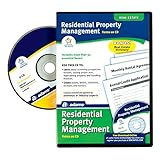
- Easy-to-use for property owners who lease and/or for real estate investors
- A complete collection of landlord legal forms on CD
- Contents reviewed and approved by attorneys and industry experts
- 148 page e-book on CD with step by step instructions and state law appendix
- CD is compatible with Windows and Mac
What makes DoorLoop attractive?
DoorLoop brings everyday management functions into one product and emphasizes guided implementation. Onboarding, migration assistance, training, mobile access, tenant portals, owner portals, work orders, accounting, and reporting can reduce the need to assemble several separate tools.
What should buyers verify with DoorLoop?
Buyers should verify document-storage limits, QuickBooks and other integration availability, payment-processing charges, screening charges, user limits, and the exact capabilities included in each plan. The 2024 comparison also described starter-plan document-storage and tenant-currency limitations; those historical claims should be rechecked because plan restrictions can change.
Who should choose DoorLoop?
Choose DoorLoop if implementation help and usability are major priorities and you want portals, maintenance, accounting, and reporting without immediately moving to a more complex enterprise platform. Choose another product or request a detailed demonstration if your organization needs specialized accounting, extensive API customization, or unusual entity and currency support.
PC Slower Than It Used to Be?
A free scan shows the junk files, broken settings and background clutter dragging Windows down - then fixes them in one click.Free scan · Windows 10 & 11Outdated Drivers Are Slowing You Down
One free scan finds every outdated or missing driver and matches the right update for your exact hardware.Free scan · exact hardware match5. Is Rentec Direct the best value-oriented property management software?
Rentec Direct is a value-oriented option for smaller landlords and managers who want online payments, tenant screening, bookkeeping, reporting, portals, mobile access, and website tools. Rentec Direct occupies the middle ground between a basic DIY application and a larger professional system.
June 2024 coverage reported Rentec Direct pricing starting at $45 per month for 25 units, a 10% annual-subscription discount, free setup and onboarding, and a two-week trial. These are historical 2024 figures. Current prices, unit allowances, discounts, screening charges, payment fees, and trial terms should be verified on the official Rentec Direct pricing page.
What does Rentec Direct include?
Rentec Direct’s reported feature set includes online rent payments, tenant screening, bookkeeping, reporting, tenant portals, mobile access, property-management tools, and a professional website. The combination is useful for landlords who want more structure than a free basic tool but do not need the minimums or specialized workflows of a large operator platform.
What are Rentec Direct’s trade-offs?
Rentec Direct may require more configuration than a very simple landlord application, and prospective customers should confirm which accounting, website, payment, and screening features are included in the selected plan. Interface quality is a subjective consideration rather than a measured fact; buyers should request a demonstration or trial if day-to-day usability is important.
Who should choose Rentec Direct?
Choose Rentec Direct if you want a cost-conscious professional tool with portals, payments, screening, bookkeeping, and a website. It may not be the right choice for a large organization that needs advanced API controls, complex workflow automation, specialized housing modules, or enterprise reporting.
How much does rental property management software really cost?
Rental property management software costs more than the advertised subscription when payment processing, screening, e-signatures, bank accounts, inspections, minimums, onboarding, and add-ons are included. A realistic comparison must model the way the software will be used, not just the plan name.
| Cost variable | Why it matters | Questions to ask before buying |
|---|---|---|
| Subscription | May be flat-rate, per-unit, tiered, or quote-based | Is the price monthly or annual? Does the price change by unit count? |
| Minimums | A monthly or unit minimum can make a low per-unit rate expensive for small portfolios | Is there a minimum number of units or minimum monthly spend? |
| Payments | ACH and card transactions can add recurring costs | Who pays the fee: landlord, tenant, applicant, or management company? |
| Screening | Applicant reports may be charged separately | Is screening included, discounted, or passed to the applicant? |
| E-signatures and leases | Lease forms and signature volume may be limited by plan | Are state-specific forms and signatures included? |
| Bank accounts and inspections | Professional workflows may carry setup or per-use charges | Are bank-account setup, inspections, and reconciliations billed separately? |
| Users and support | Additional staff, permissions, onboarding, or premium support may cost extra | How many users and roles are included? |
| Migration and export | Moving historical tenants, leases, and accounting data can require assistance | Is migration included, and can data be exported if the contract ends? |
TurboTenant illustrates why “free” needs qualification. The current official page advertises a $0 plan while also offering paid Essentials and Pro tiers with different lease, payout, income-verification, ACH, and accounting features. Buildium illustrates the other side of the problem: its current pricing page lists separate charges for several services even though the platform has a broad feature set.
Independent reader supportYour contribution helps us test, update, and keep practical guides available for everyone.Which platform fits each portfolio size?
| Portfolio or operation | Most likely fit | Why | What to watch for |
|---|---|---|---|
| One to five units | TurboTenant | Low-cost listings, applications, screening, leases, payments, and maintenance | Paid screening, payment, lease, and accounting upgrades |
| Five to 50 units | TurboTenant, Rentec Direct, or DoorLoop | Choice depends on whether low cost, bookkeeping, portals, or onboarding matters most | Data export, reporting depth, owner workflows, user limits, and transaction fees |
| Small or midsize management company | Buildium or DoorLoop | Professional accounting, portals, maintenance, reporting, and support | Setup fees, payment costs, plan restrictions, and migration |
| 50 or more complex units | AppFolio or higher-tier Buildium | Bulk operations, advanced accounting, integrations, APIs, and specialized workflows | Minimum-unit requirements, minimum spend, quote-based pricing, and add-ons |
| HOA, affordable housing, or student housing | Buildium or AppFolio, subject to plan confirmation | These platforms are positioned for broader property types and professional operations | Confirm specialized modules, compliance workflows, reporting, and implementation |
How should you choose rental property management software?
- Count units and entities. Record the current unit count, expected growth, number of owners, properties, legal entities, bank accounts, and staff users.
- Separate bookkeeping from property accounting. Decide whether you need simple income-and-expense tracking or property ledgers, bank reconciliation, owner statements, trust accounting, distributions, and general-ledger controls.
- List the workflows you actually use. Include listings, applications, screening, leases, signatures, recurring payments, late notices, maintenance, inspections, vendors, communications, and year-end reporting.
- Calculate transaction volume. Estimate ACH payments, card payments, screening reports, e-signatures, inspections, showings, and bank accounts. Transaction volume can change the cheapest option.
- Check plan-level restrictions. A platform may offer a feature while reserving it for a higher tier or charging separately for it.
- Test implementation. Ask about data import, migration, training, support, mobile access, permissions, and data export before committing historical records.
- Request a written total-cost estimate. Ask the vendor to include the exact unit count, users, payment volume, bank accounts, add-ons, onboarding, premium support, and annual-billing terms.
What are the main failure modes when buying property-management software?
Choosing a professional platform for a tiny portfolio
A professional system can cost more than the operational problem it solves for a landlord with one or two units. A free or low-cost tool may be more rational when the landlord does not need owner accounting, staff permissions, bank reconciliation, or bulk maintenance dispatch.
Quick wins for a faster PC:
Scan for outdated or missing drivers - takes under a minuteDriver Scan →Clear out junk files and repair common Windows errorsFree Scan →Fix the driver behind crashes, sound loss and screen glitchesFind Drivers →Outgrowing a lightweight tool
A platform that works for five units may become unsuitable at 50 units if it lacks owner reporting, automated reconciliation, permissions, bulk actions, reliable data export, maintenance dispatch, integrations, or API access. Portfolio growth should be part of the buying decision even when the current need is small.
Rank #4
- Keep tracker of your rental homes and or apartments
Confusing expense tracking with professional accounting
Expense tracking does not necessarily mean full accrual accounting, trust accounting, owner distributions, entity-level reporting, bank reconciliation, advanced general-ledger controls, or tax-ready reports suitable for every situation. Ask for an accounting demonstration using a realistic property and owner scenario.
Assuming “free” means all services are free
Free plans may still involve tenant-paid or landlord-paid screening, card-processing, ACH, lease, expedited-payout, premium-support, insurance, lead-generation, or maintenance-related charges. Every fee should be identified by payer and by condition.
Assuming a lease template guarantees compliance
Lease templates and screening workflows cannot guarantee compliance with state or local law. Security deposits, notices, late fees, screening rules, rent reporting, and lease language vary by jurisdiction, so local legal review may still be necessary.
Using long-term rental software for short-term rentals
This shortlist is primarily for long-term residential rental management. Vacation-rental and Airbnb-focused operations often need different capabilities, such as channel management, nightly-rate calendars, cleaning coordination, and short-term tax workflows.
Are there credible alternatives to these five platforms?
Yes. Alternatives may be better when the reader’s central need is accounting, expense tracking, or a specialized operating model rather than full property management.
- REI Hub: an accounting and bookkeeping-focused option for investors concerned with income, expenses, receipts, fixed assets, and tax-oriented reports.
- Landlord Studio: an accounting-focused alternative emphasizing expense tracking, mileage tracking, bank syncing, and a low-cost paid tier in 2024 comparison coverage.
- Stessa, TenantCloud, RentRedi, and Innago: potential alternatives for smaller landlords, but current prices and feature claims should be independently verified before choosing them.
- Yardi, Propertyware, and Rent Manager: products to investigate for larger or more specialized operations rather than assuming that a DIY landlord platform will scale indefinitely.
These alternatives are not ranked in this article because the supplied evidence does not support a full current comparison of their plans, fees, and capabilities.
Frequently Asked Questions
What is the best free rental property management software?
TurboTenant is the best free starting point in this comparison because its current official pricing page lists a $0 plan with unlimited listings, applications and screening, online rent collection, and maintenance requests. Paid upgrades and service-specific fees can still apply.
Is rental property management software worth it for one rental?
Rental property management software can be worthwhile for one rental when online applications, screening, leases, rent collection, and maintenance records save meaningful time. A professional platform may be uneconomical for one unit if the landlord does not need advanced accounting or owner workflows.
What software is best for 50 rental units?
AppFolio is designed for larger and more complex operations, but its current Core plan requires a 50-unit minimum and minimum spend. Buildium or DoorLoop may be better at 50 units when professional accounting, portals, maintenance, and onboarding matter more than enterprise-scale workflows.
Which rental property management platforms include accounting?
Buildium, AppFolio, DoorLoop, Rentec Direct, and upgraded TurboTenant plans offer accounting or bookkeeping-related capabilities, but the depth varies. Basic expense tracking is not the same as bank reconciliation, owner statements, trust accounting, entity reporting, or a professional general ledger.
Are tenant-screening fees included in rental management software?
Tenant-screening fees are not necessarily included in the subscription. The landlord, applicant, tenant, or management company may pay depending on the platform, plan, location, and transaction, so the fee schedule should be checked before advertising a property.
The Bottom Line
Bottom line: Start with TurboTenant if you are a DIY landlord seeking a free or inexpensive way to manage core rental workflows. Choose Buildium for balanced professional management, AppFolio for larger or specialized operations, DoorLoop for guided all-in-one usability, and Rentec Direct for value-oriented management. Before signing up, calculate the full cost—including minimums, payment processing, screening, signatures, bank accounts, inspections, onboarding, and add-ons—rather than comparing subscription prices alone.
Quick Recap
Product prices and availability are accurate as of the date/time indicated and are subject to change. Any price and availability information displayed on Amazon at the time of purchase will apply.

