
What’s actually slowing this PC down?
Pick the symptom - the matching free tool is one click away.
iTechGuides is reader-supported. When you buy through links on our site, we may earn an affiliate commission. As an Amazon Associate I earn from qualifying purchases. Learn more
Enterprise network operations are harder when teams must piece together incidents across specialized monitoring tools, cloud and data-center systems, applications, and service workflows. AI can help correlate events and reduce alert noise, but it cannot by itself repair fragmented integrations or unreliable telemetry. The practical goal is shared incident context, governed data, and clear human oversight—not a promise that one dashboard will replace every specialist tool.
Why does tool sprawl slow network operations?
Specialized observability tools can give teams useful detail about particular domains. The friction starts when an incident crosses those boundaries: engineers switch interfaces, translate between data sources, and manually assemble a view of what happened. That makes tool sprawl a workflow and organizational problem as much as a software-count problem.
In its October 8, 2026 report, Network World cited an Enterprise Management Associates (EMA) survey in which respondents described several connected burdens:
Recommended Free Tools
| Reported burden | Share |
|---|---|
| Skills and staffing demands from operating multiple tools | 45% |
| Integration and API complexity consuming engineering time | 44% |
| Context switching slowing investigation and response | 41% |
| Increased manual effort | 40% |
| Alert noise and cognitive overload | 34% |
These are findings from EMA’s 2026 observability-unification survey, as reported by Network World; they are not proof that tool count alone causes each problem. In practice, weak integrations can make a domain-specific tool harder to use alongside others, while unclear ownership can leave teams responsible for maintaining overlapping pipelines and interfaces.
#1 Best Overall
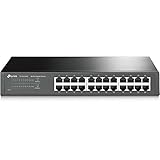
- 𝙊𝙣𝙚 𝙎𝙬𝙞𝙩𝙘𝙝 𝙈𝙖𝙙𝙚 𝙩𝙤 𝙀𝙭𝙥𝙖𝙣𝙙 𝙉𝙚𝙩𝙬𝙤𝙧𝙠: 24 port of 10/100/1000Mbps RJ45 Ports supporting Auto Negotiation and Auto MDI/MDIX
- 𝙂𝙞𝙜𝙖𝙗𝙞𝙩 𝙩𝙝𝙖𝙩 𝙎𝙖𝙫𝙚𝙨 𝙀𝙣𝙚𝙧𝙜𝙮: Latest innovative energy-efficient technology greatly expands your network capacity with much less power consumption and helps save money
- 𝙍𝙚𝙡𝙞𝙖𝙗𝙡𝙚 𝙖𝙣𝙙 𝙌𝙪𝙞𝙚𝙩: IEEE 802. 3X flow control provides reliable data transfer and Fanless design ensures whisper quiet operation
- 𝙋𝙡𝙪𝙜 𝙖𝙣𝙙 𝙋𝙡𝙖𝙮: Easy setup with no software installation or configuration needed, just plug it in and start
- 𝙈𝙚𝙩𝙖𝙡 𝘾𝙖𝙨𝙞𝙣𝙜: Metal-cased switches provide superior durability, heat dissipation, and EMI protection, making them the clear choice for reliable performance over cheaper plastic switches.
How widespread is the effort to unify observability?
EMA announced The Reality of Observability Unification in Modern IT Operations on September 15, 2026. Its survey covered 356 enterprise IT professionals. The findings point to broad interest in unification, alongside a substantial implementation workload:
| Finding | Share |
|---|---|
| Use 4–12 observability tools across network, cloud infrastructure, and service environments | 75% |
| Say observability tool unification is very important | 62% |
| Switch tools 3–5 times per incident | 55% |
| Have unification efforts under way | 51% |
| Are planning or evaluating an approach | 32% |
| Report unification completed | 17% |
The first three figures are from EMA’s September 2026 announcement; the implementation-status breakdown was reported by Network World from that study. Together, they describe a priority that many organizations are still working through, not a settled end state.
Unification need not mean discarding every specialist product. It can instead mean consistent telemetry, useful integrations, and a shared operating view that lets network, cloud, application, and service teams follow the same incident. EMA vice president of research for network infrastructure and operations Shamus McGillicuddy cautioned in Network World: “One of the first things I can say is no one gets a single pane of glass.”
Rank #2

- (12) 2.5 GbE, (12) GbE; all PoE+ ports
- (2) 10G SFP+ ports
- 400W total PoE availability
- DC power backup-ready
- Layer 3 switching
What other pressures are changing network operations?
EMA’s Network Management Megatrends 2026 is a separate study, not the observability-unification survey. Its May 18, 2026 announcement describes 352 IT professionals in North America and Europe who were directly involved in enterprise network management or oversaw network operations. The findings show why teams may be reconsidering both their tools and their operating models:
| Finding | Share of respondents |
|---|---|
| Reported completely successful network-operations strategies | 31% |
| Were completely satisfied with their network monitoring and troubleshooting tools | 32% |
| Expected to replace some network monitoring or troubleshooting tools within two years | 73% |
| Considered hiring and retaining network-technology experts a significant challenge | 52% |
| Expected their organization to run AI application workloads on-premises or in the cloud within two years | 97% |
These results are from EMA’s May 2026 study announcement. They indicate expectations and reported experience among that study’s respondents; they should not be treated as outcomes for all enterprises or combined with the other EMA survey populations.
Where can AI help—and what does it depend on?
Useful observability tasks
AI is being applied to correlate related events, reduce alert noise, detect anomalies, summarize incidents, forecast capacity, and support root-cause analysis. Those functions can help engineers find relevant signals sooner, particularly when an incident spans several technical domains. They are aids to investigation, not evidence that an AI system can infer a reliable end-to-end picture from disconnected or inconsistent sources.
Rank #3

- 16 Gigabit Ethernet Ports for Network Expansion: Expand your network with 16 high-speed ethernet ports. The STEAMEMO 16-port managed switch features 16 x 10/100/1000BASE-T RJ45 ports in a compact design, making it an ideal gigabit switch for businesses seeking to enhance network capacity and performance.
- Easy Smart Management via Web Interface: Effortlessly manage and configure your network through a user-friendly web interface or free software. This managed switch allows for comprehensive remote or local management, making network administration a breeze.
- Advanced VLAN Functionality: The STEAMEMO 16-port gigabit switch offers robust VLAN capabilities, including support for up to 15 IEEE 802.1Q VLAN groups, MTU VLAN with port isolation, and port VLAN for traffic segmentation. These features ensure secure and efficient network segmentation, enhancing both security and performance.
- Cost-Effective and Energy-Efficient Design: Easily expand your network as your business grows, with flexible management that saves time and resources. The STEAMEMO Cloud Managed Switch offers efficient operation and reduced energy consumption, providing long-term cost benefits.
- Durable Metal Casing with Advanced Heat Dissipation:Built with a robust steel shell and intelligent heat dissipation design, this 16 port gigabit ethernet switch ensures long-lasting performance and stability even under heavy use. Its durable construction provides reliable network connectivity for all your business needs.
Data quality is a constraint
EMA’s AI-Driven NetOps: How Enterprises are Embracing Intelligent Network Management Solutions, announced January 20, 2026, covered 458 IT professionals. In that separate survey, 44% expressed full confidence in the quality of their network data to support AI initiatives. McGillicuddy said in the announcement, “Network data quality is the AI killer,” and “IT organizations must clean up their network data before they invest in AI.” The figures and comments appear in EMA’s January 2026 announcement.
EMA also reported that 59% of respondents were using AI features provided by network-management vendors, while 52% were training AI models with their own IT and security data. Adoption therefore does not establish that underlying data is complete, consistent, or suitable for every use. Teams should check what telemetry an AI feature consumes, how missing or conflicting records are handled, and whether its output can be traced back to source evidence.
AI adoption is not the same as proven operational success
In the same 458-person EMA AI-NetOps survey, 35% reported complete success with AI-driven network-management initiatives, and 39% said they were completely confident in their organization’s ability to evaluate those solutions. These survey responses do not establish that AI caused better outcomes, nor do they predict results for a particular enterprise.
Rank #4

- 【10G Performance】Equipped with 8×10Gbps SFP+ ports and 160Gbps switching capacity. Perfect for NAS, high-speed workstations, and Wi-Fi 7 APs. Enjoy lag-free 8K video editing and lightning-fast file transfers for your home lab or creative studio.
- 【Important Note 】Features two switchable global rate modes: 10G/1G (Default) and 10G/2.5G. Changing the mode for any port applies to all 8 ports. Ensure all connected modules (SFP+, DAC, or copper transceivers) match the active mode to avoid disconnection.
- 【Advanced L3 Routing & Management】This L3 managed switch supports Static Routing, RIP v1/v2, and OSPF v2. It handles inter-VLAN routing internally, drastically reducing load on your primary router. Manage your network like a pro via the intuitive web UI or industry-standard console port, for precise control over all data flows.
- 【Fanless Silent Operation】Fanless design with premium heat-dissipating metal chassis for completely silent operation. No fan noise, making it ideal for quiet offices, bedroom setups, and noise-sensitive creative spaces. Its compact, rugged design supports flexible desktop or wall-mount installation.
- 【Secure & Ultra-Reliable】Features ERPS for millisecond-level loop recovery, plus DAI/ACLs to block internal network spoofing. Delivers rock-solid, secure 24/7 connectivity for mission-critical tasks and high-intensity creative workflows.
How should an enterprise approach unification?
1. Map the incident workflow before selecting a platform
Trace how a network incident is detected, investigated, escalated, and resolved. Record which teams and tools contribute at each point, where engineers switch systems, and which handoffs require manual copying or interpretation. This reveals whether the main gap is missing telemetry, incompatible integrations, unclear ownership, or a lack of shared service context.
2. Set governance and ownership
EMA research director Parker Hathcock told Network World: “All of these issues can compound each other, so that’s why strong tool governance is essential,” adding, “It’s an essential step to get to a better place before you even start trying to simplify what you have.” In that report’s account of the 2026 unification survey, 24% said observability governance was fully centralized, while 48% described ownership as mostly centralized with some domain-specific exceptions. A workable governance model should identify who approves tools and integrations, who maintains telemetry standards, and how domain teams can document legitimate exceptions.
3. Define the shared context teams need
Agree on how systems, services, dependencies, incidents, and ownership are represented across tools. A common view is only useful if teams can connect an alert to the affected service, relevant changes, related events, and the people responsible for follow-up. Keep specialist interfaces where they add needed depth, while reducing the work required to move evidence between them.
Best Value

- Ultra-fast 100G & 25G Connectivity – Delivers ultra-high-speed non-blocking throughput with 2 x 100GbE QSFP28, 4 x 25GbE SFP28, and 24 x 10GbE (RJ45) ports. Purpose-built for AI clustering workloads, large-scale NAS deployments, and high-bandwidth enterprise environments.
- Layer 3 Lite-Managed Features – Optimize your IT infrastructure with a robust web GUI supporting IPv4/IPv6 static routing, VLAN, QoS, and bandwidth control. Enables efficient network segmentation and highly secure data routing.
- Top-Of-Rack (ToR) Data Center Design – Engineered for server rooms requiring low-latency connectivity. Perfect for intensive virtualization (VMware ESXi, Hyper-V), enterprise storage area networks (SAN), and high-res media production workflows.
- Lossless Network Performance – Built-in advanced technologies including Priority Flow Control (PFC) and Explicit Congestion Notification (ECN). Minimizes packet loss and bottlenecking, making it ideal for optimizing RoCEv2 and high-speed data transmission.
- Future-Proof Scalabilty – Seamlessly bridge modern 100G/25G fiber optical backbones with existing 10G copper setups. Provides flexible multi-gigabit integration, ensuring cost-effective migration and scalable upgrades for growing businesses.
4. Validate data and integrations before relying on AI
Check telemetry coverage, consistency, freshness, and access controls. Test whether integrations preserve timestamps, identifiers, and relationships across sources, and whether the information supplied to AI features is governed appropriately for security and compliance. Evaluate AI outputs against incidents with known causes rather than assuming a fluent summary or correlation is correct.
5. Bound automated actions with human review
Using AI to prioritize alerts or draft an incident summary carries a different operational risk from allowing it to change routing, configurations, or service policies. Define which actions can be automatic, which require approval, and which must remain under operator control. Establish review and rollback procedures for exceptions and business-critical services before granting an AI system authority to change infrastructure.
What should teams compare when evaluating approaches?
EMA’s findings identify relevant evaluation dimensions, not a universal scoring rubric or a recommendation for any vendor. Compare options against the workflow and risk boundaries the organization has actually defined:
Quick wins for a faster PC:
Fix the driver behind crashes, sound loss and screen glitchesFind Drivers →Repair Windows errors before they cause bigger problemsFix Now →Scan for outdated or missing drivers - takes under a minuteDriver Scan →- Cross-domain visibility: Can network, cloud, application, and service teams follow an incident using shared context without losing access to necessary specialist detail?
- Integration burden: Which APIs and connectors are required, who maintains them, and what happens when a source changes or becomes unavailable?
- Telemetry quality and coverage: Are data sources sufficiently complete, consistent, and current for the intended troubleshooting and AI tasks?
- Service workflows: Can findings connect to incident management and broader ServiceOps processes, including ownership and escalation?
- Governance and staffing: Are responsibilities clear, and can the organization operate the integrations and workflows without creating an unsustainable support burden?
- AI safeguards: Can teams inspect the evidence behind outputs, control sensitive data, and enforce security and compliance requirements?
- Automation boundaries: Are approval, exception, and rollback rules explicit for changes that could affect network or service availability?
EMA’s announcements are survey sources and do not provide full questionnaire wording or all methodology. The studies also have commercial sponsors, as named in their official announcements; sponsorship is context for interpreting the findings, not validation of any product. Treat the reported percentages as respondent findings from their stated samples, not universal rates or causal proof.
Quick Recap
Product prices and availability are accurate as of the date/time indicated and are subject to change. Any price and availability information displayed on Amazon at the time of purchase will apply.

