
What’s actually slowing this PC down?
Pick the symptom - the matching free tool is one click away.
iTechGuides is reader-supported. When you buy through links on our site, we may earn an affiliate commission. As an Amazon Associate I earn from qualifying purchases. Learn more
Google’s earlier push toward 90-day TLS certificates is not the final adopted limit. The CA/Browser Forum adopted a phased schedule that is already at a 200-day maximum for covered public TLS certificates and reaches 47 days on March 15, 2029. The next reduction, to 100 days, takes effect March 15, 2027.
What is the current TLS certificate lifetime schedule?
The CA/Browser Forum’s 2025 SC-081v3 ballot set staged maximum validity periods for publicly trusted TLS subscriber certificates. The 200-day stage is in effect as of September 28, 2026; the schedule then tightens further.



| Effective period | Maximum certificate validity | Maximum domain/IP validation-data reuse |
|---|---|---|
| Through March 14, 2026 | 398 days | Not stated for this period in the SC-081v3 schedule |
| March 15, 2026 | 200 days | 200 days |
| March 15, 2027 | 100 days | 100 days |
| March 15, 2029 | 47 days | 10 days |
These are maximums, not required certificate durations: a certificate authority can issue certificates with shorter validity. The validation-data limits concern how long a CA may reuse domain-name or IP-address validation under the Baseline Requirements; they are separate from the certificate’s own validity period. See the CA/Browser Forum TLS Baseline Requirements and SC-081v3 schedule.
Free tools Windows power users keep installed
One-click scans. No signup required.
How does the 90-day proposal relate to the adopted 47-day endpoint?
Google’s earlier stated direction toward 90-day certificates helped frame the debate, but the adopted policy did not stop at 90 days. SC-081v3 sets a more gradual transition from 398 to 200, then 100, and finally 47 days. Google’s Chrome Root Program roadmap describes the Forum effort as passed in 2025 and phased in from March 2026 through March 2029: Moving Forward, Together.
#1 Best Overall
That distinction matters when interpreting headlines or planning renewals: 90 days is a historical proposal, not the current scheduled endpoint. The operative dates and values are in the Baseline Requirements schedule.
Which certificates are covered?
Publicly trusted certificates for internet-facing servers
The TLS Baseline Requirements govern certificates intended to authenticate servers accessible through the internet. The schedule applies to public TLS certificates issued under those requirements, rather than every certificate that happens to use a compatible profile. The Forum’s SC-081v3 ballot describes that scope.
Locally operated private PKI
The schedule does not automatically impose these limits on private certificates issued and trusted only within an organization. Chromium’s published Chrome lifetime rule similarly distinguishes certificates chaining to CAs trusted by default in Chrome from locally operated CAs with no path to a publicly trusted CA. For a specific deployment, check the applicable browser, root-program, and internal PKI policies; the published Chromium certificate lifetime policy is not a substitute for the later SC-081v3 schedule.
Why are certificate lifetimes being shortened?
The Forum’s rationale is that certificate information represents a point-in-time validation and can become stale as circumstances change. Shorter validity is intended to narrow the period in which stale, improperly validated, or misissued certificates remain valid. The ballot also says the change supports faster cryptographic transitions and reduces dependence on certificate-status services. These are the Forum’s stated aims, not quantified guarantees of a particular reduction in incidents or operating cost.
The ballot characterizes the combined reduction in certificate lifetimes and validation-data reuse as increasing “the average net reliability of certificates.” It also says a shorter maximum “provides substantial support for smoothly — and, when necessary, swiftly — transitioning between deployed and supported cryptography.” Both statements are institutional rationale in the SC-081v3 ballot, not measured outcomes.
Independent reader supportYour contribution helps us test, update, and keep practical guides available for everyone.What should website and platform operators do?
Shorter maximum validity means renewal and replacement become more frequent. The practical response is to make the certificate lifecycle dependable before the 100-day and 47-day stages arrive; a manual calendar reminder alone becomes increasingly fragile as a renewal workflow.
- Inventory certificates. Identify every public-facing hostname, certificate authority, certificate owner, expiry date, and deployment location. Include load balancers, reverse proxies, CDNs, and services that renew independently.
- Automate issuance and renewal where possible. Use your CA’s supported automation or an ACME-compatible workflow where available. Confirm that renewal actually occurs ahead of expiry rather than relying on a person to start the process.
- Automate deployment and verify it. A renewed certificate must be installed on every endpoint serving the hostname. Add checks that confirm the live certificate’s dates, chain, and hostname coverage after deployment.
- Monitor failures and ownership. Alert on renewal errors, approaching expiry, and endpoints that still present an older certificate. Ensure alerts reach an accountable team and that credentials or validation methods remain maintained.
- Test recovery. Exercise rollback and reissuance procedures before an urgent expiration or key compromise forces their use. Shorter validity does not remove the need to handle a misissuance or outage promptly.
The Forum and Google identify reliable automation as an operational need encouraged by the transition; they do not endorse a particular certificate-management vendor.
Quick Recap
Best Value
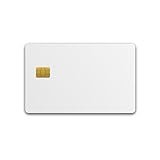
- CUSTOMIZABLE BLANK FACE: White PVC card ready for in-house printing so you can add your own logo, employee ID or branding to a working FIDO2 security key
- HARDWARE 2FA AND MFA: FIDO Alliance Certified FIDO2 v2.1 with CTAP Level 1 for phishing-resistant login on compatible FIDO2 and WebAuthn services
- PASSKEY READY: Serves as a WebAuthn passkey and enables passwordless sign-in where the service supports security keys, subject to each service policy
- DUAL INTERFACE: Works by NFC tap over ISO 14443 or a contact card reader over ISO 7816, an NFC smart card that is not a USB device
- CERTIFIED SECURE ELEMENT: NXP JCOP 4.5 (P71D600) with Common Criteria EAL6+ (augmented), backed by a 2 year warranty
Product prices and availability are accurate as of the date/time indicated and are subject to change. Any price and availability information displayed on Amazon at the time of purchase will apply.

