
The Tool Desk
Outbyte Driver Updater FREEFix the driver behind crashes, sound loss and screen glitchesFind Drivers →Outbyte PC Repair FREERepair Windows errors before they cause bigger problemsFix Now →iTechGuides is reader-supported. When you buy through links on our site, we may earn an affiliate commission. As an Amazon Associate I earn from qualifying purchases. Learn more
On June 23, 2000, Texas Instruments announced an agreement to acquire Alantro Communications for approximately $300 million in TI stock. TI said Alantro’s wireless-LAN technology would complement its DSL and cable-modem chips, letting the company pursue wireless distribution of broadband inside homes and offices.
What did TI agree to buy, and for how much?
The announced consideration was about $300 million in Texas Instruments stock, according to EE Times’ June 23, 2000 report. The report describes an agreement to acquire Alantro, not the terms of a completed transaction: it does not state an exchange ratio or establish the final legal closing date.
What was Alantro Communications?
Alantro was a three-year-old, privately held fabless semiconductor company headquartered in Santa Rosa, California, with additional sites in San Diego and Raleigh, North Carolina. It had about 50 employees when the deal was announced. Its strengths included signal processing and the application and design know-how needed for wireless networking.
Recommended Free Tools
Was Alantro a Wi-Fi chip company?
Alantro developed wireless-LAN technology conforming to IEEE 802.11, the family of standards associated with Wi-Fi networking. The contemporaneous report identifies its wireless networking technology and expertise; it does not specify a particular product model, retail chip, or later commercial product line.
#1 Best Overall
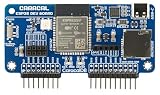
- ESP32 Wi-Fi & Bluetooth: Enables a wide range of wireless projects and applications.
- Wide Compatibility: Plugs directly into the GPIO pins for seamless integration.
- Expandable Headers: Includes external module headers for NRF24, CC1101, and GPS modules (not included), greatly extending the board's capabilities.
- MicroSD Slot & USB-C Port: Features a microSD card slot for data storage and a USB-C port for easy ESP32 firmware flashing and development.
Why did Texas Instruments want Alantro?
TI’s stated aim was to pair Alantro’s wireless networking know-how with its existing broadband access technology. George Barber, TI vice president and manager of the Broadband Access Group, described the goal as “one more step by TI to bring broadband into and throughout the home or office.” He said TI’s DSL and cable-modem chipsets could deliver broadband to a home, while Alantro’s technology could distribute it wirelessly through the home or office.
Alantro founder and CEO Chris Heegard said its technology would leverage TI’s digital signal-processing (DSP) strength. Strategically, the deal joined broadband access at the connection point with wireless LAN inside the premises—a home-and-office networking play, rather than an acquisition described as a cellular or mobile-phone initiative.
Rank #2

- 📦This ESP32 LoRa V4 development board kit includes a preinstalled 3000mAh rechargeable lithium battery, a USB charging cable with indicator light and built-in protection rated at 3.7V/1A using a 1.25mm forward connector, a 915MHz LoRa antenna, and a protective storage case for safe transport and easy setup.
- 🔧Powered by the advanced ESP32-S3 microcontroller and SX1262 LoRa chipset, this ESP32 LoRa board supports WiFi, Bluetooth LE 5.0, and stable 915MHz long-range communication, making it suitable for Meshtastic nodes, IoT sensing, remote data transmission, and low-power wireless applications.
- 📡With up to 28dBm LoRa transmission power and ultra-high receiver sensitivity down to -137dBm, this board delivers reliable long-distance connectivity. The onboard 2MB PSRAM and 16MB Flash support complex firmware, OLED displays, GPS functions, and multitasking embedded applications.
- 🔋Designed for portable and off-grid use, the included 3000mAh battery combined with smart power management and solar input enables extended operation. Seamless switching between USB, battery, and solar power makes it ideal for outdoor sensor networks and remote deployments.
- 🛰️Equipped with a 0.96-inch OLED display, dual IP EX antenna connectors, and dedicated GNSS and solar interfaces, this board supports GPS tracking, environmental monitoring, and custom IoT expansion while remaining backward compatible with ESP32 LoRa V2 and V3 pin layouts.
How was Alantro to fit into TI?
TI planned to place Alantro within its Broadband Access Group. At announcement, the companies expected the acquisition to be completed by the end of the third quarter of 2000. That was a stated expectation, not confirmation in the cited report that the deal closed on that date.
How did the deal relate to TI’s earlier wireless acquisition?
TI had previously announced the acquisition of Butterfly VLSI in January 1999. EE Times described Butterfly’s work as short-distance radio-frequency integrated circuits for the 900-MHz and 2.4-GHz bands. The Alantro announcement, by contrast, centered on IEEE 802.11 wireless LAN and distributing broadband around a home or office.
Rank #3

- Microprocessor: ESP32-S3FN8 (Xtensa 32-bit LX7 dual core processor, five stage pipeline rack Structure, main frequency up to 240 MHz)
- Integrated WiFi, LoRa, Bluetooth three network connections, onboard Wi-Fi, Bluetooth dedicated 2.4GHz metal spring antenna, reserved antenna interface for LoRa use
- Type-C USB interface with a complete voltage regulator, ESD protection, short circuit protection, RF shielding, and other protection measures
- Onboard 0.49-inch 128*64 dot matrix OLED display, which can be used to display debugging information, battery power, and other information
- Integrated CP2102 USB to serial port chip, convenient for program downloading, and debugging information printing
| Acquisition | Technology and intended use | Deal details reported | Planned place in TI |
|---|---|---|---|
| Alantro Communications, announced June 2000 | IEEE 802.11 wireless LAN; wireless networking to distribute DSL and cable-modem broadband in homes and offices. | About $300 million in TI stock; Alantro had about 50 employees and sites in Santa Rosa, San Diego, and Raleigh. | TI’s Broadband Access Group; completion expected by the end of Q3 2000. |
| Butterfly VLSI, announced January 1999 | Short-distance RF integrated circuits in the 900-MHz and 2.4-GHz bands. | Consideration, workforce, and locations are not stated in the cited June 2000 report. | Not stated in the cited June 2000 report. |
The June 2000 account establishes the announcement, rationale, and planned integration, but does not document Alantro’s subsequent product or corporate history. It therefore cannot establish what happened to the company after the expected acquisition timetable.
Quick Recap
Best Value

- Compact and Lightweight Design: The ESP32-C3 Development Board_Classic Edition offers a compact size of 0.83 inches x 2.01 inches and weighs just 0.71 Oz, making it perfect for portable projects and space-constrained designs
- High Storage and Expandability: With 4MB of Flash memory (expandable up to 16MB), the ESP32-C3 Development Board_Classic Edition provides ample storage for your code and data, ensuring smooth and efficient operation
- Advanced Wireless Connectivity: Featuring WiFi (IEEE 802.11bgn) and Bluetooth-compatible (BLE 5.0 & Mesh), the ESP32-C3 Development Board_Classic Edition ensures reliable and versatile wireless communication for a wide range of IoT applications
- Powerful and Versatile Chipset: Equipped with the ESP32-WROOM-32 chipset, the ESP32-C3 Development Board_Classic Edition delivers high performance and supports multiple interfaces including 2 UART, 5-channel 12-bit ADC, IIC, 4 PWM, and 15 GPIO
- Easy Debugging and User-Friendly Features: The ESP32-C3 Development Board_Classic Edition includes USB Type C, SMD LED indicators, Reset and BOOT buttons, and a built-in USB to TTL download debug port, making it easy to use and ideal for programming and learning
Rank #4

- Equipped with a high-performance 32-bit RISC-V processor with clock speed up to 160 MHz, and a low-power 32-bit RISC-V processor with clock speed up to 20MHz
- Supports 2.4GHz Wi-Fi 6 (802.11 b/g/n) and Bluetooth 5 (LE), with onboard antenna
- Built in 320KB ROM, 512KB of HP SRAM, 16KB LP SRAM and 4MB Flash memory. Onboard 1.47inch LCD display, 172×320 resolution, 262K color
- Adapting multiple IO interfaces, integrates full-speed USB port. Onboard TF card slot for external TF card storage of pictures or files
- Supports accurate control such as flexible clock and multiple power modes to realize low power consumption in different scenarios. Built-in RGB LED with clear acrylic sandwich panel for cool lighting effect
Product prices and availability are accurate as of the date/time indicated and are subject to change. Any price and availability information displayed on Amazon at the time of purchase will apply.

