
iTechGuides is reader-supported. When you buy through links on our site, we may earn an affiliate commission. As an Amazon Associate I earn from qualifying purchases. Learn more
U.S. automated-vehicle regulation is advancing, but it is not a single finished rulebook. NHTSA requires certain crash reports and is revising vehicle standards that assume a human driver or conventional controls. It has also withdrawn one proposed program, while other proposed changes remain unfinished. A UN global technical regulation for automated driving systems was adopted in June 2026, but that does not automatically make it U.S. law. Federal vehicle-safety oversight also coexists with state and local responsibilities for roads and operations.
What counts as an automated vehicle for this scorecard?
The focus here is U.S. federal regulation, especially rules and research concerning automated driving systems (ADS) at SAE Levels 3–5. These systems are designed to perform the driving task within their defined operating circumstances. Level 2 driver-assistance systems are different: they assist a human driver, who remains responsible for driving. NHTSA’s crash-reporting requirements can cover both categories, but that does not make them equivalent forms of automation.

The latest federal status update identified here is NHTSA’s September 2026 report, covering January 1 through June 30, 2026. It describes actions and proposals during that period; it is not a guarantee that every rulemaking remains at the same stage after June.
The Tool Desk
Outbyte Driver Updater FREEFix the driver behind crashes, sound loss and screen glitchesFind Drivers →Outbyte PC Repair FREERepair Windows errors before they cause bigger problemsFix Now →U.S. AV regulation scorecard
| Area | Score | What the status means |
|---|---|---|
| Safety oversight and crash reporting | Active requirement; outcome picture incomplete | NHTSA’s Standing General Order collects certain crash reports involving covered Level 2 and Level 3–5 systems. The reports do not, by themselves, establish comparative safety. |
| Vehicle standards for driverless designs | Modernization in progress | NHTSA has studied how existing standards apply and proposed changes to several of them. The cited changes were not final rules in the September 2026 update. |
| Measurable safety assessment | Ongoing research | NHTSA is developing and evaluating assessment methods, but the described work is not a validated nationwide score or binding certification scheme. |
| Regulatory coordination | Framework and international work underway | A UN GTR was adopted, and NHTSA describes federal coordination efforts. Neither replaces the distinction between federal vehicle standards and state or local operating responsibilities. |
1. Safety oversight: crash reporting is in place, but it is not a safety ranking
Score: an existing reporting requirement, with important limits on what its data can show. NHTSA’s Standing General Order requires covered manufacturers and operators to report certain crashes involving a covered Level 2 driver-assistance system or Level 3–5 ADS when the system was engaged during or immediately before the crash. NHTSA amended the order in 2025. The agency’s published description distinguishes expedited reporting for crashes with serious outcomes—including a fatality, a hospital-treated injury, a tow-away, air-bag deployment, or involvement of a vulnerable road user—from monthly reporting for other ADS crashes involving injury or property damage, with later updates as applicable. For current compliance duties, deadlines, and coverage, consult the live order rather than relying on a general summary.
Crash reports help NHTSA obtain information about incidents; they are not a direct measure of risk per mile or a controlled comparison between automated and human driving. Counts can be affected by how much systems are used, where and under what conditions they operate, and which events meet reporting criteria. The official materials covered here do not establish a current, comparable national AV safety rate suitable for a simple safer-or-less-safe verdict.
2. Standards for vehicles without manual controls: adaptation proposed, not completed
Score: substantial groundwork, with rule changes still pending in the latest report. Many Federal Motor Vehicle Safety Standards (FMVSS) were written around conventional vehicles and human-operated controls. That can create questions for ADS vehicles designed without a steering wheel, pedals, or other manual controls. It does not mean such vehicles receive a general exemption from safety requirements.
What NHTSA has studied
In 2025, NHTSA completed a multi-volume research project examining 81 FMVSS. The number describes the standards examined, not the number amended. The work gathered evidence to inform safety-neutral technical translations and adaptations to test procedures; the research itself did not change the standards.
Windows Errors? Fix Them Before They Spread
Repair common Windows errors and clear accumulated junk for a smoother, more stable PC - no reinstall needed.Free scan · no reinstallCrashes, No Sound, or Screen Glitches?
Random freezes, missing sound and display glitches usually trace back to one bad driver. Find and replace yours safely.Free scan · under a minuteWhat was proposed by June 2026
NHTSA’s September 2026 report describes proposals or comment-review work involving several standards whose assumptions can matter for novel ADS designs:
- FMVSS 103 and 104: windshield defrosting and wiping.
- FMVSS 102: transmission shift interlock.
- FMVSS 110: tire selection and placard information.
- FMVSS 135: light-vehicle brakes, including vehicles designed never to be human-driven.
These were proposals or rulemakings under review in the reporting period, not final amended standards. Their scope and legal effect depend on the final rule, if adopted.
3. Safety assessment: promising methods, no single national grade
Score: active research, not a completed pass/fail system. NHTSA’s work spans simulation, closed-course testing, and on-road evaluation. The agency is also studying how to select relevant driving scenarios, analyze component and subsystem failures, account for sensor degradation, use independent trip recorders, and evaluate maintenance reliability and software-defined vehicles.
Rank #3
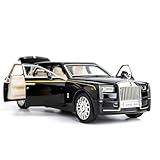
- Product size: 6.69*2.36*1.97 inches Weight: 0.7 pounds Outer packaging: exquisite color translucent packaging box
- Material: Die-cast car model, made of zinc alloy, with plastic parts, rubber tires, detailed interior and exterior decoration.
- Function: Press the two wheels of the front car to trigger the sound of the engine and the lights, with upright car logos,the angel logo is stored in the hood. The details of the body interior are realistic. Place the car on a flat ground, press the body and pull it back, the car will drive forward. (With pull back function)
- This Rolls-Royce Phantom 1/32 car model pull back car is very suitable for children to play with. The paint is exquisite and feels good, and it is heavy to hold. It is also very suitable for car model enthusiasts as a decoration.
- Accessories and collections: This product is very suitable for static accessories and can be used as an accessory next to a computer. For those who are passionate about collecting model car models, this is a great art collection.
The 2026 report describes research on a competency-based framework and robotic surrogate vehicles intended to make test scenarios repeatable while allowing variation. These are research activities; they do not establish that every ADS has passed a common nationwide test or that a validated national safety score is available.
Quick wins for a faster PC:
Scan for outdated or missing drivers - takes under a minuteDriver Scan →Repair Windows errors before they cause bigger problemsFix Now →Fix the driver behind crashes, sound loss and screen glitchesFind Drivers →Why vehicle design and passenger experience matter
Removing a human driver can change more than the controls. NHTSA’s crashworthiness and human-factors research includes alternative cabin layouts, reclined or rear-facing seating, restraint performance, passenger awareness, warnings, and remote assistance. These topics matter because requirements and test methods built around a forward-facing driver may not answer every safety question raised by a different cabin layout.
Independent reader supportYour contribution helps us test, update, and keep practical guides available for everyone.4. Federal, state, local, and international roles
Score: coordination is developing, but authority remains distributed. NHTSA describes its role in terms of vehicle performance and safety design. State vehicle codes and local land-use policies also affect how and where vehicles and services operate. NHTSA has convened state, local, commercial oversight, and emergency-response stakeholders to discuss the multi-agency landscape. A federal vehicle standard alone therefore does not determine where every driverless service may operate or the local conditions it must meet.
The federal materials covered here do not establish a current state-by-state deployment ranking. This article is a federal status overview, not a fifty-state legal inventory.
The federal framework is policy direction, not a new comprehensive statute
NHTSA’s 2025 report described three principles for its federal framework: prioritize safety in ongoing public-road AV operations, remove unnecessary regulatory barriers, and enable commercial deployment to enhance safety and mobility. It also recorded an August 2025 expansion of the Automated Vehicle Exemption Program to domestic manufacturers. These are agency policy and program developments, not a comprehensive new law authorizing every deployment.
Free tools Windows power users keep installed
One-click scans. No signup required.
At the National AV Safety Forum, NHTSA Administrator Jonathan Morrison described FMVSS 102, 103, and 104 as the first tranche of amendments under development and said new developer safety guidance was in progress. Guidance in progress is not the same as a binding standard.
The UN GTR is adopted internationally, not automatically U.S. domestic law
NHTSA’s September 2026 report says the agency supported a proposed UN Global Technical Regulation (GTR) for ADS and voted for it on behalf of the United States in June 2026. UNECE WP.29 then adopted and formally established the GTR under the 1998 Agreement. NHTSA presents that work as informing the U.S. position and possible future domestic action; adoption does not automatically make the GTR binding U.S. law.
What this scorecard does—and does not—say about legality
There is no single federal AV rule that answers every question about whether a particular driverless vehicle or service may operate in a particular place. The federal picture includes existing reporting duties, vehicle-safety standards, proposed updates, agency research, and an adopted international instrument with no automatic domestic effect. State and local requirements can also matter to operations. Because the latest status report covers only the first half of 2026, check current Federal Register notices, relevant rulemaking dockets, and the live Standing General Order for changes after that period.
Quick Recap
Product prices and availability are accurate as of the date/time indicated and are subject to change. Any price and availability information displayed on Amazon at the time of purchase will apply.

