
Do these 3 things before closing this tab:
1Scan for outdated or missing drivers - takes under a minute2Repair Windows errors before they cause bigger problems3Fix the driver behind crashes, sound loss and screen glitchesiTechGuides is reader-supported. When you buy through links on our site, we may earn an affiliate commission. As an Amazon Associate I earn from qualifying purchases. Learn more
The world cannot switch off El Niño, but it can reduce the damage it causes. The strongest practical ideas are to turn seasonal forecasts into local plans, release money and supplies before hazards peak, and coordinate decisions about food, water, farms and infrastructure. A more radical proposal—deliberately brightening marine clouds to influence climate patterns—has shown effects in computer simulations, not in a proven real-world operation.
Can the world stop El Niño?
No established approach can stop or reliably control El Niño. It is a recurring climate pattern in the tropical Pacific, part of the El Niño–Southern Oscillation (ENSO). It shifts the odds of certain temperature and rainfall patterns; it does not dictate the same weather or damage in every country, or even in every El Niño event. The practical goal is to reduce exposure and protect people whose livelihoods, food supplies or essential services are at risk.
That distinction matters: a forecast is not a prediction that every place will experience drought, flooding or crop failure. Local impacts also depend on exposure, preparedness and existing conditions such as poverty, food insecurity, conflict, displacement and limited institutional capacity. UNDRR Special Representative Kamal Kishore framed the challenge this way: “The real question is not simply whether a strong El Niño will occur. The important question is whether our disaster risk governance systems are prepared to manage its consequences.”
The Tool Desk
Outbyte Driver Updater FREEScan for outdated or missing drivers - takes under a minuteDriver Scan →Outbyte PC Repair FREERepair Windows errors before they cause bigger problemsFix Now →Why is preparation urgent now?
In its 3 September 2026 update, the World Meteorological Organization said El Niño was established and expected to intensify, with near-100% likelihood of persisting through February 2027. UNDRR also reported a WMO forecast of a 2.9°C seasonal-average sea-surface-temperature anomaly for August–October 2026. That figure is a forecast for that season, not a measurement of impacts everywhere or a timeless description of El Niño.
#1 Best Overall

- [USA-based family owned company since 1983] [DIGITAL COLOR FORECAST] Dynamic forecast icons with trend arrows (*Please allow 7-10 days for barometric calibration); RECORDS HI/LO values for temp & humidity (auto-resets daily)
- [CURRENT TEMPERATURES & HUMIDITY] Monitor Indoor & Wireless Outdoor Temperatures with humidity levels; CUSTOM set alerts (HI/LO for both temp & humidity); Dew Point & Heat Index views
- [COMFORT CHARTS] Colorful Comfort level color bars display humidity levels for both Indoor & Outdoor. Range: 10% to 99% RH
- [ACCURATE TIME] Atomic self-set clock in 12-hr or 24-hr mode and Crescendo time alarm & 10-min snooze; Auto-reset for Daylight Savings time (on/off option) and 7 time zone settings; Complete calendar date
- [AC POWERED] Constant backlight with Adjustable settings operating with (incl.) 5V power cord; optional back up requires 3 AA alkaline batteries (not included) if you should lose power (POWER-SAVING feature - only illuminates backlight on LCD, when battery operated-only); TX141TH-B (any version) requires (not incl.) 2 AA batteries
Seasonal lead time makes early decisions possible, but forecasts remain probabilistic. Their value depends on whether institutions can connect an outlook to a decision: which communities need support, what supplies to move, and when funding should be released.
Make warnings actionable at every timescale
UNDRR recommends using different forecast horizons for different decisions, and translating hazard information into impact-based forecasts that explain what the expected conditions could mean for people and services.
| Forecast horizon | Best use | Example of a decision |
|---|---|---|
| Seasonal | Strategy and finance | Set contingency plans and fund readiness in areas facing elevated drought or flood risk. |
| Sub-seasonal | Preparedness and pre-positioning | Move supplies closer to at-risk communities and prepare local response teams. |
| Short-range | Immediate operations | Time field actions and urgent communications to near-term weather conditions. |
Warning systems need to reach people in forms they can use, not merely produce a forecast for officials. The UN’s Early Warnings for All initiative aims to protect everyone with multi-hazard warning systems by the end of 2027. Its page reported 119 countries covered in 2025, a 113% increase since 2015, while noting that coverage still needs to expand. Those statistics describe multi-hazard systems, not an El Niño-specific forecast network.
Rank #2

- ECO-FRIENDLY DESIGN WITH RECYCLING: Create a terrarium in a bottle. Repurpose a plastic bottle to form the base of the weather station, teaching kids about recycling and sustainability while learning about weather science.
- BUILD A FUNCTIONAL WEATHER STATION: Assemble tools like an anemometer, wind vane, rain gauge, and thermometer to observe and measure weather conditions. The assembled station measures 8.6 x 4.7 inches (22 x 12 cm).
- LEARN WIND, RAIN & TEMPERATURE TRACKING: Use the anemometer to measure wind speed, the wind vane to track direction, the thermometer to record temperatures, and the rain gauge to measure precipitation.
- INTERACTIVE CLIMATE SCIENCE EXPERIMENTS: Conduct bonus activities like simulating the greenhouse effect or creating a self-sustaining terrarium to explore the water cycle and climate change. Watch science come alive.
- WEATHER JOURNAL CHALLENGE: Observe and record the weather. Track weather for 30 days using included prompts and exercises, encouraging observation skills and understanding of weather patterns.
Release money and support before a crisis peaks
Anticipatory action means agreeing in advance what forecast or risk thresholds will trigger help, then making funding and delivery arrangements capable of acting before losses escalate. FAO and WFP’s 18 June 2026 appeal sought $202 million to protect nearly 9 million people across 22 priority countries, with a stated target of 8.8 million. The agencies said they were positioned to support 1.2 million people; an additional $167 million would enable them to expand support to a further 7.6 million. These are appeal and planned-capacity figures, not confirmation that the money was raised or that everyone was reached.
FAO and WFP cited an estimate that “Every dollar invested in anticipatory response can result in up to $7 in avoided losses and response costs.” It is an agency-attributed estimate, with “up to” important: it is not a guaranteed return for every project or location.
Funding triggers matter because relief delivered after a household has lost crops, livestock or income may arrive too late to prevent distress sales or other damaging choices. WFP Acting Executive Director Carl Skau said: “With El Niño on the horizon, we have a narrow window to act so families are not forced into impossible choices later.”
Rank #3

- NO MORE MORNING DRESSING BATTLES: Milo makes mornings easier with 6 cute clothing and umbrella suggestions based on 12-hour weather forecasts and temperature changes. Kids can confidently choose what to wear and build daily independence
- INTERACTIVE THUMBS-UP REWARD SYSTEM: A built-in thumbs-up button gives kids positive feedback for their daily achievements. Add one Like each day and collect up to 5 Likes, creating a fun way to celebrate progress and encourage positive habits
- WEATHER FORECASTS & TEMP MONITORING: See 12-hour weather forecasts with 6 animated icons, including sunny, cloudy, rain, heavy rain, and snow. Track indoor and outdoor temperatures with trend arrows to help kids understand weather changes and prepare for the day
- IPX4 OUTDOOR SENSOR: Monitor outdoor conditions with a wireless sensor featuring 200ft (60m) transmission range and IPX4 weather-resistant protection. Designed for temperatures from -40°F to 158°F (-40°C to 70°C), it offers flexible placement with a table stand, mounting hole, or lanyard
- GENTLE WAKE-UP FOR KIDS: Wake kids gently with a crescendo alarm, 5-minute snooze, and a soft 10-second backlight for comfortable nighttime viewing. Battery-powered with low-battery alerts, it can be placed on a tabletop or mounted on the wall to fit any child's room
Match food, water and livelihood measures to local hazards
FAO and WFP’s appeal describes a portfolio of possible early actions, rather than a single product or intervention suited to every place. Selection should follow local forecasts, farming practices, water conditions and community priorities.
- Protect household consumption: provide cash assistance where markets can supply the goods people need.
- Protect agricultural production: offer drought-tolerant or flood-resistant seeds when the expected hazard and local growing conditions make them suitable, alongside agricultural advisories.
- Reduce water stress: support water harvesting and storage where these fit local needs and water systems.
- Reduce flood losses: prepare flood-protection infrastructure and communicate warnings early enough for communities to act.
- Protect livestock: take locally appropriate steps to safeguard animals and the livelihoods that depend on them.
These actions work best when public agencies, technical partners, regional bodies, local organizations and affected communities coordinate. Rainfall deficits can strain crops, drinking-water supplies and hydropower at the same time, creating trade-offs—for example, between water allocated to farms and water reserved for households or electricity generation. UNDRR therefore emphasizes multi-sector planning as well as protecting vulnerable people and enabling local action.
Plan for regional differences, not one global El Niño scenario
A 15 June 2026 analysis by the European Commission’s Joint Research Centre (JRC), based on seasonal forecasts and scenario modeling, highlighted elevated drought risks in Australia, Southeast Asia, southern Africa and Central America. It also identified similar risks in the Sahel and Indian subcontinent as El Niño intensified. The analysis projected increased rainfall in East Africa, parts of Central and East Asia, and areas of North and South America. More rain is not automatically beneficial: on degraded or saturated soils, excess rainfall can contribute to erosion, nutrient loss and waterlogging.
Rank #4
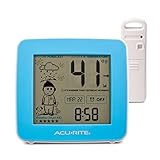
- Teach Your Kids to Dress for the Weather - Over 40 different clothing recommendations are shown depending on the weather forecast outside your home so your child can replicate the outfit
- Best Weather Station for Kids - This AcuRite Weather Station was named Best Weather Station for Kids by Better Homes and Gardens
- Hyperlocal Weather Forecast - Self-calibrating technology utilizes data collected by a wireless outdoor sensor in your backyard to generate a hyperlocal, personalized forecast 12 hours from your current conditions
- Incentives for Dressing Accordingly - Reward your kids (or yourself) with a virtual star for each day of proper dressing based on your hyperlocal weather conditions, and watch for fun bonus images too
- Weather Alarm Clock - The display provides the date and time, features a 10-minute snooze function with momentary backlight, and automatically updates for daylight saving time
The JRC projected heat building across the tropics and subtropics from September, peaking between December 2026 and February 2027 and persisting into spring 2027. These are June 2026 projections, not observed outcomes. Its food-price analysis also varied by crop and scenario; the most extreme modeled scenario went beyond historical precedent. Forecasts can help prioritize preparation, but they do not establish a single, certain outcome for a region or commodity.
Existing crises shape how severe a weather hazard becomes. JRC noted that displacement linked to drought is difficult to measure, while UNDRR highlighted the way climate hazards can compound conflict, poverty and food insecurity. Local plans therefore need to account for who has limited ability to move, access water, protect assets or recover—not just where a rainfall anomaly is forecast.
Could cloud brightening dampen El Niño?
The most interventionist idea in the evidence is targeted marine cloud brightening, a proposed form of solar geoengineering. A 2024 paper by Wan, Fasullo, Rosenbloom, Chen and Ricke, “Targeted marine cloud brightening can dampen El Niño,” modeled brightening clouds over the southeast Pacific. The authors reported that their simulations reproduced observed cloud changes associated with a 2019–2020 experiment-of-opportunity and produced La Niña-like responses. In simulations of the 1997–1998 and 2015–2016 El Niño events, earlier and longer intervention scenarios restored neutral ENSO conditions and dampened impacts.
Best Value
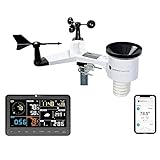
- COMPLETE WEATHER STATION: (1) Osprey Sensor Array with Rain Cup, and (1) Brilliant, Easy-to-Read LCD Color Display
- AUTHENTIC HYPER-LOCAL DATA: Monitor your actual home and backyard weather conditions with our wireless and Wi-Fi-enabled sensor array measuring wind speed/direction, temperature, humidity, rainfall, UV intensity, and solar radiation
- SMART HOME READY: Set up alerts, access your data remotely, and program your home based on weather conditions using IFTT, Google Home, Alexa, and more
- ENHANCED WIFI: Enables your station to transmit its data wirelessly to the world's largest personal weather station network (optional setting)
- JOIN THE COMMUNITY: Connect to Ambient Weather Network to customize your dashboard tiles, share hyperlocal weather conditions via social feeds and create your own forecasts (coming soon)
This is a modeling result, not proof that an intervention can safely or reliably control a real El Niño. The paper presents the approach as a potential complement to forecasting; it does not establish a global deployment plan, quantified planetary-scale safety, or governance consensus. It is therefore not comparable in readiness to early warnings, funding triggers or locally tailored preparedness, which are grounded in operational planning and institutional guidance.
What separates a credible plan from a bold promise?
The most useful proposals connect forecast information to a funded, locally workable action and explain who is responsible for carrying it out. For an idea that would deliberately alter climate conditions, the evidence threshold must be higher still: simulations alone cannot settle questions of real-world efficacy, safety or governance. The near-term opportunity lies in acting on forecast lead time without mistaking a probability for certainty—or treating a modeled climate intervention as a tested solution.
Quick Recap
Product prices and availability are accurate as of the date/time indicated and are subject to change. Any price and availability information displayed on Amazon at the time of purchase will apply.

