
iTechGuides is reader-supported. When you buy through links on our site, we may earn an affiliate commission. As an Amazon Associate I earn from qualifying purchases. Learn more
There is no reliable national figure showing how much less likely a graduate of a “tier-3” engineering college is to be hired in 2026. The label is informal, and the available national placement and employability figures do not compare outcomes by college tier. A more supportable conclusion is that college recruiting access may affect which opportunities candidates encounter, while the size of any disadvantage—and how much candidate-specific evidence changes it—has not been established by the data cited here.
Does college tier matter when applying for engineering jobs?
It may matter through access: a college’s employer connections and campus recruiting can influence which openings are visible to students. That is a plausible hiring mechanism, not a measured result in the sources available for 2026. Those sources do not quantify a hiring penalty for graduates of colleges called tier 3, document a representative employer preference or rejection rate by tier, or show that skills-first hiring has replaced college-based screening.


“Tier 3” itself is not a standardized national category in the evidence here. The National Institutional Ranking Framework (NIRF) publishes institutional rankings and data, but a NIRF rank or a placement metric does not establish a universal tier definition. Any claim about tier-specific outcomes needs to say which institutions or proxy definition it covers.
Quick wins for a faster PC:
Fix the driver behind crashes, sound loss and screen glitchesFind Drivers →Clear out junk files and repair common Windows errorsFree Scan →Scan for outdated or missing drivers - takes under a minuteDriver Scan →What do the 2026 figures actually measure?
The available numbers offer context, but they answer different questions. None is a tier-3 placement rate or an individual graduate’s probability of getting a job.
#1 Best Overall
| Reported figure | What it measures—and what it does not |
|---|---|
| 410,843 undergraduate placements in FY 2023–24 and 471,227 in FY 2024–25 | Aggregate placements at AICTE-approved institutions, based on institution self-disclosures and reported in a parliamentary reply. These are counts, not rates: they do not give the number of eligible students seeking work, compare tiers or branches, or show whether a job was in a graduate’s preferred field. Parliamentary reply reporting AICTE data |
| 70.2% BE/BTech employability in 2026 | The employability figure reported by the India Skills Report and cited in Arvind Virmani’s NITI Aayog-hosted working paper. It is an employability measure, not a job-placement rate or a tier-3 outcome. The paper also notes the difficulty of finding consistent, comparable data across India’s diverse education and labor systems. NITI Aayog-hosted paper |
| Graduate employment growth has not kept pace with graduate growth | Azim Premji University’s State of Working India 2026 describes the transition from education to employment as a major challenge in the wider labor market. This context does not establish a college-tier hiring penalty. State of Working India 2026 |
Read these measures on their own terms. A large placement count can rise without revealing the share of eligible students placed, and an employability estimate cannot be converted into a count of hires without additional evidence.
What is changing in practical and work-based learning?
The Ministry of Education’s July 2026 reply describes reforms focused on hands-on exposure, projects, internships, industry connection and AI-related competencies. It says Project PRACTICE, launched in September 2025, is intended to promote hands-on, industry-connected, skill-based training in AICTE-approved institutions in tier-2 and tier-3 cities. That is a statement of the program’s purpose, not independent evidence that it has improved placements.
Rank #2
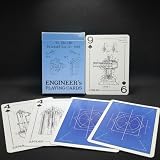
- 52 Unique Engineering Drawings from Real American Patents — Every single card features a different engineering schematic sourced from authentic, expired American patents. Mechanical mechanisms, aerospace systems, electrical circuits, civil structures, and much more!
- Premium Quality Playing Cards – Standard 3.5” x 2.5” Poker Size — Printed on high‑quality, durable card stock with a smooth, linen‑style finish for professional handling and long‑lasting performance. These engineering playing cards are perfect for poker night, game night, cardistry, magic, collecting or display. Designed to feel like a luxury deck while maintaining official casino dimensions.
- Interactive QR Code to Explore Each Patent Drawing — Scan the built‑in QR code to unlock deeper insight into the engineering behind the artwork. Learn about the original inventors, patent numbers, design intent, mechanical principles, electrical concepts and real‑world applications. Perfect for engineers, students and curious minds who want to dive deeper into the STEM behind the art.
- Extremely Detailed Engineering Art – Printed at 0.1mm Resolution Accuracy — Each patent drawing is reproduced with ultra‑fine precision down to 0.1mm line accuracy, capturing every gear, circuit, bolt, beam, linkage and contour. The intricate detail makes the deck mesmerizing to look at, creating a visually stunning and immersive experience for engineers, students, designers and STEM lovers.
- Highly Unique & Collectible – Perfect for Playing Card Enthusiasts — A standout addition to any playing card collection, engineering collection or STEM display. Ideal for card collectors, poker players, cardistry fans, magicians, engineers, designers and anyone who appreciates technical art. A rare, niche, premium deck that makes an unforgettable gift for engineers and collectors alike.
The Ministry’s reply also states: “A key outcome of the evaluation is the requirement for mandatory internships (industrial/social) for students, providing direct exposure to real-world working environments.” It reports approximately 17.22 lakh apprentices engaged through NATS during 2021–22 to 2025–26, and more than 75,000 beneficiaries of the AI Apprenticeship Programme. These are participation figures, not counts of people hired after training.
Recommended Free Tools
Ministry of Education reply published through the Press Information Bureau
Rank #3
How can a candidate make their evidence easier to assess?
These steps are preparation advice, not proof that individual effort fully offsets differences in recruiting access.
- Choose work that matches the role. Make relevant skills visible through projects, with a clear account of the problem, your contribution, the tools used and what the work demonstrates.
- Seek experience that shows work in context. Look for internships or apprenticeships where you can explain your responsibilities and what you learned. The policy emphasis on projects and work-based learning supports their relevance as preparation; it does not guarantee a job outcome.
- Practise explaining your decisions. Be ready to describe how you approached a project, what trade-offs you made and what you would improve. Communication and interview performance are practical parts of presenting your evidence, not factors whose relative effect is quantified by the figures above.
- Investigate access beyond the college label. Ask which employers recruit for your branch, whether those employers return, and what internship or apprenticeship routes students use. A college’s name alone cannot answer those questions.
How should students compare engineering colleges?
Do not build a tier list from isolated highest-package claims or raw placement counts. For a like-for-like comparison, check the institution’s own placement disclosure and the method behind each number. NIRF’s institution data index can help locate disclosures; it does not itself define “tier 3.”
Rank #4
- Compare the share of eligible graduates placed, and check how the institution defines “eligible.”
- Use median salary rather than the highest package, and confirm the cohort year.
- Separate results by branch and degree level where those figures are available.
- Review employer mix and repeat recruiter access, not just the number of companies listed.
- Check internship and apprenticeship access, as well as location and local labor demand.
If a college does not publish a comparable figure, do not treat a different statistic as its substitute. A raw count, a median salary and an employability estimate answer different questions.
What is the harsh reality?
The evidence supports neither a universal rejection story nor a claim that college tier no longer matters. It shows a wider graduate-to-work transition challenge, national placement totals that are not broken down by tier in the figures cited here, and policy efforts intended to strengthen practical learning. The specific question of whether employers in 2026 screen or hire graduates differently by a consistently defined engineering-college tier remains unanswered by these sources.
Quick Recap
Best Value

- Credit Card-Sized Multitool for Engineers: This stainless-steel laser-cut pocket tool includes a straight-edge ruler, protractor, and a compass. From lab work to DIY projects, it’s the ultimate at-work companion. Metric or inches? No problem. Draft blueprints, calculate angles, and create precise drawings. Perfect for students, professors, engineers, and mechanics. Surprise your boyfriend, dad, or gadget-loving friends with a unique gift. An ideal stocking stuffer graduation gift.
- Packed With Engineering Reference Info: Never look up a basic engineering equation, physical constant or unit conversion again. It’s not just a ruler; it’s your quick-reference while in the field or on the job. Architects, carpenters, and electricians—slip it into your pocket to save time looking up conversions! It’s the ultimate tool for measuring, drafting, and fixing anything. A helpful, handy gadget for the cool dads, boyfriends, women engineers, or hobbyist husband who loves to tinker!
- For Precision Technical Drawings: Always be ready to take a quick measurement or sketch a new design accurately with the ruler, protractor and compass drawing tools. From construction sites to woodworking benches, this stainless-steel multitool is your centimeter, millimeter, mils and inches ruler with angular precision of 5 degrees. A must-have for engineering, architects, machinists, draftsmen, field engineers and practical nerds! Be quick to measure, cut, and work with precision.
- Never Outgrow It: Reference info stays useful for a long career, Give a professional, student or budding young engineer a unique, thoughtful and practical gift for homework to cutting-edge research. Ideal for tech-savvy students, teachers, and DIY enthusiasts. The perfect desk accessory and EDC gift for civil, mechanical, and electrical engineers. In the lab or the job site, surprise your boyfriend, dad, mom, lab mate or favorite engineer with something they will keep for years.
- Lasts for a Lifetime: The laser-etched solid stainless steel ruler, laser-cut protractor, and the laser-engraved reference info lasts forever. Whether you’re converting inches to millimeters, PSI to Torr, or measuring angles, it's an every-day carry pocket companion for a lifetime. Essential for ingenieros and ingenieras with both English and Metric system conversions! Surprise your engineering employees, manufacturing team, or quality control staff with an awesome corporate gift!
Product prices and availability are accurate as of the date/time indicated and are subject to change. Any price and availability information displayed on Amazon at the time of purchase will apply.

