
Do these 3 things before closing this tab:
1Fix the driver behind crashes, sound loss and screen glitches2Clear out junk files and repair common Windows errors3Scan for outdated or missing drivers - takes under a minuteiTechGuides is reader-supported. When you buy through links on our site, we may earn an affiliate commission. As an Amazon Associate I earn from qualifying purchases. Learn more
Technology is turning shipping from a chain of handoffs into a connected operating system. AI can recommend—and increasingly execute—planning and exception decisions; sensors and visibility platforms show where freight is and what condition it is in; robots and simulation reshape fulfillment; and electrification and alternative fuels target lower-emission operations. Adoption is uneven, because every deployment still depends on data quality, integration, cybersecurity, skilled people, capital, and regulation.
What is changing in shipping and logistics
The biggest shift is the tighter connection between digital decisions and physical work. A transport-management system, warehouse robots, port equipment, vessel sensors and customer-service tools can feed a common operating picture. That makes it possible to detect a problem earlier, test a response digitally and coordinate people or machines around the result.
Gartner’s 30 June 2026 trend list describes this direction through agentic AI, multiagent coordination, intelligent simulation, specialized language models, physical AI, product provenance and AI governance. These are technology capabilities and market directions, not evidence that every carrier, warehouse or port has deployed them.
From prediction to operational action
Traditional analytics might forecast demand or estimate arrival times. Newer systems are being designed to choose and carry out the next step: reassign a carrier, change a route, release inventory, schedule labor or escalate an exception. DHL Group’s 24 September 2026 Logistics Trend Radar 8.0 frames the change from AI assistance toward planning, decisions and execution. As DHL’s Klaus Dohrmann put it, “Until now, AI has helped people perform tasks more efficiently. The next chapter is about action.”
#1 Best Overall

- Accurate to 0.1oz: High precision for postage, packaging, or food preparation.
- Solid design with high weight limit: 50Lbs
- Smart Tare & Hold Functions: Effortlessly subtract container weight or lock readings for larger boxes.
- Clear LCD Display: Large, backlit screen makes weights easy to read, even in dim rooms.
- Multi-measuring units: Kg, lb/oz, oz
In practice, action should remain bounded by permissions, safety rules and human review. A model can propose a reroute, but a dispatcher may need to approve it when a hazardous load, customs restriction, service commitment or severe-weather risk is involved.
Where AI and analytics create practical value
Visibility and capacity decisions
Combining shipment, order, inventory, carrier and facility data can show which loads are at risk and where capacity should be deployed. McKinsey’s 2026 examples describe visibility informing fleet deployment and carrier sourcing. The value is not a dashboard by itself; it is a faster, better-supported operating decision.
Digital twins before a warehouse investment
A digital twin models a facility, its flows and its constraints so teams can compare alternatives before moving racks or buying equipment. The McKinsey example considered storage racks, fulfillment paths, automated guided vehicles, conveyors and labor interactions. One company reported an operating-expense reduction of more than 10 percent after using digital-twin analysis for a distribution-center network. That is a company-reported case result, not an industry average; a simulation is only as reliable as its data and assumptions.
What’s actually slowing this PC down?
Pick the symptom - the matching free tool is one click away.
Exception handling
AI agents can monitor events and flag a temperature excursion, delay, theft risk or route deviation. They can gather documents, identify the likely cause and prepare a response for an operator. An effective implementation defines which actions are automatic, which require approval and how every decision is logged for later review.
Rank #2

- Digital tabletop postal scale for quickly and precisely weighing items
- Includes a shipping postal scale and AC adapter; made of durable black ABS, aluminum, and iron
- 65 pound (30kg) capacity reads to 0.1 ounce (1g) in 0.1 ounce increments; minimum load weight is 0.2 ounces (5g)
- Extra large LCD display for easy viewing; measuring units in ounces, pounds, g, and kg
- Tare function for resetting the scale to zero after setting a container on the platform; great for net weights
Provenance and traceability
Gartner identifies product provenance as a use of AI, blockchain and knowledge graphs to support origin verification and traceability. This can help with recalls, regulated goods and sustainability claims, but only when suppliers and logistics partners contribute trustworthy, interoperable records.
Robotics, physical AI and the fulfillment center
Warehouse automation is moving beyond a single robot performing a single repetitive task. Physical AI links models to cameras, IoT sensors, mobile robots, manipulators and other machinery so a system can sense conditions, decide and act in a changing environment. Gartner describes this capability across manufacturing, warehousing and transportation; it does not imply universal deployment.
What robots are likely to do
- Move totes, pallets or parcels between storage, picking and packing areas.
- Support picking, sortation and replenishment where item presentation is predictable.
- Inspect inventory, scan locations and detect obstructions or damage.
- Work alongside employees in collaborative workflows rather than operating as a fully separate island.
Why “robots replace warehouse workers” is the wrong default
Automation changes tasks before it eliminates whole occupations. People still handle exception recovery, quality judgments, equipment support, safety decisions, customer-impacting trade-offs and process improvement. DHL’s outlook highlights wearables, remote operations, collaborative robotics and AI workplace assistants as ways to augment employees while stressing skills and employee experience. The World Economic Forum’s 16 April 2026 outlook likewise describes a move from isolated pilots toward real-time work between humans and intelligent systems.
Quick wins for a faster PC:
Fix the driver behind crashes, sound loss and screen glitchesFind Drivers →Repair Windows errors before they cause bigger problemsFix Now →Scan for outdated or missing drivers - takes under a minuteDriver Scan →Workforce effects depend on the process being automated, the local labor market, training, facility design and whether volume is stable enough to justify the investment. A responsible project measures injury exposure, workload and job quality alongside throughput.
Rank #3
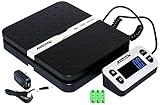
- Solid structure & Sleek/Modern Design – ACCUTECK postal scale is designed with durable plastic platform, user-friendly buttons, backlit extended display and two way 90 degree-opened lid.
- Enhanced capacity with higher precision- This new postal scale can hold a max weigh up to 110 lbs in 0.1 oz graduation. It can meet all your needs from a first-class package to parcel packages. Start weight: 10g.
- Multi Measuring Units with extra Large LCD display. Measure in oz, g, lb/oz. The extra large back-lit LCD display allows you to work under any environment.
- Convenient Tare/Hold Function and the shipping postal scale features are tare function which allows you to zero out the number for multi-packages purpose. Hold function allows you to lock the number after you take the package off the platform.
- Power supply: Batteries, USB cable Charger, AC adapter (All Included). When using on Battering, it will turn off automatically after 90 seconds. When using Ac adapter for power supply, it won't turn off automatically.
Autonomous ships: what is real in 2026
Autonomous shipping is not a single switch, and automation alone does not make a vessel a Maritime Autonomous Surface Ship (MASS). Under the International Maritime Organization’s framework, a ship qualifies as a MASS only after the appropriate approval process and a valid MASS Safety Certificate.
The IMO MASS Code
IMO adopted the non-mandatory MASS Code in May 2026; it took effect on 1 July 2026 and applies to cargo ships. The code uses risk assessment and addresses safe operating limits, navigation, connectivity, remote operations, cybersecurity, fire safety and search and rescue. The master retains overall responsibility, including when the master is ashore.
IMO’s current roadmap targets development of a mandatory code in 2028, expected adoption by 1 July 2030 and entry into force on 1 January 2032. Those are planned milestones, not completed regulatory events.
PC Slower Than It Used to Be?
A free scan shows the junk files, broken settings and background clutter dragging Windows down - then fixes them in one click.Free scan · Windows 10 & 11Crashes, No Sound, or Screen Glitches?
Random freezes, missing sound and display glitches usually trace back to one bad driver. Find and replace yours safely.Free scan · under a minuteWhat autonomy looks like operationally
- Decision support: software recommends routes, speed or collision-avoidance actions while the crew remains in control.
- Remote assistance: a shore team supervises a vessel and intervenes when onboard systems encounter an exception.
- Highly automated operation: systems handle more routine navigation and machinery management within defined limits.
- Autonomous operation: the vessel performs approved functions with minimal direct intervention, subject to certification, communications and emergency arrangements.
Connectivity outages, cyberattacks, sensor failures, unusual traffic and search-and-rescue situations make oversight and fallback procedures essential. There is no evidence in the cited material for a single adoption rate across the global merchant fleet.
Rank #4
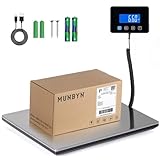
- Cost-Saving Precision: Experience unmatched accuracy with the Munbyn 440lbs digital postal scale. As a digital scale for shipping packages, scale for packages, and postage scale, it ensures you only pay for what you ship—vital for small business essentials—with a margin of error consistently under 0.5%.
- Convenient Hold Function for Easy Use: The MUNBYN 440lbs postal scale features a handy Hold Function that locks the weight on the screen, making it easy to record measurements without rushing. Simply press the “T” key to reset for the next use, making it a reliable shipping scale for small business packages.
- Quick, User-Friendly Operation: With fast USB connectivity and an intuitive display, this digital postal scale simplifies your workflow. It’s a top choice among digital scales for shipping and postal scales for shipping packages.
- Dual Power Options for Uninterrupted Use: Choose between 2 AAA batteries (offering 13 hours of runtime) or USB-C charging with a built-in 250mAh rechargeable battery (11-hour runtime). This versatile digital scale for shipping provides consistent performance as a postal scale, package scale, and essential small business tool.
- All-in-One Weighing Solution: Cover all your needs with one device that works as a digital postal scale, shipping scale, suitcase weight scale, and even package scale shipping small business. It’s the ultimate solution among postal scales for shipping packages and weight scale for packages.
Ports, vessels and the digital maritime network
IMO’s maritime digitalization strategy work aims to connect vessels and ports, improve logistics and route optimization, and reduce greenhouse-gas emissions. In an 18 March 2025 statement, IMO Secretary-General Arsenio Dominguez called it “a game-changing effort to make smooth, seamless, smart shipping a reality.” The strategy was still being developed at that time, with submission to the IMO Assembly planned for the end of 2027; it should not be described as an already adopted global standard.
Interoperability is the practical challenge. A port community system, carrier platform, customs service and vessel operator need compatible data definitions, identity controls and permissioning. Cybersecurity and the global digital divide remain explicit concerns in IMO’s work, so a connected port also needs segmented networks, incident response and procedures for operating safely when digital services fail.
Sustainability is a system decision
Lower-carbon shipping will not come from one device or one universal fuel. DHL’s 2026 outlook points to decarbonization, sustainable fuels, circularity and electrification of heavy and light vehicles. WIPO’s 2025 transportation-technology report groups innovation into four clusters:
| Cluster | Examples of the problem it addresses | What it does not establish |
|---|---|---|
| Sustainable propulsion | Electric drivetrains, efficiency improvements and alternative fuels | The best fuel or lifecycle result for every route or vessel |
| Automation and circularity | Efficient operation, reuse, repair and material recovery | That automation automatically lowers total emissions |
| Communication and security | Connected assets, monitoring, identity and cyber protection | That connectivity is risk-free or universally interoperable |
| Human-machine interfaces | Safer, clearer collaboration between workers and systems | That technology removes the need for skilled operators |
Energy source, route length, payload, utilization, manufacturing, maintenance and end-of-life treatment all affect environmental performance. The reviewed sources do not provide a standardized lifecycle comparison for every transport mode, lane or vessel class, so a sustainability claim should specify its boundary and measurement method.
Best Value

- Durable & Practical Design - Built for durability and daily use, this all-in-one postal scale features a sturdy ABS housing, along with a stainless steel platform and control panel. Comes fully equipped with 2 AA batteries, a USB cable, and a soft measuring tape, so you're ready to start weighing right out of the box.
- Higher Capacity with Precision Accuracy - Max. Capacity: 90lb / 40kg, Min. Readability: 10g, Display Resolution: 2g / 0.1oz. Perfect for handling everything from small parcels to heavy packages.
- 5 Versatile Measurement Units - Quickly toggle between lb, lb.oz, oz, g, and kg to suit any shipping or postal need. The large, backlit LCD display makes it effortless to read weight values in any setting.
- User-Friendly Features - Simple 5-button interface for easy operation, with useful functions like Hold, Tare, and PCS (piece counting). Ideal for streamlining your shipping, packaging, or inventory processes.
- Easy to Calibration - Equipped with adjustable calibration technology, you can choose any known weight between 3 lb to 80lb(2kg-40kg), making calibration quick and hassle-free.
How to evaluate a logistics technology project
Comparing unlike tools by headline features produces bad decisions. Use the same questions for an AI agent, a robot fleet, a visibility platform or an autonomous-vessel system.
- Define the operating decision. Specify whether the goal is routing, capacity, exception response, warehouse movement, port coordination or vessel operations.
- Audit data and integration. Check data quality, latency, ownership and compatibility with transport-management, warehouse-management, port and inventory systems.
- Set safety and governance controls. Document human approval points, explainability needs, cyber defenses, audit logs, fail-safe behavior and applicable maritime or workplace rules.
- Plan the workforce change. Identify affected tasks, training, staffing, maintenance skills, employee feedback and procedures for manual operation.
- Test resilience and economics. Model capital and operating costs, service reliability, disruption exposure, spare capacity and recovery when systems or connectivity fail.
- Measure environmental performance. Track energy and fuel sources, route and mode, utilization, reuse and emissions boundaries rather than relying on a generic “green” label.
- Pilot with a decision threshold. Define the service, safety and financial metrics that justify expansion before buying at network scale.
What the reported numbers do—and do not—mean
McKinsey’s 2026 article reports one retailer achieving more than 10 percent lower fulfillment and inventory-holding costs, 5 percent less air freight and approximately 20 percent higher utilization of a network node after using fulfillment simulations and end-to-end economics analysis. These are results reported for one company under its own conditions, not a promise for every retailer.
No authoritative cross-industry statistic in the cited material states what percentage of all shipping and fulfillment operations has already been transformed by AI, robotics or autonomy. Trend announcements and individual case studies cannot supply that number.
The main implementation risks
- Bad or fragmented data: an accurate model cannot be built from missing events, inconsistent location codes or delayed status updates.
- Automation bias: staff may accept a confident recommendation without checking an unusual situation.
- Cybersecurity exposure: connected cranes, vehicles, warehouses and vessels expand the attack surface.
- Integration debt: a pilot may work while a production system cannot exchange data with legacy platforms.
- Change fatigue: new screens and workflows fail when training, staffing and incentives are ignored.
- Unclear accountability: operators need to know who is responsible when an automated action causes a delay, loss or safety event.
- Overstated environmental claims: a more efficient trip can still have high lifecycle emissions if energy, manufacturing or utilization is excluded.
The outlook for the next phase
Shipping is likely to become more adaptive rather than simply more automated. AI will coordinate planning and responses, physical systems will sense and move goods, and digital twins will test changes before they reach a facility or network. People will remain responsible for exceptions, safety, governance and the judgment that models cannot reliably provide in every context.
The companies best positioned to benefit will treat technology as an operating-model change: connect trustworthy data, define decision rights, train the workforce, secure the system and measure service, resilience, cost and environmental effects together. Regulation—especially the IMO’s developing autonomy rules—will determine how far the most advanced maritime applications can go.
Quick Recap
Product prices and availability are accurate as of the date/time indicated and are subject to change. Any price and availability information displayed on Amazon at the time of purchase will apply.

