
iTechGuides is reader-supported. When you buy through links on our site, we may earn an affiliate commission. As an Amazon Associate I earn from qualifying purchases. Learn more
For enterprises, the most consequential agentic AI risks are prompt injection, excessive agency, data exposure, and weak evaluation and oversight. This is a practical synthesis of recurring risks—not an official ranking: which deserves priority depends on what an agent can access, what it can do, and how difficult its actions are to detect or reverse.
What are the four biggest risks of agentic AI for enterprises?
An AI agent can use tools, retrieve information, and take actions to pursue a task. That creates security and governance concerns beyond the quality of a generated answer: an agent may be manipulated by what it reads, overstep its intended authority, expose information, or act in ways an organization cannot adequately reconstruct.
| Risk area | What can go wrong |
|---|---|
| Prompt injection and goal hijacking | Instructions embedded in content an agent reads can divert it from the user’s intended task. |
| Excessive agency | Too many tools, permissions, or unsupervised steps can let a mistaken or manipulated response cause harm. |
| Data exposure and trust-boundary failures | Sensitive information can move through tools, APIs, outputs, logs, memory, or third-party integrations. |
| Weak evaluation, oversight, and incident governance | An organization may be unable to test, trace, contain, or learn from unsafe agent actions. |
OWASP’s agent-security guidance and NIST’s work on agent hijacking and generative-AI risk inform these categories. OWASP’s Agentic Applications Top 10, announced on December 9, 2025, is a taxonomy of risks and mitigations, not proof that every organization should rank them in the same order.
1. Prompt injection and goal hijacking
An agent may encounter malicious instructions inside a website, document, email, or other material it is asked to process. NIST’s Center for AI Standards and Innovation describes agent hijacking as indirect prompt injection: an attacker places instructions in data the agent may ingest, potentially causing unintended harmful actions. OWASP identifies both direct and indirect prompt injection as risks.
#1 Best Overall

- 【Leading AI Mini Workstation】MINISFORUM AI MS-S1 Max Workstation comes with AMD Ryzen AI Max+ 395 processor, which uses AMD's latest generation Zen 5 architecture. It has 16 Cores and 32 Threads, the boost clock is up to 5.1GHz. The overall processor performance is up to 126 TOPS, and the NPU performance reaches up to 50 TOPS. AMD Ryzen AI enables improved productivity, advanced collaboration, and improved efficiency.
- 【AMD Radeon 8060S Graphics 】The MS-S1 Max Mini PC equipped with AMD Radeon 8060S Graphics which built on the new generation of RDNA 3.5 architecture AMD graphics, it brings ultra-high frame rate experiences and advanced content creation features anywhere and delivers staggering performance. It can handle all your computing and multimedia tasks efficiently.
- 【Five 8K Video Output】This MS-S1 Max Workstation comes with five video outputs, 1x HDMI (8K@60Hz), 2x USB4(40Gbps,Alt DP2.0,PD out 15W) and 2x USB4 V2(80Gbps,Alt DP2.0,PD out 15W) Outputs, which support multiple monitors display at the same time and provide a larger and wider filed of view and improve your work efficiency. It is used in fields that require high-performance computing and graphics processing, including digital signage and securities trading, as well as work that uses CAD, such as engineering design, scientific calculations, animation production, and post-production for movies and television.
- 【 Fast and Stable Wire & Wireless Speed】It comes with Two 10G Lan Ports for wired connection and and Wi-Fi 7 / BT5.4 for wireless connection, which increased the network speed greatly and expand its functions and improved performance of computer to a large extent and allows you to use more networks such as software routers (OpenWRT / DD-WRT / Tomato etc.), firewalls, NAT, network isolation etc.
- 【Large Storage & Flexible Expandability】This Workstation equipped with 128GB LPDDR5-8000MHz + 2TB M.2 2280 PCIe4.0 SSD. There is another PCIe4.0 SSD slot available for up to 8TB, these SSD slots are compatible with RAID0 and RAID1, you can store movies, videos, photos, important files easily. What’s more, it also comes with 1x standard PCIex16 slot(PCIe4.0x4) inside.
How enterprises can reduce the risk
- Treat user-provided and retrieved content as untrusted input, even when it appears in a routine business document or trusted-looking page.
- Keep trusted task instructions structurally distinct from external content so that retrieved text is not treated as authority to change the task.
- Give an agent only the tools its task requires, and require a person to confirm irreversible or high-impact actions.
- Preserve logs that connect actions to the content and context that triggered them, subject to the organization’s data-handling requirements.
- Test realistic adversarial inputs before release and again after material changes. Filtering prompts can be one measure, but should not be treated as a complete defense.
NIST’s January 17, 2025 discussion of strengthening agent-hijacking evaluations frames evaluation as a way to identify and manage this risk; it does not establish a universal success rate for defenses.
2. Excessive agency: too many tools, permissions, or autonomous steps
OWASP uses “excessive agency” for cases where unexpected, ambiguous, or manipulated model output can trigger damaging actions. It identifies three common causes: excessive functionality, excessive permissions, and excessive autonomy. For example, a read-only task should not rely on a tool that can also modify or delete records. An integration should not use an overprivileged identity, and a consequential deletion should not proceed without an appropriate check.
Rank #2
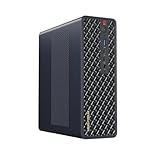
- 【Leading AI Mini Workstation】MINISFORUM AI MS-S1 Max Workstation comes with AMD Ryzen AI Max+ 395 processor, which uses AMD's latest generation Zen 5 architecture. It has 16 Cores and 32 Threads, the boost clock is up to 5.1GHz. The overall processor performance is up to 126 TOPS, and the NPU performance reaches up to 50 TOPS. AMD Ryzen AI enables improved productivity, advanced collaboration, and improved efficiency.
- 【AMD Radeon 8060S Graphics 】The MS-S1 Max Mini PC equipped with AMD Radeon 8060S Graphics which built on the new generation of RDNA 3.5 architecture AMD graphics, it brings ultra-high frame rate experiences and advanced content creation features anywhere and delivers staggering performance. It can handle all your computing and multimedia tasks efficiently.
- 【Five 8K Video Output】This MS-S1 Max Workstation comes with five video outputs, 1x HDMI (8K@60Hz), 2x USB4(40Gbps,Alt DP2.0,PD out 15W) and 2x USB4 V2(80Gbps,Alt DP2.0,PD out 15W) Outputs, which support multiple monitors display at the same time and provide a larger and wider filed of view and improve your work efficiency. It is used in fields that require high-performance computing and graphics processing, including digital signage and securities trading, as well as work that uses CAD, such as engineering design, scientific calculations, animation production, and post-production for movies and television
- 【 Fast and Stable Wire & Wireless Speed】It comes with Two 10G Lan Ports for wired connection and and Wi-Fi 7 / BT5.4 for wireless connection, which increased the network speed greatly and expand its functions and improved performance of computer to a large extent and allows you to use more networks such as software routers (OpenWRT / DD-WRT / Tomato etc.), firewalls, NAT, network isolation etc.
- 【Large Storage & Flexible Expandability】This Workstation equipped with 64GB LPDDR5-8000MHz + 2TB M.2 2280 PCIe4.0 SSD. There is another PCIe4.0 SSD slot available for up to 8TB, these SSD slots are compatible with RAID0 and RAID1, you can store movies, videos, photos, important files easily. What’s more, it also comes with 1x standard PCIex16 slot(PCIe4.0x4) inside.
How enterprises can manage agent autonomy
- Remove unnecessary tools and functions; scope each remaining tool to the smallest useful set of operations.
- Use least-privilege credentials, preferably tied to the requesting user where that is practical.
- Enforce authorization in the downstream application or service. Do not rely on the model to decide whether an action is permitted.
- Require approval for actions whose potential impact warrants it, with stricter gates for consequential or hard-to-reverse operations.
- Use logging and rate limits to help detect and contain mistakes or abuse.
OWASP’s Excessive Agency guidance is useful for separating tool capability, access rights, and autonomy: reducing any one of these can limit what a faulty or manipulated agent is able to do.
3. Data exposure and trust-boundary failures
Information can leave its intended boundary through tool calls, API requests, agent outputs, or logs. Risk also extends beyond a single interaction: OWASP identifies memory poisoning, in which hostile data persisted in memory can affect later sessions or users, as well as supply-chain risks involving third-party tools, APIs, and data sources. The scope of exposure depends on the agent’s access and integrations.
Rank #3

- Built for Local AI and Advanced Workflows – The BOSGAME M5 AI Mini PC is powered by AMD Ryzen AI Max+ 395 with 16 cores, 32 threads, up to 5.1GHz, 50 TOPS NPU performance and up to 126 TOPS total AI performance. It is designed for local AI inference, private AI assistants, coding, data analysis, virtualization, content creation and demanding multitasking while keeping sensitive data on the device.
- 128GB Unified Memory for Large Models and Creative Projects – M5 includes 128GB LPDDR5X-8000 unified memory, giving the CPU and Radeon 8060S graphics access to a large shared memory pool. This helps support memory-intensive AI workloads, large project files, multiple virtual machines, 3D work, video editing and complex professional applications without the capacity limits of typical 32GB or 64GB mini computers.
- Radeon 8060S Graphics for Creation, Rendering and Gaming – Integrated Radeon 8060S graphics with 40 RDNA 3.5 compute units delivers high-end visual performance without a separate graphics card. Use the M5 creator workstation for 4K video editing, 3D rendering, CAD, AI image workflows, high-resolution media and modern gaming, while maintaining a compact desktop footprint.
- 2TB PCIe 4.0 SSD and Flexible Expansion – A pre-installed 2TB NVMe PCIe 4.0 SSD provides fast access to models, datasets, media libraries and project files. A second M.2 2280 PCIe 4.0 slot allows additional storage expansion, while the SD 4.0 card reader supports efficient photo and video workflows for creators and production teams.
- Professional Connectivity and Four-Display Support – Dual USB4 ports, HDMI 2.1 and DisplayPort 1.4 support up to four displays and resolutions up to 8K@60Hz. WiFi 7, Bluetooth 5.4 and 2.5GbE deliver fast networking for cloud collaboration, NAS access and business deployment. Windows 11 Pro, performance-mode switching, Wake-on-LAN and auto power-on support flexible workstation use.
How enterprises can protect data boundaries
- Map which data each agent and task can access, and limit that scope to what the task needs.
- Avoid putting secrets or unnecessary sensitive information into prompts, persistent memory, or logs.
- Separate memory by user and trust level so that untrusted material cannot silently influence other users or future work.
- Review the permissions and data handling of third-party tools and sources, and retain access controls in the systems those tools call.
- Monitor data movement through agent integrations so unexpected disclosure or transfers can be investigated.
These controls apply the least-privilege, tool-security, and testing principles in the OWASP AI Agent Security Cheat Sheet to enterprise data boundaries.
Independent reader supportYour contribution helps us test, update, and keep practical guides available for everyone.4. Weak evaluation, oversight, and incident governance
When an organization cannot reproduce inputs, see tool actions, or identify who authorized an operation, it is harder to determine whether an agent behaved as intended—or to contain and learn from a failure. OWASP recommends structured security testing before production and after material changes to prompts, tools, memory, retrieval, policies, or model providers.
Rank #4

- Speed up your tasks with AI: Unlock new levels of productivity and creativity by upgrading to Intel Core Ultra processors with built-in AI.
- Supports multiple monitors: Connect up to four FHD monitors using DisplayPort and Daisy Chaining*. Or connect two 4K displays using HDMI 2.1 port and DisplayPort.
- Effortless upgrades: The tool-less entry and removable side panel let you quickly access the internal components, making upgrades convenient and stress-free.
- Ready for business: Keep your data secure with a hardware TPM security chip. And when you need to step away from your desk, simply secure your desktop using the built-in lock slot or padlock loop.
- Style meets sustainability: Dell Tower Desktop seamlessly combines elegance with sustainability. Its sleek, modern design, crafted from recycled materials and featuring refined corners, makes it a stylish addition to any home or office.
Build an operational control loop
- Inventory: Record agents, integrations, tools, data access, and the business tasks they support.
- Assign ownership: Name an accountable owner and define action boundaries, approval requirements, and escalation paths.
- Evaluate: Test realistic and adversarial scenarios before deployment and after material changes.
- Record: Capture plans, relevant inputs, tool calls, approvals, and outcomes so that actions can be traced.
- Monitor and respond: Watch for anomalous behavior, and establish incident response and rollback procedures appropriate to the systems involved.
NIST’s Generative AI Profile, NIST AI 600-1, was published on July 26, 2024 as a cross-sectoral companion to AI RMF 1.0. NIST identifies governance, pre-deployment testing, content provenance, and incident disclosure as primary considerations; it also says additional human review, tracking, documentation, and management oversight may be warranted. The NIST AI Risk Management Framework is voluntary guidance for AI design, development, use, and evaluation—not a certification or a guarantee of safety. NIST says the framework is being revised.
Recommended Free Tools
How should an enterprise prioritize these risks?
There is no universal four-risk ranking in the cited guidance. Set controls according to the agent’s actual operating context, using these decision axes as a practical comparison—not as a standardized scoring method:
| Decision axis | Question to ask | Why it matters |
|---|---|---|
| Reach | What data, applications, identities, APIs, or other agents can it access? | Broader access can expose more resources to a compromised or mistaken agent. |
| Impact | Could its actions disclose data, change records, spend money, or affect customers or infrastructure? | Higher-consequence actions warrant stronger controls. |
| Autonomy | How many steps can it execute without human review? | Longer unsupervised action sequences leave fewer opportunities to intervene. |
| Reversibility | Can an error be contained or undone before material harm? | Hard-to-reverse actions call for more cautious permissions and approvals. |
| Detectability | Will logs, alerts, and clear ownership make abnormal actions visible in time? | Weak visibility makes containment and accountability harder. |
These axes synthesize OWASP’s discussion of tool reach, permissions, autonomy, impact, logging, and rate limiting with NIST’s emphasis on testing and oversight. An enterprise should assess them for each agent and task rather than assume a control that is appropriate for a low-impact assistant is sufficient for an agent that can change production records.
Quick Recap
Product prices and availability are accurate as of the date/time indicated and are subject to change. Any price and availability information displayed on Amazon at the time of purchase will apply.

