
What’s actually slowing this PC down?
Pick the symptom - the matching free tool is one click away.
iTechGuides is reader-supported. When you buy through links on our site, we may earn an affiliate commission. As an Amazon Associate I earn from qualifying purchases. Learn more
Is spectrum scarcity ending? Not in the literal sense. Radio frequencies remain a finite, interference-sensitive physical resource, and bands differ greatly in propagation, coverage and deployment cost. But scarcity can be eased when engineers increase capacity and when regulators allow more flexible sharing instead of assigning every band to one fixed use.
That is the argument behind Gregory Staple and Kevin Werbach’s early-2000s IEEE Spectrum article, The End of Spectrum Scarcity. Its durable lesson is not that spectrum has become unlimited; it is that the amount of useful access depends on technology, rules and location as well as on physics.
What “spectrum scarcity” really means
Radio spectrum is managed because incompatible transmissions can interfere with one another. A frequency that works well for a nationwide broadcast network may be less suitable for a short-range indoor system, a satellite link or a radar service. Lower frequencies generally travel farther and penetrate obstacles better, while higher frequencies can offer wider channels but often require denser infrastructure. Commercial value therefore depends on propagation conditions and the cost of deploying equipment, not on a frequency label alone.
Scarcity has at least three sources:
- Physical limits: antennas, transmit power, noise and propagation constrain how many signals can coexist.
- Interference: nearby users need technical separation, coordination or protection rules.
- Institutional limits: fixed assignments, underused licenses and slow reallocations can leave capacity idle even when demand exists.
That mix explains why a “shortage” in one city or at one hour can coexist with unused capacity elsewhere. It also explains why better management can expand useful access without creating new frequencies.
#1 Best Overall
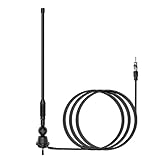
- Waterproof FM/AM Car and Marine Radio Antenna Replacement - 15 3/4 inch stereo antenna comes with mounting base and stub. So the car radio antenna also suitable for golf cart ATV UTV RV marine truck excavator tractor RVR yacht pontoon boat. There is no need to purchase an antenna base separately.
- Improve Performance & Range - Your new car and boat radio stereo antenna can provide a range of 12 miles around for AM/FM radio frequencies because the radio antenna mast is thickened spring steel internal core. It has higher conductivity and much stronger. You can listen to your favorite radio station while you play golf.
- Easy Install - This car radio antenna kit has 1 1/2" and 2" mounting studs for different thickness of the mounting surface. When the antenna is used for golf carts UTV, you can use the short ones. When it is used for boats or RV, you can use the long ones. The thickness of mounting surface is approximately 1/3" to 4/5". The mounting hole approximately 2/5" to 1".
- Wide Application - This car stereo radio antenna kit suitable for golf cart Marine UTV ATV RV truck excavator tractor RVR Yacht Pontoon Boat Go Kart and more.
- Package Included - 1 piece 15 3/4 inch universal FM/AM Radio antenna, 1 piece 54 inch connected cable.
How engineering can create more usable capacity
Staple and Werbach present a family of techniques rather than a single breakthrough. Each improves efficiency, coexistence or adaptability, but none removes interference constraints by itself.
Digital transmission and coding
Converting information to digital form allows systems to use compression, error correction and more sophisticated modulation. The article used the analog-to-digital transition in television and cellular service to illustrate the qualitative effect: more information can fit into a comparable amount of spectrum when signals are encoded efficiently. The historical examples should not be treated as universal performance ratios for today’s networks.
Spread spectrum and ultrawideband
Spread-spectrum systems distribute a transmission over a wider range of frequencies using codes or rapid changes. Ultrawideband systems use very wide channels at low power. Their ability to share depends on receiver design, power limits, bandwidth and the interference environment; “spread” does not mean invisible or interference-free.
PC Slower Than It Used to Be?
A free scan shows the junk files, broken settings and background clutter dragging Windows down - then fixes them in one click.Free scan · Windows 10 & 11Outdated Drivers Are Slowing You Down
One free scan finds every outdated or missing driver and matches the right update for your exact hardware.Free scan · exact hardware matchRank #2

- 𝗡𝗲𝘃𝗲𝗿 𝗣𝗮𝘆 𝗠𝗼𝗻𝘁𝗵𝗹𝘆 𝗕𝗶𝗹𝗹: Watching local channels with this HD digital tv antenna for smart tv indoor 4K, you can watch crystal HDTV channels without cable service and enjoy local tv channels.
- 𝗜𝗻𝗱𝘂𝘀𝘁𝗿𝘆 𝗟𝗲𝗮𝗱𝗶𝗻𝗴 𝗧𝗲𝗰𝗵𝗻𝗼𝗹𝗼𝗴𝘆: This digital indoor tv antenna for local channels is made of eco-friendly flame-retardant dual PC soft material (not ordinary PVC), providing moisture resistance and lightning protection for indoor use.
- 𝗢𝗺𝗶𝗻𝗶-𝗱𝗶𝗿𝗲𝗰𝘁𝗶𝗼𝗻𝗮𝗹 𝗥𝗲𝗰𝗲𝗽𝘁𝗶𝗼𝗻 & 𝗠𝗮𝗴𝗻𝗲𝘁𝗶𝗰 𝗕𝗮𝘀𝗲: The indoor HDTV antenna brings omini-directional Reception; Whether hd digital tv antenna indoor is installed on the TV stand or on the table, you can receive the crystal clear picture
- 𝗖𝗼𝗺𝗽𝗮𝗰𝘁 𝗮𝗻𝗱 𝘀𝗺𝗮𝗹𝗹 𝗗𝗲𝘀𝗶𝗴𝗻: The indoor antenna for tv without cable features a compact and slim design, making it easy to hide without taking up space. The lightweight build allows you to move it conveniently and adapt to different living environments effortlessly.
- 𝗡𝗼𝘁𝗲 𝗮𝗻𝗱 𝗖𝘂𝘀𝘁𝗼𝗺𝗲𝗿 𝗦𝗲𝗿𝘃𝗶𝗰𝗲 : Read the manual first, set up your TV properly, and scan for channels. 𝐅𝐨𝐫 𝐨𝐩𝐭𝐢𝐦𝐚𝐥 𝐫𝐞𝐜𝐞𝐩𝐭𝐢𝐨𝐧, 𝐭𝐞𝐬𝐭 𝐛𝐨𝐭𝐡 𝐯𝐞𝐫𝐭𝐢𝐜𝐚𝐥 𝐚𝐧𝐝 𝐡𝐨𝐫𝐢𝐳𝐨𝐧𝐭𝐚𝐥 𝐩𝐥𝐚𝐜𝐞𝐦𝐞𝐧𝐭. Mount the antenna high, near a window facing local broadcast towers (Check "dtv gov maps" for available channels), to avoid obstacles and interference. Actual Reception depends on location, terrain, and weather, always re-scan for channels after moving the antenna. If you have any issues, please contact us. We will provide professional service and a satisfactory solution for you.
Smart antennas and spatial reuse
Multiple antennas can steer energy toward an intended user and suppress unwanted directions. Spatial separation lets independent links reuse frequencies when their coverage areas or beam patterns do not overlap significantly. Real-world performance depends on antenna calibration, channel conditions, mobility and the protection requirements of neighboring systems.
Adaptive coding and modulation
Coding algorithms can add error protection when a channel is difficult and use a more efficient mode when conditions improve. This turns changing radio conditions into a capacity-management problem instead of forcing every link to operate at the most conservative setting.
Cooperative mesh networks
In a mesh, devices relay traffic for one another. Shorter hops can reduce transmit power and allow frequencies to be reused across separate parts of the network. Mesh designs introduce their own costs, including relay overhead, routing complexity and the possibility that one busy node becomes a bottleneck.
Rank #3
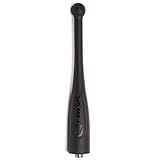
- 【Compatibility】Compatible for APX 6000 APX 6000XE APX 1000 APX 4000 APX 7000 APX 8000XE SRX 2200 DP3400 DP3401 DP3600 DP3601 DP4400 DP4401 DP4600 DP4601 DP4800 DP4801.
- 【Convenience】Short and stubby antennas are ideal when the radio is worn on a belt.
- 【Advanced Design】LUITON APX 6000 short antenna is constructed by high quality and durable material. We pay attention to the details of production. It's extremely durable and lightweight.
- 【Further Information】Band:800 MHz, 700 MHz. Frequency range:764-870 MHz. Type: Stubby 4 inch.
- 【Warranty】Simple and convenient return process. 100% satisfaction guaranteed. Warranty would be valid for 12 months.
Software-defined radios
Software-defined radios move functions such as modulation, filtering and protocol support into software that runs on adaptable hardware. This can make equipment responsive to local rules or changing conditions. An SDR receiver can be useful for learning and observation, but the technology alone does not authorize transmission or guarantee lawful access to any band.
Cognitive radios
Cognitive radios are intended to sense their radio environment and adjust frequency, power or operating mode. The concept supports opportunistic use of channels that are not occupied at a particular place or time. Reliable sensing, databases, geolocation, incumbent protection and enforcement are all necessary; sensing errors can create harmful interference.
What the article’s historical numbers do—and do not—show
| Example | What the early-2000s article claimed | How to read it now |
|---|---|---|
| Digital television | At least five digital TV shows could fit in frequencies occupied by one analog channel. | A historical illustration of digital efficiency during an analog-to-digital transition, not a universal current channel ratio. |
| Digital cellular | Digital systems could carry three times as many calls as analog predecessors. | A context-specific historical comparison, not a benchmark for every modern cellular network. |
The underlying point survives even when the exact percentages do not: usable capacity is shaped by coding, network architecture and interference management, not simply by the number of hertz assigned on paper.
Rank #4

- 7 Sections Telescopic Antenna, Made of Stainless Steel; Antenna Length: 15cm - 74cm (5.9 - 29 inch); Mounting Hole Diameter : 2.5mm / 0.1 inch;
- Easy to install; Great Antenna Replacement Part for Damaged TV and FM Radio Reception Antenna;
- Compatible with Indoor Portable Radio, FM Radio, Home Stereo Receiver, AV Audio video Home Theater Receiver, TV Converter Box, TV Tuner Receiver;
- Compatible with Home and Office GSM Alarm System, Wireless Security Sensor Motion Detector Alert, Remote Control Toy Model, Frequency Meter Counter;
- Package List: 2 x Telescopic Antenna; (As the Picture Shown)
Three policy routes to more access
The article’s policy case has three distinct mechanisms. They solve different problems and impose different costs.
| Policy mechanism | Potential benefit | Main trade-offs |
|---|---|---|
| Reallocation | Move a band from an existing use to a higher-value or more heavily demanded use. | Incumbents may need new equipment or replacement spectrum; transitions can be expensive and disruptive. Propagation and protection requirements may limit the value of the target use. |
| Leasing and secondary access | Let a license holder transfer or lease some use rights, giving new users more geographic or temporal flexibility. | Coordination, service restrictions and incumbent-protection obligations remain. The rules described by the article reflect the early-2000s framework and should not be assumed to be current. |
| Unlicensed or shared access | Permit compliant devices to operate without an individual license for each deployment, lowering entry barriers and encouraging experimentation. | Devices must follow power, channel, sensing and equipment rules. Congestion and interference can increase where many users select the same channels. |
These choices should be judged on usable capacity, interference risk, protection of safety-critical and incumbent services, geographic and time flexibility, coordination cost, barriers to entry and public-interest effects. A band that looks empty in a nationwide average may still be essential at a particular location or moment.
Why “unused” spectrum is usually local or temporary
Michael Calabrese’s 2009 New America paper argued that valuable spectrum might be idle in particular places or only at certain times. He proposed first mapping actual use, then enabling opportunistic access with safeguards such as power limits and other protections. He also recommended examining incentives for federal and private licensees to share.
Best Value
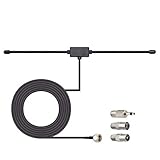
- Adhesive Mounting FM Radio Antenna 75 Ohm UNBAL FM Dipole Antenna with Universal Connector and Adapter,for Music System Indoor Radio Bluetooth Stereo Receiver AV Audio video Home Theater Receiver Tuner.
- Compatible with Yamaha, Sherwood, Pioneer, Panasonic, Onkyo, Sony, Bose Indoor Sound Radio Home Stereo Audio video Receiver, 75 ohm UNBAL.
- 10 feet / 3m Coaxial Extension Cable, Antenna Connector Interface: F Type Plug Connector; Included Connector Adapter: TV Female Socket Connector Adapter, 3.5mm Audio Plug Connector Adapter, TV Male Plug Connector Adapter;
- Easy to install; Adhesive Wall Mounting, Improves FM Radio Stereo Reception;
- Package List: 1 x Antenna, 3 x Connector Adapters;(As the Picture Shown)
This is a policy proposal, not evidence that any named band is vacant or safe to share. A credible sharing system needs measurements, incumbent protection criteria, reliable databases or sensing, defined operating limits and a way to respond when conditions change.
What the FCC’s 2023 framing added
In a 2023 speech, then-FCC Chair Jessica Rosenworcel connected spectrum abundance to both transmitters and receivers: “And having efficient policies for receivers can clear the way for more innovation in our skies by turning spectrum scarcity into spectrum abundance.” Better receiver performance can reduce guard bands and unwanted emissions, allowing services to operate closer together. It does not eliminate the need for coordination or protection.
The speech identified 7–16 GHz as promising mid-band airwaves for 6G and described an inquiry into 550 megahertz in the 12.7–13.25 GHz band. Those statements describe the FCC’s 2023 planning and proposals; the material available here does not establish the inquiry’s later outcome or current availability of that spectrum.
Do these 3 things before closing this tab:
1Repair Windows errors before they cause bigger problems2Fix the driver behind crashes, sound loss and screen glitches3Clear out junk files and repair common Windows errorsRosenworcel also reported that the FCC had conducted 100 spectrum auctions and raised more than $233 billion for the U.S. Treasury over the preceding three decades. Those are figures given in the 2023 speech, not a current cumulative total. The speech said auction authority had expired on March 9, 2023; later legal status is not established here.
What is established, and what remains conditional
Well-established principles
- Digital processing, directional antennas, adaptive radios and network cooperation can increase capacity or improve coexistence.
- Flexible access can expose capacity that fixed assignments leave idle.
- Propagation, interference and incumbent-protection requirements still constrain every sharing arrangement.
- Local and time-specific measurements matter more than a simple national estimate of “unused” spectrum.
Claims that require a date or qualification
- The television and cellular capacity ratios belong to the early-2000s article’s historical context.
- The article’s descriptions of leasing rules and FCC actions reflect the period around 2003, not automatically today’s regulations.
- The 7–16 GHz, 12.7–13.25 GHz and auction-authority statements are tied to Rosenworcel’s 2023 speech.
- No statement here proves that a particular band is currently open for unlicensed, shared or commercial use.
How to evaluate a claim that spectrum scarcity is ending
- Identify the band and geography. Ask which frequencies, location and propagation conditions are involved.
- Check the incumbent. Determine whether federal, public-safety, satellite, broadcast or commercial users require protection.
- Separate capacity from access rights. A radio may technically detect an opening while regulations still prohibit operation.
- Examine the coexistence mechanism. Look for power limits, masks, sensing, databases, coordination or geographic exclusion zones.
- Date the evidence. Auctions, inquiries and allocation rules can change; a 2023 statement is not a current legal conclusion.
Bottom line
Spectrum scarcity is easing, but it is not disappearing. The strongest case for abundance combines efficient digital and spatial techniques with rules that permit carefully protected sharing, leasing and reallocation. Physics still sets boundaries, and policy determines how much of the available capacity people can actually use.
Quick Recap
Product prices and availability are accurate as of the date/time indicated and are subject to change. Any price and availability information displayed on Amazon at the time of purchase will apply.

