
iTechGuides is reader-supported. When you buy through links on our site, we may earn an affiliate commission. As an Amazon Associate I earn from qualifying purchases. Learn more
Stakeholder-centric AI design means making decisions with the people who use, build, govern, or live with an AI system—and continuing that work throughout the system’s life. It helps teams discover real-world needs, surface risks, define appropriate human oversight, and test whether an AI-enabled task is usable and trustworthy. Participation is not a guarantee of fairness or performance; it is a disciplined way to bring relevant knowledge and rights into decisions that would otherwise be made by a narrow technical group.
What stakeholder-centric AI design means
A stakeholder-centric process starts with the human task and the outcome, not with a preferred model or feature. The team asks what people are trying to accomplish, who may be affected, what could go wrong, and where human judgment must remain visible and accountable.
This approach is consistent with the OECD AI principles, adopted in 2019 and updated in 2024. They cover inclusive growth and well-being; human rights and human-centred values; transparency and explainability; robustness, security and safety; and accountability. The OECD’s human-centred values principle says AI actors should respect the rule of law, human rights and democratic values throughout the AI system lifecycle, including non-discrimination, equality, freedom, dignity, autonomy, privacy, diversity, fairness, social justice and labour rights.
The Tool Desk
Outbyte Driver Updater FREEFix the driver behind crashes, sound loss and screen glitchesFind Drivers →Outbyte PC Repair FREERepair Windows errors before they cause bigger problemsFix Now →Stakeholder input is therefore part of governance and product decision-making, not a public-relations exercise. A team should be able to explain which decisions were open to influence, what evidence it heard, what changed, and why an unresolved concern was accepted, mitigated or escalated.
#1 Best Overall
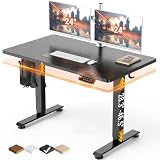
- Electric Height Adjustment – Sit or Stand Any Time: Quiet motor (under 52 dB) with memory presets. Easily switch between sitting and standing from 28.3" to 46.5" to help reduce sedentary time
- Sturdy & Stable – Stays Solid at Full Height: Strong steel frame remains stable even when fully extended. Performance may vary slightly by floor type and load weight, but reliable for daily work, gaming, or study
- Spacious Desktop with Cable Management: Large surface fits multiple monitors and gear. Built-in cable management keeps cords tidy for a clean, organized workspace
- Quiet & Smooth Height Adjustment: Powerful motor enables seamless height changes and stable transitions, helping create a peaceful workspace that sparks creativity
- Easy Assembly & Great Value: Clear instructions and straightforward setup in 10–30 minutes. Offers electric height adjustment, memory presets, and solid build quality(The desktop is composed of two boards)
When should stakeholders be involved?
Engagement is lifecycle-wide. The OECD lifecycle covers design, data and models; verification and validation; deployment; and operation and monitoring. Stakeholder questions recur whenever the system, context, users or risks change.
- Design and problem definition: clarify the human outcome, affected groups, unacceptable uses and success criteria before selecting a technical approach.
- Data and model development: examine whether data represents the relevant population, whether labels encode questionable assumptions, and whether privacy or intellectual-property constraints alter the design.
- Verification and validation: involve users and domain experts in realistic testing, including edge cases and failure consequences rather than only aggregate accuracy.
- Deployment: confirm that people understand the system’s role, can challenge or correct outputs, and know when a human decision-maker is available.
- Operation and monitoring: watch for drift, new patterns of misuse, unequal burdens and work-practice changes; provide channels for reports and revise safeguards.
Early engagement matters because it can identify consequences and risks while requirements are still changeable. Presenting a finished system for comments leaves participants with little practical influence.
Who should be involved in designing AI?
There is no universal stakeholder roster. The OECD Recommendation on Artificial Intelligence identifies possible participants such as citizens, civil servants, affected communities, scientists and engineers, social partners, companies and institutions. Select people according to the system’s consequences and the knowledge needed to identify them.
- Direct users: people who operate the tool or rely on its outputs in daily work.
- People affected by decisions: applicants, patients, students, customers, residents, workers or other groups whose access, rights, safety or services may change.
- Front-line and domain specialists: staff who understand exceptions, informal workarounds and consequences that a requirements document can miss.
- Technical and security teams: engineers, data specialists, accessibility experts and security professionals who can explain constraints and failure modes.
- Governance and accountability roles: managers, legal and privacy advisers, procurement teams, regulators or independent reviewers with authority to require safeguards.
- Under-represented or vulnerable groups: people likely to face disproportionate harm or barriers to participation, including those with disabilities or limited language, connectivity or institutional access.
Map impact before recruiting. A person does not need to be a system user to be a stakeholder: someone affected indirectly may have the strongest evidence about a risk.
Rank #2

- 【AODK Reversible L Shape Desk】This L shaped gaming desk comes with storage shelves, power outlet, light strip, CPU stand, headphone hook and storage bag. The L desk is reversible and the top hutch can be fixed on the left or right side according to your display needs, maximizing your limited space and ideal for corner spaces. A great choice for home office, game, office, studio and living room.
- 【Power Outlets & Charging Ports】 AODK computer desk is equipped with 3 power outlets & 2 USB charging ports for your electronic device. You can easily and conveniently charge smart phone, gaming gear and Bluetooth devices when you are working or playing games. Power cord allows you to place this small computer desk wherever you need.
- 【Gaming Desk with Colorful LED Lights】This gaming desk features LED strip that contains 10 static colors, 8 brightness grades, 10 dynamic modes and memory function with switching controls. Adjusting to the proper lighting can reduce eye strain, improve focus, and create a comfortable workspace or gaming space.
- 【Ample Storage Space】Dimension: 18.9"D x 53"W x 29.8"H. The L-shaped desk provides 2 shelves, CPU stand, headphone hook and storage bag, which gives you super plenty of storage space to store your books, work files and small office stuffs, make your work and study more efficient. There are two installation method of this 2-tier upper storage rack. You can use it as a display shelf or a monitor stand.
- 【Easy Assembly & After-sale Service】The study table comes with detailed instructions and all parts are clearly labeled for easy assembly, what you need to do is following instructions step-by-step. If your AODK desk arrives damaged, missing parts, or scratched, our professional customer support team will help you solve the problem within 24 hours.
What makes engagement “meaningful”?
The OECD/ECNL Framework for meaningful engagement of external stakeholders in AI development frames meaningfulness as a question of whether engagement can inform real decisions. In practice, meaningful engagement has five characteristics:
- A clear decision: participants know the problem, the proposed use, the decisions still open and the constraints that cannot be changed.
- Relevant participants: the people consulted have experience of the task, its effects or the risks under examination.
- Accessible conditions: language, timing, compensation, technology, disability access and confidentiality are appropriate to the context.
- Evidence that fits the question: interviews and observation reveal needs and lived experience; co-design shapes services; testing exposes usability and operational failures.
- Visible follow-through: the team records input, decisions, safeguards and reasons for accepting or rejecting recommendations.
Meaningful does not mean every request is adopted. It means the process gives participants a genuine opportunity to influence a decision and provides an intelligible account of the outcome.
What does a trustworthy engagement process look like?
Trust depends on both the engagement itself and the institution making decisions. Explain the system’s purpose and limits in plain language, avoid implying that participation guarantees a particular result, and state how sensitive information will be handled.
What’s actually slowing this PC down?
Pick the symptom - the matching free tool is one click away.
The OECD guidance on enablers, guardrails and engagement recommends research and participatory design, along with involving users in testing, iteration and improvement. A trustworthy process should also provide a route for human oversight and correction. The OECD principle calls for mechanisms that preserve human agency and oversight, including risks from unintended use, intentional misuse and use outside the intended purpose.
Rank #3

- Spacious Storage & Organization: This writing desk features 6 fabric drawers and two storage shelves, offering ample space. Perfect for organizing office supplies, gaming gear, it helps you maintain a clean and efficient workspace
- Adjustable & Removable Shelf: Customize your storage shelf to fit your needs. The middle shelf on the storage unit can be adjusted to different heights. This flexibility easily accommodates tall items like CPU towers or books
- Robust & Steady: Engineered for stability and durability. The sturdy metal frame is reinforced with triangular brackets at the back, providing exceptional support. Combined with the high-quality desktop, it ensures a rock-solid surface for work
- Versatile Multifunctional Workstation: More than a computer desk, it's a versatile hub for your home. Ideal as a gaming desk, study desk, or craft table, it seamlessly fits into your home office, bedroom, or living room, meeting all your needs
- Easy Assembly: Get set up quickly and easily. With clearly numbered parts, step-by-step instructions, and all necessary tools included, you can assemble your new pc desk easily. Adjustable feet keep it stable on uneven floors
- Publish the purpose, expected benefits, known limitations and prohibited uses.
- Tell participants what information is being collected and how it will affect decisions.
- Separate advisory input from formal authority: identify who can approve, pause or reject deployment.
- Protect participants from retaliation and provide an escalation path for serious concerns.
- Keep an auditable record of requirements, test findings, unresolved risks and release decisions.
- Re-engage when monitoring shows material changes in performance, population or use.
How to distinguish the meaningful from the meaningless?
Ask whether participation could have changed the proposal. A large attendance figure or a favorable survey is not evidence of influence if the scope, questions or decision were fixed in advance.
| Engagement dimension | Meaningful practice | Warning sign |
|---|---|---|
| Reach | Includes groups that experience the system’s consequences, with barriers addressed. | Only convenient or already supportive participants are invited. |
| Timing | Occurs while goals, requirements and safeguards can still change. | Feedback is requested after procurement or implementation is effectively settled. |
| Influence | Participants can alter requirements, tests, safeguards or a go/no-go decision. | Input is collected without identifying any decision owner. |
| Evidence fit | The method matches the question: needs, lived experience, usability or operational impact. | A single generic survey is used for every question. |
| Trust and accessibility | Purpose, risks, confidentiality and participation conditions are understandable. | Technical language or inaccessible tools exclude relevant people. |
| Follow-through | The team publishes changes, safeguards and reasoned decisions not to change. | No response is given after participants contribute. |
These dimensions are practical comparisons drawn from OECD engagement guidance, not a validated universal scorecard or ranking.
How to choose an engagement method
Use more than one method when the decision involves different kinds of evidence. The right choice depends on the question, the affected population and the stage of development.
| Method | Best for | Typical limitation |
|---|---|---|
| Evidence review | Understanding existing harms, policies, domain knowledge and prior evaluations. | May miss local experience or emerging workarounds. |
| Interviews | Uncovering goals, concerns, exceptions and experiences that are difficult to observe directly. | Small samples require careful interpretation. |
| Observation | Seeing real workflows, informal practices and points where automation could create risk. | Time-intensive and sensitive to observer effects. |
| Participatory workshops or co-design | Shaping service concepts, requirements, safeguards and explanations with participants. | Power differences can silence people without skilled facilitation. |
| Surveys | Collecting comparable views across a larger population. | Pre-set questions can hide issues the team did not anticipate. |
| User testing | Finding usability problems, misunderstanding, unsafe reliance and failure recovery needs. | Late testing cannot repair a fundamentally wrong problem definition. |
A practical workflow for stakeholder-centric AI
1. Define the human task and outcome
Describe what a person is trying to accomplish, what the AI contributes and what decision remains with a human. NIST’s AI Use Taxonomy: A Human-Centered Approach provides 16 AI use activities that are independent of AI technique and domain. It is a classification aid—not an engagement method or performance metric—but it helps teams describe the task consistently.
Rank #4

- 【Simple Desk】Enjoy a simple yet spacious work space with this sleek rustic-brown desk. Measuring 54''x19.7''x29.5'', it is the perfect solution for your study, kid's room, or home office. With a wide desktop, it accommodates your computer, calendar, lamp, and other essentials, leaving enough room to enjoy a cup of coffee
- 【Versatile Desk】Whether you need a large office desk, a bedroom desk, a gaming setup, or a desk for your child's room, this versatile desk fits seamlessly into any space, serving multiple purposes with ease
- 【Reinforced Structure】Crafted from durable particleboard and thick steel tubes, this work from home desk offers a stable and sturdy structure. Reinforcement struts beneath the tabletop provide additional stability, ensuring its longevity for working or gaming
- 【Variety of Styles and Colors】Featuring a selection of 5 on-trend hues - sleek grey, black, warm rustic brown, a unique blend of rustic brown and black for a distinctive look, and white - along with multiple sizes, this home desk is designed to effortlessly match any home decor theme and enhance a wide range of design aesthetics
- 【Easy Assembly】Say goodbye to complicated setups. This PC desk has a simple structure, visually demonstrative instruction and provided tools, and it will be finished in less than 40 minutes
2. Map consequences and stakeholders
List direct users, indirectly affected people, workers, communities and oversight roles. For each group, document possible benefits, burdens, rights impacts, safety concerns and practical ability to contest an output.
3. Set the engagement contract
State the questions being asked, decisions that remain open, constraints, privacy arrangements, compensation, accessibility provisions and the person accountable for responding.
4. Gather and test evidence
Combine methods suited to the question. Test realistic scenarios, including non-routine cases and situations in which an incorrect or delayed output has serious consequences. Invite participants to identify unacceptable outcomes, not merely rate interface preferences.
Windows Errors? Fix Them Before They Spread
Repair common Windows errors and clear accumulated junk for a smoother, more stable PC - no reinstall needed.Free scan · no reinstallOutdated Drivers Are Slowing You Down
One free scan finds every outdated or missing driver and matches the right update for your exact hardware.Free scan · exact hardware match5. Decide and document
Translate findings into requirements, data changes, safeguards, training, escalation routes or a decision not to deploy. Record dissent and unresolved uncertainty rather than averaging it away.
Best Value

- Electric Height Adjustment – Sit or Stand Any Time: Quiet motor (under 52 dB) with memory presets. Easily switch between sitting and standing from 28.3" to 46.5" to help reduce sedentary time
- Sturdy & Stable – Stays Solid at Full Height: Strong steel frame remains stable even when fully extended. Performance may vary slightly by floor type and load weight, but reliable for daily work, gaming, or study
- Spacious 55" Desktop with Cable Management: Large 55-inch surface fits multiple monitors and gear. Built-in cable management keeps cords tidy for a clean, organized workspace
- Quiet & Smooth Height Adjustment: Powerful motor enables seamless height changes and stable transitions, helping create a peaceful workspace that sparks creativity
- Easy Assembly & Great Value: Clear instructions and straightforward setup in 10–30 minutes. Offers electric height adjustment, memory presets, and solid build quality(The desktop is composed of two boards)
6. Monitor and re-engage
During operation, track complaints, overrides, error patterns, access barriers, workload changes and new uses. Bring affected stakeholders back when evidence indicates that assumptions, populations or risks have changed.
How can teams tell whether feedback actually influenced an AI system?
Use a traceable feedback log. For every material issue, record the source, evidence, responsible decision-maker, action taken, verification method and status. Link changes to concrete artifacts such as revised requirements, test cases, model or data controls, user guidance, staffing or escalation procedures.
For issues that were not adopted, provide a reason grounded in evidence, law, safety or feasibility, identify any compensating safeguard, and state when the decision will be revisited. This makes influence visible without pretending that consensus is possible.
Recommended Free Tools
Evaluate the resulting human-AI task, not just model metrics. Check whether people can understand the system’s role, detect and recover from errors, exercise oversight and achieve the intended outcome. NIST’s AI RMF Playbook Govern function can help organize accountability, roles and oversight, while the taxonomy helps keep evaluation tied to the use activity.
What stakeholder-centric design can—and cannot—establish
OECD and NIST materials are normative frameworks and recommended practices, not controlled evidence that participation universally improves fairness, accuracy, adoption or return on investment. Their value is in structuring responsible decisions: identifying affected interests, making trade-offs explicit, preserving human agency and creating accountability for change.
Context still determines the result. No source establishes a universal stakeholder list, engagement format or outcome score. Laws, standards and guidance can also change, so teams should verify the applicable jurisdiction and instrument before treating this workflow as compliance advice.
The scale of policy adoption illustrates interest, not proof of impact: the OECD reported more than 1,000 AI policy initiatives across more than 70 jurisdictions based on government information available by May 2023. That dated figure should not be presented as a current 2026 count or as evidence that any particular design process works.
Free tools Windows power users keep installed
One-click scans. No signup required.
Quick Recap
Product prices and availability are accurate as of the date/time indicated and are subject to change. Any price and availability information displayed on Amazon at the time of purchase will apply.

