
iTechGuides is reader-supported. When you buy through links on our site, we may earn an affiliate commission. As an Amazon Associate I earn from qualifying purchases. Learn more
No—filing a deed, planting a flag, occupying a site, or announcing a claim does not give you recognized ownership of lunar land. The 1967 Outer Space Treaty bars national appropriation of the Moon by sovereignty claim, use, occupation, or any other means. It does, however, distinguish land from equipment: ownership of objects landed or built on the Moon is preserved. Resource extraction and operational safety zones raise separate legal questions; neither is the same as owning a patch of lunar surface. And despite the title’s “billion-dollar” framing, the sources discussed here establish no official valuation for a lunar land market.
Can you buy land on the Moon or claim a piece of it?
There is no treaty-recognized way for a person, company, or country to secure lunar territory by issuing a deed, planting a flag, occupying a site, or making a unilateral declaration. Article II of the Outer Space Treaty says that “Outer space, including the moon and other celestial bodies, is not subject to national appropriation by claim of sovereignty, by means of use or occupation, or by any other means.” The rule expressly reaches beyond formal sovereignty claims: use and occupation cannot be used to create national ownership either.
The treaty was concluded on January 27, 1967, and entered into force on October 10, 1967, according to the United Nations Treaty Collection. Its Article I describes outer space as the “province of all mankind” and provides for free exploration, use, and access to celestial-body areas. Article IV requires the Moon and other celestial bodies to be used exclusively for peaceful purposes. These principles frame activity on the Moon; they do not establish a terrestrial-style system of private lunar land titles.
Recommended Free Tools
What can be owned on the Moon?
Land and hardware are different legal categories. Article VIII of the Outer Space Treaty preserves ownership of objects launched into space, including objects landed or constructed on a celestial body and their component parts. That means the treaty does not say that private property or private activity can never exist on the Moon. It means ownership of a habitat, vehicle, instrument, or other installation does not, by itself, convey ownership of the ground around it.
#1 Best Overall
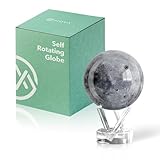
- Realistic Lunar Detail with Cratered Surface — A faithful recreation of the Moon’s rugged topography, this design shows lunar craters, valleys, and maria as seen from Earth’s orbit.
- Solar-Powered Motion – No Wires or Batteries — This MOVA Globe rotates continuously using only ambient light and the Earth’s magnetic field. No fuss, no noise, no cables.
- Compact Display Piece with Stunning Presence — At 4.5 inches across, it fits perfectly on desks, nightstands, or bookshelves. A small globe that sparks big conversation.
- Premium Build with Seamless Movement — A fluid-suspended inner globe rotates within a clear acrylic outer shell, offering a smooth, almost magical visual experience.
- Inspire Curiosity and Wonder — Perfect for stargazers, space buffs, students, and science enthusiasts. A gift that celebrates Earth’s constant lunar companion.
| Concept | What the cited instruments support | What they do not establish |
|---|---|---|
| Lunar land or territorial sovereignty | Article II bars national appropriation by claim, use, occupation, or other means. | A deed, flag, or unilateral declaration that creates recognized title to lunar terrain. |
| Space object or installation | Article VIII preserves ownership of objects landed or constructed on a celestial body and their parts. | Ownership of equipment as ownership of the surrounding surface. |
| Resource extraction | The Artemis Accords’ signatories state that treaty-compliant extraction does not inherently constitute national appropriation. | A grant of land title or a universal settlement of resource rights. |
| Safety zone | The Accords describe notification and coordination to avoid harmful interference, with temporary zones tied to an activity. | A permanent exclusion boundary or territorial claim. |
| Private space activity | Article VI makes states responsible for national space activities and requires authorization and continuing supervision of nongovernmental activities. | A private operator’s exemption from oversight by the appropriate state. |
Can a company own lunar mining rights?
Resource extraction is a distinct issue from owning lunar real estate, and its legal status is not settled in a comprehensive global commercial mining code. Section 10 of the Artemis Accords says that extraction and use of space resources should be conducted consistently with the Outer Space Treaty. Section 10.2 states: “The Signatories affirm that the extraction of space resources does not inherently constitute national appropriation under Article II of the Outer Space Treaty, and that contracts and other legal instruments relating to space resources should be consistent with that Treaty.” The Accords also commit signatories to inform the UN Secretary-General, the public, and the international scientific community about resource-extraction activities.
That is the signatories’ position in a political agreement, not a global property registry or a universal court ruling. The Outer Space Treaty itself does not spell out a detailed commercial resource regime. UNOOSA-hosted legal analysis notes that the Treaty, considered on its own, is silent on the legality of resource utilization, particularly commercial utilization, while the Moon Agreement was intended to address resource issues in greater detail. This analysis is not a court holding, and it does not show that every country accepts a single interpretation or that a universal commercial regime exists.
Rank #2

- It is held by a free mount base for easy viewing
- Made in USA
- Over 3000 place names
So the cautious distinction is: the Accords treat resource extraction as potentially compatible with the Treaty when it complies with the Treaty, but they do not grant companies ownership of a mining site or settle every country’s law. A company’s ability to conduct an activity also sits within the state-responsibility framework in Article VI.
Do Artemis Accords safety zones let countries claim territory?
No. Section 11 of the Artemis Accords describes notification and coordination intended to avoid harmful interference with space activities. It calls for safety zones to reflect the operation and its environment, to be reasonably based on scientific and engineering principles, and to change as the activity changes. Section 11.7(c) states: “Safety zones will ultimately be temporary, ending when the relevant operation ceases.” Signatories also commit to respect free access to all areas of celestial bodies.
Rank #3

- Great way for students to learn about the moon and the Apollo 11 mission
- This special edition National Geographic Moon Globe has a rechargeable LED device with long lasting LED bulbs
- 750 Moon topographic locations
- Includes impact craters, mountain ranges, highlands, seas, rays
These are operational coordination measures, not a grant of territorial sovereignty. The practical effects of a particular activity could still matter: whether it creates an unjustified exclusion may depend on the facts and on how the law develops. The cited materials do not supply a universal adjudicated test for every possible dispute.
Independent reader supportYour contribution helps us test, update, and keep practical guides available for everyone.Who is responsible when a private company operates on the Moon?
Under Article VI of the Outer Space Treaty, states bear international responsibility for national activities in outer space, whether those activities are carried out by government agencies or nongovernmental entities. Nongovernmental activities require authorization and continuing supervision by the appropriate state. A private operator therefore cannot treat a lunar project as outside national oversight simply because it is privately funded or run.
Rank #4
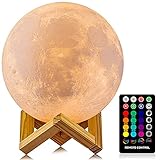
- A Unique Night Light for Kids - Moon lamp with the diameter is 4.8 INCH, made with 3D printing technology, realistic full moon shape, the surface of the moon lamp is very close to the lunar moon, novelty and charming; Create a peaceful environment in your kids' rooms and help them enter a blissful slumber with the bright moon light.
- Moon Night Light with 16 RGB Colors - The 16 colors can flash or fade or strobe, dreamlike and creative decorative lights, perfect for your nursery room or children bedroom; can adjust brightness to turn this moon lamp into a soft kids' night light, provide children with a comfortable sleeping environment.
- Moon Light with Remote & Touch Control Model - Use the remote control to change the color or also the brightness of the color, very convenient for you to choose your perfect color. You can use the timer on the remote control to fix the moon light light for 15/30/45/60 mins. This moon glowing lights (dimming & flash) perfect for romantic dinner or an anniversary.
- Moon Lamp with the Build-in Rechargeable Battery - No line hanging around, you can hold the moon light on your hand; Designed with USB charging port, and you can charge this moon globe on any USB devices, like computer/power bank or USB adapter etc.
- A comfortable night light, perfect decoration for bedroom, courtyard, dinner table, parties, cafe and outdoor decoration; A romantic and mysterious gift for friends, kids and family on birthday, wedding, anniversary, Easter, Thanksgiving Day and Christmas.
The treaty also calls for activities to be conducted with due regard for the corresponding interests of other states. Together with the peaceful-use requirement in Article IV, that means lunar activity is not simply a matter of a company asserting a right and proceeding without regard to other actors or its state’s obligations.
Quick wins for a faster PC:
Scan for outdated or missing drivers - takes under a minuteDriver Scan →Clear out junk files and repair common Windows errorsFree Scan →Is there really a billion-dollar lunar land market?
The cited treaty texts, Artemis Accords, and legal analysis establish rules and interpretations about lunar activity; they do not establish an official dollar valuation for lunar land claims or a “billion-dollar” lunar real-estate market. Treat the phrase as headline language, not a substantiated market statistic. A claim certificate or novelty deed should not be mistaken for legally effective ownership of the Moon.
For current context, NASA’s September 28, 2026 release reported 76 Artemis Accords signatories, and the Accords page identified San Marino as the 76th signatory on September 25, 2026. That is a time-sensitive count of signatories to a political agreement, not a count of parties to the Outer Space Treaty and not a measure of land ownership or market value.
Quick Recap
Product prices and availability are accurate as of the date/time indicated and are subject to change. Any price and availability information displayed on Amazon at the time of purchase will apply.

