
Quick wins for a faster PC:
Scan for outdated or missing drivers - takes under a minuteDriver Scan →Repair Windows errors before they cause bigger problemsFix Now →iTechGuides is reader-supported. When you buy through links on our site, we may earn an affiliate commission. As an Amazon Associate I earn from qualifying purchases. Learn more
The best language learning apps for 2025 depend on your goal: Duolingo is the strongest free, habit-building choice, Babbel is better for structured study, Pimsleur is strongest for audio and prompted speaking, and serious learners should add authentic listening and human conversation. No single app reliably delivers fluency by itself.
That distinction matters because these products are not interchangeable. A gamified beginner course, an audio program, an immersion platform, a flashcard system, and a tutoring marketplace solve different problems. The right choice depends on your target language, current level, preferred skills, available time, budget, and need for feedback.
Key takeaways
- Duolingo is the best starting point for free access, short lessons, and daily habit formation, but course depth varies sharply by language.
- Babbel is the strongest choice for adults who want structured lessons, practical dialogues, grammar guidance, and pronunciation practice.
- Pimsleur is best for audio-first speaking and listening practice, while live tutoring is still better for spontaneous conversation and personalized correction.
- LingQ is particularly useful for intermediate learners who need extensive reading and listening, and Anki is a customizable vocabulary-review companion rather than a complete course.
- Prices, trial terms, language counts, offline features, and premium tools vary by country, platform, billing term, and promotion, so verify the exact offer before subscribing.
What are the best language learning apps for 2025?
For most beginners, start with Duolingo if free access and consistency matter most. Choose Babbel for a more traditional course, Pimsleur for listening and speaking during commutes, Rosetta Stone for image-based immersion, Busuu for community corrections, Memrise for native-speaker video and vocabulary, LingQ for extensive input, Anki for custom review, and italki or Preply when the main objective is real conversation.
The Tool Desk
Outbyte Driver Updater FREEFix the driver behind crashes, sound loss and screen glitchesFind Drivers →Outbyte PC Repair FREERepair Windows errors before they cause bigger problemsFix Now →| Best for | App or service | Why choose it | Main limitation |
|---|---|---|---|
| Free learning and habit building | Duolingo | Short, game-like lessons and a substantial free entry point | Gamification and uneven course depth can distract from communication |
| Structured adult study | Babbel | Planned lessons, practical dialogues, grammar explanations, and pronunciation practice | Narrower language selection and limited free access |
| Audio-first speaking | Pimsleur | Listen-and-respond lessons that encourage oral repetition | Less suitable for writing, spelling, and visual grammar |
| Immersion without constant translation | Rosetta Stone | Picture-based lessons and pronunciation practice | Can feel repetitive or unclear to learners who want explicit grammar |
| Native-speaker corrections | Busuu | Structured courses combined with community feedback | Correction quality and response time vary |
| Native-speaker video and vocabulary | Memrise | Real-speaker video, vocabulary practice, and AI conversation features | Not necessarily a complete sequential course for every language |
| Reading and listening immersion | LingQ | Importable or built-in content, word tracking, and review | Requires more self-direction than a linear beginner course |
| Custom vocabulary retention | Anki | Flexible spaced-repetition cards for words, characters, and grammar | Requires setup and does not provide a complete curriculum |
| Live conversation and tailored feedback | italki or Preply | One-to-one lessons with tutors or teachers | Costs more and requires scheduling; tutor quality varies |
How should you define “best” before choosing an app?
The best language learning app is the one whose teaching model matches the result you actually need. A traveler preparing basic phrases needs a different tool from a student preparing for an exam, a professional learning workplace language, or an intermediate learner trying to follow podcasts.
#1 Best Overall

- 353 photo card early vocabulary set with current, realistic, attractive photographic images
- Includes 9 basic categories: animals, food, vehicles, furniture, clothing, toys, everyday objects, shapes, and colors
- 3. 5" X 5" flashcards on sturdy cardstock with gloss varnish on the photo-side to allow for easy wipe off, and writable surface on the back
- Autism education flash cards teach core aba and Early Autism lessons: receptive labeling, expressive labeling, matching identical cards, matching similar cards, sorting into categories, adjectives, feature, function, class and storytelling.
- Goal: Decide whether you want travel phrases, everyday conversation, school support, work communication, relocation preparation, exam practice, heritage-language recovery, or general interest.
- Target language: Check the exact language, writing system, dialect, and regional variety. Spanish learners may need to choose between Latin American and European usage, while some less commonly taught languages may have only introductory or audio content.
- Level: An absolute beginner needs an on-ramp; a false beginner may need review; an intermediate learner usually needs more authentic input and less isolated drilling.
- Skills: Separate vocabulary, grammar, pronunciation, listening, reading, writing, and spontaneous speaking. An app can be strong in one skill and weak in another.
- Learning model: Choose among gamified drills, structured lessons, audio repetition, image-based immersion, flashcards, community correction, AI role-play, or human tutoring.
- Time: Five minutes of daily practice favors a habit-building app. Thirty to 60 minutes of deliberate study makes a structured course, reading platform, or app combination more useful.
- Feedback: Automated correction, speech recognition, AI dialogue, community feedback, and qualified teacher feedback are different levels of support.
- Practical access: Check offline lessons, iOS and Android support, web access, tablet or desktop compatibility, and whether downloaded material remains available after cancellation.
Which app is best for free learning and building a habit?
Duolingo
Best for: Beginners, casual learners, and people who have trouble studying consistently.
Duolingo is the best default recommendation when the priorities are free access, short sessions, motivation, and a simple daily routine. Duolingo’s current learning pages emphasize bite-sized, game-like lessons, personalized practice, and free language learning.
The app’s strengths include reminders, streaks, points, progressive units, and exercises covering reading, listening, writing, and some speaking. Those features make Duolingo particularly effective at reducing the friction of starting a study session. According to Duolingo’s FY2025 results, the company reported more than 50 million daily active users at the end of 2025. That figure demonstrates reach and engagement, not educational effectiveness.
Do these 3 things before closing this tab:
1Scan for outdated or missing drivers - takes under a minute2Clear out junk files and repair common Windows errors3Fix the driver behind crashes, sound loss and screen glitchesThe weaknesses are equally important. Gamification can encourage optimizing points and streaks instead of learning to communicate. Lessons may feel repetitive or provide less explanation than a grammar-focused learner wants, and progress differs considerably between language courses. Duolingo should not be treated as a standalone route to advanced conversation.
Duolingo offers a free product, while Super Duolingo adds premium access and a one-week trial offer on the main learning page. Features and prices can vary by platform, country, and account, so confirm the current offer before subscribing. Duolingo is a sensible first purchase only after the learner has established that the routine will continue beyond the novelty period.
Skip Duolingo if: You need detailed writing correction, a consistent advanced syllabus, or sustained live conversation.
Best companion: Add free podcasts or graded videos for listening and a tutor or exchange partner for unscripted speaking. Add Anki only when Duolingo’s built-in review does not retain the vocabulary you need.
Free tools Windows power users keep installed
One-click scans. No signup required.
Which app is best for a structured adult course?
Babbel
Best for: Adults who prefer a planned curriculum, practical dialogues, and direct grammar explanations.
Babbel is the strongest choice for learners who want lessons to feel more like a guided course than a game. Babbel’s mobile-app description lists real-life dialogues, grammar guidance, speech-recognition pronunciation practice, podcasts, and downloadable lessons. Babbel also advertises 15-minute lessons and 14 languages on its current subscription materials.
Babbel’s explicit explanations are useful for learners who want to understand why a sentence is formed a particular way. Practical situations and dialogues help connect grammar to everyday use, while pronunciation exercises provide controlled practice before a learner speaks with another person.
Babbel’s language selection is narrower than Duolingo’s or LingQ’s, and a prepared course cannot by itself create enough spontaneous speaking ability. The availability and depth of a course should be checked for the exact target language rather than inferred from the overall brand.
The supplied U.S. pricing snapshot showed an annual plan at $8.95 per month equivalent, charged as $107.40 for 12 months, and a lifetime option at $299.99. Those are time-sensitive, region-specific observations, not permanent prices. Babbel’s pricing help page explains that prices vary by location, platform, term, and purchase channel, and that longer plans are paid upfront for the renewal period.
Skip Babbel if: Your target language is not among the supported courses, you want a large free tier, or you learn best through unscripted conversation rather than sequential lessons.
Best companion: Add weekly tutoring or a language exchange for free-form speaking, then use Babbel for grammar and controlled practice.
Which app is best for speaking and pronunciation?
Pimsleur
Best for: Commuters, auditory learners, travelers, and people who want to respond aloud from the first lessons.
Rank #2

- Comprehensive ASL Learning Tool:The 500 ASL Starter Bundle is classified according to color features 10 themed packs & 10 Rings! This diverse collection Includes The Basics、Early Vocabulary、Calendar Time、Mealtime、Animals、Nouns、Verbs、Sight Words. Covers ABCs, Numbers, Colors, Food, Vegetables, Fruits, Emotions, Seasons, Greetings and 500+ practical words!
- Organized Learning: Each pack includes 50 double-sided ASL flash cards with words and inclusive illustrations on card fronts, Self-checking feature with answers on card backs for independent study. Each Card borders and upper right corner classification with color-coded system for easy sorting and targeted learning.
- Durable Design: Perfect size (2.8” x 4.3”) for kids’ hands and classroom use; A thick 350gsm laminated cardstock – waterproof, tear-resistant, and long-lasting; Includes 10 metal binder rings to create custom sign language flashcard sets; Sturdy storage box keeps this asl cards organized and protected.
- Wider Application:Build Vocabulary for All Ages & Skill Levels, Ideal for beginners (toddlers, homeschoolers) and advanced learners (ASL students); Teaches nouns, verbs, sight words, and daily phrases for real-world use; Whether you're a teacher looking to enhance your classroom resources or a parent eager to support your child's language development, The Sign Language Flashcard Set for Beginners is a must-have addition to your learning toolkit.
- Ideal Teaching Aids:Versatile for Teachers, Parents & Therapists, Great for speech therapy, classrooms, or home learning; Encourage interactive play (memory games, quizzes, group activities),Supports inclusive communication for deaf and hearing communities.
Pimsleur is the best audio-first option because the lessons require learners to listen and answer orally instead of spending the entire session tapping through a screen. The approach is well suited to building automaticity with common phrases and preparing for basic travel interactions. Pimsleur’s official site is the appropriate place to check the current language catalog and plan options.
Pimsleur is not a complete replacement for reading, writing, spelling, or live interaction. The repetition-heavy format will suit some learners and frustrate others. Listening to a prompt and producing a memorized response is also different from managing an unpredictable conversation with a real person.
Use Pimsleur while walking or commuting, but do not use any audio lesson in a way that distracts you from driving or another safety-critical task. Pimsleur is a strong travel and conversational-basics tool, not a promise of a particular final proficiency level.
Skip Pimsleur if: Your immediate priority is literacy, visual grammar explanation, essay writing, or the lowest possible monthly cost.
Best companion: Add a reading course, writing correction, and occasional human conversation. A tutor exposes gaps that prompted audio responses cannot reveal.
Rosetta Stone
Best for: Learners who prefer visual context and want to reduce dependence on translation.
Rosetta Stone uses image-based, immersion-oriented exercises to associate meaning with pictures and situations. The current U.S. product page advertises 25 languages and lists the TruAccent pronunciation tool, Chat Missions, flashcards, and Sapphire Studio. Rosetta Stone’s plans page contains the current feature and offer details.
The no-translation approach can help learners build direct associations, but the same approach can frustrate absolute beginners who want a clear explanation in their first language. Repetition may feel slow, and grammar can be less transparent than in an explicitly explained course. Rosetta Stone is also not a substitute for live feedback or current conversational slang.
What’s actually slowing this PC down?
Pick the symptom - the matching free tool is one click away.
The supplied U.S. price observation showed $19.99 per month or $159 annually, with a 14-day money-back guarantee. Promotional pages can differ, so treat those figures as date-sensitive rather than universal.
Skip Rosetta Stone if: You want detailed grammar notes, a community of correcting speakers, or highly current informal language.
Best companion: Pair it with a grammar reference and a conversation partner once you can form basic sentences.
Which app is best for feedback from other speakers?
Busuu
Best for: Learners who want a structured course with opportunities for native-speaker corrections.
Windows Errors? Fix Them Before They Spread
Repair common Windows errors and clear accumulated junk for a smoother, more stable PC - no reinstall needed.Free scan · no reinstallOutdated Drivers Are Slowing You Down
One free scan finds every outdated or missing driver and matches the right update for your exact hardware.Free scan · exact hardware matchBusuu combines course-based progression with a learning community. Busuu’s support documentation says the free level includes essential course access and community feedback, while Premium adds features such as grammar and vocabulary review and offline mode. Premium Plus includes AI Conversations and pronunciation feedback according to Busuu’s current Premium support page.
Community correction is valuable because a person can notice whether a message sounds natural in context. Community feedback is not the same as instruction from a trained teacher, however. Response time, detail, and accuracy vary among contributors, and the highest-tier speaking features may require Premium Plus.
Busuu states that prices vary by platform, local currency, and active offers. Compare the actual charge rather than relying on a monthly equivalent displayed for an annual plan.
Rank #3

- 【What's Included】Include 60 double-sided toddler flash cards, and 5 colored rings. Designed to teach young children foundational skills, these cards cover the alphabet, counting from 1 to 10, shapes and colors, animals, first words, body parts, foods and fruits.
- 【Curated for Children】These baby flash cards are beautifully illustrated with vibrant colors, images, and easy-to-read fonts, allowing children to immerse themselves in a world full of fun and learning, sparking their curiosity and imagination with every flashcard.
- 【Early Skills Development】Young learners will expand their vocabulary, develop their memory, sharpen their focus and improve recognition skills with these first words flashcards. They help children develop essential kindergarten readiness skills.
- 【Elegant Design】Our flash cards are sized at 4" x 5", making the cards large enough for little hands to hold. All cards have rounded edges. Additionally, the set includes 5 rings for easy classification, keeping the cards neat and organized.
- 【Ideal toy for Kids】Our flashcards can make a great toy for curious toddlers. This learning toy for kids is perfect for interactive learning activities in preschools, kindergarten classrooms, and homeschooling supplies.
Skip Busuu if: You need guaranteed teacher feedback, a highly specialized professional syllabus, or a fully free experience without premium restrictions.
Recommended Free Tools
Best companion: Use community corrections for short messages and add a tutor for pronunciation, sustained dialogue, or high-stakes writing.
Which app is best for native-speaker video and vocabulary?
Memrise
Best for: Learners who want useful vocabulary, real-speaker video, and conversational exposure.
Memrise is strongest as a vocabulary and exposure tool. Its current Pro description includes native-speaker video, vocabulary practice, AI conversation, grammar and verb drills, ad-free use, and unlocked vocabulary. Memrise’s Pro plans page should be checked for the current feature set and price.
Native-speaker video helps learners hear voices and phrasing that can be more natural than carefully scripted beginner audio. Memrise is not necessarily a complete sequential curriculum for every language, and the product’s organization and course availability have changed over time. AI conversation can provide useful practice, but AI dialogue is not equivalent to correction from a human speaker or teacher.
The supplied U.S. pricing snapshot displayed $24.99 monthly, $61.99 annually, and a discounted lifetime offer of $99.00. The page also showed a higher reference price and a time-limited sale. Because promotional pricing is highly volatile, compare the renewal terms and actual upfront charge before buying.
Skip Memrise if: You want one consistently linear course from beginner to advanced level without adding another resource.
Best companion: Use Memrise alongside Babbel or a textbook for structure, or alongside LingQ when you need vocabulary support for authentic content.
Which app is best for reading and listening immersion?
LingQ
Best for: Intermediate learners and motivated beginners who want substantial reading and listening rather than isolated exercises.
LingQ is the strongest option for extensive input. Learners can work through stories, lessons, and imported material while tracking unfamiliar words and reviewing vocabulary. LingQ’s language-learning platform is designed around reading and listening through content, and its comparison guide explains that extensive input differs from more linear or audio-first approaches.
LingQ is useful when a learner has outgrown short dialogues and wants to follow more substantial content. The trade-off is self-direction: learners must choose material, manage difficulty, and decide how much review to do. Content quality can also vary when material is imported by users or comes from different sources.
LingQ does not automatically solve speaking. A learner can understand a large amount of language while still struggling to produce it, so reading and listening should be paired with conversation and writing practice.
Skip LingQ if: You are an absolute beginner who needs every lesson sequenced for you, or you want a primary focus on pronunciation drills.
Best companion: Add a beginner course such as Babbel or Duolingo, then use LingQ as the amount and difficulty of input increase.
Which app is best for vocabulary review?
Anki
Best for: Learners who need to retain a custom set of words, characters, verb forms, or exam terminology.
Rank #4
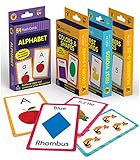
- Early Learning Toddler Flash Cards: Turn your child’s lessons into fun, phonics games and math games that bring learning to life with Carson Dellosa’s Early Learning Flash Cards!
- Why You’ll Love These Kids Flash Cards: Kids learn basic sight words, colors and shapes, numbers 0-25, and the alphabet. Bonus resource cards feature additional phonics games and math games for even more learning fun!
- What’s Included: The preschool flash cards bundle includes 4 packs of flash cards, including 53 First Words, 54 Colors & Shapes, 52 Numbers 0-25, and 52 Alphabet Flash Cards, with 5 bonus resource cards for a total of 216 cards.
- Working Together: Each flash card is made with a glossy cardstock finish and rounded edges for easy flipping and sorting. The sight words, numbers, and abc cards are double-sided with a word or number on one side and illustration on the other.
- Why Carson Dellosa: For more than 40 years, Carson Dellosa has provided solutions for parents and teachers to help their children get ahead and exceed learning goals. Carson Dellosa supports your child’s educational journey every step of the way.
Anki is a flexible spaced-repetition flashcard system, not a polished language course. Learners can create cards or use shared decks for vocabulary, spelling, Chinese characters, Japanese kanji, conjugations, and specialized terminology. The official Anki site explains the app’s platform and synchronization options.
Anki’s results depend heavily on card quality. Cards that show an isolated word and demand a direct translation can encourage brittle memorization. Better cards include a clear sentence, audio where appropriate, a useful image, or a prompt that matches the learner’s real goal.
Do these 3 things before closing this tab:
1Repair Windows errors before they cause bigger problems2Scan for outdated or missing drivers - takes under a minute3Clear out junk files and repair common Windows errorsAnki can reinforce a grammar course or authentic reading, but it does not provide a complete pedagogical sequence without carefully selected or created material.
Skip Anki if: You want a guided first lesson, built-in explanations, or a motivational course with no setup.
Best companion: Create cards from words encountered in Babbel, LingQ, a textbook, or conversations instead of memorizing a disconnected list.
Which option is best for real conversation?
italki and Preply
Best for: Exam preparation, professional language, advanced learners, pronunciation correction, and anyone who needs to speak spontaneously.
What’s actually slowing this PC down?
Pick the symptom - the matching free tool is one click away.
italki and Preply are tutoring marketplaces rather than conventional language courses. One-to-one lessons provide real-time interaction, personalized correction, and immediate adaptation to the learner’s needs. italki and Preply can therefore fill the gap that automated exercises, speech recognition, and AI role-play leave open.
Marketplace tutoring is more expensive than self-study and requires scheduling. Tutor quality, teaching experience, specialization, and price vary. A community contributor is not necessarily a trained teacher, and an AI conversation partner is not a reliable measure of spontaneous conversational competence.
For an exam or professional goal, tell the tutor the exact outcome: interview practice, presentation rehearsal, writing correction, pronunciation, exam tasks, or workplace vocabulary. A general conversation session may not address a high-stakes requirement.
Best companion: Use a structured app for daily study and a tutor for weekly conversation, correction, and accountability.
How do the leading apps compare by language skill?
| Skill | Strongest fits | What the learner should verify |
|---|---|---|
| Habit and consistency | Duolingo | Whether points and streaks support meaningful study rather than replace it |
| Explicit grammar | Babbel | Whether explanations match the target language and the learner’s level |
| Pronunciation imitation | Pimsleur, Rosetta Stone, Busuu | Whether feedback identifies specific pronunciation problems |
| Prompted speaking | Pimsleur | Whether the learner can later produce language without prompts |
| AI conversation | Busuu Premium Plus, Memrise Pro, Rosetta Stone Chat Missions | Whether the feature gives useful correction and supports the target language |
| Human conversation | italki, Preply | Tutor qualifications, specialization, availability, and lesson price |
| Native-speaker exposure | Memrise, LingQ | Speech speed, accents, transcripts, and content difficulty |
| Extensive reading and listening | LingQ | Content quality, import workflow, and how much guidance the learner needs |
| Custom vocabulary retention | Anki | Card design, review workload, and whether words are learned in context |
| Free writing | Human tutor, teacher, or correction service | Whether corrections explain natural wording rather than only mark errors |
Speaking practice needs especially careful labeling. Pronunciation imitation means repeating model audio. Controlled speaking means answering a prompt. AI conversation means simulated dialogue. Human conversation means unscripted interaction with feedback. Those four activities overlap, but none should be presented as interchangeable.
How many languages does each app support?
Language counts are useful only when the word “support” is defined. A published count may include a full beginner-to-intermediate course, a short introductory course, an audio-only program, user-generated content, or separate regional varieties.
| Service | First-party count or scope in the supplied research | How to interpret it |
|---|---|---|
| Duolingo | Broad range of language offerings | Course depth varies considerably by language |
| Babbel | 14 languages on its subscription page | Check whether the exact language has the level and skills you need |
| Rosetta Stone | 25 languages advertised | Count does not establish equal depth or regional variety |
| LingQ | Content-based coverage | Availability and quality depend on built-in and imported material |
| Anki | Potentially any language | Coverage depends on the decks you create or select |
Duolingo’s course page lists a broad selection, but a long language list should not be mistaken for equal content depth. Babbel’s current subscription page lists 14 languages, while Rosetta Stone’s U.S. plans page advertises 25 languages.
Learners of Japanese, Chinese, Arabic, or another less commonly taught language should check script instruction, audio quality, dialect or regional variety, course length, reading support, and speaking opportunities before subscribing. A popular app may be excellent for Spanish or French and much less complete for another language.
Can a free app really teach a language?
A free app can establish a useful foundation and daily habit, but free access does not necessarily mean that the entire course or every review and speaking feature is equally available. Advertising, hearts or lives, limited practice, locked explanations, and restricted premium tools can affect the experience.
Best Value

- 24Pcs ASL Hand Sign Learning Set: This set includes 24 bilingual ASL (American Sign Language) hand signs, featuring commonly words and phrases. Designed for classrooms, homes, or therapy settings, these visual cue cards promote effective communication and support sign language learning for students of all ages
- Clear and Engaging Visuals: Each sign features vibrant, easy-to-understand illustrations with bold labels, making it simple for learners to recognize and practice. These colourful, eye-catching sign posters are perfect for engaging students and reinforcing sign language skills in a fun way
- High-Quality Materials: Made from sturdy, premuim paper material, these asl sign posters are water-resistant, tear-resistant, and reusable. Markings made with water-based dry erase markers can be easily erased, facilitating repeated practice and interactive lessons
- Versatile Classroom Decorations: These sign language cards can be hung on walls, used for group activities, or incorporated into daily routine practices. Ideal for special education classrooms, daycare centers, homeschooling environments, or therapy sessions, helping to create an inclusive learning space
- Ideal Learning and Teaching Tool: Perfect for teachers, parents, or therapists working with students, including those with special needs or auditory impairments. These signs posters help foster inclusive communication, support language development, and are excellent for strengthening understanding of sign language
Free practice becomes more valuable when paired with free listening, reading, and real conversation. A learner can use Duolingo for daily structure, public podcasts or videos for listening, library resources for graded reading, and a language exchange for interaction. “Free” should not be confused with “complete.”
Do not use Duolingo’s cited 34-hour comparison as a fluency promise. Duolingo describes an independent study claiming that 34 hours of its instruction can be equivalent to a university semester; that is a specific comparison, not evidence that 34 hours produces conversational fluency. The company’s free-language page should be read in that context.
Are paid language apps worth it?
A paid language app is worth considering when payment removes a restriction that genuinely blocks regular study, supplies a course structure you will follow, adds useful offline access or review, or provides speaking tools that match your goal. Paying for a course you consistently use is usually more valuable than collecting several overlapping subscriptions.
Windows Errors? Fix Them Before They Spread
Repair common Windows errors and clear accumulated junk for a smoother, more stable PC - no reinstall needed.Free scan · no reinstallOutdated Drivers Are Slowing You Down
One free scan finds every outdated or missing driver and matches the right update for your exact hardware.Free scan · exact hardware matchPayment is harder to justify when the target language has shallow content, the learner has not tested the free version, the plan overlaps with an existing course, or the buyer expects fluency without live practice. A lifetime offer can reduce long-term cost for a committed learner, but buying lifetime access before establishing a habit is a common way to pay for unused software.
What should you check before subscribing?
- Is the displayed price a monthly equivalent or the actual upfront charge?
- Does the plan auto-renew, and at what renewal price?
- Must cancellation happen through the vendor, Apple, Google, or another marketplace?
- Does a free trial convert automatically into a paid subscription?
- Does lifetime access cover all languages, one language, or a defined product tier?
- Are taxes, currency conversion, or app-store pricing added at checkout?
- Do downloaded lessons remain available after cancellation?
- Are AI conversation, offline mode, detailed review, or pronunciation feedback limited to a higher tier?
Babbel’s pricing support documentation specifically notes that longer plans are paid upfront for the renewal period and that pricing can differ by location, platform, and purchase channel. Busuu also says that pricing varies by platform, local currency, and active offers. Treat vendor checkout pages as the final authority for a purchase.
Which app combination should you use?
Lowest-cost beginner stack
Use Duolingo for daily structure, free podcasts or graded videos for listening, and Anki only if important vocabulary repeatedly disappears. Add a language exchange when you are ready to produce unscripted speech. This stack minimizes cost while covering more than one skill.
Conversation-oriented stack
Use Babbel for explicit structure or Pimsleur for audio-led practice, then schedule a weekly tutor or language exchange. Add native-speaker media to bridge the gap between prepared lessons and real speech. Choose this stack when speaking is more important than completing a streak.
The Tool Desk
Outbyte Driver Updater FREEScan for outdated or missing drivers - takes under a minuteDriver Scan →Outbyte PC Repair FREEClear out junk files and repair common Windows errorsFree Scan →Intermediate or serious-learner stack
Use LingQ or another extensive-reading tool for stories, articles, and listening content; use Anki for recurring vocabulary; and use a tutor, exchange partner, or speaking group for output. Intermediate learners often gain more from increasing the amount and difficulty of input than from switching among beginner apps.
Exam or professional stack
Use a structured course for grammar, official exam materials for task familiarity, a teacher for feedback, writing correction, and timed practice. General-purpose apps can supply useful vocabulary and routine, but they should not be the only preparation for an exam, interview, presentation, or workplace requirement.
What does the evidence say about language-learning apps?
Product pages are useful for verifying features, availability, and prices, but first-party claims are not independent evidence that an app is the most effective. Comparison articles can add hands-on context, yet different reviewers may test different languages, plans, devices, and study periods.
TechRadar’s comparison and NBC Select’s hands-on coverage are useful secondary sources, but their observations should not automatically be generalized to every language or learner. App-store ratings measure popularity and user satisfaction, not long-term retention or spontaneous speaking.
A careful comparison separates first-party product claims, independent testing, research evidence, editorial judgment, and reader-specific recommendations. No supplied evidence establishes that one app guarantees fluency, that AI speaking equals a tutor, or that a particular number of study hours produces conversational competence.
How should you choose the right app?
- Name the outcome. Write down whether you need travel basics, conversation, literacy, an exam score, workplace language, or general study.
- Verify the exact course. Search the app for your language, script, dialect, regional variety, and desired level before paying.
- Choose the primary skill. Select a course for structure, audio for listening and prompted speaking, immersion for input, flashcards for retention, or tutoring for interaction.
- Test the routine. Use the free version or trial long enough to determine whether the lesson length and format fit your schedule.
- Buy only the missing capability. Do not subscribe to three beginner courses when you need one tutor, more listening, or writing correction.
- Track output, not only app activity. After several weeks, test whether you can understand a short recording, write a message, or answer an unexpected question.
Final verdict by learner type
| If you say… | Start with… | Why |
|---|---|---|
| “I want to learn for free and build a daily habit.” | Duolingo | Its free entry point and short, motivating sessions reduce startup friction. |
| “I want grammar and practical dialogues.” | Babbel | Its course structure and explicit guidance fit deliberate adult study. |
| “I need to speak during travel or a commute.” | Pimsleur | Audio-led prompts encourage oral responses without requiring a screen. |
| “I dislike translation and prefer pictures.” | Rosetta Stone | Its image-based immersion format matches that learning preference. |
| “I want corrections from other speakers.” | Busuu | Its community adds feedback to a structured course. |
| “I want native speakers and vocabulary review.” | Memrise | Native-speaker video and vocabulary practice provide useful exposure. |
| “I am intermediate and need real content.” | LingQ | Reading and listening through substantial content can extend beyond app drills. |
| “I need to memorize a custom list.” | Anki | Spaced repetition can target the exact words, characters, or forms you need. |
| “I need an exam, work, or spontaneous-conversation result.” | A course plus italki, Preply, or a teacher | Human interaction and correction address needs that self-study apps cannot fully cover. |
| “I want one app to make me fluent.” | A realistic stack | Combine structured study, listening, review, reading, writing, and interaction instead of searching for one universal winner. |
Frequently Asked Questions
Can you become fluent with a language-learning app alone?
A language-learning app alone is unlikely to provide balanced practice in advanced listening, free speaking, reading, and writing. Apps are useful for structure, vocabulary, grammar, and controlled practice, but conversational ability usually requires authentic media, writing, and interaction with other people.
What is the best free language-learning app in 2025?
Duolingo is the strongest free starting point for most beginners because it combines short lessons, habit-building features, and broad availability. The free experience may include advertising or restrictions, and course depth varies by language.
Is Pimsleur better than Duolingo for speaking?
Pimsleur is generally the better fit for audio-first, prompted speaking because learners listen and respond aloud throughout lessons. Pimsleur still does not replace spontaneous conversation, while Duolingo is usually stronger for free access, visual practice, and habit formation.
Recommended Free Tools
Which language-learning app is best for advanced learners?
LingQ is a strong choice for intermediate learners who need extensive reading and listening through more substantial content. Advanced learners should also consider a tutor, teacher, or conversation partner for correction and specialized speaking or writing practice.
Should I pay for a lifetime language-learning subscription?
A lifetime subscription can be worthwhile when the target language has sufficient course depth and you have already established a regular study habit. Check whether lifetime access covers all languages or only one, whether the offer is promotional, and whether the upfront cost is lower than the expected renewal cost.
The Bottom Line
Bottom line: Start with Duolingo for a free habit, Babbel for structured lessons, Pimsleur for audio-led speaking, Rosetta Stone for visual immersion, Busuu for community feedback, Memrise for native-speaker vocabulary exposure, LingQ for extensive input, and Anki for custom review. Add italki, Preply, or a teacher when your goal involves spontaneous conversation, professional communication, exam preparation, or serious writing. The best language-learning setup is usually a small combination of tools chosen around one target language and one measurable outcome—not the app with the biggest language count or most engaging streak.
Quick Recap
Product prices and availability are accurate as of the date/time indicated and are subject to change. Any price and availability information displayed on Amazon at the time of purchase will apply.
Free tools Windows power users keep installed
One-click scans. No signup required.

