
Free tools Windows power users keep installed
One-click scans. No signup required.
iTechGuides is reader-supported. When you buy through links on our site, we may earn an affiliate commission. As an Amazon Associate I earn from qualifying purchases. Learn more
Condenser microphones can capture quiet detail and fast transients with high sensitivity and broad frequency response—useful for vocals, acoustic instruments, and other sources where nuance matters. They are not automatically better than dynamic microphones: room noise, pickup pattern, self-noise, maximum sound pressure level (SPL), and power requirements all affect whether a condenser is the right choice.
How does a condenser microphone work?
A condenser microphone, also called a capacitor microphone, uses a flexible diaphragm and a fixed backplate to form a capacitor. Sound waves move the diaphragm relative to the backplate, changing the capacitance and creating an electrical signal. The capsule produces a high-impedance signal, so active electronics inside the microphone convert it into a usable, lower-impedance output. DC-polarized and radio-frequency (RF) condenser designs handle that electrical conversion differently. PreSonus explains the basic operating principle and power options, while Shure describes microphone transducers, polar patterns, and frequency response.
What are the advantages of a condenser microphone?
Sensitivity to quiet detail
Condenser elements can be more sensitive than dynamic elements, helping them capture low-level sounds without requiring as much gain from the preamp. This can be useful for nuanced vocals, soft instruments, and room ambience in a suitably quiet recording space. Sensitivity describes how strongly a microphone responds to sound; it does not mean the microphone rejects unwanted sound.
Response to transients and a broad range of frequencies
Condenser microphones can offer smooth response across a wide frequency range and reproduce rapid changes in sound, or transients, such as a plucked string or the attack of a percussion hit. Shure lists vocals, cymbals, and acoustic instruments among common recording applications for condenser microphones. The actual result depends on the individual microphone’s response, the source, placement, and room; a broad frequency specification alone does not prove that one model will sound better for a particular recording. See Shure’s recording techniques guide and its dynamic-versus-condenser comparison.
#1 Best Overall
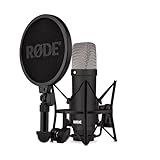
- COMPLETE VOCAL SETUP: shock mount, pop filter and XLR cable included, add an interface and record
- THE SOUND OF HIT RECORDS: the legendary NT1 large-diaphragm condenser voicing trusted in studios for two decades
- WHISPER-QUIET: among the lowest self-noise microphones ever made, nothing between you and the take
- BUILT FOR VOCALS AND STREAMS: tight cardioid pattern focuses on the voice, rejects the room
- IN THE BOX: NT1 Signature (Black), SM6 shock mount with pop filter, XLR cable and dust cover
More options for capturing a source
Condenser microphones are available in different pickup patterns, which determine how sound from different directions contributes to the recording. A directional pattern may help focus on a source, while a pattern that captures more from around the microphone can include more room sound. The pattern and its off-axis response matter alongside sensitivity: neither a condenser capsule nor high sensitivity by itself controls how much unwanted room or background sound enters the recording.
What are the trade-offs?
The same traits that make a condenser useful for detail can expose problems in the recording setup. High sensitivity may also capture room reflections, ventilation, traffic, or other background noise. In addition, the microphone’s internal electronics contribute self-noise, and every model has a maximum SPL beyond which distortion can occur. For quiet sources, check the model’s equivalent noise or self-noise specification; for loud instruments or close placement, check its maximum SPL. Microphone placement, source level, room acoustics, and preamp headroom also affect the result.
Rank #2
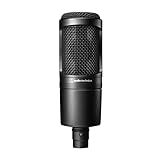
- The price/performance standard in side address studio condenser microphone technology
- Ideal for project/home studio applications
- High SPL handling and wide dynamic range provide unmatched versatility
- Custom engineered low mass diaphragm provides extended frequency response and superior transient response
- Cardioid polar pattern reduces pickup of sounds from the sides and rear, improving isolation of desired sound source.
- Quiet, controlled room: sensitivity and transient detail can be useful when the desired source is quiet and room noise is low.
- Noisy or reflective room: consider the pickup pattern, off-axis response, placement, and whether a less sensitive or differently directed microphone would better suit the surroundings.
- Loud source: compare the microphone’s maximum SPL with the expected sound level rather than assuming every condenser will handle it.
- Stage, field, or instrument mounting: check physical format, mounting, robustness, and power arrangements for the specific conditions of use.
What is a “phantom powered” microphone?
Many condenser microphones use phantom power: DC voltage sent through a balanced XLR cable to run the microphone’s electronics. Shure describes phantom power as commonly ranging from 12 to 48 volts, with the required voltage depending on the microphone. Other condenser designs use batteries or a dedicated power supply, so check the model’s documentation and confirm that the mixer or audio interface can provide what it needs. PreSonus also outlines phantom-power considerations.
Do these 3 things before closing this tab:
1Fix the driver behind crashes, sound loss and screen glitches2Repair Windows errors before they cause bigger problems3Scan for outdated or missing drivers - takes under a minuteShure’s official “What is Phantom Power?” support FAQ, last edited April 14, 2021, explains that balanced dynamic microphones are not affected by phantom power when the voltage is equal on pins 2 and 3: “Because the voltage is exactly the same on Pin 2 and Pin 3, phantom power will have no effect on balanced dynamic microphones: no current will flow since there is no voltage difference across the output.” Check equipment documentation before connecting or powering any microphone, particularly if the connection is not balanced XLR.
Rank #3

- Custom three-capsule array: This professional USB mic produces clear, powerful, broadcast-quality sound for YouTube videos, Twitch game streaming, podcasting, Zoom meetings, music recording and more
- Blue VO!CE software: Elevate your streamings and recordings with clear broadcast vocal sound and entertain your audience with enhanced effects, advanced modulation and HD audio samples
- Four pickup patterns: Flexible cardioid, omni, bidirectional, and stereo pickup patterns allow you to record in ways that would normally require multiple mics, for vocals, instruments and podcasts
- Onboard audio controls: Headphone volume, pattern selection, instant mute, and mic gain put you in charge of every level of the audio recording and streaming process
- Positionable design: Pivot the mic in relation to the sound source to optimize your sound quality thanks to the adjustable desktop stand and track your voice in real time with no-latency monitoring
How to choose a condenser microphone for your use
- Match it to the source and setting. Identify whether you are recording vocals, an acoustic instrument, a loud source, or ambience, and consider room reflections and background noise.
- Choose a pickup pattern for the room. Compare directionality and off-axis response to understand how much sound from other directions may enter the recording.
- Read the frequency-response information in context. Use the response graph and intended application to judge whether it suits the source; do not use a wide stated range as a stand-alone quality ranking.
- Check noise and level limits. Compare self-noise or equivalent noise level for quiet sources and maximum SPL for loud ones.
- Verify power and connection. Confirm whether the microphone needs phantom power, a battery, or a dedicated supply, and whether your recording input can provide it.
- Check practical fit. Make sure the microphone’s format, mounting, and robustness suit the placement and conditions where you will use it.
A model example: Sennheiser MKH 416
The Sennheiser MKH 416 illustrates why “condenser” alone is not enough to choose a microphone. Sennheiser identifies it as an RF condenser with a super-cardioid/lobar pickup pattern. Its official specification page lists a 48 V ± 4 V phantom supply, approximately 13 dB(A) equivalent noise level, 130 dB SPL maximum sound pressure level, and 40–20,000 Hz frequency response. These are specifications for this model, not general figures for condenser microphones; the page does not establish that the MKH 416 is the right choice for every recording use. See Sennheiser’s MKH 416 specifications.
Quick Recap
Best Value

- [USB Output] Enables simple setup. USB studio recording microphone kit provides a direct convenient plug-and-play connection to pc and laptop without any additional hardware or drivers for recording vocals, podcasts and Skype. Studio microphone for recording vocals is never been easier to get high-quality sound for your voice and computer-based audio recordings. (Incompatible with Xbox)
- [Excellent Sound Quality] With rugged construction for durable performance, the vocal recording microphone, USB condenser mic for PC,offers a wide frequency response and handles high SPLs with ease. Ideal for project/home-studio applications. The cardioid condenser capsule captures crystal-clear audio from the front and avoid ambient noise when communicating/creating/recording. Comes ready to go with a desktop mic boom arm stand and 8.2ft USB cable, you're guaranteed to get great-sounding results.
- [Durable Arm Set] The podcast microphone bundle with versatile and sturdy broadcast suspension boom scissor arm with 180° up and down rotation, 135° forward and backward extension for optimal adjustment, for capturing your voice in podcast or voiceover. The double pop filter attached on the music recording microphone provides two layers of dissipation, removes the rush of air, minimize the popping sounds or cancel noise that can compromise your recording, great for studio as well as home use.
- [Easy to Attach] The streaming microphone for PC includes adjustable boom studio scissor arm stand that features a heavy-duty combo mount consisting of a sturdy C-clamp and a detachable desktop mount. With 13" fixed horizontal arm and offers a 30" reach, the low-profile, table-hugging design of audio recording microphone allows on-air talent to perform without facial obstruction to record in podcasting or make dubbing sounds for videos, use voice chat in Discord or online conference on Zoom or Skype.
- [The Accessory Package Includes] The studio microphone music recording comes with practical accessories for you to use in most of recording. The scissor arm stand is made out of all steel construction, sturdy and durable, a studio-grade shock mount, a double pop filter, premium 8.2' USB-B to USB-A/C cable, a podcast PC gaming microphone, a user manual and friendly Technical Support.
Rank #4

- 48V Phantom Power Required – The Maono PM320S professional XLR condenser microphone requires a stable 48V phantom power supply. Simply connect it to your audio interface, mixer, or preamp via the included XLR cable for plug‑and‑play operation, and it delivers pristine studio‑grade sound instantly. Whether you’re using it as a microphone for PC, a vocal microphone for singing, or a recording microphone for music production, the external power ensures consistent, reliable performance every time.
- Studio‑Grade Audio: Built with a large 16mm condenser capsule, this XLR condenser microphone captures extended frequency response and superior transient detail—ideal for studio recording, music production, and vocal tracking. It handles high SPL with ease, making it a versatile recording microphone for podcasting, streaming, vlogging, home studio, and content creation. Whether you're a singer, podcaster, or streamer, this condenser mic delivers broadcast‑quality sound for any application
- Low‑Noise Design for Crystal‑Clear Capture: The cardioid polar pattern effectively rejects off‑axis ambient noise, making it an excellent podcast microphone XLR for untreated rooms, while the integrated shock mount reduces vibration rumble from stands or desks. A pop filter and foam windscreen further tame plosives and saliva noise—perfect for vocal microphone for singing, streaming mic, or recording mic for voice‑over work—so your audio stays clean, immersive, and professionally polished.
- All‑In‑One Studio Kit: Engineered with rugged all‑metal housing, this condenser XLR microphone withstands daily studio use and accidental drops. The adjustable metal boom arm bracket offers stable positioning and folds neatly for easy portability. From podcast setups to music recording, it's the ideal studio microphone for producers, streamers, and vocalists—all at an incredible value, making it the go‑to podcast mic and recording mic for music, vocals, and online content creation
- Packing List: package includes microphone*1, boom arm*1, metal shock mount*1, pop filter*1, windscreen*1, XLR to XLR cable*1 and User manual*1
Product prices and availability are accurate as of the date/time indicated and are subject to change. Any price and availability information displayed on Amazon at the time of purchase will apply.

