
The Tool Desk
Outbyte Driver Updater FREEFix the driver behind crashes, sound loss and screen glitchesFind Drivers →Outbyte PC Repair FREEClear out junk files and repair common Windows errorsFree Scan →iTechGuides is reader-supported. When you buy through links on our site, we may earn an affiliate commission. As an Amazon Associate I earn from qualifying purchases. Learn more
As of August 10, 2026, the best Canon camera for most serious hybrid shooters is the EOS R5 Mark II—but it is not the best purchase for everyone. The EOS R6 Mark III is the more balanced enthusiast option, the EOS R6 V is the strongest full-frame choice for video-first creators, and the EOS R7 offers the best wildlife and sports value.
For less money, the EOS R8 is Canon’s most attractive affordable full-frame body, while the EOS R50 is the easiest recommendation for beginners. Video-first buyers should also consider the EOS R50 V, a creator camera that is more specialized than the conventional R50.
This guide separates “best camera” from “best fit.” A $6,799 EOS R1 is Canon’s professional sports and news flagship, but its speed-oriented design and 24.2MP resolution make it a poor default recommendation for a family photographer, traveler, or landscape shooter.
Recommended Free Tools
Quick verdict: the best Canon cameras for different buyers
| Camera | Best for | Sensor | Key video capability | Approximate U.S. body-only price | Main drawback |
|---|---|---|---|---|---|
| EOS R5 Mark II | Best overall high-resolution hybrid | 45MP full-frame stacked | Internal 8K; 4K/120p | $4,299 launch reference; current price varies | Expensive files, media, and computer requirements |
| EOS R6 Mark III | Best all-rounder for enthusiasts | 32.5MP full-frame | 7K RAW up to 59.94p; Open Gate | $2,799 Canon Direct listing | More expensive than the discounted R6 Mark II |
| EOS R6 V | Best video-first full-frame camera | 32.5MP full-frame | 7K/60p RAW; 4K/120p; Open Gate | $2,499 Canon Direct listing | Video-first design is less conventional for stills |
| EOS R7 | Best wildlife and sports value | 32.5MP APS-C | 4K/60p | $1,649 Canon Direct listing | Rolling shutter and buffer limitations at high speed |
| EOS R8 | Best affordable full-frame option | 24.2MP full-frame | Uncropped oversampled 4K/60p | $1,299 observed sale; $1,649 regular listing | No IBIS, one card slot, and smaller battery |
| EOS R50 | Best beginner interchangeable-lens Canon | 24.2MP APS-C | 6K-oversampled 4K/30p | $729.99 observed; $779.99 regular listing | No IBIS and limited professional redundancy |
Best dedicated vlogging alternative: the EOS R50 V. It is the better choice than the R50 for a creator who primarily records video, wants Canon Log 3 and 10-bit recording, and does not need a viewfinder.
#1 Best Overall
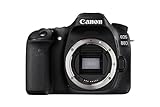
- 45-point all cross-type AF system* allows for superb autofocus when shooting with the optical viewfinder and focusing area selection modes.
- Intelligent Viewfinder with approximately 100% viewfinder coverage. Approx. 730g / 25.75oz. (Based on CIPA Guidelines),Approx. 650g / 22.93oz. (Body only)
- 24.2 Megapixel (APS-C) CMOS sensor helps provide impressive, high-resolution results. Shooting speed of up to 7.0fps makes it an excellent choice for capturing moving subjects
- Improved Dual Pixel CMOS AF helps you shoot video with smooth, fast and accurate autofocus, and stills with instant and precise autofocus.
How these recommendations were chosen
“Best” is not a camera specification. It is a judgment based on the buyer’s subject, workflow, budget, and tolerance for compromises. These picks weigh:
- Still-image quality and resolution.
- Autofocus and subject-recognition behavior.
- Mechanical and electronic burst performance.
- Sensor readout and rolling-shutter risk.
- Video formats, bit depth, Log profiles, Open Gate, cooling, audio, and HDMI connectivity.
- Stabilization, battery life, card redundancy, and body ergonomics.
- RF and RF-S lens choices, the cost of adapted EF lenses, and the size of the complete kit.
- Current U.S. pricing and whether an older model offers better value.
This is why the high-resolution R5 Mark II leads the overall list, while the R6 Mark III is the more sensible recommendation for many enthusiasts and the R7 wins the wildlife-value category.
Crashes, No Sound, or Screen Glitches?
Random freezes, missing sound and display glitches usually trace back to one bad driver. Find and replace yours safely.Free scan · under a minuteWindows Errors? Fix Them Before They Spread
Repair common Windows errors and clear accumulated junk for a smoother, more stable PC - no reinstall needed.Free scan · no reinstall1. Canon EOS R5 Mark II: best overall Canon camera
Verdict: The EOS R5 Mark II is Canon’s most complete high-resolution hybrid body. It combines a 45MP stacked full-frame sensor with fast electronic shooting, sophisticated autofocus, professional card options, and internal 8K video. It is the strongest one-camera solution for an advanced photographer who genuinely needs both detail and speed.
Who should buy it
- Professional and advanced hybrid photographers.
- Landscape, commercial, portrait, wedding, wildlife, and high-resolution video shooters.
- Anyone who regularly crops images or needs 45MP files.
- Users who want one body for detailed stills, fast action, and 8K production.
Key specifications
- 45MP back-illuminated stacked full-frame CMOS sensor.
- Up to 30fps electronic shooting.
- Up to 12fps mechanical or electronic-first-curtain shooting.
- Dual Pixel Intelligent AF with subject tracking and Eye Control AF.
- Internal 8K video and 4K/120p.
- Canon Log 2 and Canon Log 3.
- Full-size HDMI.
- One CFexpress Type B slot and one UHS-II SD slot.
- LP-E6P battery supplied.
Canon says the stacked sensor reduces rolling-shutter distortion by approximately 60% compared with the original EOS R5. That makes the electronic shutter more useful for action than on a conventional, slower-readout sensor, although it does not make the camera immune to distortion in every situation.
Why it is so capable
The R5 Mark II avoids the usual choice between resolution and speed. Its 45MP output gives landscape and commercial photographers considerable cropping latitude, while the stacked sensor and 30fps electronic burst make it more practical for wildlife and fast-moving subjects than a similarly high-resolution, non-stacked body.
It also has a serious hybrid-video specification: internal 8K, 4K/120p, Log 2 and Log 3, full-size HDMI, and a CFexpress/SD dual-card workflow. Eye Control AF can be useful for moving the focus area toward the point where the photographer is looking, but it requires calibration and will not improve every user’s results equally.
Free tools Windows power users keep installed
One-click scans. No signup required.
Limitations and failure modes
- Cost: Canon’s original U.S. launch estimate was $4,299 body-only in August 2024. The current price may be lower or higher depending on stock and promotions, but this remains a costly body.
- Storage: 45MP stills, 8K footage, and CFexpress cards quickly increase storage and backup costs. A fast computer is also important for editing.
- Battery compatibility: The supplied LP-E6P is the safest choice for full performance. Older LP-E6N and LP-E6NH batteries can work with limitations, while battery-dependent features may be restricted.
- Recording claims: Canon lists maximum recording times of up to six hours for some modes at 59.94fps or lower, but that is not an unconditional six-hour 8K guarantee. Heat, ambient temperature, settings, card, power source, and battery condition can shorten recording.
- Firmware: Check Canon’s current R5 Mark II firmware notices and storage-card advisories before a paid assignment.
Best lens pairing: An RF 24-105mm f/4 L is a practical professional general-purpose choice; an RF 24-70mm f/2.8 L is better for low-light events and demanding commercial work. Verify current lens pricing separately.
Do not buy it if: You mainly take family, travel, or casual photos, rarely crop, and do not need 8K. The R6 Mark III or R8 will usually make more financial sense.
Best alternatives: Choose the R6 Mark III if 32.5MP and 7K video are sufficient, the R1 if you shoot professional sports or news, or a discounted/refurbished original R5 if its older sensor and video behavior meet your needs.
2. Canon EOS R6 Mark III: best all-rounder for enthusiasts
Verdict: The EOS R6 Mark III is the most balanced photo-first Canon body in the current range. It provides 32.5MP full-frame images, up to 40fps electronic bursts, strong stabilization, dual-card recording, and unusually flexible 7K video without pushing buyers into the R5 Mark II’s resolution and storage demands.
Key specifications
- 32.5MP full-frame CMOS sensor.
- Up to 40fps electronic shooting.
- Up to 20 frames of pre-continuous shooting.
- Canon-rated IBIS of up to 8.5 stops in the center and 7.5 stops at the periphery with compatible equipment.
- One CFexpress Type B slot and one UHS-II SD slot.
- Internal 7K RAW up to 59.94p.
- 7K Open Gate up to 29.97p.
- 4K/119.8p and Full HD/179.8p high-frame-rate modes.
- Canon Log 2, Canon Log 3, HLG, and PQ.
Canon Direct lists the body at $2,799 in the United States. Canon published firmware version 1.1.0 for the R6 Mark III on July 22, 2026; check the current advisory page rather than assuming a camera on a retailer shelf has the latest firmware.
Why it is the best fit for many enthusiasts
The R6 Mark III has enough resolution for most prints, editorial work, weddings, portraits, travel, and wildlife while retaining fast shooting and full-frame low-light advantages. Its stabilization and dual-card arrangement are meaningful upgrades over entry-level full-frame bodies, and 7K RAW plus Open Gate gives video shooters flexibility for horizontal and vertical delivery.
It is also a more natural stills camera than the R6 V. The R6 Mark III retains a conventional photo-oriented body, viewfinder, and controls, whereas the R6 V is built primarily around video operation.
What to watch for
- The 40fps figure depends on shutter mode, shutter speed, lens, battery, and other settings. It should not be treated as a guaranteed rate in every configuration.
- 7K RAW and Open Gate generate large files and require fast, high-capacity media.
- It is not the right substitute for the R6 V when long-form video, active cooling, tally operation, or creator controls are the priority.
- It does not offer the R5 Mark II’s 45MP stills or 8K emphasis.
- Canon’s stabilization figures are measured under stated test conditions. IBIS cannot freeze a moving person, bird, or athlete.
Best lens pairing: An RF 24-105mm lens covers general-purpose travel, events, and portraits. Add an RF 50mm f/1.8 or RF 85mm lens for inexpensive shallow-depth-of-field portrait work.
Quick wins for a faster PC:
Clear out junk files and repair common Windows errorsFree Scan →Scan for outdated or missing drivers - takes under a minuteDriver Scan →Best alternative: The EOS R6 Mark II is the value choice when discounted. The EOS R8 is cheaper and smaller but gives up IBIS, battery capacity, body depth, and dual-card redundancy.
3. Canon EOS R6 V: best video-first full-frame Canon
Verdict: The EOS R6 V is the best Canon body here for creators and small production teams who will spend most of their time recording video. Its active cooling, 7K/60p RAW, Open Gate recording, full-size HDMI, tally lamp, front record controls, and vertical-video features matter more to a filmmaker than a conventional stills-camera layout.
Key specifications
- 32.5MP full-frame sensor.
- Internal 7K/60p Canon RAW Light.
- 7K/30p Open Gate.
- 4K/120p and oversampled 4K up to 60p.
- Canon Log 2 and Canon Log 3.
- Active cooling fan.
- Full-size HDMI.
- Front recording button, tally lamp, vertical tripod mount and interface, and power-zoom lever.
- Canon-rated IBIS of 7.5 stops in the center and 7.0 stops at the periphery under specified conditions.
- CFexpress Type B media and LP-E6P battery.
Canon lists a six-hour maximum recording time for modes below 100fps under its stated conditions, and Canon Direct lists the body at $2,499. Canon published firmware version 1.1.0 on July 22, 2026. Those figures are useful planning references, not promises that every 7K RAW or high-frame-rate recording will run for six hours in every temperature and power configuration.
Why video creators should consider it
Active cooling is the central difference between the R6 V and a conventional photo-first mirrorless camera. It is valuable for interviews, podcasts, livestreams, courses, events, and other recordings where stopping to manage heat is disruptive.
Do these 3 things before closing this tab:
1Fix the driver behind crashes, sound loss and screen glitches2Repair Windows errors before they cause bigger problems3Scan for outdated or missing drivers - takes under a minuteOpen Gate records the full usable sensor area, making it easier to create both horizontal and vertical versions from one take. Full-size HDMI is more robust for production connections than micro-HDMI, while the tally lamp and front record button help solo operators confirm that the camera is recording.
The R6 V also supports a creator-oriented physical layout, vertical mounting and interface options, Canon Log profiles, and video-focused operation. These are practical workflow benefits rather than headline megapixel improvements.
Important compromises
- Not the best stills camera by default: If photography is your primary activity, the R6 Mark III offers a more conventional and balanced experience.
- Viewfinder question: Current third-party coverage describes the R6 V as viewfinder-less, while Canon’s technical page has not consistently displayed a viewfinder specification. Treat it as a screen-based video design and confirm the final Canon specification before ordering. If you need an EVF for bright-light stills or traditional photography, choose the R6 Mark III.
- Media cost: CFexpress Type B cards are more expensive than the SD cards used by entry-level bodies, and 7K RAW requires substantial capacity.
- Battery cost: It uses LP-E6P batteries; the original LP-E6 is not compatible, and older batteries may offer reduced performance or restricted functions.
- Recording limits: Cooling reduces risk but does not eliminate every heat, power, or environmental limit.
Best lens pairing: The RF 20-50mm f/4 L IS USM PZ is designed around a compact creator workflow with a useful wide end. Confirm kit availability and pricing at publication time.
Best alternatives: Choose the EOS R50 V for a much smaller APS-C vlogging kit, the R6 Mark III for a photo-first hybrid, or the EOS C50 if your workflow requires a more cinema-oriented production camera.
4. Canon EOS R7: best wildlife and sports value
Verdict: The EOS R7 is the best value choice for wildlife, birds, aviation, motorsports, and outdoor sports when reach and pixel density matter more than full-frame low-light performance. Its 32.5MP APS-C sensor gives Canon’s 1.6× field-of-view advantage, while IBIS, dual SD slots, and a robust control layout make it more serious than the cheaper R10.
Rank #2

- 24.1 Megapixel CMOS (APS-C) sensor with is 100–6400 (H: 12800)
- Built-in Wi-Fi and NFC technology
- 9-Point AF system and AI Servo AF
- Optical Viewfinder with approx 95% viewing coverage
- Use the EOS Utility Webcam Beta Software (Mac and Windows) to turn your compatible Canon camera into a high-quality webcam. Compatible Lenses- Canon EF Lenses (including EF-S lenses, excluding EF-M lenses)
Key specifications
- 32.5MP APS-C sensor.
- Canon’s 1.6× APS-C field-of-view factor.
- Up to 15fps mechanical shooting.
- Up to 30fps electronic shooting.
- IBIS and up to 7 stops of coordinated stabilization under Canon’s stated conditions.
- Dual SD card slots.
- 4K/60p video.
- Subject-detection autofocus derived from technology used in Canon’s higher-end cameras.
Canon Direct lists the R7 at $1,649 body-only. Canon’s launch information explains the crop-sensor telephoto advantage, but the effect needs to be understood correctly: a 400mm lens on the R7 frames like approximately a 640mm lens would on full frame, but the lens remains optically a 400mm lens. The crop factor changes the angle of view; it does not create extra optical detail.
Why it works for wildlife
With a distant subject, the R7 places more pixels over a narrower angle of view than a similarly resolved full-frame body. That can reduce the need for a larger, heavier, and more expensive telephoto lens. Mechanical shooting at 15fps is also a dependable option for fast action when electronic-shutter distortion is a concern.
IBIS, weather-resistant construction, dual cards, and a joystick give the R7 a more field-ready design than the R10. Canon’s subject detection can be effective for animals and moving subjects, but it is not infallible: clutter, obstructions, poor light, a wrong detection category, or a subject that occupies too few pixels can cause the AF system to lose or switch subjects.
What’s actually slowing this PC down?
Pick the symptom - the matching free tool is one click away.
Wildlife-specific failure modes
- Rolling shutter: The electronic shutter can bend fast-moving wings, propellers, or vehicles during rapid panning. The 30fps mode should not be treated like the electronic shutter of a stacked-sensor camera.
- Buffer: High frame rates can fill the buffer after a burst. Capacity depends on file type, card speed, shutter mode, and other settings; independent testing has documented limits of several dozen RAW frames in some configurations.
- Low light: APS-C reach comes with less high-ISO latitude and a different depth-of-field trade-off than full frame. Indoor sports may favor the R6 Mark III despite the R7’s apparent reach advantage.
- Lens choice: Native RF-S telephoto options are not as broad as the full-frame RF range. Large RF telephoto lenses can be expensive and heavy, while adapted EF lenses may reduce the total cost.
Best lens pairing: The RF 100-400mm is a relatively approachable wildlife pairing; the RF 100-500mm is the more advanced option. Existing Canon DSLR owners should also investigate an EF-EOS R adapter and compatible EF telephoto lenses.
Best alternatives: The EOS R10 costs less and is lighter. The R6 Mark III is preferable for indoor action and low light. The R5 Mark II is the higher-end choice when resolution and electronic-shutter behavior matter more than price.
5. Canon EOS R8: best affordable full-frame Canon
Verdict: The EOS R8 is the most attractive entry point to Canon full frame when image quality, autofocus, and video matter more than professional redundancy. It is a particularly good fit for portraits, travel, landscapes, family photography, and low-light shooting.
Key specifications
- 24.2MP full-frame sensor.
- Dual Pixel CMOS AF II.
- Uncropped 4K/60p oversampled from 6K.
- Full HD high-frame-rate recording up to 180p.
- Vari-angle touchscreen.
- 2.36-million-dot OLED electronic viewfinder.
- Canon-listed maximum movie recording time of two hours.
Canon Direct pricing observed for the R8 was $1,299, compared with a regular listing of $1,649. Because that lower figure is promotion-sensitive, treat it as an observed sale price rather than a permanent MSRP.
Why it is a strong value
The R8 delivers full-frame image quality and Canon’s capable autofocus in a relatively small body. Its 6K-oversampled 4K/60p is unusually strong for this price category, and the same RF full-frame lenses used by the R6 and R5 families are available to it.
It is a better choice than an APS-C body when low-light shooting, wide-angle work, or shallow depth of field is the priority. It is also a sensible upgrade from an older Rebel or DSLR if the buyer wants a modern full-frame body without paying R6-series prices.
What the lower price means
- No IBIS: Stabilization comes from the lens, electronic video stabilization, or careful technique. This is less convenient for handheld video and unstabilized lenses.
- One card slot: It is not the right recommendation for a professional who needs in-camera backup during a wedding or paid assignment.
- Smaller battery and body: It is less comfortable and less resilient for intensive professional use than an R6-series body.
- Two-hour movie specification: Canon’s maximum is mode- and condition-dependent; it is not a guarantee for every temperature or setting.
- Value changes with sales: A discounted R6 Mark II may be the better buy if IBIS, battery life, dual cards, and more substantial handling matter.
Best lens pairing: An RF 24-105mm lens is the most flexible general-purpose starting point. An RF 50mm f/1.8 or RF 85mm lens suits portraits and low-light people photography.
Best alternatives: Buy the R6 Mark II when its price is close and you need dual cards and IBIS; choose the R50 for a smaller, less expensive APS-C system; choose the R7 for wildlife and sports reach.
6. Canon EOS R50: best beginner Canon camera
Verdict: The EOS R50 is the best general-purpose beginner Canon with interchangeable lenses. It is compact, approachable, and much easier to recommend than a cheaper camera with a dated screen or weaker autofocus. It suits smartphone upgraders, students, families, travelers, and casual vloggers who still want an electronic viewfinder.
Key specifications
- 24.2MP APS-C sensor.
- DIGIC X processor.
- Dual Pixel CMOS AF II.
- 4K/30p video oversampled from 6K.
- 12fps electronic-first-curtain and 15fps electronic continuous shooting.
- Product-demo mode for showing objects close to the camera.
- UVC/UAC webcam and streaming compatibility.
Canon Direct pricing observed at $729.99 compares with a regular listing of $779.99. Both availability and promotional pricing can change.
Why it is beginner-friendly
The R50 combines a relatively small body with modern autofocus and a straightforward learning path. A beginner can start with an inexpensive RF-S lens, then move to a higher-end full-frame RF body later without abandoning the RF system. It is also more useful as a webcam and casual video camera than many older entry-level DSLRs.
For a compact everyday kit, pair it with the RF-S 18-45mm. The RF-S 18-150mm is the more useful travel lens if the buyer prefers not to change lenses frequently.
Limitations
- No IBIS; image stabilization depends on the lens or electronic video stabilization.
- One card slot, so it is not ideal for work requiring immediate file redundancy.
- The small body and battery are less suited to demanding professional use.
- Its strongest 4K mode is 30p oversampled from 6K; it is not the right choice for buyers who specifically need 4K/60p as a central feature.
Choose the R10 instead if photography is more serious and you want a larger grip, more direct controls, and stronger action capability. Choose the R50 V if you primarily make video and can live without a viewfinder.
The Canon EOS R50 V: the better choice for video-first creators
The EOS R50 V deserves a prominent place in a creator-oriented buying guide, but it should not automatically replace the R50 in a general beginner-photography list. It is not simply an R50 with a new menu. Canon redesigned it around video operation.
- Front and conventional record buttons.
- Tally light.
- Vertical and horizontal tripod positions.
- Creator-oriented interface.
- 4K/30p oversampled from 6K.
- 4K crop up to 59.94p and Full HD up to 119.8p.
- Canon Log 3, HLG, PQ, and Canon 709.
- 10-bit video options.
- Headphone and microphone connections.
- USB livestreaming and clean HDMI.
- Power-zoom control for compatible lenses.
- 24.2MP APS-C sensor and one SD card slot.
- No RAW video recording.
The RF-S 14-30mm power-zoom lens is a natural pairing for self-shooting, interiors, and vertical content. The R50 V is better than the R50 for video-first users because its controls, monitoring, recording, and mounting features are designed around that workflow. It is not universally better: a photography beginner may prefer the conventional R50 and its electronic viewfinder.
Important alternatives that should not be ignored
Canon EOS R1: best professional sports and news camera
The EOS R1 is Canon’s professional flagship, not the default best Canon camera. Its U.S. body-only price is listed at $6,799. It uses a 24.2MP stacked full-frame sensor and emphasizes speed, reliability, autofocus, and professional handling over maximum resolution.
The Tool Desk
Outbyte Driver Updater FREEScan for outdated or missing drivers - takes under a minuteDriver Scan →Outbyte PC Repair FREEClear out junk files and repair common Windows errorsFree Scan →Its notable features include up to 40fps electronic shooting, pre-continuous shooting, cross-type autofocus, eye-control AF, and a built-in vertical grip. It is an excellent fit for agencies, sports photographers, and high-volume news work where ruggedness, rapid operation, and workflow reliability matter more than the R5 Mark II’s 45MP files.
For landscapes, commercial work, portraits, and cropping-heavy wildlife photography, the R5 Mark II’s greater resolution is usually more useful. That is why the R1 is a specialist alternative rather than the overall winner.
Canon EOS R6 Mark II: best discounted full-frame value
The R6 Mark II remains highly relevant because it offers 24.2MP full-frame imaging, fast autofocus, uncropped 4K/60p, good low-light performance, IBIS, and dual card slots. It may be a better purchase than the R6 Mark III when the price gap is large and the buyer does not need 32.5MP, 7K RAW, or Open Gate.
Check current retailer and Canon refurbished pricing. A newer model is not automatically better value if the older camera already covers the intended workflow.
Rank #3
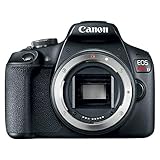
- 24. 1 Megapixel CMOS (APS C) sensor with is 100–6400 (H: 12800)
- Built in Wi Fi* and NFC** technology | 9 Point AF system and AI Servo AF.Image File Format:JPEG, RAW
- Optical Viewfinder with approx. 95% viewing coverage
- 3. 0 Inch LCD with 920, 000 dots.Not compatible with UHS speed class cards
- Camera Is Brand New In Kit Box (Lens Removed)
Canon EOS R10: best lower-cost action and travel camera
The R10 is a capable 24MP APS-C camera with up to 15fps mechanical shooting, R3-derived subject detection, and 4K/60p. It is a sensible step up from the R50 for a photography-first beginner who wants a larger grip and more direct controls.
Its compromises are significant for demanding work: it lacks the R7’s IBIS, weather resistance, and dual-card arrangement. Independent testing and Canon’s specifications support its beginner-friendly performance, but it should not be mistaken for a professional wildlife body.
Canon EOS R100: only for the tightest budget
The R100 can make sense when the lowest possible entry price is the overriding concern, but it is a weak primary recommendation in 2026. Its fixed, non-touch screen, limited controls, and older feature set make the R50 easier and more pleasant to learn with. Buy it only when the savings are substantial and the buyer understands the usability trade-off.
Canon PowerShot V1: compact creator alternative
The PowerShot V1 is a fixed-lens video-oriented compact with a 22MP sensor and a 16–50mm-equivalent zoom. It is worth considering for a creator who wants a pocketable, self-contained camera and does not need interchangeable lenses. It is not a replacement for the R50 or R50 V when lens choice and system growth matter.
Do these 3 things before closing this tab:
1Scan for outdated or missing drivers - takes under a minute2Clear out junk files and repair common Windows errors3Fix the driver behind crashes, sound loss and screen glitchesCanon EOS C50: production-focused video option
The EOS C50 belongs in a cinema-camera comparison rather than a normal mirrorless buying guide. Its controls, recording formats, body design, and intended workflow are more production-oriented than those of the R50, R8, R7, or R6 family. Choose it when cinema production requirements—not compact stills photography—drive the purchase.
Key comparisons before you buy
EOS R5 Mark II vs EOS R6 Mark III
| Choose the R5 Mark II if… | Choose the R6 Mark III if… |
|---|---|
| You need 45MP files and substantial cropping latitude. | 32.5MP is sufficient for your work. |
| You need internal 8K. | 7K RAW and Open Gate cover your delivery needs. |
| Electronic-shutter action performance is especially important. | You want a lower-cost, more balanced photo-first body. |
| You can afford CFexpress, storage, and a powerful editing computer. | You want to reduce file sizes and total system cost. |
EOS R6 Mark III vs EOS R6 V
Choose the R6 Mark III for photography-first use, a conventional viewfinder-and-screen camera experience, and a balanced stills/video workflow. Choose the R6 V when active cooling, tally operation, full-size HDMI, Open Gate, vertical production, and front recording controls are more valuable than conventional stills ergonomics.
EOS R7 vs EOS R10
The R7 is worth the additional cost for wildlife and sports because it adds 32.5MP resolution, IBIS, dual card slots, weather-resistant construction, and a more substantial body. The R10 is the better value for travel and general photography when those features are not needed.
EOS R8 vs EOS R6 Mark II
The R8 prioritizes small size, low price, and full-frame image quality. The R6 Mark II is the better working camera when dual-card backup, IBIS, longer battery life, and more robust handling justify the additional cost. If the R6 Mark II is heavily discounted, its older generation does not make it a poor buy.
EOS R50 vs EOS R50 V
The R50 is the better general beginner camera because it offers a conventional camera layout and electronic viewfinder. The R50 V is the better video tool because it adds creator-oriented controls, tally operation, vertical mounting, 10-bit Log options, and livestreaming features. Neither is universally superior.
EOS R5 Mark II vs EOS R1
The R5 Mark II is the better hybrid and high-resolution camera. The R1 is the specialist professional sports and news body: it trades resolution for speed, cross-type AF, pre-continuous shooting, an integrated vertical grip, and workflow-focused reliability. Most buyers should not pay the R1 premium unless those professional requirements are real.
Independent reader supportYour contribution helps us test, update, and keep practical guides available for everyone.Choose by subject and workflow
Wildlife and birds
Start with the R7 if you need affordable reach in good light. Its 1.6× APS-C framing advantage and 32.5MP sensor are useful with a 100-400mm lens. Move to the R5 Mark II for higher resolution and more confidence in electronic-shutter action, or to the R6 Mark III for low-light flexibility and a balanced full-frame setup.
Remember that reach does not equal magnification. A longer lens, better positioning, and sufficient light still matter.
What’s actually slowing this PC down?
Pick the symptom - the matching free tool is one click away.
Sports
For outdoor sports on a budget, the R7 is compelling, but use mechanical or electronic-first-curtain shutter when rolling shutter is visible. For indoor sports, the R6 Mark III’s full-frame sensor may provide cleaner high-ISO results. The R1 is the professional option when the assignment demands maximum speed, ruggedness, integrated vertical controls, and reliable agency workflow.
Portraits
The R8 is the affordable full-frame choice, while the R6 Mark III adds stabilization, dual cards, a more substantial body, and more resolution. Pair either with an RF 50mm f/1.8 or RF 85mm lens. The R5 Mark II is valuable for commercial portraits and heavy cropping, but its resolution is unnecessary for many ordinary portrait sessions.
Weddings and events
Prioritize dual card slots, battery life, low-light autofocus, stabilization, and lens brightness over maximum burst rate. The R6 Mark III is the strongest current fit, the R6 Mark II may be the best discounted value, and the R5 Mark II is appropriate when high-resolution delivery and cropping are important.
Travel
The R50 is the lightest approachable system, the R10 is the better photography-first step-up, and the R8 is the full-frame choice when low-light and wide-angle performance matter. Budget for the lens: an RF-S 18-150mm can make an APS-C kit more convenient, while a 24-105mm lens makes a full-frame kit versatile but larger.
Vlogging and social video
Choose the R50 V for creator-specific controls and 10-bit Log options. Choose the R6 V for full-frame quality, active cooling, 7K RAW, Open Gate, and production connectivity. Choose the conventional R50 if you also want an electronic viewfinder and ordinary stills-camera operation.
Professional video
The R6 V is the most natural mirrorless recommendation for long-form creator and small-production work because active cooling and full-size HDMI address practical video problems. The R5 Mark II is stronger when high-resolution hybrid work and 8K are central. The EOS C50 should be considered when a cinema-oriented body, recording workflow, and production controls are more important than stills capability.
Full-frame or APS-C: which Canon format is right?
Full-frame bodies such as the R5 Mark II, R6 Mark III, R6 V, R8, and R1 generally make it easier to shoot in low light, obtain shallow depth of field, and use wide-angle lenses. They also tend to require larger and more expensive lenses, particularly for wildlife.
APS-C bodies such as the R7, R10, R50, and R50 V are often smaller and less expensive. Canon’s 1.6× crop factor narrows the angle of view, which is useful for distant subjects: a 400mm lens frames approximately like a 640mm lens on full frame. It does not optically magnify the subject or add detail. APS-C also gives up some low-light and depth-of-field behavior compared with full frame, although lens choice and lighting can matter more than format for many photos.
Recommended Free Tools
Rank #4

- Take beautiful photos and movies with background blur
- Easily connect, shoot and share on the move
- Express your creativity with easy to follow guidance
- Explore the power of DSLR and interchangeable lenses
- EOS 2000D body, Eyecup Ef, Camera Cover R-F-3, Camera strap EW-400D, Battery Pack , Battery Charger , Power cable for battery charger,
Do not buy full frame solely because it is marketed as “better.” Buy it when its low-light, wide-angle, depth-of-field, or professional-body benefits match your work.
Budget for the complete Canon system
The body is only the beginning. A realistic budget should include:
- Standard lens: RF-S 18-45mm for a small R50 or R10 kit; RF-S 18-150mm for more travel range; a 24-105mm option for full frame.
- Specialist lens: RF 100-400mm for an approachable wildlife setup, RF 100-500mm for advanced wildlife, or a fast 50mm/85mm lens for portraits.
- Battery: The R5 Mark II and R6 V use LP-E6P batteries. Do not assume older LP-E6-series batteries provide identical performance.
- Memory: The R5 Mark II, R6 Mark III, and R6 V need CFexpress Type B for their highest-demand modes. Sustained write speed matters more than a card’s peak marketing speed.
- Backup: Dual-card models are preferable for paid work. The R8, R50, and R50 V have one card slot and should not be sold as equivalent redundancy solutions.
- Video accessories: Budget for an external microphone, headphones, power supply, cage, tripod, lighting, and possibly cooling or power-management accessories.
- Computer and storage: 7K and 8K footage can require fast local storage, large backups, and a computer capable of editing the chosen codec.
Canon’s RF system supports RF and RF-S lenses. Existing Canon DSLR owners can generally adapt EF and EF-S lenses with Canon’s EF-EOS R adapter, which can significantly reduce upgrade costs. EF-M lenses are not compatible through that adapter. Third-party RF autofocus availability, pricing, and regional stock continue to change, so check the current lens market rather than relying on an old statement that the system is either “limited” or “complete.”
Buying used, refurbished, or older Canon bodies
A newer camera is not automatically the best value. Consider a discounted or refurbished older body when the missing feature does not affect your work:
- R6 Mark II: Still a strong low-light and event camera with 24.2MP, fast autofocus, uncropped 4K/60p, IBIS, and dual cards. It is especially attractive when discounted.
- Original R5: Offers high resolution at a lower used price, but its sensor readout and video behavior are older than the R5 Mark II’s.
- R10: A capable APS-C travel and action camera without the R7’s IBIS, weather resistance, and dual cards.
- R50: Often a better beginner experience than the cheaper R100 because of its screen, autofocus, and controls.
- Rebel T7/2000D and 5D Mark IV: These can be useful used-market options at very low prices, but they should not lead a current 2026 buying guide unless the reader specifically wants a DSLR.
For used equipment, inspect the shutter and card-slot condition, confirm the battery and charger, test autofocus with the intended lens, check the sensor and screen, and verify that the seller offers a meaningful return period. For refurbished equipment, Canon’s own stock and warranty terms are preferable when the price difference is reasonable.
Common mistakes to avoid
Do not equate burst rate with action performance
A 30fps or 40fps electronic burst may depend on shutter mode, lens, battery, shutter speed, file format, and autofocus settings. A slower sensor readout can also distort a bird’s wings, a propeller, or a fast pan. Use mechanical or electronic-first-curtain shutter on the R7 when distortion appears. Prefer the R5 Mark II or R1 when electronic-shutter action performance is mission-critical.
Do not assume autofocus never misses
Canon subject detection can lose a subject when it is obscured, too small, poorly lit, surrounded by clutter, or confused with another similar subject. Select the appropriate subject category, use a more constrained AF area when needed, and choose a lens that can focus quickly enough. Independent testing has praised the R7’s action AF while also documenting its buffer and rolling-shutter limitations.
Do not treat stabilization ratings as guarantees
Canon’s “up to” 8.5-stop or 7-stop figures are measured under specific CIPA and compatible-lens conditions. Stabilization helps counter camera movement; it does not freeze a moving subject. A bird, dancer, or child may still require a fast shutter speed.
Windows Errors? Fix Them Before They Spread
Repair common Windows errors and clear accumulated junk for a smoother, more stable PC - no reinstall needed.Free scan · no reinstallOutdated Drivers Are Slowing You Down
One free scan finds every outdated or missing driver and matches the right update for your exact hardware.Free scan · exact hardware matchDo not assume active cooling eliminates overheating
Cooling is an important advantage of the R6 V, but recording can still stop early because of heat, power, ambient conditions, settings, battery, or card limitations. Mode-specific testing is more meaningful than a blanket claim that a camera “does not overheat.”
Do not buy the wrong V-series camera
The V suffix means video-oriented, not simply “higher-end.” The R50 V and R6 V change the conventional stills-camera experience to prioritize recording controls, vertical production, tally operation, power zoom, audio, cooling, or streaming. A video creator may value those changes; a photographer may prefer the standard R50 or R6 Mark III.
Why this list differs from older “best Canon cameras” pages
Some search results still show a page titled “The 6 Best Canon Cameras of 2026” whose visible update date is January 17, 2025. That older list centers on the R6 Mark II, R7, R10, R50, Rebel T7/2000D, and 5D Mark IV, and predates the R5 Mark II, R6 Mark III, R6 V, and R50 V recommendations used here. Older models remain relevant when discounted, but they should not obscure the current Canon RF lineup.
Other current roundups call the R5 Mark II the best Canon overall, while identifying the R6 Mark III as the better hybrid or the R6 Mark II as the better value. Those positions are not contradictory once “best camera” and “best purchase” are separated. The R6 V and R50 V also require different standards: their value is in cooling, Open Gate, Log recording, audio, connectivity, and creator controls—not simply megapixels or stills burst rate.
Quick wins for a faster PC:
Scan for outdated or missing drivers - takes under a minuteDriver Scan →Repair Windows errors before they cause bigger problemsFix Now →Fix the driver behind crashes, sound loss and screen glitchesFind Drivers →Firmware, stock, and price checklist
- Check the current Canon firmware and product-advisory page for the exact body.
- Check Canon, B&H, Adorama, Best Buy, and Amazon on the same day.
- Separate list price, temporary sale price, kit price, used price, and refurbished price.
- Confirm whether the listing is body-only and whether a battery, charger, or lens is included.
- For the R5 Mark II, R6 Mark III, and R6 V, confirm the required CFexpress Type B card and reader.
- Check the battery model before reusing batteries from an older EOS body.
- Do not infer that a camera is discontinued from one contradictory retailer or Canon product-page status. Some Canon Direct pages have displayed “In Stock” alongside “Discontinued” or “no longer available.”
Frequently Asked Questions
Which Canon camera is best for most people in 2026?
For a serious enthusiast who wants one body for stills and video, the EOS R6 Mark III is the most balanced choice. The EOS R5 Mark II is the better overall hybrid if you need 45MP files, stronger electronic-shutter action performance, or internal 8K. For a first interchangeable-lens camera, the EOS R50 is the better fit.
Is the Canon EOS R5 Mark II better than the EOS R1?
It is better for high-resolution hybrid work because it has a 45MP sensor and internal 8K video. The EOS R1 is better for professional sports and news photographers who prioritize speed, cross-type autofocus, pre-continuous shooting, an integrated vertical grip, and workflow reliability over resolution. Its U.S. body-only price is listed at $6,799.
Should I buy the Canon EOS R7 or a full-frame camera for wildlife?
Choose the EOS R7 when affordable telephoto framing, 32.5MP pixel density, and outdoor value are priorities. Choose the R6 Mark III or R5 Mark II when low-light performance, shallow depth of field, or better electronic-shutter behavior matters more. The R7’s 1.6× crop factor changes framing; it does not optically magnify the subject.
Is the Canon EOS R50 V better than the EOS R50?
The R50 V is better for video-first creators because it adds front recording controls, a tally light, vertical-video support, 10-bit Log options, livestreaming features, and creator-focused operation. The standard R50 is better for a general beginner who wants a conventional camera experience and an electronic viewfinder.
Free tools Windows power users keep installed
One-click scans. No signup required.
Is the Canon EOS R8 a professional camera?
The R8 can produce professional-quality images and video, but its one card slot, lack of IBIS, smaller battery, and less substantial body make it a weaker choice for assignments requiring redundancy and intensive handling. It is an excellent affordable full-frame camera for portraits, travel, landscapes, family photography, and low-light work.
Can I use my Canon DSLR lenses on an EOS R camera?
Canon EF and EF-S DSLR lenses can generally be adapted to RF bodies with an EF-EOS R adapter. EF-M lenses are not compatible through that adapter. Adapter compatibility, autofocus behavior, and the value of a particular lens should be checked individually before buying.
The Bottom Line
Choose the EOS R5 Mark II if you need the most capable high-resolution hybrid. Choose the EOS R6 Mark III if you want the best balance of resolution, speed, stabilization, handling, and video for enthusiast and professional hybrid work. Choose the EOS R6 V when video operation, cooling, Open Gate, and production connectivity matter most. Choose the EOS R7 for wildlife and outdoor sports value, the EOS R8 for an affordable full-frame entry point, and the EOS R50 for beginner-friendly photography. If video is your entire reason for buying, compare the R50 V and R6 V separately rather than assuming a conventional stills camera is the better creator tool.
Quick Recap
Product prices and availability are accurate as of the date/time indicated and are subject to change. Any price and availability information displayed on Amazon at the time of purchase will apply.

