
Free tools Windows power users keep installed
One-click scans. No signup required.
iTechGuides is reader-supported. When you buy through links on our site, we may earn an affiliate commission. As an Amazon Associate I earn from qualifying purchases. Learn more
PCWorld’s 2006 list put the Apple II at No. 1, but it was not a contest for the fastest or best-value computer. The editors judged nominated machines on innovation, impact, industrial design, and intangibles. Read the ranking as a historical argument about which PCs changed what people expected computers to do—not as an objective or current leaderboard.
How to read PCWorld’s list
Published on August 11, 2006, the ranking brought together desktop and portable computers, workstations, home and gaming PCs, and even a media-center system. PCWorld’s working definition also included computers running an operating system originally created for desktops and laptops. That broad scope makes direct performance comparisons misleading: a pocket DOS computer and a networked workstation mattered for different reasons.


The editors solicited nominations and considered innovation, impact, industrial design, and intangibles. They did not publish numerical scores or weights for those factors. Their judgment was that a machine could be great because it opened a market, made an idea usable, shaped later designs, or became culturally important—not just because it sold well or had impressive specifications.
Quick wins for a faster PC:
Repair Windows errors before they cause bigger problemsFix Now →Fix the driver behind crashes, sound loss and screen glitchesFind Drivers →Clear out junk files and repair common Windows errorsFree Scan →The 25 PCs, in PCWorld’s 2006 order
-
Apple II (1977)
PCWorld’s overall winner combined color output and user expandability with practical uses that helped personal computers move beyond hobbyists. VisiCalc gave businesses a compelling reason to buy one, while the machine’s broader cultural reach strengthened its case across the editors’ criteria.
-
Compaq Deskpro 386 (1986)
PCWorld recognized the Deskpro 386 as the first major PC built around Intel’s 80386. Its significance was not simply 32-bit performance: it brought that capability to a system compatible with DOS and major applications, helping the established PC software environment move forward without requiring users to abandon it.
-
Xerox 8010 Information System, or Star (1981)
The Star brought together a graphical interface, desktop metaphor, mouse, WYSIWYG graphics, Ethernet, and networked-workstation ideas in a commercial system. Its importance lies in the collection of concepts it embodied and demonstrated, even though it was not the same thing as a mass-market home PC. Xerox Star team software engineer Dave Curbow told PCWorld there were “way too many firsts to enumerate.”
-
Apple Macintosh Plus (1986)
The Macintosh Plus made the original Macintosh concept more usable for demanding work. It arrived with 1MB of RAM, could be expanded to 4MB, used 800KB floppy disks, and introduced the first SCSI port on a Mac. Those changes improved room for applications and data as well as the ability to connect peripherals.
Crashes, No Sound, or Screen Glitches?
Random freezes, missing sound and display glitches usually trace back to one bad driver. Find and replace yours safely.Free scan · under a minuteWindows Errors? Fix Them Before They Spread
Repair common Windows errors and clear accumulated junk for a smoother, more stable PC - no reinstall needed.Free scan · no reinstallSpecial offer. See more information about Outbyte and uninstall instructions. Please review EULA and Privacy policy. -
IBM ThinkPad 700C (1992)
The ThinkPad 700C made a strong case for treating a laptop as a premium work computer rather than a desktop reduced in size. PCWorld highlighted its black case, TrackPoint, 10.4-inch color TFT display, 120MB removable drive, and keyboard. The combination of pointing, typing, and color-screen features helped define a distinctive portable design.
-
IBM Personal Computer Model 5150 (1981)
The original IBM PC mattered in part because it helped create an ecosystem larger than IBM itself. Compatible hardware, software, books, and magazines accumulated around the platform, giving buyers more options and making the IBM-compatible model influential well beyond the machines IBM sold.
-
Commodore Amiga 1000 (1985)
The Amiga 1000 was notable for bringing graphics, video, and sound capabilities together with multitasking. Custom coprocessors supported its multimedia ambitions, showing that home computers could be built around more than text, business applications, or simple games.
Rank #2
-
Tandy TRS-80 Model 100 (1983)
This lightweight portable paired a built-in keyboard with word processing, spreadsheet software, and a modem. PCWorld described it as one of the first notebooks to gain broad adoption. Its integrated design made it useful as a self-contained mobile tool rather than merely a desktop computer that happened to be portable.
What’s actually slowing this PC down?
Pick the symptom - the matching free tool is one click away.
Special offer. See more information about Outbyte and uninstall instructions. Please review EULA and Privacy policy. -
Columbia Data Products MPC 1600-1 (1982)
PCWorld identified the MPC 1600-1 as the first shipped IBM-compatible clone discussed in the ranking. Its place reflects the early spread of compatible systems and the Intel-and-Microsoft platform: a PC did not have to come from IBM to participate in the ecosystem established by the IBM PC.
-
Apple PowerBook 100 (1991)
The PowerBook 100 helped popularize a laptop layout that put the keyboard toward the user, leaving a wrist rest and an integrated trackball in front. That arrangement made room for pointing without an external mouse and influenced the ergonomics people came to expect from mobile computers.
-
Sony VAIO 505GX (1998)
The VAIO 505GX was a thin ultraportable with a magnesium case. PCWorld’s rationale emphasized its influence on a wave of compact notebook designs: its contribution was as much about what a small laptop could look and feel like as about any single feature.
-
MITS Altair 8800 (1975)
The Altair 8800 was sold as a build-it-yourself kit, giving hobbyists a tangible way into personal computing and helping create demand for supporting hardware and software. PCWorld quoted Vintage-Computer.com’s Erik Klein describing how other companies quickly joining in demonstrated the Altair’s power and allure.
Do these 3 things before closing this tab:
1Clear out junk files and repair common Windows errors2Fix the driver behind crashes, sound loss and screen glitches3Repair Windows errors before they cause bigger problemsSpecial offer. See more information about Outbyte and uninstall instructions. Please review EULA and Privacy policy. -
IBM Personal Computer/AT Model 5170 (1984)
The PC/AT brought Intel’s 80286 to this class of IBM personal computer and added high-density floppy support and expansion improvements. PCWorld also credited it with helping establish the keyboard layout that endured. Its importance was a combination of a more capable platform and conventions that outlasted the original machine.
-
Atari 800 (1979)
The Atari 800 placed custom graphics and sound chips at the center of a home-computer experience oriented toward games and animation. Cartridge support and joystick ports reinforced that emphasis, illustrating how entertainment helped drive computer design well before multimedia PCs became commonplace.
-
Shuttle SV24 barebone system (2001)
The SV24 represented a compact Flex ATX barebones approach. PCWorld included it for its influence on small-form-factor PCs, showing that the shape and footprint of a desktop could be a significant design innovation in their own right.
-
Tandy TRS-80 Model I (1977)
Radio Shack’s Model I helped bring computers to a mass-market retail audience. PCWorld’s 2006 account said more than 200,000 units were sold. That sales figure supports its place as an adoption story, distinct from machines whose influence rested more on technical concepts or industrial design.
Recommended: Update Every Outdated Driver on Your PC in One Scan - Free →Recommended: Fix Windows Errors and Clear Junk Files in Minutes - Free Scan →Special offer. See more information about Outbyte and uninstall instructions. Please review EULA and Privacy policy. -
Toshiba T1000 (1987)
The T1000 was a relatively light DOS portable with a clamshell case, full-size keyboard, floppy drive, and ROM-based MS-DOS. Those elements made it a notable step toward a usable portable PC: it combined familiar software with a form that could travel and open into a full-size typing experience.
-
Hewlett-Packard OmniBook 300 (1993)
At 2.9 pounds, the OmniBook 300 was a subnotebook that put useful software in ROM, including Windows, Excel, Word, and MS-DOS, and used solid-state storage. PCWorld’s case for it centered on fitting substantial computing capability into a highly portable package.
-
Apple iMac, second generation (2002)
The second-generation iMac paired a dome-shaped base with a flat panel on a swivel arm. PCWorld singled out its playful industrial design. Its place in the ranking is a reminder that a computer’s physical form can become a major part of its identity, not merely a housing for components.
Rank #4
Sale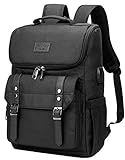 YALUNDISI Vintage Backpack Travel Laptop Backpack with usb Charging Port for Women & Men College Backpack Fits 15.6 Inch Laptop Black
- Lots of Storage Space&Pockets: One separate laptop compartment hold 15.6 Inch Laptop as well as 15 Inch,14 Inch and 13 Inch Macbook/Laptop. One spacious packing compartment roomy for daily necessities,tech electronics accessories. Front compartment with many pockets, pen pockets and key fob hook, make your items organized and easier to find
- Functional&Safe: A luggage strap allows travel laptop bag fit on luggage/suitcase, slide over the luggage upright handle tube for easier carrying. External pockets on both sides are made of elasticized fabric, expands to secure various size water bottles and compact umbrella
- USB Port Design: With built in USB charger outside and built in charging cable inside,this usb backpack offers you a more convenient way to charge your phone while walking. Please noted that this backpack doesn't power itself, usb charging port only offers an easy access to charge
- Material & Solid:Made from nylon fabric with Two "S" curve PADDED shoulder straps,offers LIGHT-WEIGHT Carrying and of force reinforcement,perfects for business traveling, weekend getaways, shopping, professional office work and other outdoor activities. Also, a perfect college backpack.
- Note: THIS ITEM IS NOT INTENDED FOR USE BY CHILDREN 12 AND UNDER
-
Gateway 2000 Destination (1996)
The Destination was an early media-center PC, combining a large CRT with a TV tuner, remote control, wireless keyboard, and speakers. It treated the computer as a living-room entertainment system, anticipating a use case that later devices would pursue in different forms.
Special offer. See more information about Outbyte and uninstall instructions. Please review EULA and Privacy policy. -
Alienware Area-51 (1998)
The Area-51 used a multi-card gaming configuration, while its styling helped make gaming PCs more culturally visible. PCWorld’s recognition was not just for gaming hardware; it also reflected the way a striking design could give a distinct identity to a growing PC category.
-
Hewlett-Packard 100LX (1993)
The 100LX packed a DOS computer into a pocketable form, with a QWERTY keyboard, numeric keypad, monochrome display, and Lotus 1-2-3 in ROM. It was a very different answer to portability from the full-size keyboard notebooks elsewhere on the list: its significance was putting familiar PC software in a much smaller device.
-
Apple eMate 300 (1997)
The eMate 300 was an educational computer running Newton OS, with pen input and a distinctive green case. It was short-lived but became a cult favorite. PCWorld’s inclusion captures a machine whose unusual form and focused purpose mattered even without a long commercial run.
-
Toshiba Qosmio G35-AV650 (2006)
The Qosmio G35-AV650 represented the entertainment-notebook idea at the time of PCWorld’s ranking. Its features included HD DVD, HDMI/HDCP, a TV tuner, a remote, a large display, and multimedia audio. It combined PC and media functions in a portable system rather than treating entertainment as an add-on use.
The Tool Desk
Outbyte Driver Updater FREEScan for outdated or missing drivers - takes under a minuteDriver Scan →Outbyte PC Repair FREERepair Windows errors before they cause bigger problemsFix Now →Special offer. See more information about Outbyte and uninstall instructions. Please review EULA and Privacy policy. -
Non-Linear Systems Kaypro II (1982)
The Kaypro II was an affordable CP/M luggable that bundled productivity software and included a 9-inch display. It brought a computer, screen, and software together in a transportable package, occupying a middle ground between fixed desktops and the later lightweight notebook designs in the ranking.
Best Value
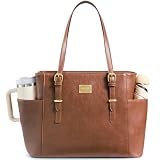 LOVEVOOK Laptop Tote Bag for Women, Vintage Leather 15.6 Inch Work Tote with Large Water Bottle Pocket, Teacher Nurse Professional Computer Bag, Office Briefcase Handbag Gift, Brown
- 【LOVEVOOK Original Design】Design Inspiration: Timeless Vintage Meets Modern Functionality; Inspired by the enduring charm of vintage leather and the needs of today's professional women, this tote blends clean lines, warm textures, and elegant gold-tone hardware into a silhouette that never goes out of style. Designed to carry everything you need while elevating every commute with effortless sophistication.
- 【Oversized Side Pocket for Large Tumblers】Designed to fit most popular handled tumblers, including 30 oz and 40 oz styles, the oversized side pocket keeps your drink upright and within easy reach throughout the day. It also accommodates large water bottles or umbrellas, helping maximize interior storage while making every commute, workday, or trip more convenient.
- 【Generous Dimensions】Measures 16.5" L x 6" W x 12" H. Spacious interior fits 15.6" laptops, notebooks, charger, planner, cosmetics, lunch, and other daily essentials—all in one organized laptop tote. Perfect for work, commuting, business trips, or travel.
- 【Premium Craftsmanship, Made to Last】Crafted from high-quality vegan leather with a soft vintage-inspired finish, this work tote is both stylish and durable. Reinforced stitching, smooth premium zippers, and elegant gold-tone hardware ensure long-lasting performance while adding a refined touch to your everyday look.
- 【One Computer Bag for Every Occasion】More than just a laptop bag, it's your everyday companion. Perfect as a work tote bag, teacher tote bag, briefcase for women, messenger bag, or everyday handbag. Whether you're a professional, teacher, nurse, college, or busy mom, this versatile laptop purse keeps you organized without compromising on style.
What the ranking says about PC history
Compatibility turned a product into a platform
The IBM 5150, Compaq Deskpro 386, and Columbia Data Products MPC 1600-1 represent different stages in the growth of compatible PCs. IBM’s machine helped establish a broad ecosystem; Compaq showed that a compatible system could adopt a major processor advance; and Columbia’s clone demonstrated that compatible machines could come from other manufacturers. Together, they make clear why ecosystem reach can matter as much as a machine’s specifications.
Ideas mattered even when adoption differed
The Xerox Star’s graphical and networked-workstation concepts, the Altair’s kit-driven hobbyist community, and the Macintosh Plus’s usability improvements illustrate several routes to influence. The list does not claim every influential idea reached the same number of buyers. Instead, it treats innovation and subsequent impact as separate but related reasons a computer might rank highly.
Portability was a series of different compromises
The TRS-80 Model 100, Kaypro II, HP 100LX, Toshiba T1000, PowerBook 100, ThinkPad 700C, OmniBook 300, and VAIO 505GX do not form a simple march toward one ideal laptop. They range from integrated lightweight portables and luggables to pocket DOS machines and increasingly refined notebooks. Their varying keyboards, storage, displays, and pointing methods show that portable computing evolved through distinct answers to what users most needed to carry.
Graphics and entertainment were part of the story early
The Atari 800, Amiga 1000, Gateway Destination, Alienware Area-51, and Qosmio G35-AV650 show that games, multimedia, and home entertainment were not late diversions from “serious” PC history. They helped shape hardware, system design, and the cultural identity of personal computers.
Why isn’t the Commodore 64 in the top 25?
It did not make this particular ranking, despite its large production scale. PCWorld’s 2006 discussion described about 30 million Commodore 64 units produced, but that figure appeared in its discussion of the near-greats rather than among the ranked 25. The omission is best read as a difference in editorial selection, not proof that the C64 lacked historical importance.
That distinction captures the list’s central point: there is no single trait that makes a computer great. PCWorld’s ordering reflects the editors’ choices in 2006 about innovation, impact, design, and intangibles. Readers asking which old PCs changed computing will find multiple answers here, depending on whether they value compatibility, usability, graphics, portability, or cultural reach most.
Quick Recap
Product prices and availability are accurate as of the date/time indicated and are subject to change. Any price and availability information displayed on Amazon at the time of purchase will apply.

