
Outdated Drivers Are Slowing You Down
One free scan finds every outdated or missing driver and matches the right update for your exact hardware.Free scan · exact hardware matchPC Slower Than It Used to Be?
A free scan shows the junk files, broken settings and background clutter dragging Windows down - then fixes them in one click.Free scan · Windows 10 & 11iTechGuides is reader-supported. When you buy through links on our site, we may earn an affiliate commission. As an Amazon Associate I earn from qualifying purchases. Learn more
The AnandTech Forums thread “The 2016 FX overclocking results thread” is a four-page record of late-era AMD FX experimentation, not a controlled benchmark leaderboard. Its headline entries—an FX-8370E at 5.1 GHz and an FX-8370 at 5.0 GHz—were user claims. The discussion never independently established that a typical FX processor could sustain those clocks on an AMD Wraith cooler. Its durable lesson is that effective clock speed, VRM behavior, workload, and test duration matter more than a multiplier shown in a screenshot.
What the AnandTech thread was
Started by cbn on March 15, 2016 in AnandTech Forums’ CPUs and Overclocking section, the thread was intended to collect comparable AMD FX results. The opening post asked contributors to identify the processor, purchase date, manufacturing date when known, clock speed, voltage, cooler, motherboard, stress-test temperature, and whether the chip included AMD’s newer red-fan Wraith cooler. The thread ran for four pages when archived.
The Wraith detail was historically interesting because the poster thought it might indicate later Vishera production. That is a period observation, not a dependable dating method for every retail FX processor.
The headline results—and their evidence level
| Processor | Claimed clock | Voltage | Cooling | Motherboard | What the thread establishes |
|---|---|---|---|---|---|
| FX-8370E | 5.1 GHz | 1.425 V | AMD Wraith | Gigabyte GA-990FXA Gaming | User submission; sustained frequency and stability disputed |
| FX-8370 | 5.0 GHz | 1.475 V | Wraith in the opening reference; later entry lists a Phanteks 120 mm tower | Gigabyte 990FXA-UD5 | User submission; no standardized validation |
| FX-8310 | 4.2 GHz | 1.344 V | Cooler Master Hyper 212 Evo | Gigabyte GA-970-DS3P | More conservative result; board power limitations were discussed |
| FX-9590 | 5.1 GHz | 1.45 V load, 1.5 V idle | Antec 240 mm sealed cooler | Asus Crosshair V Formula | User result under different CPU, board and cooling conditions |
Other posts reported an older FX-8370 near 4.916 GHz at 1.45 V while a newer sample managed about 4.64 GHz at the same voltage. Those are anecdotal samples, not a population-wide comparison. BIOS version, ambient temperature, memory, northbridge and HT settings, load-line calibration, workload and measurement software were not controlled.
#1 Best Overall

- CONTACT FRAME FOR INTEL LGA1851 | LGA1700: Optimized contact pressure distribution for longer CPU life and better heat dissipation
- ARCTIC's P12 PRO FAN: More power at any speed - more powerful and quieter than the P12, especially at low speeds. Higher maximum speed for optimal cooling performance under high load
- NATIVE OFFSET MOUNTING FOR INTEL AND AMD: Shifting the cold plate center towards the CPU hotspot ensures more efficient heat transfer
- INTEGRATED VRM FAN: PWM-controlled fan that lowers the temperature of the voltage converters and thus ensures reliable performance
- INTEGRATED CABLE MANAGEMENT: The PWM cables of the radiator fans are integrated in the sheathing of the hoses so that only a single visible cable is connected to the motherboard
Why the 5.1 GHz FX-8370E claim became controversial
The main objection concerned the benchmark result, not merely whether a Wraith cooler could remove the heat. The Stilt argued that the posted NQueen score matched an effective operating speed of approximately 4.65–4.7 GHz rather than a processor sustaining 5.1 GHz throughout the run. Other participants raised VRM overheating, power limits and clock cycling as possible explanations.
The original claimant maintained that the CPU was running at 5.1 GHz and later acknowledged that motherboard VRMs might have affected the result. The thread did not produce an independently reproducible test that resolved the disagreement. Calling the result fabricated goes beyond the evidence; calling it verified is equally unjustified.
Why a displayed multiplier is not proof
- Boot frequency: the system reaches the operating system at the selected multiplier.
- Displayed or screenshot frequency: monitoring software catches the requested clock at some point, often at idle or during a light interval.
- Short-benchmark frequency: a brief workload completes before heat or power limits fully develop.
- Sustained stable frequency: all active cores maintain the effective clock through a defined workload without errors, throttling or crashes.
The NQueen run was criticized as lasting less than two seconds. That can demonstrate that a configuration starts and finishes one calculation; it cannot establish a daily-use overclock.
Free tools Windows power users keep installed
One-click scans. No signup required.
Rank #2
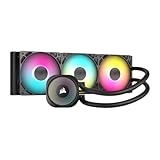
- Simple, High-Performance All-in-One CPU Cooling: Renowned CORSAIR engineering delivers strong, low-noise cooling that helps your CPU reach its full potential
- Efficient, Low-Noise Pump: Keeps your coolant circulating at a high flow rate while generating a whisper-quiet 20 dBA
- Convex Cold Plate with Pre-Applied Thermal Paste: The slightly convex shape ensures maximum contact with your CPU’s integrated heat spreader, with thermal paste applied in an optimised pattern to speed up installation
- RS120 ARGB Fans: RS ARGB fans create strong airflow and high static pressure, with easy ARGB control via a compatible motherboard. CORSAIR AirGuide technology and Magnetic Dome bearings ensure great cooling performance and low noise
- Easy Daisy-Chained Connections: Reduce the wiring in your system by daisy-chaining your RS ARGB fans and connecting them to just one 4-pin PWM fan header and one +5V ARGB header
VRMs were often the limiting component
FX overclocking places sustained demand on the motherboard’s voltage-regulation circuitry. A board can show a high multiplier while reducing effective performance when VRMs become too hot or reach a power-delivery limit. The processor may remain within its reported temperature range while the board intervenes.
- One FX-8310 user attributed limitations to the GA-970-DS3P’s 4+1 power design.
- Another participant said a 6+2 board began throttling during extended Prime testing and regarded an 8+2 board as more suitable for a 5 GHz attempt.
- Additional airflow directed at the VRM area was reported to improve behavior.
These are user observations and rules of thumb, not universal certification requirements. Phase count alone does not describe MOSFET quality, heatsinking, firmware behavior or airflow.
Stability tests in the thread were not equivalent
Contributors used NQueen, AIDA64, Prime95, LinX and CPU-Z benchmarks. They also requested one hour of Prime95 using 768–900K in-place FFTs, while later testing used large out-of-place FFTs with substantial memory allocation. Each workload stresses a different combination of cores, cache, memory, power delivery and cooling.
Rank #3

- CONTACT FRAME FOR INTEL LGA1851 | LGA1700: Optimized contact pressure distribution for longer CPU life and better heat dissipation
- ARCTIC's P12 PRO FAN: More power at any speed - more powerful and quieter than the P12, especially at low speeds. Higher maximum speed for optimal cooling performance under high load
- NATIVE OFFSET MOUNTING FOR INTEL AND AMD: Shifting the cold plate center towards the CPU hotspot ensures more efficient heat transfer
- INTEGRATED VRM FAN: PWM-controlled fan that lowers the temperature of the voltage converters and thus ensures reliable performance
- INTEGRATED CABLE MANAGEMENT: The PWM cables of the radiator fans are integrated in the sheathing of the hoses so that only a single visible cable is connected to the motherboard
A later FX-8370E report passed one hour of in-place 768–900K testing at 4.7 GHz but failed when large FFTs were run out of place with 13.5 GB of RAM. Passing one test therefore did not establish universal stability. A useful report should state the exact workload, duration, memory allocation, active cores, errors and whether clocks remained effective rather than merely requested.
Why temperature numbers cannot be ranked directly
The thread mixes open-test-bench and enclosed-case conditions, different room temperatures, fan speeds, airflow paths, sensors and workloads. “CPU temperature” may mean a core/package reading or a socket reading, and throttling can lower the reported peak by reducing power before the test finishes.
A reported 55°C at 5.1 GHz on a Wraith cooler was considered implausible by several participants unless the workload was brief, the clock was not sustained or the sensor did not represent the relevant thermal condition. The strongest late-thread counterexample was a detailed 4.7 GHz FX-8370E test using a custom loop:
Rank #4

- 【Better Cooling】 The cooler adopts the fourth generation pump head + 240 cold row size black aluminium fin heat sink plate + protective preparation mesh water pipe + standard configuration 120mm ARGB fan, to create a low vibration, high heat dissipation, low evaporation, high life span of the one-piece water-cooled cooler area unit.
- 【Unique Pump Head】 The octagonal shaped cold pump head adopts the exclusive frame of the 4th generation water pump, the swirling rectangle design and the ARGB halo under the logo luminous marking creates a colourful visual experience, and the life of the cold pump head is up to 40,000 hours with a rotation speed of up to 2800 RPM ± 10%, which ensures that the CPU is provided with excellent heat dissipation for a long period of time
- 【Excellent LED Lighting Effect】Fan and water-cooling header ARGB sync with 5V 3pin on the motherboard to achieve light sync, 1600W colour soft light effect, efficient cooling while providing rich light effect, support light effect series and motherboard sync to avoid insufficient light interface.
- [CPU Fan Parameters]Equipped with dual-fan TL-C12B-S V2, Speed:1500RPM±10%, size: 120x120x25mm, fan noise≤25.6dBA, power supply interface: 4PIN PWM, light interface: 5V/3PIN ARGB, airflow: 66.17CFM(MAX), with PWM and ARGB function, can automatically adjust the speed according to the CPU temperature, provide strong airflow and lower noise, ARGB light colour can be manually adjusted.
- 【Convenient Installation】 AIO cooler compatibility, support AMD & Intel slots, support AMD: AM4/AM5, Intel: lga1150/1151/1155/1156/1200/1700, comes with accessories that can be installed on the corresponding platforms, the installation is simple, can be installed according to the instructions and tutorials.
| Measurement | Reported value |
|---|---|
| CPU maximum | 52.8°C |
| Northbridge maximum | 45°C |
| VRM maximum | 89°C |
| Maximum reported power | 181 W |
| Average Vcore | 1.449 V |
Despite the low CPU temperature, the VRM approached 89°C, and longer, more demanding testing failed. This is why CPU temperature alone is inadequate for judging an AM3+ overclock.
Independent reader supportYour contribution helps us test, update, and keep practical guides available for everyone.FX-8370E versus FX-8370: what can—and cannot—be inferred
One participant tested two FX-8370s and an FX-8370E across more than one motherboard and reported considerably lower benchmark performance from the E-model even when clocks were similar. Motherboard and chipset effects were suggested, but cross-board testing made it difficult to assign the difference solely to one board.
Do these 3 things before closing this tab:
1Scan for outdated or missing drivers - takes under a minute2Clear out junk files and repair common Windows errors3Fix the driver behind crashes, sound loss and screen glitchesThe thread supports sample variation, not a product-wide verdict that every FX-8370E is worse or every FX-8370 is better. Individual silicon, firmware, memory, bus, northbridge and HT settings all matter.
Best Value

- Simple, High-Performance All-in-One CPU Cooling: Renowned CORSAIR engineering delivers strong, low-noise cooling that helps your CPU reach its full potential
- Efficient, Low-Noise Pump: Keeps your coolant circulating at a high flow rate while generating a whisper-quiet 20 dBA
- Convex Cold Plate with Pre-Applied Thermal Paste: The slightly convex shape ensures maximum contact with your CPU’s integrated heat spreader, with thermal paste applied in an optimised pattern to speed up installation
- RS120 ARGB Fans: RS ARGB fans create strong airflow and high static pressure, with easy ARGB control via a compatible motherboard. CORSAIR AirGuide technology and Magnetic Dome bearings ensure great cooling performance and low noise
- Easy Daisy-Chained Connections: Reduce the wiring in your system by daisy-chaining your RS ARGB fans and connecting them to just one 4-pin PWM fan header and one +5V ARGB header
How to grade an old overclocking claim
Stronger evidence
- Effective-clock monitoring captured during the workload, preferably per core.
- A benchmark score that is consistent with the claimed sustained frequency.
- Load Vcore, not only the BIOS setting, with load-line calibration disclosed.
- VRM temperature, CPU temperature, power and throttling indicators.
- Defined duration, workload, ambient temperature and case or test-bench conditions.
- No crashes, calculation errors or corrected hardware errors.
Weaker evidence
- An idle CPU-Z screenshot or multiplier validation.
- A benchmark lasting seconds.
- “Stable” without a named test and duration.
- Temperature figures without ambient, airflow or sensor definitions.
- BIOS multiplier values presented as effective all-core frequency.
- Open-bench results presented as ordinary enclosed-case daily use.
Label results explicitly as a maximum screenshot clock, bootable clock, short-benchmark clock, one-hour stress-test clock, long-duration stable clock, daily-use claim or unverified forum claim. That vocabulary prevents a spectacular but transient number from being mistaken for a reproducible operating point.
The thread’s historical significance
In 2016, enthusiasts were extracting new performance from an aging AM3+ platform while AMD’s updated Wraith cooler renewed interest in late Vishera chips. The discussion shows how community scrutiny can improve technical accuracy: a headline multiplier prompted questions about benchmark duration, effective clocks, VRM temperatures and workload choice.
It is best read as a snapshot of enthusiast practice, not a modern buying guide or a controlled silicon survey. Anyone recreating it would need monitoring software such as CPU-Z, HWMonitor or HWiNFO, plus a defined stress workload such as Prime95. Used AM3+ boards also carry risks from aging components, unknown prior voltage and obsolete firmware.
Quick wins for a faster PC:
Repair Windows errors before they cause bigger problemsFix Now →Fix the driver behind crashes, sound loss and screen glitchesFind Drivers →Clear out junk files and repair common Windows errorsFree Scan →Verdict
The AnandTech thread documents what particular FX processors could sometimes display, boot or benchmark at. It does not prove that a typical FX-8370E or FX-8370 could run 5.0–5.1 GHz stably on a stock Wraith cooler. The most defensible reading of the disputed 5.1 GHz entry is an unverified high-clock claim whose benchmark behavior may have reflected throttling or a lower effective frequency. The detailed 4.7 GHz report, with 89°C VRMs and failure in more demanding testing, better illustrates the platform’s real constraints.
Quick Recap
Product prices and availability are accurate as of the date/time indicated and are subject to change. Any price and availability information displayed on Amazon at the time of purchase will apply.

