
The Tool Desk
Outbyte PC Repair FREERepair Windows errors before they cause bigger problemsFix Now →Outbyte Driver Updater FREEFix the driver behind crashes, sound loss and screen glitchesFind Drivers →iTechGuides is reader-supported. When you buy through links on our site, we may earn an affiliate commission. As an Amazon Associate I earn from qualifying purchases. Learn more
Electronic Design’s Testing the Limits of Test and Measurement is a five-chapter special report about making testing part of electronic product development—from PCB prototypes through manufacturing. Published April 4, 2024, with a downloadable eBook dated April 3, it covers board test access, power-integrity probing, PXI/PXIe systems, repeatable wireless testing and the software tools used in safety-critical embedded development.
Why the report argues for testing throughout development
The report’s central point is that testing should not be saved for the end of a design cycle. Testing during prototyping can help engineers find faults while a design is still being changed; later testing can help confirm performance and support manufacturing. As Electronic Design senior staff editor James Morra puts it, “Instead of leaving it to the end of the development cycle, testing is becoming more of a forward-looking process that is necessary at every step from prototyping to manufacturing.”
That means test has two jobs: checking whether a device works under real-world conditions and helping tune its performance. The report treats testability as a design consideration, not simply a final inspection task.
What the five chapters cover
| Chapter focus | Problem addressed | Approach described |
|---|---|---|
| PCB test-point design | Dense, highly integrated boards can be difficult to probe and diagnose. | Plan for test access so engineers can evaluate components and distinguish possible part faults from poor attachments. |
| Power integrity | Measuring very low impedance in a power-distribution network is demanding. | Discuss advanced probes and a two-port shunt-through method for output-impedance measurement. |
| PXI/PXIe systems | Test applications may need configurable instruments and room to expand. | Explain modular systems built from a controller, chassis and peripheral cards, including PXIe’s PCIe bus. |
| Conducted RF testing | Wireless tests need controlled, repeatable conditions that reflect field-like scenarios. | Use RF components and channel matrices to create test paths and reproduce logged failure conditions. |
| Safety-critical software tools | Embedded software tools used in automotive and other safety-critical work also need testing. | Address testing those tools; Solid Sands is identified as the chapter contributor. |
How to design a PCB for test
The report’s PCB chapter starts from a practical constraint: as boards become more integrated and crowded, engineers have fewer convenient places to probe. Designing in test capability gives a team access to signals and components it may need to evaluate during debugging or manufacturing checks.
#1 Best Overall
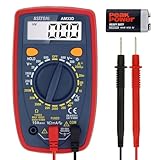
- Additional Tips - The following incorrect operations may cause the multimeter not to show results: Firstly, the plugs of test leads are not fully inserted or not inserted into the correct sockets. Secondly, the manual rotary switch is not placed in the correct position. In addition, this meter can not test all AC Current and below 100mV AC Voltage. Please check the user manual carefully before measurement.
- Versatile Digital Multimeter - Accurately measures AC/DC Voltage, DC Current, Resistance, and Diode. This Multimeter is a really useful tool for solving industrial and household electrical issues. Suitable for Household Outlets, Fuses, Batteries (including Vehicles), Automotive Circuit Troubleshooting, Charging Systems, Testing electronics in Cars etc.
- Troubleshooting with Accuracy - This Multimeter has a sampling speed of 2 times per second; Built-in a backlight LCD display with 3 ½ digits (1999 count) 0.6”, and high polarity including negative and positive readings.
- Ensures Safety - Double fuse is anti-burn and protects from overloading. The silicone cover can protect the multimeter from failing damage and prevent electric shocks. And low battery indication will be displayed when battery power is low.
- Ease of Use - Support Data Hold and Continuity Buzzer. Includes Convenient feature like LCD Backlit Screen makes it easy to use in dimly light areas. Batteries/Set of Test Leads/User Manual are Included.
Broad probing access can also help narrow down the cause of a failure. A test result may point toward a defective component or an attachment problem, rather than leaving the engineer with only a board-level pass/fail result. The report does not prescribe a universal test-point layout or spacing rule; the useful design principle is to consider which points must remain physically reachable for the tests the board will require.
What probe is needed for power-integrity measurements?
Power-integrity work often requires measuring the impedance of a power-distribution network (PDN) at very low levels. The chapter by Rohan Phadke of Arista Networks and Picotest’s Steve Sandler and Charles Hymowitz discusses specialized probing for that task. It describes a two-port shunt-through measurement as the gold standard for measuring sub-milliohm output impedance.
Rank #2
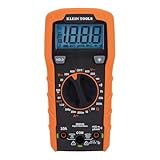
- VERSATILE FUNCTIONALITY: Measures AC/DC voltage up to 600V, 10A DC current, 2MΩ resistance; additional features include continuity, diode test and battery test
- LEAD-ALERT PROTECTION: LEDs on the meter illuminate to indicate proper test lead placement, enhancing accuracy and safety during measurements
- BACKLIT DISPLAY: LCD shows clear readings in low-light conditions for enhanced visibility
- BATTERY TEST: Battery test mode can be used for checking if batteries are working
- CONVENIENT FEATURES: Test lead holders on the back of the meter, kickstand and optional magnetic hanger (Cat. Nos. 69445 or 69417) for hands-free operation
The report also illustrates a two-port PDN probe. It includes setup-specific examples of a 1.2 μΩ Kelvin-sense result and approximately 25 dB of common-mode rejection in a probe example. These are illustrations tied to the described measurement setup, not general performance guarantees or benchmarks for every probe, instrument or PDN.
Recommended Free Tools
For a measurement choice, the key implication is to match the probe and measurement method to the impedance range and setup. Physical access and grounding matter as well as the instrument’s bandwidth and accuracy; a probe figure by itself does not establish what a different configuration will measure.
Rank #3

- Versatile Digital Multimeter - Accurately measures AC/DC Current, AC/DC Voltage, Capacitance, Frequency, Duty Cycle, Resistance, Diode, Continuity and Temperature.
- Thoughtful Design - Support Data Hold, Large LCD Backlit Screen, Auto Shut-off and Kickstand make the process of measurements easier. Professional level is reflected in some features include Auto-Ranging capability, and True RMS for measuring both AC Current and Voltage.
- Suitable For Many Occasions - This Multimeter is a golden partner to help to troubleshoot a variety of automotive and household electrical problems safely and accurately.
- Ensure Safety - Double ceramic fuse is anti-burn and protects from overloading,and it will be more secure and reliable; F400mA/600V and F10A/600V explosion-proof ceramic fuse tubes can protect the multimeter effectively.
- Additional Tips - Please take off the cap before using the test leads. Check the manual for more usage information.
What are PXI and PXIe systems?
A PXI test system combines a controller, a chassis and peripheral cards. PXIe adds a PCIe bus. The report describes PXI/PXIe as open-standard modular platforms used in fields including aerospace, automotive, consumer electronics, process control and industrial automation.
Christian Ganninger, global product manager at nVent SCHROFF, discusses how PXIe systems support different generations, bandwidths and applications. The modular format allows a system to be assembled from cards in a chassis rather than being limited to one fixed instrument configuration. When evaluating a platform, readers should consider required measurement performance, available cards and slots, expansion needs, and the integration effort of the complete system; the report does not provide a single cost or configuration comparison.
Rank #4

- Accurately Test Full Features: Accurately measures AC/DC voltage, DC current, resistance, continuity test, diode and batteries.
- High Quality & Safety :Our multimeter is designed to safely and accurately troubleshoot a variety of automotive and household electrical problems. Overload Protection on all ranges to ensure long-term service life,Low Battery Indication, Audible continuity sensor checks that the circuit or wires conduct electricity. Double insulation with a good angled stand for hand free use.
- EASY TO USE: 2.7"Large Backlit LCD Display, Data Hold, Easy to Read Large Back-light Screen forvisibility in dimly light areas. Our mutimeter tester is widely used in Car repair, Homeuse, Schools, laboratories, Families and factories, suitable for Car Drivers, Beginners,Professional Electricians, Housewives, Students Use.
- Nice Protective Orange Shell with Stand Built: Our digital multimeter can be hand held or stood using its fold out stand. Removable thick rubber cover is made of kind of non-slip slightly soft plastic that will help with drop protection & minor bumps protection.
- 2 YEARS Quality Guarantee & Included 9V Battery: The compartment lid at the back is easy to remove. Battery/Set of Test Leads/User Manual are Included.They guarantee against faulty materials and workmanship for 2 years-giving you total peace of mind. If there is any issue within24 months of your purchase, we will replace it for vou with no doubt.
How can wireless testing be made repeatable?
Conducted RF testing uses a wired test path to create controlled conditions for a wireless device. Stephen Martin, director of marketing at Spectrum Control, describes arrangements that can include attenuators, phase shifters, filters, power dividers or combiners, couplers, antennas, coaxial lines and channel matrices.
What’s actually slowing this PC down?
Pick the symptom - the matching free tool is one click away.
The purpose is not simply to connect RF components, but to create conditions that can be repeated and to record the circumstances around a failure. Logging those conditions lets engineers reproduce an issue and compare behavior across tests. The specific component mix depends on the scenario being recreated; the report does not set out one universal RF test configuration.
Best Value

- VERSATILE FUNCTIONALITY: Measures AC/DC voltage up to 600V, 10A AC/DC current, 50MΩ resistance; additional features include continuity, temperature, capacitance, frequency/duty cycle and diode test
- LEAD-ALERT PROTECTION: LEDs on the meter illuminate to indicate proper test lead placement, enhancing accuracy and safety during measurements
- BACKLIT DISPLAY: LCD shows clear readings in low-light conditions for enhanced visibility
- ACCURATE MEASUREMENTS: Auto-ranging and True Root Mean Squared (TRMS) technology provides precise and accurate measurements
- CONVENIENT FEATURES: Test lead holders on the back of the meter, kickstand and optional magnetic hanger (Cat. Nos. 69445 or 69417) for hands-free operation
Why test software tools for safety-critical embedded systems?
Embedded software tools help create software for automotive and other safety-critical systems. The report includes a chapter on testing those tools, contributed by Solid Sands. This extends the report’s test-through-development argument beyond circuit boards and instruments: the software environment used to build embedded products is itself part of the development chain that warrants scrutiny.
The report identifies the subject and contributor, but does not provide a detailed qualification procedure, compliance checklist or comparative assessment of tool vendors. It therefore serves as an introduction to the issue rather than a standalone guide to qualifying a particular toolchain.
What the report is—and is not
This is an industry special report, not a comparative laboratory evaluation of probes, PXI/PXIe platforms, RF components or software-testing products. Its chapters present application areas and approaches through named contributors, including representatives of Arista Networks, Picotest, nVent SCHROFF, Spectrum Control and Solid Sands. Use it to understand why these testing problems matter and what categories of methods are involved; product selection and implementation require requirements and evidence specific to the reader’s setup.
Quick wins for a faster PC:
Scan for outdated or missing drivers - takes under a minuteDriver Scan →Clear out junk files and repair common Windows errorsFree Scan →Quick Recap
Product prices and availability are accurate as of the date/time indicated and are subject to change. Any price and availability information displayed on Amazon at the time of purchase will apply.

