
iTechGuides is reader-supported. When you buy through links on our site, we may earn an affiliate commission. As an Amazon Associate I earn from qualifying purchases. Learn more
Tenant-aware load shedding means deciding, tenant by tenant, which work to slow, defer, or reject when demand threatens shared capacity, so that one customer’s spike does not push every other tenant past its service targets. It works only when four things are in place together: tenant context in your telemetry, limits enforced at each shared bottleneck rather than only at the edge, capacity that can absorb bursts while scaling catches up, and isolation applied where a bottleneck actually sits. The sections below take these in the order a design team needs them, with the AWS guidance behind each one and the limits of that guidance.
The question the design has to answer
AWS’s Well-Architected SaaS Lens asks the question directly under its PERF 1 best practice: “How do you prevent one tenant from adversely impacting the experience of another tenant?” This is the noisy-neighbor problem. In a pooled system, one tenant running a large bulk import, a storm of client retries, or an unusually expensive query can consume worker threads, database connections, queue slots, or inference capacity that other tenants also depend on.
The answer is not to make the platform refuse more work across the board. It is to know which tenant is generating the load, which shared resource is under pressure, and what that tenant’s tier entitles it to. Load shedding that ignores tenant identity treats a single heavy customer and a healthy majority the same way, and that is how one tenant ends up degrading everyone.
PC Slower Than It Used to Be?
A free scan shows the junk files, broken settings and background clutter dragging Windows down - then fixes them in one click.Free scan · Windows 10 & 11Outdated Drivers Are Slowing You Down
One free scan finds every outdated or missing driver and matches the right update for your exact hardware.Free scan · exact hardware matchMake tenant identity part of your telemetry
The Foundations section of the SaaS Lens calls for tenant-aware reliability data. In practice, every request, log line, trace span, and queue message carries a tenant identifier, and dashboards can break each metric down by tenant. The signals worth recording are:
#1 Best Overall

- Save valuable floor space: 6U wall mount server cabinet Dimensions: 13.78" H x21.65" W x17.72" D.Maximum mounting depth is 14.2"
- Keep critical network equipment secure: glass door and side panels are lockable to prevent unauthorized access. Front door can be installed on either side of the front of the cabinet to satisfy your door swing orientation preference
- Easy equipment configuration: Fully adjustable mounting rails and numbered U positions, with square holes for easy equipment mounting with top and bottom punch-out panels for easy cable access
- Durability: Made of high quality cold rolled steel holds up to 110lb (50kg) (Easy Assembly Required)
- PCI & HIPPA and EIA/ECA-310-E compliant
- Consumption per tenant, measured in whatever unit your system meters: requests, compute time, storage, or messages.
- Latency per tenant, captured at the same points in the request path for every tenant so comparisons are fair.
- Throttle and rejection rates per tenant and per tier, so you can see which limits are being hit.
- Error rates per tenant, separated from errors the platform itself causes.
- Scaling behavior, including how long new capacity takes to arrive after demand rises.
Alerts should fire on tenant-relative conditions: a tenant exceeding its own limit, one tenant’s latency climbing while the platform average stays flat, or a shared resource saturating while a single tenant accounts for most of its consumption. Alerts keyed only to platform-wide averages hide the event you most need to see, because one heavy tenant can dominate a shared resource while the aggregate looks healthy.
Map the shared bottlenecks before setting any limit
Limits belong where a tenant’s load meets a shared resource. AWS’s guidance names compute, storage, messaging, APIs, inference, memory, and tools as the kinds of components where tenant-specific load can affect other tenants. Which of them matter depends on your architecture, so the first task is an inventory of what is shared and how much concurrent work each shared component can absorb.
The AWS Agentic AI Lens (best practice AGENTPERF07-BP02) makes one point that applies well beyond agentic workloads: a gateway at the edge is not enough. A gateway can protect the front door, but work that continues downstream, such as a long-running job, an inference call, a memory read, or a tool invocation, may never pass through that gateway again. The Lens calls for controls at the API, inference, memory, and tool layers. The table below uses its layers as a starting pattern; replace them with the shared components in your own stack.
Free tools Windows power users keep installed
One-click scans. No signup required.
| Layer | Typical shared resource | Tenant-aware control to evaluate | Failure if it is missing |
|---|---|---|---|
| API ingress | Gateway or API front end | Usage plans, or per-tenant rate, burst, and quota limits | One tenant’s retries reach the back end at full volume |
| Inference or heavy compute | Model endpoints, worker pools | Tenant-aware queues and concurrency limits on in-flight calls | One tenant’s concurrent calls occupy every available slot |
| Memory or state stores | Shared caches, session or memory stores | Per-tenant rate limits on reads and writes | One tenant’s access pattern saturates data other tenants need |
| Tool or downstream endpoints | Internal or third-party services called by workflows | Per-tenant rate limits on outbound calls | One tenant’s workflow exhausts a dependency’s limits for everyone |
| Storage and messaging | Databases, queues, object stores | Per-tenant quota or concurrency cap; AWS’s guidance gives the pattern, not a value | One tenant’s bulk writes delay other tenants’ messages |
Set policy by tenant tier at each layer
Once the layers are mapped, set policy by tenant or service tier at each one. The AWS guidance presents these controls as implementation patterns:
- Rate and burst limits cap sustained request rate and allow short spikes up to a defined ceiling.
- Quotas cap total consumption over a period, which suits tiers sold on volume.
- Concurrency limits cap simultaneous in-flight work, and matter most for long-running or expensive operations.
- A global protection mechanism sits above tenant policies, so the platform stays within capacity even when every tenant respects its own limit at the same moment.
Choose the response by failure mode
Shedding is one of three responses to overload. Choose based on what is actually failing.
Rank #2

- Universal 19” Rack Mount Compatibility – Perfect for pro audio, video, IT, and network gear. Compatible with mixers, routers, patch panels, servers, power amps, and more.
- Heavy-Duty Load Capacity – Built to support up to 550 lbs. Ideal for studio gear, DJ setups, server equipment, and AV components that demand serious stability.
- Robust Steel Frame & Design – Made with 1.5mm thick steel and weighs 36 lbs for maximum durability, reduced vibration, and long-term reliability in any setting.
- Mobile & Secure – Preinstalled with 3” industrial-grade caster wheels (lockable), making it easy to move and position your rack exactly where you need it.
- All-In-One Setup Kit Included – Comes with 34 rack screws (5mm & 6mm), a 1U blank spacer, and an assembly tool—ready for fast installation out of the box.
Throttle or defer the tenant’s work
Use this when a tenant exceeds its entitlement or a shared resource has no spare capacity. Deferred work goes into a tenant-aware queue and runs when capacity returns; work that cannot be deferred receives a clear rejection. Keep the queue per tenant or per tier, so one tenant’s backlog does not sit in front of everyone else’s work.
Add capacity and keep a cushion
Use this when the load is legitimate and the platform can scale to meet it. Scaling takes time, so the SaaS Lens recommends a capacity cushion to absorb bursts while new capacity starts. Scaling alone is not protection: if it lags a spike, something else must still limit the tenant responsible.
Recommended Free Tools
Isolate the bottleneck
Use this when one resource is repeatedly overloaded by one tenant’s pattern, and limits alone would penalize too many tenants to be acceptable. The isolation options are compared below.
The SaaS Lens REL 1 guidance recommends limiting tenant impact with throttling and scaling strategies together. Throttling without scaling can leave legitimate customers waiting; scaling without throttling means one tenant’s spike drives up capacity and cost for everyone, with no protection while scaling lags.
Pooled, siloed, or hybrid
Isolation is a cost decision as much as a reliability one. AWS’s pool isolation guidance, whose document history gives a publication date of 2020-08-01, sets out the trade-offs of pooled models.
Rank #3

- ADJUSTABLE DEPTH: 4- Post 22U 19" server rack enclosure with 4 vertical rails and adjustable mounting depth 5.7" to 33.0" (14,4cm to 83,8cm); IT rack is compatible with various servers / switches / data / video / AV and other IT networking equipment
- EASY SHIPPING AND ASSEMBLY: Enclosed 22U data rack cabinet ships compact flat-packed to avoid damage and facilitate installation; Include wheels & levelling feet to offer more stability; Home server rack cabinet is only 46.6in (118,3cm) in height
- DESIGN AND VENTILATION: Half height server rack cabinet has lockable and removable door and side panels with vented top allowing airflow; 4 Post 19" rack with 1764lb (800kg) weight capacity (stationary); Computer cabinet rack is EIA/ECA-310-E Compliant
- HARDWARE INCLUDED: Rolling home network rack includes rack mounting and equipment mounting hardware, such as 20 M6 cage nuts / screws, PVC cup washers; Front/rear doors and side panels Keys, 2x allen keys; Rack assembly hardware; Casters and leveling feet
- THE IT PRO'S CHOICE: Designed and built for IT Professionals, this 22U IT Server Cabinet is backed for life, including free lifetime 24/5 multi-lingual technical assistance
| Option | Benefits to weigh | Costs and risks to weigh |
|---|---|---|
| Pooled resources | Dynamic use of shared capacity, simpler fleet operations, cost efficiency | Noisy-neighbor effects, harder per-tenant cost attribution, shared blast radius, possible compliance objections |
| Targeted silo at a bottleneck | Limits impact to the layer creating the problem while the rest stays pooled | Added architecture and operating complexity; the real bottleneck must be identified first |
| Broader tenant silo | Can reduce one tenant’s failure impact on others and can meet specific business or isolation requirements | Higher cost and operational burden, growing with tenant count |
The practical default is a pooled system with targeted silos at the layers that repeatedly fail under skewed load. Confirm the bottleneck with per-tenant data before you split it, because a silo at the wrong layer adds operating cost without fixing the problem. A broader tenant silo is justified when that tenant’s contract, compliance needs, or workload spans the stack.
Static or adaptive limits
Static limits are fixed values per tier. Adaptive limits let a tenant use spare capacity and tighten when the system is under stress. AWS’s Agentic AI Lens describes adaptive throttling as a recommended pattern, but it is not a universal algorithm specification.
| Approach | Benefits to weigh | Costs and risks to weigh |
|---|---|---|
| Static limits | Simple to reason about, configure, and explain to customers | Can waste capacity in low-load periods, and can fail to protect other tenants during high load |
| Adaptive limits | Allow bursts into available capacity while tightening controls during system stress | Requires trustworthy load signals, careful policy design, and validation before it is trusted in production |
A workable sequence is to start with static tier limits that customers can understand, then move specific layers to adaptive limits once the telemetry from the previous section is reliable enough to drive them.
Independent reader supportYour contribution helps us test, update, and keep practical guides available for everyone.Worked example: tiered REST APIs with API Gateway usage plans
AWS’s 2022 implementation article by Nick Choi, published on the AWS Architecture Blog on 6 May 2022, shows how a tiered, multi-tenant REST API can be throttled using Amazon API Gateway usage plans. The pattern has two parts:
- Define a usage plan for each tier, setting throttling thresholds and a quota.
- Issue each tenant an API key. The key identifies which usage plan applies to that tenant’s requests.
The article’s scope is REST APIs. It explicitly notes that API Gateway WebSocket and HTTP APIs use different throttling mechanisms, so a configuration built for REST APIs does not carry over unchanged to those protocols.
Quick wins for a faster PC:
Clear out junk files and repair common Windows errorsFree Scan →Fix the driver behind crashes, sound loss and screen glitchesFind Drivers →Rank #4
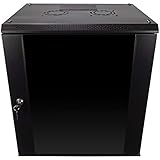
- DURABLE BUILD: Constructed from high-quality Cold Rolled Steel, the NavePoint Consumer Series 12U network cabinet boasts a sturdy, welded frame. Fitting EIA standard 19” networking equipment, this server cabinet confidently supports up to 110 lbs, providing a resilient base for your vital IT gear and equipment
- CONVENIENT DESIGN: This 12U cabinet features a reinforced, heat-treated, tempered glass front door with a security lock. Perfect for applications requiring both security and accessibility, its compact design of 17.72"L x 21.65"W x 24.42"H offers a practical solution for space-constrained settings.
- EASY & CUSTOMIZABLE EQUIPMENT SET UP - The 12U IT cabinet, with removable side panels and security locks, offers customization at its finest. Whether it's for an efficient device or cable management, this data cabinet ensures secure, adaptable configurations that suit your networking server requirements
- ENHANCED VENTILATION & SECURITY - Built-in fans and flow-through ventilation work to prevent overheating, ensuring optimal operation of your equipment. The reinforced, lockable tempered glass front door not only boosts security but also facilitates easy monitoring of installed equipment.
- SAFETY & COMPLIANCE - All NavePoint products are built to industry standards.
Give throttled tenants clear feedback
A rejected or deferred request should tell the client what happened and what to do next. For REST APIs, that usually means an HTTP 429 Too Many Requests response with a retry hint. Deferred work should expose its status through the same API so tenants can see that it is queued rather than lost. Make the response name the limit that was hit (rate, burst, quota, or concurrency), because a burst problem and a monthly-volume problem call for different responses from the customer. Log every feedback event per tenant. These events are often the first sign that a limit is set too low for a legitimate workload.
Prove the controls under skewed load
Test noisy-neighbor behavior before tenants find the gaps. AWS’s Agentic AI Lens calls for regular noisy-neighbor load tests. A useful test plan covers these points:
- Drive one tenant well above its limit while the rest of the platform runs a realistic mix of traffic.
- Include real tenant workflows, especially long-running and downstream work that can bypass edge limits.
- Exercise each tier’s limit behavior, including what happens at the burst ceiling and when a quota is exhausted.
- Measure per-tenant latency, throttle rate, and error rate for the non-heavy tenants, not only for the tenant generating the load.
- Repeat the test after any change to limits, scaling policy, or isolation.
A test that only confirms the heavy tenant gets throttled has not shown that everyone else is protected.
Reassess limits as the tenant mix changes
Limits go stale. A tier that was generous when the largest tenant was small can become a bottleneck after a major customer onboards or a workflow changes. AWS’s 2022 implementation article states that throttling and quota impact should be monitored and evaluated as tenant composition and behavior evolve. Put that review on a schedule, and also run it after each large tenant onboarding, each major workflow release, and each change to scaling policy. A rise in another tenant’s latency that coincides with a heavy tenant’s throttle rate is a reliable trigger for review.
What the guidance does not settle
AWS’s material provides design patterns, metrics, and test dimensions. It does not provide universal request rates, queue policies, load-shedding algorithms, or SLA values, and it is not a neutral comparison across cloud providers. The Agentic AI Lens is scoped to agentic AI, and the REST API example is scoped to REST APIs, so the layers and limit types here translate to your stack only after you map its real shared resources. The numbers come from your own measured load and from the service objectives you publish. AWS documentation is revised over time, so check the live version of each Lens or article before relying on a specific recommendation.
Quick Recap
Product prices and availability are accurate as of the date/time indicated and are subject to change. Any price and availability information displayed on Amazon at the time of purchase will apply.

