
Quick wins for a faster PC:
Clear out junk files and repair common Windows errorsFree Scan →Fix the driver behind crashes, sound loss and screen glitchesFind Drivers →Repair Windows errors before they cause bigger problemsFix Now →iTechGuides is reader-supported. When you buy through links on our site, we may earn an affiliate commission. As an Amazon Associate I earn from qualifying purchases. Learn more
A Fitbit can sync with an iPad when the tablet and the Fitbit model are both supported and the sync runs through the Google Health app, with Bluetooth on and the iPad connected to the internet. Google’s current requirements list iOS 16.4 or later and say the app works on most phones and tablets. That is not a guarantee that every iPad and every Fitbit model will work, so check the model-specific setup flow before you start. The steps below cover setup, the most common reasons a sync fails, and the order in which to try fixes.
Check compatibility before you set up
Google lists iOS 16.4 or higher as the minimum operating system for its app. Google also warns that some devices can have compatibility issues, so an iPad that meets the iOS version may still fail with a particular Fitbit model. Confirm two things first:
| # | Preview | Product | Price | |
|---|---|---|---|---|
| 1 |

|
Google Fitbit Air - Screenless Activity Tracker, Obsidian | $99.99 | Buy on Amazon |
| 2 |

|
Google Fitbit Air - Screenless Activity Tracker, Berry | $99.99 | Buy on Amazon |
| 3 |
|
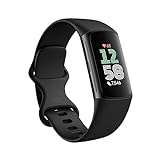
Google Fitbit Charge 6 - Fitness Tracker - Obsidian/Black | $132.50 | Buy on Amazon |
- iPadOS version: Open Settings > General > About (or Settings > General > Software Update) and confirm the iPad runs iOS/iPadOS 16.4 or later.
- Fitbit model: Look up your exact model in Google’s setup documentation. Compatibility is model-specific, and the steps can differ between models.
Google’s support pages are regularly updated and the retrieved versions do not show publication dates, so treat the minimum version as the one stated at the time of writing (October 2026) and re-check it if your setup differs.
Set up the Fitbit through the Google Health app
Do not pair the Fitbit from the iPad’s Bluetooth screen. Google’s guidance is to start from the app, because the app handles account sign-in and device registration that a bare Bluetooth pairing does not.
#1 Best Overall
- Google Fitbit Air is the unbelievably comfortable, exceptionally smart way to transform your health[1]; and Google Health brings together effortless tracking and adaptive coaching to help make the most of your everyday[2]
- Unlock more with Google Health Premium: With a premium membership, get personalized coaching that’s built with Gemini and adapts to your life[2]; get a 3-month trial at no cost to you[5] (Google Health Premium subscription sold separately)
- Comfortable fit - One Size Tracker (130-210 mm): The lightweight, micro-adjustable fit sits comfortably and quietly, so you can wear Google Fitbit Air through work, play, and sleep; advanced sensors and new algorithms power more accurate, precise health tracking, 24/7[1]
- Designed for every occasion: With no screen to distract you or disrupt your style, your tracker moves seamlessly from bracelet to workout band to sleep band, and you can change looks in seconds – just press the pebble in, click, and go
- Long battery life: Google Fitbit Air’s battery lasts up to a week, and fast charging gets you one day of battery life in just five minutes[6,7]
- Install the Google Health app from the App Store on the iPad and open it.
- Sign in with your Google account.
- Select the option to add a device, then choose your Fitbit model.
- Follow the on-screen instructions. Keep the Fitbit close to the iPad and make sure Bluetooth is turned on.
- Approve the pairing request when it appears.
Once the setup finishes, the Fitbit should appear as a device entry inside the app. If it does not appear, move to the troubleshooting sequence below rather than repeating setup, because repeated pairing attempts can leave stale connections behind.
Why a Fitbit will only sync with one device
Google’s iPhone and iPad sync troubleshooting states: “Your Fitbit device can only sync with one device at a time.” This is the most common hidden cause of a failed sync on an iPad. If a phone or another tablet nearby is signed into the same account, or still holds an active Bluetooth pairing with the Fitbit, the iPad may appear connected while data never reaches it.
Rank #2
- Google Fitbit Air is the unbelievably comfortable, exceptionally smart way to transform your health[1]; and Google Health brings together effortless tracking and adaptive coaching to help make the most of your everyday[2]
- Unlock more with Google Health Premium: With a premium membership, get personalized coaching that’s built with Gemini and adapts to your life[2]; get a 3-month trial at no cost to you[5] (Google Health Premium subscription sold separately)
- Comfortable fit - One Size Tracker (130-210 mm): The lightweight, micro-adjustable fit sits comfortably and quietly, so you can wear Google Fitbit Air through work, play, and sleep; advanced sensors and new algorithms power more accurate, precise health tracking, 24/7[1]
- Designed for every occasion: With no screen to distract you or disrupt your style, your tracker moves seamlessly from bracelet to workout band to sleep band, and you can change looks in seconds – just press the pebble in, click, and go
- Long battery life: Google Fitbit Air’s battery lasts up to a week, and fast charging gets you one day of battery life in just five minutes[6,7]
Before you troubleshoot the iPad itself, check for competing hosts:
Recommended Free Tools
- Phones and tablets in the same room that have the Google Health app installed and signed in.
- Any other device with an active Bluetooth connection to the Fitbit.
- Other Bluetooth accessories nearby that may be competing for the connection.
Troubleshooting sequence
Work through these steps in order. Each one is less disruptive than the next, so stopping early avoids unnecessary re-pairing.
Rank #3
- Fitbit Charge 6 tracks key metrics from calories and Active Zone Minutes to Daily Readiness and sleep; move more with 40+ exercise modes, built-in GPS, all-day activity tracking, 24/7 heart rate, automatic exercising tracking, and more[1]
- See your heart rate in real time: Just link your Charge 6 to compatible exercise machines, like treadmills, ellipticals, and more[2]; and stay connected with YouTube Music controls[3]
- Tune into your body: Track your response to stress with a stress management score; learn about the quality of your sleep with a personalized nightly Sleep Score; and wake up more naturally with the Smart Wake alarm
- Run your routine with Google essentials: Find your way seamlessly during runs or rides with turn-by-turn directions from Google Maps on Fitbit Charge 6; and when you need a snack break on the go, just tap to pay with Google Wallet[1,4]
- Unlock more with Google Health Premium: With a premium membership, get personalized coaching that’s built with Gemini and adapts to your life[7]; get a 3-month trial at no cost to you[5] (Google Health Premium subscription sold separately)
- Try a manual sync. Keep the Fitbit near the iPad, open Google Health, and start a manual sync from the device entry.
- Clear competing connections. Sign out of, or turn off Bluetooth on, any other nearby device that has the Fitbit paired or signed in. Then retry on the iPad.
- Restart the Fitbit and reset iPad Bluetooth. Restart the Fitbit, then turn iPad Bluetooth off in Settings, wait at least three seconds, and turn it back on. Confirm the iPad has a working Wi-Fi or cellular internet connection.
- Restart the iPad. Then check for updates to iPadOS, the Google Health app, and the Fitbit firmware.
- Check app permissions and charge. In iPad Settings, confirm Google Health has Bluetooth, Background App Refresh and Cellular Data enabled as applicable. Charge the Fitbit fully before retrying.
- Forget the Fitbit and reconnect. Go to Settings > Bluetooth, tap the information button beside the Fitbit, and choose Forget This Device. Reopen Google Health and approve pairing when prompted.
- Use the official removal or support path. If the Fitbit still fails, follow Google’s removal and reconnect instructions for your model, or contact Google support.
Google also recommends reducing nearby Bluetooth connections and keeping the iPad and Fitbit close together for persistent connection problems or after an update. Reinstalling the app belongs at the end of this list rather than the beginning; it removes local app data, so it is useful only after the connection steps above have failed.
Independent reader supportYour contribution helps us test, update, and keep practical guides available for everyone.What the official guidance does not establish
- Google’s sources do not publish a success rate or a comparison of which fix works most often, so the order above reflects how disruptive each step is, not measured effectiveness.
- No model-specific iPad steps are given in the general guidance. If your iPad or Fitbit model behaves differently from the steps described here, the model’s own setup page is the authority.
- The sync steps need no extra hardware. Replacement bands or chargers are not part of the official process, and a failed sync is rarely solved by buying one.
Summary of the approach
For most iPad users the process comes down to four checks: a supported iPadOS version, a single active host device, Bluetooth and internet access, and an up-to-date app. Set up from Google Health rather than the iPad’s Bluetooth menu, and escalate from manual sync to a forgotten pairing only when earlier steps fail.
Quick Recap
Product prices and availability are accurate as of the date/time indicated and are subject to change. Any price and availability information displayed on Amazon at the time of purchase will apply.

