
Do these 3 things before closing this tab:
1Repair Windows errors before they cause bigger problems2Scan for outdated or missing drivers - takes under a minute3Clear out junk files and repair common Windows errorsiTechGuides is reader-supported. When you buy through links on our site, we may earn an affiliate commission. As an Amazon Associate I earn from qualifying purchases. Learn more
Yes, you can build a supercapacitor-based backup power supply, but a safe, useful power bank is more than capacitors wired to a USB port. It needs a controlled charger, cell-voltage management when capacitors are in series, and a regulated output stage matched to the device you want to power. Charging in five minutes may be possible for a particular design; it is not established for this project without its component values and measurements.
Can you make a supercapacitor power bank?
You can assemble a supercapacitor bank and electronics that charge it and deliver regulated backup power. The capacitors store energy, but they do not by themselves provide the stable voltage and current a phone or other USB device expects. A complete design therefore has four functional parts:

- Storage: one or more supercapacitors chosen for the required voltage and energy.
- Charging: a circuit that controls current and stops or regulates charging at the intended voltage.
- Cell management: voltage monitoring and balancing if capacitors are connected in series.
- Output conversion: a regulator that supplies the load’s required voltage and current as the capacitor voltage changes.
The available manufacturer examples demonstrate these architectures, but none is a tested phone power bank matching a particular DIY build. Without a schematic, capacitance, charge supply, output specification, and load measurements, claims about charging a phone, runtime, or a five-minute charge would be guesses.
Recommended Free Tools
How quickly can a supercapacitor bank charge?
Charge time depends on the bank’s capacitance, starting and target voltages, available input current, charger limits, and thermal behavior. A charger’s maximum current is not a promise that a connected bank will charge at that rate throughout the cycle; a load connected alongside the capacitors can also share the available charge current.
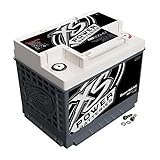
#1 Best Overall

- 【Super capacitor】:16v 500F,Weight:5kg.
- 【Universal 12V Compatibility:】 Tailored for compatibility with all 12V vehicles, this supercapacitor ensures reliable and prompt start-ups, establishing itself as a crucial component for diverse automotive applications.
- 【Extreme Temperature Endurance:】 Engineered to operate flawlessly in harsh temperatures, from a freezing -45°F to a scorching 158°F, this supercapacitor maintains stable performance, providing a dependable power source in challenging weather conditions.
- 【Extended Cycle Life:】 Featuring an outstanding cycle life exceeding 1,000,000 cycles, this supercapacitor is designed for durability, delivering sustained and stable power output over an extended operational period.
- 【Potent 6000A Instant Current Output:】 Providing a powerful instant current of 6000A, this supercapacitor is well-suited for applications requiring rapid and substantial current flow, ensuring swift and reliable power delivery in critical scenarios.
What the manufacturer examples establish
- Texas Instruments’ BQ25173 is an active linear supercapacitor charger rated for up to 800 mA. Its programmable charge current ranges from 10 mA to 800 mA, and it supports one to four cells, charging from 0 V, adjustable regulation voltage, and protections including input overvoltage, overcurrent, thermal regulation and shutdown, and output short circuit. These are component specifications, not measured results for a DIY build. Texas Instruments BQ25173.
- TI’s application brief describes two 50 F capacitors in series charging from 0 V to approximately 5.4 V in minutes with the BQ25173. That example makes a quick charge plausible for a defined circuit; it does not establish that an unspecified bank charges in five minutes. TI says linear chargers suit lower charging currents, while switching chargers are useful above 1 A because they handle charger power loss more effectively. TI, “Selecting the Correct Charger for Your Supercapacitor Designs” (December 13, 2021).
- Analog Devices’ industrial-scale example uses ten series capacitors rated at 3400 F and 2.7 V each, producing a 340 F ensemble. Its reported 330 seconds of operation is for a 10 A actuator load across a 10 V discharge range—not a phone-charging result. The article also describes constant-current then constant-voltage charging and a safety timer. Analog Devices, “How to Fast-Charge Your Supercapacitor”.
These examples have different banks, circuits, and loads. They cannot be used as a direct comparison or as a runtime estimate for a small USB power bank.
How do you get usable power out of the bank?
The output converter must maintain the load’s required voltage while the capacitor-bank voltage changes during discharge. The required topology depends on the bank voltage and target output: a design may need boost or buck-boost conversion rather than a direct connection to the load.
Rank #2

- High-Capacity Energy Storage: This 6-inch super capacitor module offers two configurations: 2.7V 500F and 16V 83F, providing robust energy storage solutions for a wide range of electronic devices. Ideal for applications requiring high power density and rapid charge/discharge cycles.
- Durable Construction: Built with premium materials, this super capacitor module ensures long-lasting performance and reliability. The compact 6-inch design makes it easy to integrate into various electronic projects and systems.
- Wide Voltage Range: With voltage ratings of 2.7V and 16V, this super capacitor module is versatile enough to meet the power needs of different electronic components. It can handle both low and high voltage requirements efficiently.
- Fast Charging and Discharging: Designed for quick charge and discharge cycles, these super capacitors are perfect for applications where instant power delivery is critical. They provide consistent performance even under heavy load conditions.
- Enhanced Safety and Stability: Equipped with advanced safety features, this super capacitor module ensures stable operation under varying environmental conditions. It minimizes the risk of overheating and electrical failures, making it a reliable choice for demanding applications.
- Analog Devices describes the LTC4041 as a 2.5 A supercapacitor backup power manager for one capacitor or two capacitors in series. It includes internal balancing and reverses its regulator into a boost supply when input power fails. ADI lists the part as recommended for new designs. Its DC2642A demo board demonstrates short-term backup on a 5 V rail using 10 F capacitors; that is not a phone runtime specification. Analog Devices LTC4041.
- TI’s PMP30693 reference design combines adjustable charging current and voltage, reverse blocking, active cell balancing, and a buck-boost converter. TI reports a stable 3.7 V at 300 mA for more than 100 seconds, until the output voltage drops. That result belongs to the reference design and its test conditions; it does not show that the design can power a 5 V USB device. TI PMP30693 reference design.
A capacitor bank’s energy alone does not tell you how long a particular device will run. The converter, its efficiency, the usable voltage range, and the load all affect delivered power. Do not infer a number of phone charges from either manufacturer backup example.
Quick wins for a faster PC:
Repair Windows errors before they cause bigger problemsFix Now →Scan for outdated or missing drivers - takes under a minuteDriver Scan →Why do series capacitors need voltage management?
Connecting capacitors in series raises the bank’s voltage capability, but each capacitor still has its own voltage limit. The total bank voltage does not guarantee that every cell remains within its limit, so a series design needs a suitable charging and balancing approach. The selected charger’s supported cell count and the component data sheet and design files should govern the implementation.
For example, the BQ25173 supports one to four cells, while the LTC4041 supports one capacitor or two in series and includes internal balancing for those configurations. Those capabilities are specific to the named parts; they do not make arbitrary series banks safe or compatible.
Independent reader supportYour contribution helps us test, update, and keep practical guides available for everyone.What should you decide before building?
- Define the load. Specify the output voltage and current your device requires, and whether the intended use is brief backup or longer operation.
- Choose the storage bank. Select the capacitor count, capacitance, and voltage arrangement, keeping each cell’s voltage limit in view.
- Match the charger to the bank and source. Check supported cell count, regulation voltage, charge-current range, thermal behavior, and protection features. If a load operates while charging, account for current shared with that load.
- Plan cell balancing for series configurations. Use a charger or management circuit whose documented arrangement matches the bank; do not assume balancing is present.
- Specify the output converter. Confirm that its topology and ratings can provide the target voltage and current throughout the bank’s usable discharge range.
- Measure the completed design under load. Verify cell voltages, charge behavior, output stability, and runtime with the intended load. A component specification or reference-design result does not verify a different assembly.
For a first experiment, a dedicated charger or backup-manager evaluation board can make the intended architecture clearer, but an IC or evaluation board is not automatically a complete USB power bank. Check that its documented input, capacitor arrangement, balancing, and output match your design before connecting a device.
Quick Recap
Best Value

- ★ Made of food grade material, strong, durable and pollution-free, goodperformance and long service life.
- ★ Low characteristics with high current alternative to electricity, and fast charge only need few seconds.
- ★ It comes with soldered board, ready to use.
- ★ It also can be used as an backup power source in electronic devices such asRAM, three-meter, motor drive, clock circuit, power-down for and other fields.
- ★ Wider practicability for car starting, solar wind etc.
Product prices and availability are accurate as of the date/time indicated and are subject to change. Any price and availability information displayed on Amazon at the time of purchase will apply.

