
iTechGuides is reader-supported. When you buy through links on our site, we may earn an affiliate commission. As an Amazon Associate I earn from qualifying purchases. Learn more
Spotify’s Lossless audio quality is finally here: Spotify began rolling out Lossless to eligible Premium subscribers on September 10, 2025, with streaming up to 24-bit/44.1 kHz FLAC. Availability depends on your country, plan, app, and playback hardware, and Bluetooth may prevent an end-to-end lossless connection.
Spotify’s long-promised “HiFi” feature launched under the simpler name Lossless. Spotify initially limited the rollout to selected markets, announced availability for Premium users in more than 50 markets on October 6, 2025, and later described the feature as available in eligible markets. That does not mean every account, device, or country receives it at the same time.
The practical verdict is straightforward: enable Lossless if you already use Spotify Premium, verify the indicator during playback, and use wired headphones, a USB DAC, or a confirmed-compatible Spotify Connect device if you want the most reliable result. Do not buy expensive audio equipment solely because a settings menu says “Lossless.”
Recommended Free Tools
Key takeaways
- Spotify Lossless launched on September 10, 2025, for eligible Premium subscribers in selected markets and later expanded to more than 50 markets.
- Spotify Lossless delivers up to 24-bit/44.1 kHz FLAC, which is lossless CD-rate audio with additional bit-depth headroom, not 24-bit/96 kHz or 24-bit/192 kHz.
- Lossless is included as a Premium benefit on Spotify’s U.S. plan page rather than being advertised as a separate HiFi surcharge.
- A Lossless setting does not prove that the final signal is lossless because Bluetooth, device firmware, operating-system mixing, DSP, and unsupported playback routes can alter the signal.
- The safest setup is Lossless selected for the relevant streaming or download setting, followed by wired playback or a Spotify Connect device that explicitly supports Lossless.
What exactly launched?
Spotify launched a lossless music-streaming feature called Lossless, rather than a separately branded “Spotify HiFi” tier. Spotify’s announcement says the rollout began on September 10, 2025, and supports music at up to 24-bit/44.1 kHz in FLAC. The same announcement explains the initial market and device rollout in more detail in Spotify’s Lossless launch announcement.
#1 Best Overall

- 1” titanium lts vented tweeter with hybrid tractrix Horn
- 6.5" Spun copper cerametallic woofers
- Bass-reflex via rear-firing tractrix port
- Dual binding posts for bi-wire/bi-amp
- Strong, flexible removable magnetic grille
Spotify’s launch date, broad availability date, and your account’s availability are three different things:
| Milestone | What it means |
|---|---|
| September 10, 2025 | Spotify began rolling out Lossless to eligible Premium subscribers in selected markets. |
| October 6, 2025 | Spotify said Lossless was available to Premium users in more than 50 markets. |
| Later eligible-market rollout | Spotify described the feature as available in eligible markets, but country, account, app, and device eligibility still determine whether a particular listener can use it. |
For U.S. readers, Spotify’s U.S. Premium page lists Lossless as a Premium benefit. The page captured in the research pass listed Individual at $12.99 per month, Student at $6.99, Duo at $18.99, and Family at $21.99. Those prices and any introductory offers are market- and date-sensitive, so check the official Spotify Premium page before subscribing or changing plans.
Who gets Spotify Lossless?
Spotify Lossless requires an eligible Premium plan, a supported market, a compatible app, and a playback device or connection that supports Spotify’s implementation. Spotify does not present Lossless as a feature of the free, ad-supported plan.
Do these 3 things before closing this tab:
1Fix the driver behind crashes, sound loss and screen glitches2Repair Windows errors before they cause bigger problems3Scan for outdated or missing drivers - takes under a minute| Eligibility question | Practical answer |
|---|---|
| Do I need Premium? | Yes. Lossless is presented as a benefit of eligible Spotify Premium plans. |
| Does the free plan include Lossless? | Spotify does not present Lossless as a free-plan benefit. |
| Is Lossless available in every country? | No universal worldwide claim should be assumed. Availability began in selected markets and expanded to eligible markets. |
| Which apps support it? | Spotify’s support guidance covers mobile, desktop, and tablet apps. Do not assume the web player follows the same Lossless path unless Spotify explicitly confirms it for your account and version. |
| Does every Spotify Connect device support it? | No. Spotify Connect support alone does not guarantee Lossless support. Model, firmware, account, and market eligibility matter. |
Spotify has cited compatible products from brands including Sony, Bose, Samsung, and Sennheiser, but a brand name is not a model-level compatibility guarantee. Check the exact product and current firmware information before buying or upgrading equipment. Spotify’s Premium benefits support page provides the relevant account and app guidance.
Is Spotify Lossless actually lossless?
Yes. FLAC is a lossless compression format, so FLAC reduces file size without discarding the audio information represented by the source file. Spotify says its Lossless stream can reach 24-bit/44.1 kHz FLAC, provided the track, account, software, hardware, and connection support that quality.
The phrase “up to” is important. Every song is not necessarily delivered at 24-bit/44.1 kHz, and a source master may not contain more information than the original release. A lossless file preserves the supplied source; it does not create detail that was never present.
Lossless also says nothing about mastering quality. A poorly mastered recording remains poorly mastered in FLAC. A well-encoded lossy stream may already sound transparent to a particular listener. File format, mastering, playback equipment, listening environment, and personal hearing all affect the result. Spotify’s artist-facing documentation explains the service’s definition of lossless audio in its lossless-audio support article.
Windows Errors? Fix Them Before They Spread
Repair common Windows errors and clear accumulated junk for a smoother, more stable PC - no reinstall needed.Free scan · no reinstallOutdated Drivers Are Slowing You Down
One free scan finds every outdated or missing driver and matches the right update for your exact hardware.Free scan · exact hardware matchWhat does 24-bit/44.1 kHz mean?
44.1 kHz is the sampling rate traditionally associated with CD audio. 24-bit describes the digital audio bit depth and provides more headroom in production and distribution than 16-bit audio. Spotify’s maximum is therefore a lossless, CD-rate stream with 24-bit depth—not the highest numerical resolution offered by every competing service.
Rank #2

- Exquisite Appearance, Built from wood and metal materials with a unique sense of layering, The streamlined corner design is truly atmospheric and stylish
- All in 1, This turntable spins at both 33 and 45 RPM speeds, the turntable’s speaker can play other devices’ music wirelessly or using the Aux-in port, and the built-in amplifier allows connection to your own externally powered speakers
- Magnet type Cartridge and Adjustable Counterweight, Essentials for any serious classic turntable, These work to balance each channel and produce rich and warm audio, releasing authentic sound so you can find freedom from noise and distortion
- Wireless Streaming, Pair and play music from all your favorite devices like iPhone and Android smartphones, tablets, PCs, usb mp3 players through the turntable’s speakers using Bluetooth connection
- Audio-Technica Stylus, The diamond-tipped Audio-Technica stylus cartridge is designed to produce rich sound and outstanding clarity, tracking your record’s grooves with precision for accurate, high-definition audio
| Specification | What it tells you | What it does not tell you |
|---|---|---|
| FLAC | The stream uses lossless compression that does not discard the represented audio data. | That the recording has better mastering or will sound dramatically different. |
| 24-bit | The digital word depth can preserve greater production headroom than 16-bit. | That the listener will hear a direct improvement from the extra bit depth. |
| 44.1 kHz | The sampling rate matches the conventional CD rate. | That Spotify offers the 96 kHz or 192 kHz maximum available from some rivals. |
| “Up to” 24-bit/44.1 kHz | The stated maximum supported quality. | That every track is supplied at that exact resolution. |
Some rival services advertise tracks at up to 24-bit/96 kHz or 24-bit/192 kHz, depending on catalog and plan. Higher numbers do not automatically produce better audible sound. For many listeners, mastering quality, lossless versus lossy delivery, a quiet room, and the quality of headphones or speakers matter more than the maximum sample-rate label.
How do you turn on Spotify Lossless?
Set Lossless separately for each relevant streaming and download category. Spotify provides separate choices for Wi-Fi, cellular data, and downloads, so changing one setting may not change the others.
How do you enable Lossless on an iPhone or iPad?
- Open the Spotify mobile app.
- Tap your profile picture at the top.
- Open Settings and privacy.
- Open Audio Quality on iOS.
- Choose Lossless for the applicable streaming quality and, if desired, the download quality.
How do you enable Lossless on Android?
- Open the Spotify app.
- Tap your profile picture at the top.
- Open Settings and privacy.
- Open Media Quality.
- Select Lossless for Wi-Fi, cellular streaming, downloads, or each category you want to change.
How do you enable Lossless on a computer?
Open the official Spotify desktop app, open the profile or account menu, choose Settings or Settings and privacy, and find the Audio Quality or equivalent media-quality section. Select Lossless for streaming and, where offered, downloads. Menu names and locations can vary between Windows, macOS, and app versions, so do not treat one desktop path as universal.
What’s actually slowing this PC down?
Pick the symptom - the matching free tool is one click away.
If Lossless does not appear, update the official app, confirm the account and country are eligible, and check the mobile, desktop, or tablet app rather than assuming that the web player supports the same feature.
How can you confirm that playback is really Lossless?
Use the playback information rather than trusting the settings toggle alone. Spotify’s Connect interface can display a Lossless label while music is playing. Tapping or opening the connected device can also reveal a file-quality card and related quality information, as described on Spotify’s Spotify Connect Lossless page.
- Start a track that should support Lossless.
- Open the device selector by tapping or clicking the Connect icon.
- Choose a compatible receiver, speaker, streamer, or other supported device.
- Open the connected device’s quality or file-quality information where available.
- Look for Spotify’s Lossless indicator.
The final playback path is what matters. Selecting Lossless in Spotify proves that the preference is selected; the playback indicator gives stronger evidence that the selected device and route are receiving Spotify’s Lossless implementation.
Which connections preserve the best Lossless path?
A wired connection or a confirmed-compatible Spotify Connect device is the most dependable choice. Spotify recommends Wi-Fi, wired headphones or speakers, and non-Bluetooth connections for the best Lossless experience.
Quick wins for a faster PC:
Repair Windows errors before they cause bigger problemsFix Now →Fix the driver behind crashes, sound loss and screen glitchesFind Drivers →| Playback route | Recommendation | Why |
|---|---|---|
| Wired headphones or earphones | Best simple choice | Avoids the additional Bluetooth transmission stage. |
| USB DAC connected to a computer or phone | Useful when the existing headphone output is limiting | Can provide a suitable digital-to-analogue path, but operating-system mixing or resampling may still occur. |
| Wired amplifier or powered speakers | Reliable for home listening | Avoids wireless codec conversion between the source and playback hardware. |
| Compatible Spotify Connect receiver, streamer, or speaker | Strong wireless-home option | The supported device can receive Spotify’s stream directly over the network, but the individual model and firmware must support Lossless. |
| Ordinary Bluetooth headphones or speakers | Convenient, but not the safest way to verify Lossless | Bluetooth introduces its own codec and transmission path, so the final signal may no longer be the original FLAC stream unchanged. |
Does Bluetooth support Spotify Lossless?
Bluetooth headphones can sound excellent, but ordinary Bluetooth playback should not be treated as a guaranteed bit-perfect Spotify Lossless path. Spotify warns that Bluetooth can affect quality. The phone, operating system, Bluetooth codec, headphones, and Spotify implementation all determine what reaches the headphones.
Rank #3

- Transform your small room, apartment, or bedroom into a personal music haven with SONIK 1. This ultra-compact passive hi-fi speaker delivers crisp highs, natural mids, and rich, full bass, giving your music an immersive, room-filling presence without taking up extra space. Big performance meets refined design, tailored for your home, without compromising on quality or style.
- SONIK 1 sits elegantly on a shelf or stand, seamlessly integrating into your living space. Wide sound dispersion ensures balanced audio wherever you place it, making it perfect for stylish apartments, modern homes, or curated listening areas. Enjoy premium sound without sacrificing aesthetics.
- Every detail of your music is faithfully reproduced thanks to the advanced Clarity Cone paper and wood fibre drivers, inspired by DALI KORE technology. Lightweight yet rigid, these drivers deliver smooth, natural mids, lifelike vocals, and precise instrument reproduction, so your music sounds as the artist intended.
- The oversized 29mm soft dome tweeter provides extended high-frequency detail with minimal distortion. Paired with the 5.25″ Clarity Cone woofer, SONIK 1 achieves a coherent handover between drivers, delivering seamless, natural mids and highs along with controlled, full bass.
- SONIK 1 features patented SMC magnet technology, reducing distortion and improving linearity by minimizing hysteresis and eddy currents in the voice coil. Combined with premium crossover components and careful passive design, it produces cleaner, more detailed sound with airy highs, controlled bass, and authentic, high-fidelity performance.
Even a headphone box that advertises “lossless” or “near-lossless” Bluetooth does not by itself prove end-to-end delivery of Spotify’s original FLAC stream. The relevant question is what Spotify and the receiving device report during playback, not only the codec specification printed on the product.
Do USB DACs automatically make Spotify Lossless?
No. A USB DAC can improve a computer or phone’s output path, but a DAC does not automatically make the entire system lossless or bit-perfect. The operating system may resample or mix audio, other applications may share the output, and equalization, normalization, Dolby processing, or other DSP may alter the signal.
Spotify community documentation says Exclusive Mode became available on Windows and is intended to bypass the Windows audio mixer for a bit-perfect signal path. The same documentation said macOS support was planned at that time, so Mac availability should be checked against the current Spotify desktop app rather than assumed. See the Spotify desktop Exclusive Mode documentation for the version-specific context.
Do Spotify Connect speakers and receivers support Lossless?
Not necessarily. A product can support Spotify Connect without supporting Spotify Lossless. Firmware, manufacturer integration, model, account, and market eligibility can all affect the result. Check the individual device’s current firmware notes and Spotify’s supported-device information, then look for the Lossless indicator during playback.
How much data and storage does Spotify Lossless use?
Lossless uses more data and storage than Spotify’s compressed quality modes. Spotify recommends an internet connection of approximately 1.5–2 Mbps for the best Lossless listening experience; that recommendation is not a guaranteed bitrate for every track. Spotify’s Lossless audio-quality support page covers the connection limitations.
- Use Wi-Fi for extended Lossless listening when possible.
- Check your cellular data allowance before enabling Lossless on mobile data.
- Expect Lossless downloads to consume more storage than compressed downloads.
- Set download quality separately from streaming quality.
- Check available phone, tablet, or computer storage before converting a large offline library.
Spotify’s general Premium offline-download policy allows up to 10,000 songs per device across up to five devices. That is a general Premium download limit, not a Lossless-specific storage capacity. Spotify does not provide a dependable single gigabytes-per-album or megabytes-per-hour figure for every Lossless track because duration, source resolution, FLAC compression, and delivery behavior vary. The general limit is documented on Spotify’s offline downloads page.
Will Spotify Lossless sound better?
Spotify Lossless preserves more of the source signal, but audible improvement is not guaranteed. Many listeners will hear little or no difference from Spotify’s existing Very High setting, especially when the existing stream is already transparent enough for the listener or when the listening environment masks small differences.
When is a difference more likely?
- A quiet room reduces environmental masking.
- Good wired headphones or speakers reveal more detail than basic playback hardware.
- Familiar recordings make small changes easier to notice.
- Careful, level-matched comparisons reduce loudness bias.
- A high-quality source master gives the lossless file something worthwhile to preserve.
When is a difference less likely?
- Car, public-transit, or other noisy listening masks subtle changes.
- Ordinary Bluetooth earbuds add another transmission stage.
- Low-cost or heavily processed speakers may be the limiting factor.
- Different loudness levels can make one version seem better even when the format is not responsible.
- A poor source master remains poor when delivered as FLAC.
A sensible test is to select Lossless, use a wired or confirmed-compatible path, choose familiar tracks, match volume carefully, and compare without assuming that the more expensive or higher-numbered option must win. If the difference is inaudible, that is a valid result rather than evidence that the setup failed.
Rank #4

- SOUND QUALITY: The RS850 Outdoor Rock Speaker kicks out 200 watts of high power, producing a clear and rich sound. It has a frequency of 28Hz to 20kHz and an 8” woofer with a sealed voice coil.
- APPEARANCE: The RS850 is a fun and unique speaker that is designed to seamlessly integrate into your garden, porch, yard, deck, or favorite outdoor environment due to its realistic rock appearance.
- OUTDOOR: With the ability to seamlessly blend in with your home landscape,the OSD Audio Outdoor Rock Speaker is ideal for filling large backyards or patios not just with design, but with surround sound.
- DURABLE: The RS850’s Aerospace Grade, multi-layer Composite Cabinetry is fabricated to withstand rain, temperatures and other harsh weather conditions.
- CABLE: To keep your electronics safe, we recommend the direct burial of a waterproof cable and wire connectors designed for the outdoors.
Is Spotify Premium worth upgrading for Lossless?
Spotify Premium is a sensible upgrade when the reader already values Spotify’s ecosystem and wants Lossless included with the subscription. Premium also provides the broader benefits associated with the plan, including ad-free listening and offline playback. Spotify says its ecosystem works with more than 2,000 devices, although that broad device figure does not mean every device supports Lossless.
| Reader situation | Likely decision | Reason |
|---|---|---|
| You already use Spotify’s playlists, discovery, social features, and Connect devices. | Premium is a strong fit. | Lossless adds a useful option without requiring a separate Spotify hi-fi surcharge on the U.S. Premium page. |
| You listen mainly on wired headphones or a compatible home system. | Try Lossless before buying hardware. | Your existing playback chain may already be suitable. |
| You listen almost entirely through ordinary Bluetooth. | Do not upgrade solely for bit-perfect playback. | Bluetooth may prevent an end-to-end lossless path, even though it may still sound very good. |
| You listen mostly in noisy places. | Prioritize convenience and plan value. | Environmental noise may mask the audible difference. |
| Your headphones are clearly the weak point. | Consider headphones before a DAC. | A DAC cannot compensate for a transducer or fit that is limiting the experience. |
| You have limited cellular data or storage. | Use Lossless selectively. | Keep cellular streaming and downloads at a lower quality unless the extra data and storage are worthwhile. |
The practical order is to enable Lossless, verify playback, compare familiar music, and only then consider equipment. Spending on a USB DAC, amplifier, receiver, or new headphones makes sense when that product solves a demonstrated limitation—not simply because Spotify now displays a 24-bit label.
Independent reader supportYour contribution helps us test, update, and keep practical guides available for everyone.How does Spotify compare with Apple Music, Tidal, Qobuz, and Amazon Music?
Spotify’s strongest advantage is its ecosystem: discovery, playlists, social features, and Spotify Connect. Spotify’s stated maximum of up to 24-bit/44.1 kHz FLAC is lower than the 24-bit/96 kHz or 24-bit/192 kHz maximums advertised by some competitors, but maximum resolution alone does not determine audible quality.
Free tools Windows power users keep installed
One-click scans. No signup required.
| Service | What to compare | Best fit described by the available research |
|---|---|---|
| Spotify | Lossless availability, discovery, Connect hardware, social features, and up to 24-bit/44.1 kHz FLAC | Listeners who want Spotify’s ecosystem and now want lossless playback |
| Apple Music | Lossless catalog, Apple-device integration, Dolby Atmos, and spatial audio | Apple-device owners and listeners interested in spatial audio |
| Tidal | Lossless and high-resolution catalog, artist-focused features, and device support | Listeners who prioritize hi-fi formats and an audio-focused service identity |
| Qobuz | Hi-res catalog, download-store functionality, and editorial content | Listeners who want streaming plus purchases or downloads |
| Amazon Music | Lossless/high-resolution catalog and Amazon-device ecosystem | Existing Amazon subscribers and Amazon device owners |
Current competitor prices, catalog sizes, and exact plan names were not independently verified in the supplied research, so those details should not be used as current comparison claims without a fresh check of the official service pages. Choose between services based on catalog, discovery, device compatibility, spatial-audio needs, offline behavior, and whether you want downloadable purchases—not only the largest sample-rate number.
How do you fix common Spotify Lossless problems?
“I pay for Premium but cannot see Lossless.”
- Confirm that the account uses an eligible Premium plan.
- Confirm that the country is included in Spotify’s eligible rollout.
- Update the official Spotify mobile, desktop, or tablet app.
- Check the correct quality menu for the operating system.
- Do not assume that the web player or a third-party device supports the same path.
- Restart Spotify or sign out and back in if the account rollout appears incomplete.
Do not purchase a new plan or device before checking account, market, app, and hardware eligibility.
“Lossless is selected, but I hear no difference.”
No audible difference can be normal. Check whether playback is using Bluetooth, whether the volume is matched, whether the track displays the Lossless indicator, and whether headphones, speakers, room noise, normalization, equalization, Dolby processing, or another DSP stage is limiting the comparison.
“My device supports Spotify Connect but does not show Lossless.”
Spotify Connect support does not prove Lossless support. Update the device firmware, check the exact model’s manufacturer documentation, confirm the account and market are eligible, and verify that Spotify is controlling the device through the supported Connect route.
“My downloads do not sound Lossless.”
Check the download-quality setting separately from streaming quality. Spotify allows streaming and download quality to be configured independently, so selecting Lossless for Wi-Fi streaming does not necessarily change existing downloads.
Best Value
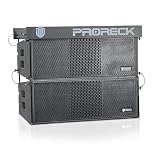
- STELLAR SOUND AND POWERFUL SPEAKER: The Proreck PR-210BP Powered Array Speaker delivers exceptional sound quality with two 10" woofers and a 3" Ferrite for superior audio performance. Its built-in Class-D amplifier provides an impressive 5000W P.M.P.O , creating an immersive listening experience.
- EASY MOUNTING: The Proreck PR-210BP Powered Array Speaker offers easy mounting options, allowing you to set up quickly and securely. The mounting system ensures stability, so you can confidently use it in a variety of settings, from indoor venues to outdoor events.
- WIDELY APPLICATIONS: This array speaker have 3 preset mode, Up to 12 PR-210BP line array speakers can be easily stacked and securely fastened together. So it is great chice for wedding, meeting, speeches, churches, events, stage performance etc.
- 6 PRESET ANGLES: The PR-210BP offer 6 preset angles(0°,2°,4°,6°,8°,10°), allowing users to tailor the sound coverage to different venue needs. This feature enhances audio distribution and ensures optimal clarity, whether in small indoor spaces or large outdoor environments.
- STURDY AND DURABLE: The PR-210BP array speaker encased in a robust all-birch plywood enclosure, Its rugged construction ensures durability and reliability in various environments. Size: 32''*18''*12.5'', Weight:82.5lbs.
“My headphones advertise a lossless Bluetooth codec.”
Codec marketing is not the same as verified end-to-end Spotify Lossless delivery. Check what Spotify and the receiving device report during playback; use a wired connection when you need the most reliable proof that the original lossless stream is reaching the playback system.
What is the sensible way to start?
- Confirm that your country and Premium account show Lossless.
- Update Spotify and select Lossless for the specific Wi-Fi, cellular, and download settings you intend to use.
- Play a familiar track and check for Spotify’s Lossless indicator.
- Use wired headphones, a USB DAC, or an explicitly compatible Spotify Connect device for the clearest test.
- Compare at matched volume in a quiet environment.
- Upgrade headphones or a DAC only if your existing equipment is clearly the limiting factor.
Spotify Lossless is a meaningful overdue addition for Spotify users, but it is not a universal sonic revolution. The useful question is not whether “24-bit” sounds impressive; the useful question is whether your account, track, connection, hardware, and listening environment let you benefit from the preserved source signal.
Frequently Asked Questions
Is Spotify Lossless free?
Spotify Lossless is included with eligible Spotify Premium plans rather than being presented as a separate Lossless surcharge on Spotify’s U.S. Premium page. The free, ad-supported plan is not presented by Spotify as receiving Lossless, and availability can vary by market and account.
The Tool Desk
Outbyte Driver Updater FREEScan for outdated or missing drivers - takes under a minuteDriver Scan →Outbyte PC Repair FREEClear out junk files and repair common Windows errorsFree Scan →What is the highest quality Spotify Lossless offers?
Spotify Lossless supports music streaming at up to 24-bit/44.1 kHz in FLAC. The “up to” qualification matters because not every track is necessarily delivered at that maximum, and Spotify’s specification is lower than the 24-bit/96 kHz or 24-bit/192 kHz maximums advertised by some competitors.
Can I hear Spotify Lossless over Bluetooth?
Bluetooth playback is not the safest way to verify an end-to-end lossless signal because Bluetooth adds its own codec and transmission path. Bluetooth can sound excellent, but use wired playback or a confirmed-compatible Spotify Connect device when preserving and verifying the Lossless path matters.
How do I know Spotify is actually playing Lossless?
Start playback, open Spotify’s Connect device selector, choose a compatible device, and check the playback quality or file-quality information. Spotify can display a Lossless label and a quality card, which is stronger evidence than simply selecting Lossless in settings.
Do I need a DAC for Spotify Lossless?
You do not automatically need a DAC. Try Lossless with your existing wired headphones or speakers first; consider a USB DAC only if your current phone or computer output is clearly limiting the sound, and remember that operating-system mixing or DSP can still affect the final path.
The Bottom Line
Bottom line: Spotify Lossless is real, included with eligible Premium plans, and supports up to 24-bit/44.1 kHz FLAC. Turn it on, verify the Lossless indicator, and use wired or explicitly compatible Spotify Connect playback before spending money on hardware. The audible benefit depends on the recording, playback chain, environment, and listener—not on the 24-bit label alone.
Quick Recap
Product prices and availability are accurate as of the date/time indicated and are subject to change. Any price and availability information displayed on Amazon at the time of purchase will apply.

