
iTechGuides is reader-supported. When you buy through links on our site, we may earn an affiliate commission. As an Amazon Associate I earn from qualifying purchases. Learn more
Soitec’s July 2020 agreement with Qualcomm was a supply deal for piezoelectric-on-insulator (POI) substrates used to manufacture smartphone RF filters—not a sale of finished filters to consumers. The partnership aimed to bring POI wafer production to high-volume manufacturing for Qualcomm’s ultraSAW filters. Soitec later reported smartphones using acoustic filters on POI substrates and customers in production, but its disclosures do not establish that it leads the entire 5G RF-filter market.
What Soitec and Qualcomm agreed to
Announced on July 7, 2020, after several years of collaboration, the agreement was intended to scale POI wafer production for Qualcomm Technologies’ RF filters used in smartphone radio-frequency front-end modules. Qualcomm executive Christian Block described the agreement as a way to secure POI substrate supply and support OEM demand for Qualcomm ultraSAW products. Soitec executive Bernard Aspar called POI an important part of Qualcomm Technologies’ 5G offering. Soitec’s announcement did not disclose the deal’s value, committed wafer volumes, duration, or whether it was exclusive.
The distinction matters: Soitec supplies an engineered semiconductor material; Qualcomm develops the filter technology that uses it. The agreement concerns an upstream manufacturing input, not a consumer-facing filter product.
What POI substrates do in an RF filter
Soitec describes POI as a high-resistivity silicon substrate with a buried oxide layer and a very thin, uniform single-crystal piezoelectric layer. It is made using Soitec’s Smart Cut process. Manufacturers can use POI to build surface acoustic wave (SAW) filters for smartphone RF front-end modules.
#1 Best Overall
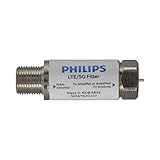
- FILTER 4G 5G LTE SIGNAL NOISE – This filter's TruAmp Technology blocks unwanted 4G/5G LTE cell phone and transmitter frequencies that can cause intermittent channel loss, pixilation and overall reception disruption while allowing lower 5-608MHz frequencies to pass through.
- COMPATIBLE WITH YOUR DEVICES – Designed to work with any TV, amplified TV antenna, coax cable or coax cable splitter, this LTE filter may be especially helpful in metropolitan and suburban areas with a high number of cell towers and mobile device users.
- NO HARDWARE OR POWER SUPPLY NEEDED - An F-type coax cable jack and port allow for easy in-line installation with your existing antenna setup – no hardware or external power supply is needed.
- WEATHERPROOF DESIGN – This compact filter is built to withstand the elements and can be used with indoor or outdoor antenna installations.
- U.S.-BASED TECHNICAL SUPPORT – Backed by a limited-lifetime replacement pledge and free U.S.-based technical support that is available Monday – Friday, 7AM-8AM, Central Time to assist with any questions or issues.
Soitec says POI supports wider bandwidth, low sensitivity to temperature changes, and integration of multiple filters on one chip. These are supplier-described attributes, not independent proof that POI-based filters outperform alternatives in every band or application. A real comparison would need measurements such as frequency and band coverage, bandwidth, insertion loss, temperature stability, integration density, yield, cost, and available supply. The cited disclosures do not provide a head-to-head evaluation across those factors.
POI is one part of a broader 5G filter ecosystem
A smartphone’s RF front end contains more than filters, and not all filters use the same technology. Soitec says POI is used for SAW filters, while its RF-SOI substrates support other front-end components, including power amplifiers, switches, and low-noise amplifiers. Qualcomm’s portfolio includes ultraSAW, ultraBAW, and TC-SAW technologies, so POI/SAW is one option in a multi-technology system rather than the only approach to 5G filtering.
Rank #2
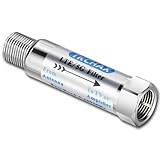
- TKCHAX LTE Filter: Eliminate 4G/5G Interference for Clear UHF TV Signals (Compatible with Channels 14–36).The LTE filter is designed to block disruptive 4G, 5G, and LTE signal interference that can cause pixelation, channel loss, and reception issues. By allowing lower frequencies (5-608 MHz) to pass through, it ensures clear and uninterrupted TV signals while preventing interference from nearby mobile networks and wireless devices.
- When to Use the TKCHAX 4G/5G LTE Filter. a. Signal Interference Symptoms: If your TV shows pixelation, experiences channel loss, or has sudden signal drops despite proper antenna placement and the addition of an amplifier,Especially UHF channels 14-36(470-608 MHz). b. Nearby Cell Towers: If you live within 1-2 miles of a cell tower, interference from 4G and 5G networks is likely. c. High-Density Mobile Networks: In URBAN AREAS with a high concentration of mobile devices and 4G/5G base stations.
- Wide Compatibility with TV Antennas & Coaxial Devices. This versatile LTE filter is fully compatible with any TV, amplified TV antenna, coaxial cable, or coax splitter. Perfect for households or businesses in areas with high cell tower density or high mobile device usage, particularly in urban and suburban locations.
- Quick & Easy Installation for TV Antenna Systems. No additional tools or power supply needed! The TKCHAX LTE filter features a standard F-type coaxial jack, making it easy to install inline with your current TV antenna setup. Simply connect it to your TV or antenna with a twist, and enjoy enhanced signal quality immediately.
- Durable & Weatherproof Design for Long-Term Use. Built with an all-metal construction, the TKCHAX LTE filter is both weather-resistant and compact, perfect for outdoor TV antenna installations. Its professional-grade materials ensure it can handle varying environmental conditions, delivering long-lasting, reliable performance.
That variety makes a blanket claim that one substrate or filter type is best for all 5G devices too broad. The appropriate design depends on the requirements of the particular frequency bands and product.
What Soitec reported after the 2020 announcement
In its FY2025-2026 Universal Registration Document, Soitec said the first smartphones with acoustic filters on POI substrates were on the market. The company reported around ten POI customers in production and more than a dozen in qualification. These are Soitec’s figures and status descriptions for the fiscal year ended March 31, 2026, not an independent count of the entire market. The filing also describes a POI Process Design Kit partnership with SAWNICS launched in 2023 and continued work to increase capacity. Soitec’s FY2025-2026 Universal Registration Document reported company-wide revenue of €592 million; that figure is not POI revenue.
Rank #3

- Model: KFBP-PD.D. Impedance: 50 Ω. Maximum Power Handling: 5W (37dBm). Connectors: SMA-F, SMA-F.
- 3 dB Passband: 300~1500 MHz. 40 dB Intermediate Rejection Band: 703~960 MHz.
- High-order, compact size, low insertion loss, high selectivity.
- Rejection band covers 700MHz 5G and 900MHz 3G bands.
- Dedicated to detecting UHF electromagnetic radiation (partial discharge) in power equipment while rejecting 3G, 5G, RFID, and other interference signals.
Soitec’s FY2026 results add a demand-side qualification. POI sales were slightly lower than the previous fiscal year after a strong ramp-up, which the company attributed to a temporary slowdown in Asia, even as sales grew with leading U.S. customers. Soitec also said leading fabless companies were increasingly adopting POI for advanced SAW filters. Separately, it reported that longer smartphone replacement cycles and customer inventory levels were affecting the RF-SOI environment, with an expected effect on revenue in FY2026-2027. A long-term agreement with Skyworks for its Sky5 platform was described as improving POI’s medium-term visibility. These company statements indicate adoption alongside uneven demand, not market-wide leadership. Soitec’s FY2026 results
Independent reader supportYour contribution helps us test, update, and keep practical guides available for everyone.Does the deal mean Soitec leads 5G RF filters?
No—not on the evidence disclosed. The 2020 agreement and Soitec’s later production and customer updates show that POI became a commercial substrate option for smartphone acoustic filters and that Qualcomm planned to use it for ultraSAW supply. They do not establish Soitec as the leader across all 5G RF filters, filter technologies, or frequency bands.
Rank #4

- Filtering 4G 5G LTE Signal Noise: this LTE filter blocks unwanted 4G/5G LTE cell phone and transmitter frequencies that can cause intermittent channel loss, pixilation and overall reception disruption while allowing lower 5-608 MHz frequencies to pass through
- Compatible with Your Devices: designed to work with any TV, amplified TV antenna, coax cable, or coax splitter, the LTE filter is especially useful in metropolitan and suburban areas with large numbers of cell towers and mobile device users
- No Hardware or Power Supply Required: easy in line installation with existing antenna setup
- Weather Resistant Design: this compact LTE filter for TV antenna is built to withstand the elements and can be used with indoor or outdoor antenna installations
- Package Includes: the package includes 2 LTE filters, which is an affordable option
In a 2020 interview with EE Times, Aspar said Soitec’s ambition was for POI to become a standard for RF filters in both 4G and 5G. That was a stated goal at the time, not proof that POI achieved standard status. The same interview included a forecast that the POI wafer market might exceed one million wafers annually in 2023–24 and a planned capacity of 500,000 wafers per year at full capacity; these were executive forecasts and plans reported in 2020, not verified results. EE Times’ July 2020 interview
Quick Recap
Best Value

- Norsat model 3200F-BPF-1
- 3.70 - 4.20 GHz
- +/-25 kHz Stability
- Rejects interference less than 3.6 GHz and greater than 4.8 GHz
Product prices and availability are accurate as of the date/time indicated and are subject to change. Any price and availability information displayed on Amazon at the time of purchase will apply.

