
The Tool Desk
Outbyte PC Repair FREEClear out junk files and repair common Windows errorsFree Scan →Outbyte Driver Updater FREEScan for outdated or missing drivers - takes under a minuteDriver Scan →iTechGuides is reader-supported. When you buy through links on our site, we may earn an affiliate commission. As an Amazon Associate I earn from qualifying purchases. Learn more
The Snapdragon 695 leads the Snapdragon 4s Gen 2 in the benchmark results reported by two comparison sites, but those figures are not a controlled test of matched phones. The 4s Gen 2 is built on a 4 nm process and supports FHD+ displays at 90 Hz; the 695 has a higher listed peak CPU speed and supports FHD+ at up to 120 fps. For a phone purchase, compare the actual devices as well as the chips.
How the specifications differ
Qualcomm’s platform specifications describe supported capabilities, not a promise that every phone using a chip will implement them. OEM choices, regional configurations, and handset design can change the experience.
| Specification | Snapdragon 695 | Snapdragon 4s Gen 2 |
|---|---|---|
| CPU | Kryo 660, up to 2.2 GHz, according to Qualcomm’s Snapdragon 695 platform page | Two performance cores up to 2 GHz and six efficiency cores up to 1.8 GHz, according to Qualcomm’s product brief. Qualcomm advises checking OEM specifications for CPU speed on its platform page. |
| GPU | Adreno 619 | Adreno GPU; the cited product brief does not state a model number |
| Process | 6 nm | 4 nm |
| 5G modem and bands | Snapdragon X51; Qualcomm lists Sub-6 and mmWave, with SA and NSA modes | Snapdragon X61 platform; the product brief describes 5G capability |
| Display capability | FHD+ at up to 120 fps | FHD+ at 90 Hz, per the product brief |
| Other listed features | Spectra 346T triple ISP; Quick Charge 4+ | UFS 3.1 support, Quick Charge 4+, dual-frequency GNSS |
The 4s Gen 2’s smaller process-node designation does not by itself prove better battery life. Likewise, a platform’s maximum display capability does not mean a particular handset has a panel with that refresh rate. Check the phone maker’s specifications for the model you are considering.
What the benchmark comparisons show
Both comparison pages put the Snapdragon 695 ahead in their displayed results, but their scores differ. Keep each publisher’s figures separate: they are not measurements from one common, matched-device test.
#1 Best Overall

- For USA Buyers: This Smartphone is not compatible/will not work with any CDMA Networks including: VERIZON, SPRINT, US CELLULAR. Please check with your network provider for 3G or 4G/LTE compatibility check before you purchase.
- Dual-SIM, Network Compatibility, SIM CARD 1: [2G : GSM 850 / 900 / 1800 / 1900 and/or 3G : WCDMA 850(B5) / 900(B8) / 1700|2100(B4) / 1900(B2) / 2100(B1) and/or 4G : LTE and/or 5G : SA/NSA] SIM CARD 2: [2G : GSM 850 / 900 / 1800 / 1900]
- 6.43 inches, AMOLED, 1080 x 2400 pixels
- 128GB Storage, 8GB RAM, microSDXC
- Android 11, Qualcomm SM6375 Snapdragon 695 5G (6 nm), Octa-core (2x2.2 GHz Kryo 660 Gold & 6x1.7 GHz Kryo 660 Silver)
| Publisher and benchmark | Snapdragon 695 | Snapdragon 4s Gen 2 | Context |
|---|---|---|---|
| NanoReview, AnTuTu 11 | 592,015 | 506,757 | Publisher-reported aggregates; the page lists 83 tests for the 695 and 2 for the 4s Gen 2. |
| NanoReview, Geekbench 6 single-core / multi-core | 905 / 2,101 | 838 / 1,899 | Publisher-reported comparison; the page does not state a publication year. |
| 91mobiles, AnTuTu | 468,021 | 381,047 | 91mobiles’ own comparison figures; they are not the NanoReview AnTuTu 11 results. |
| 91mobiles, Geekbench single-core / multi-core | 917 / 2,047 | 840 / 1,963 | 91mobiles’ comparison figures; benchmark version is not specified in the cited comparison. |
NanoReview’s comparison was accessed in 2026; its page does not state a publication year. 91mobiles’ comparison was also accessed in 2026 and does not state a publication year. Consult the NanoReview comparison and 91mobiles comparison for their displayed figures.
Scores vary with the tested handset, cooling, memory, software, power settings, benchmark version, and aggregation method. The comparison pages do not provide a matched-device test. Treat these results as evidence of how the chips compare in those datasets—not as a guaranteed difference in game frame rates, heat, battery life, or camera quality.
Rank #2
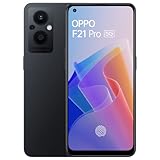
- For USA Buyers: This Smartphone is not compatible/will not work with any CDMA Networks including: VERIZON, SPRINT, US CELLULAR. Please check with your network provider for 3G or 4G/LTE compatibility check before you purchase
- Dual-SIM, Network Compatibility, SIM CARD 1 & 2 : [2G : GSM 850/ 900/ 1800/ 1900 and/or 3G : HSDPA 800 / 850 / 900 / 1900 / 2100 and/or 4G : FDD-LTE: 700(B28)/ 850(B5)/ 900(B8)/ 1800(B3)/ 1900(B39)/ 2000(B34)/ 2100(B1)/ 2300(B40)/ 2500(B41)/ 2600(B7)/ 2600(B38) and/or and/or 5G : N1/ N8/ N28/ N41/ N77/ N78 SA/NSA]
- 6.43 inches, AMOLED, 1080 x 2400 pixels, Schott Xensation glass
- 128GB Storage, 8GB RAM, microSDXC
- Android 12, Qualcomm SM6375 Snapdragon 695 5G (6 nm), Octa-core (2x2.2 GHz Kryo 660 Gold & 6x1.7 GHz Kryo 660 Silver)
Which chipset is better for everyday use and gaming?
On the available aggregate benchmark results, the Snapdragon 695 is ahead. That makes it the stronger choice if you are comparing chipset performance alone, but the evidence does not establish how much faster one specific phone will feel or perform in games. A phone’s cooling, memory, software, display, and power configuration all matter.
The 4s Gen 2’s 4 nm designation and 90 Hz FHD+ display support are notable platform features, but neither is enough to infer superior battery life or a better screen in a particular handset. For gaming, look for tests of the exact phone and game, ideally using comparable settings; the cited benchmark comparisons do not report controlled gaming results.
Quick Recap
How to choose between phones using these chips
- Compare exact models. Check the manufacturer’s specifications for RAM, storage, cooling, display refresh rate, battery capacity, and software support. Chipset capability does not guarantee that a handset includes a particular feature.
- Check network compatibility. Confirm that the phone supports the bands and 5G modes used by your carrier and in your region. Qualcomm’s platform-level modem details do not establish the bands enabled in every handset.
- Use relevant performance evidence. Prefer benchmark results from the actual models you are considering, with the benchmark version and test conditions stated. Do not compare scores from different benchmark versions or publishers as though they were one test.
- Weigh the complete phone and its price. Compare the display, cameras, battery, update policy, memory, and price alongside the processor. The chipset comparison alone does not identify a best-value handset.
Product prices and availability are accurate as of the date/time indicated and are subject to change. Any price and availability information displayed on Amazon at the time of purchase will apply.

