
Do these 3 things before closing this tab:
1Fix the driver behind crashes, sound loss and screen glitches2Clear out junk files and repair common Windows errors3Scan for outdated or missing drivers - takes under a minuteiTechGuides is reader-supported. When you buy through links on our site, we may earn an affiliate commission. As an Amazon Associate I earn from qualifying purchases. Learn more
Testing a new hard drive before trusting it with NAS data is a sensible check, but “burn-in” is not a standardized guarantee that the drive will last. Run the NAS’s supported extended S.M.A.R.T. test, or an appropriate drive-maker diagnostic, then act on any warnings. A normal result reports the drive’s condition during that test; it does not predict or prevent future failure.
What a hard-drive “burn-in” can—and cannot—tell you
In this context, burn-in means checking a new HDD before relying on it in the NAS. The useful part is the diagnostic result, not the implication that a drive has been proven reliable for the long term. The available vendor guidance describes S.M.A.R.T. tests and diagnostics as ways to assess drive condition; it does not establish that a particular home burn-in routine can reliably forecast or prevent later failures.
S.M.A.R.T. (Self-Monitoring, Analysis and Reporting Technology) exposes drive-health information, but the attributes and warning thresholds vary by manufacturer. Examples include read error rate, bad-sector count, power-on hours, and temperature. Avoid comparing raw attribute values across different drive makers as if they had one universal interpretation.
Which test should you run?
| Option | What it does | What to check |
|---|---|---|
| NAS-integrated S.M.A.R.T. test | Synology offers a shorter, basic Quick Test and a longer, more in-depth Extended Test. | Whether the NAS supports the test for the drive model and current RAID state; its expected impact; and where results are recorded. |
| Drive-maker diagnostic | Seagate lists SeaTools as a quick drive-health diagnostic; Western Digital documents S.M.A.R.T. self-tests and handling for drives with S.M.A.R.T. errors. | Compatibility with the drive and platform, the diagnostic’s stated purpose, its result, and the maker’s follow-up instructions. |
For a compatible drive, an extended test is the more thorough pre-use choice when the NAS makes it available. Synology recommends running an extended test at least monthly for more accurate results; that is Synology guidance, not a universal schedule for every NAS brand.
#1 Best Overall
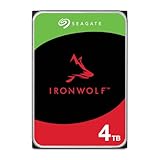
- IronWolf internal hard drives are the ideal solution for up to 8-bay, multi-user NAS environments craving powerhouse performance
- Store more and work faster with a NAS-optimized hard drive providing ultra-high capacity up to 16TB and cache of up to 256MB
- Purpose built for NAS enclosures, IronWolf delivers less wear and tear, little to no noise/vibration, no lags or down time, increased file-sharing performance, and much more
- Easily monitor the health of drives using the integrated IronWolf Health Management system and enjoy long-term reliability with 1M hours MTBF
- Three-year limited warranty protection plan included and three year Rescue Data Recovery Services included
How to check a new HDD in a Synology NAS
- Check compatibility and test availability. Confirm that the HDD is supported by your NAS and that the chosen S.M.A.R.T. test is available for its model and RAID configuration. Availability can depend on both.
- Open Storage Manager. In DSM, go to Storage Manager and find the drive’s S.M.A.R.T. test controls. Choose the extended test when available and appropriate before relying on the drive.
- Choose a suitable time. The test may temporarily affect system performance. Synology says duration varies with drive capacity and system and drive activity, so do not assume a fixed runtime.
- Review the result. A “Normal” result means the test completed and the drive is reported in good condition. If the result is abnormal, follow the NAS or drive maker’s troubleshooting advice; contact the seller or manufacturer where indicated.
- Protect the hardware while handling and testing it. Follow Synology’s advice to avoid power outages, vibration, and physical impacts.
Synology’s FAQ says an “Attention required” result after an extended test calls for data scrubbing and a backup. Follow the current guidance for your NAS and configuration rather than treating that status as a diagnosis that applies identically to every brand.
Why a normal result is not a lifetime guarantee
A clean test is a snapshot: it says the drive passed that diagnostic under the conditions in which it ran. It does not promise that the drive will remain healthy, nor does it rule out a later fault. Keep appropriate backups and monitor the NAS for subsequent alerts instead of treating a one-time test as protection against data loss.
Rank #2

- Store more, compute faster, and do it confidently with the proven reliability of BarraCuda internal hard drives
- Build a power house gaming computer or desktop setup with a variety of capacities and form factors
- The go to SATA hard drive solution for nearly every PC application from music to video to photo editing to PC gaming. Ax. Sustained transfer rate OD: 190MB/s
- Confidently rely on internal hard drive technology backed by 20 years of innovation
- Frustration Free Packaging - This is just an anti-static bag. No cables, no box.
Vendor validation claims also need to be kept in scope. Synology says it stress-validates its own drives for compatibility with its NAS products. Its 2025 page reports “Over 1,000 stress test cycles and 500,000+ hours”; these are vendor-reported figures about its own drive validation, not evidence that a user-run burn-in predicts future failures.
When a test status looks confusing
A status such as “Not Tested” does not by itself prove a newly installed drive is defective. QNAP documents a case in which IronWolf Health Management may show “Not Tested” for a newly installed Seagate IronWolf drive. QNAP also notes that testing under heavy I/O may briefly affect NAS performance. Check the NAS and drive-maker documentation for the specific model and status before deciding what to do.
Quick Recap
Rank #4

- Available in capacities ranging from 2 to 22TB(1) | (1) 1GB = 1 billion bytes and 1TB = 1 trillion bytes. Actual user capacity may be less depending on operating environment.
- For RAID-optimized NAS systems with unlimited number of bays
- Rated for 550TB/yr workload rate(2) | (2) Annualized Workload Rate = TB transferred x (8760 / recorded power-on hours). The maximum rated workload is specified for operating at typical temperature of 40C. Workload Rate will vary depending on your hardware and software components and configurations.
- Designed to handle the demands of high-intensity 24x7 multi-user NAS environments
- Western Digital partners with a wide range of NAS system vendors for extensive testing to ensure compatibility with most NAS enclosures
Rank #3

- IronWolf internal hard drives are the ideal solution for up to 8-bay, multi-user NAS environments craving powerhouse performance.date transfer rate:6.0 gigabits_per_second
- Store more and work faster with a NAS-optimized hard drive providing 8TB and cache of up to 256MB
- Purpose built for NAS enclosures, IronWolf delivers less wear and tear, little to no noise/vibration, no lags or down time, increased file-sharing performance, and much more
- Easily monitor the health of drives using the integrated IronWolf Health Management system and enjoy long-term reliability with 1M hours MTBF
- Three-year limited product warranty protection plan and three year Rescue Data Recovery Services included
Product prices and availability are accurate as of the date/time indicated and are subject to change. Any price and availability information displayed on Amazon at the time of purchase will apply.

