
Recommended Free Tools
iTechGuides is reader-supported. When you buy through links on our site, we may earn an affiliate commission. As an Amazon Associate I earn from qualifying purchases. Learn more
A sewing machine’s “motor control board” is not a universal part. Depending on the model, it may be a combined power/motor PCB, a separate power-supply motor board, or part of the main control PCB. Before ordering one, prove whether the fault is mechanical, external (cord, switch or pedal), in the motor and wiring, or in the board itself.
What the power and motor board does
Some machines combine these functions; others divide them among power, motor, main, panel and drive boards. A board may rectify AC, create logic supplies, regulate motor power, switch a motor with a triac, MOSFET, IGBT or inverter, and monitor speed, position, temperature and overcurrent. The BERNINA 820/830 power PCBA, for example, includes rectification, transformer, fuses, motor connections, motor control and 5 V/36 V outputs (service manual). Brother documentation identifies a separate power-supply motor PCB alongside main, PMD and panel PCBs (service manual).
Identify the exact machine first
Record the brand, complete model and variant, serial number, regional input voltage, machine type, motor type, board labels and part numbers, error code or LED pattern, and what happened immediately before the failure (jam, liquid, lightning, overvoltage or incorrect mains). A visually similar board is not necessarily interchangeable: voltage region, connectors, firmware, feedback sensors, fuses and revisions can differ.
Free tools Windows power users keep installed
One-click scans. No signup required.
Manufacturer terms you may encounter
- Power PCB/PCBA-Power: mains conversion and distribution, sometimes motor drive.
- Motor PCB: dedicated motor power or drive electronics.
- Main PCB: logic, user interface, sensors and coordination.
- PMD PCB: pulse-motor and solenoid drive on some Brother industrial systems.
- Panel PCB: display and controls.
Symptom-first diagnosis
| Symptom | Investigate first |
|---|---|
| Completely dead | Outlet, cord, switch, primary fuse, input connector, rectifier, power board and low-voltage supply |
| Lamp/display works, motor does not | Pedal, motor connector, motor, sensor, motor fuse, driver and main-board command |
| Motor starts at full speed | Shorted triac/MOSFET/IGBT, defective pedal, wiring or control-signal fault |
| Motor hums | Jam, seized motor, capacitor (where fitted), brushes/commutator or driver |
| Starts then stops | Thermal protection, overload, sensor, overcurrent protection or failing board |
| Fuse opens immediately | Rectifier, MOV/suppressor, power transistor, motor, wiring, capacitor or wrong voltage |
| Motor/PCB error | Only the exact model’s error table; meanings vary |
| Intermittent power | Loose or heat-damaged connector, switch, cracked solder joint or thermal fault |
| Slow sewing or lost torque | Mechanical drag, belt, brushes, pedal, supply or power-stage weakness |
| Works after cooling | Motor thermostat, board thermal protection, overheated device or blocked ventilation |
Safe diagnostic sequence
- Unplug the machine and document the symptom, model and voltage.
- Test the wall outlet with a known-good appliance or approved tester.
- Inspect the plug, cord, strain relief, switch and machine-side connector.
- Remove needle, thread, bobbin and presser-foot load if a jam is possible.
- Turn the handwheel in the manufacturer-specified direction. Do not force it.
- Inspect the belt, pedal cable, motor cable and accessible connectors for looseness, oxidation, melted plastic or discoloration.
- Check the user manual for a reset or error-clearing procedure.
- With power removed, test accessible fuses and disconnected cables.
- Compare every fuse with the exact service manual, including voltage, current and type.
- Inspect the PCB for burns, bulging capacitors, cracked solder, corrosion and carbonized areas.
- Follow the model-specific service flowchart before condemning a motor or board.
- After repair, perform the manufacturer’s functional test, calibration, speed adjustment and safety checks.
Fuse testing and repeated failure
Disconnect power and, where possible, remove the fuse from circuit before measuring. A good fuse normally reads continuity or very low resistance; an open fuse means excessive current or fuse failure, not that the fuse was the root cause. Never substitute a rating from another model or an online listing.
#1 Best Overall

- 【REPLACE PART NUMBER】AE0016C, CRD020109, D020109, CRD020118. (Warm Note: Please confirm the part number before purchasing to avoid incorrect purchases)
- 【COMPATIBILITY】The treadmill motor control board is compatible with F63.
- 【HIGH QUALITY】The Treadmill Motor Controller W/Plate (Ae00116-1Lx) is made of high-quality materials, which is more durable. At the same time, it uses cutting-edge manufacturing technology to make its performance stable and reliable, ensuring efficient and smooth operation.
- 【FUNCTION】The power supply provides power to the treadmill motor, and the treadmill control circuit motherboard uses the power to adjust the speed and direction of the treadmill.
- 【ONE YEAR QUALITY ASSURANCE】If the product has any quality problems within one year, please contact us.
Examples are model-specific: BERNINA 820/830 documentation lists a 5 A secondary and 4 A primary fuse (manual); one Brother BAS-311G/BAS-326G document shows 15 A and 3 A circuits (manual); and Brother Z-8550A/8560A values differ between 100 V and 200 V versions (manual). A new fuse that opens immediately indicates an unresolved short or overload. Manufacturer manuals specifically warn that replacing only the fuse may lead to another failure.
Separate motor, pedal, wiring and board faults
No power at all
Check outlet, cord, switch, primary fuse and input connector in that order. Then use the exact service procedure to check indicators and low-voltage output. A Brother commercial procedure checks mains, fuse continuity, board LEDs and specified DC terminals before replacing a motor or board; its connector pinout is not universal (procedure).
Rank #2
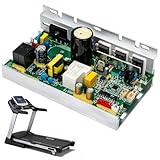
- AE0016C Treadmill Motor Control Board, Compatible with Sole F63 Treadmill Motor Controller 110V Circuit Motherboard #Replace CRD020109, D020109, CRD020118
- Replacement Part Number: AE0016C, CRD020109, D020109, CRD020118. 110V Circuit Motherboard
- Treadmill Motor Control Board Compatible with Sole F63
- OE Replacement Control Board, Easy installation, Keep your treadmill running like new; Extend the life of your treadmill without the need for a full replacement
- FUNCTION: The power supply providespower to the treadmillmotor,and the treadmilcontrol circuit motherboarduses the power to adjustthe speed and direction ofthe treadmill.
Power present but no motor
Check mechanical freedom, pedal output according to the model’s service data, motor connector and cable, motor windings and brushes (if fitted), speed/position sensor, motor fuse or fusible resistor, driver device and the command from the main PCB. An open thermal protector can look like a dead motor.
Uncontrolled speed
Stop powering the machine. A shorted power transistor or triac, defective pedal, shorted control line, incorrect motor wiring or failed suppression component can produce runaway operation.
Rank #3
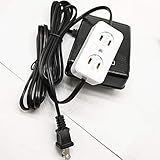
- Universal Home Sewing Machines Foot Control Pedal With Light And Motor Block Fits Many Home Sewing Machines
- PLEASE MAKE SURE YOUR MOTOR HAS ITS OWN POWER CORD WITH PLUG
- Part # FC-143
Overheating or shutdown
Look for mechanical resistance, incorrect belt tension, lint blocking ventilation, excessive duty cycle, thermostat operation and heat-damaged connectors or semiconductors. Brother documentation describes thermal protection and cooling before retest (manual).
Multimeter checks: what is safe
Normally suitable with the machine unplugged
- Fuse, cord and switch continuity.
- Disconnected pedal resistance or continuity using the model’s specified method.
- Motor winding continuity and connector continuity.
- Visual inspection and diode-test checks on an isolated rectifier.
- Motor-to-frame insulation with an appropriate insulation tester, not merely a continuity beep.
- Mechanical checks with the belt or motor isolated only when the service manual permits.
Technician-only energized measurements
Rectified DC bus, primary capacitor voltage, loaded board outputs, switching waveforms, live control signals, leakage and isolation tests require appropriate training, insulated probes, current limiting and an isolation transformer where applicable. One Brother procedure specifies 170–270 V DC at a connector after isolation checks (procedure); that is hazardous mains-level voltage, not a household DIY test.
Rank #4

- [STABLE CONNECTION] The foot control circuit board's six-hole design ensures a stable and reliable connection, improving the efficiency of your sewing machine pedal speed controller.
- [EFFICIENT SPEED ADJUSTMENT] This pedal speed controller provides seamless and accurate control over sewing machine speeds, enhancing flexibility in all your projects.
- [ROBUST CONSTRUCTION] Made from high-strength materials, this circuit board is engineered for durability and resilience against everyday wear and tear.
- [SIMPLE INSTALLATION PROCESS] Enjoy quick and hassle-free installation with this straightforward design, allowing you to get back to sewing without delay.
- [VERIFY SIZE REQUIREMENTS] This pedal speed regulator is compatible with many sewing machines; please consults your specifications before making a purchase.
Common failed components
Possible failures include primary or secondary fuses, fusible resistors, bridge rectifiers, MOVs, safety capacitors, electrolytics, triacs, MOSFETs, IGBTs, gate resistors, optocouplers, relays, regulators, transformers, brushes, Hall/optical/tach sensors, cracked solder joints, burned connectors and cooling fans. A continuity beep across a transistor still soldered in circuit is inconclusive. Replacing a visibly damaged part without testing the motor, rectifier, driver and downstream circuit commonly destroys the replacement. Community guides at iFixit’s sewing-machine index can supplement, but never replace, the exact manufacturer manual.
Repair, replace the board, or replace the machine?
| Option | When it makes sense | Main trade-off |
|---|---|---|
| Component repair | Localized fuse, connector, relay, capacitor or discrete-device fault; schematic and safe test capability available; PCB not carbonized | Root cause, safety classification and collateral damage must be verified |
| Board replacement | Extensive or multilayer damage, proprietary firmware/calibration, exact part and voltage version available | Must test motor, pedal and wiring first; may require EEPROM transfer or calibration |
| Machine replacement | Discontinued board, multiple faults, scarce parts or total repair cost near replacement value | Loss of familiar features and accessories |
Do not buy a generic “universal” controller unless motor type, voltage, connectors, safety approvals, mounting and speed feedback are documented. Computerized and embroidery machines may need firmware, test programs or sensor alignment after board replacement.
Best Value
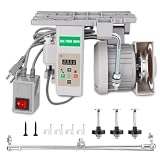
- 【ENERGY SAVING】The servo motor consumes energy only when sewing. Compared with the traditional clutch motor that consumes power by idling continuously, the 750W servo motor can save up to 50%-70% of electricity
- 【QUIET】 The noise of the servo motor when working is much lower than that of the traditional motor (usually it can be reduced to about 65 decibels), reducing noise pollution
- 【SAFETY】The 750W servo motor usually has multiple safety mechanisms such as overheat protection, overload protection, overvoltage/undervoltage protection, etc. It can automatically cut off the power in abnormal conditions, effectively protecting the core components of the motor from damage
- 【PRECISE START AND STOP】The servo motor responds very quickly, and the start and stop are completed instantly. Each time the stop needle is in a fixed position, whether it is light silk or heavy denim and leather, it can be sewn smoothly
- 【LONG SERVICE LIFE】Compared with traditional motors, the servo motor has high energy conversion efficiency and significantly reduces its own heat generation, which greatly extends the service life of the electronic components and bearings inside the motor, making the machine more durable
When to use a professional
- Any exposed mains circuitry or retained capacitor charge.
- Repeated fuse failure, burning smell, smoke, arcing or melted connectors.
- Full-speed runaway or unusually hot motor/board.
- Computerized, embroidery, rare, valuable or in-warranty machines.
- Firmware, calibration, proprietary diagnostics or multilayer PCB damage.
- No isolation transformer, current-limited equipment or electrical safety training.
Repair pricing varies by location and machine. One U.S. Bernina dealership posts a $29 diagnostic charge, $69 hourly bench labor, and maintenance prices of $139 for most non-computerized machines and $159 for computerized machines/sergers (service page). These are that dealer’s posted examples, not universal rates.
Repair-ticket checklist
- Exact model, variant, serial and regional voltage
- Motor type and board part/revision numbers
- Symptom, error code and failure conditions
- Outlet, cord, switch, pedal, handwheel and belt results
- Fuse designation, rating and continuity result
- Connector condition and PCB visual findings
- Motor, sensor and cable test results
- Required firmware, calibration and final safety test
Frequently Asked Questions
Can I replace a sewing-machine fuse with a higher-rated fuse?
No. Use only the exact fuse type, voltage and current rating specified for that model and regional version. A higher rating can allow wiring or board damage and create a fire hazard.
Does a blown fuse prove the power board is bad?
No. A jammed motor, shorted pedal, rectifier, suppressor, transistor, capacitor, wiring fault or incorrect voltage can be the cause. Find the underlying overload before fitting another fuse.
Quick wins for a faster PC:
Clear out junk files and repair common Windows errorsFree Scan →Fix the driver behind crashes, sound loss and screen glitchesFind Drivers →Repair Windows errors before they cause bigger problemsFix Now →Is a generic motor-control board safe to use?
Only when compatibility, motor technology, voltage, connectors, feedback, mounting and safety approvals are verified for the exact machine. Otherwise it can cause shock, fire, runaway speed or motor damage.
Why does the machine work again after cooling?
Thermal protection, an overloaded mechanism, blocked ventilation, an overheating motor, or a power semiconductor with a thermal fault may be involved. Do not treat cooling as a permanent repair.
Quick Recap
Product prices and availability are accurate as of the date/time indicated and are subject to change. Any price and availability information displayed on Amazon at the time of purchase will apply.

