
iTechGuides is reader-supported. When you buy through links on our site, we may earn an affiliate commission. As an Amazon Associate I earn from qualifying purchases. Learn more
Yes, metal can appear to heal itself under very specific conditions. In a 2023 experiment, researchers saw one end of a fatigue crack fuse together in a nanoscale platinum specimen being repeatedly pulled in a vacuum. The crack later grew again in a different direction. The finding does not show that a cracked tool, bridge, car part or other conventional metal object will repair itself in ordinary air.
What the researchers actually saw
The team was studying how fatigue cracks form and grow in nanoscale platinum. Using a specialized electron-microscopy technique in a vacuum, they repeatedly pulled the specimen. About 40 minutes into the experiment, one end of a crack fused back together, apparently retracing its path. The researchers had not set out to demonstrate self-healing; the closure was unexpected.
The specimen was still being loaded, and the crack later grew again along a different direction. That sequence matters: the observation was a local crack closure and fusion, not proof that the entire piece returned to its original condition or could safely go back into service.
Quick wins for a faster PC:
Clear out junk files and repair common Windows errorsFree Scan →Scan for outdated or missing drivers - takes under a minuteDriver Scan →How can a crack close while metal is being pulled?
The Nature paper describes the process as “cold welding.” In this reported nanoscale setting, the crack faces came back into contact and fused without the conventional high-temperature welding process. The observation shows that, under the experiment’s particular conditions, crack growth need not proceed only in one direction: a crack tip can also close and join locally.
#1 Best Overall

- We are providing one piece pure Platinum metal sheet / bar. Purity: Pt >=99.95%;
- Net weight 1 gram.(~ 0.0352 oz). Size: approx 15mm length x 6mm width;
- This item will be vacuum packed when posting in order to maintain original appearance and avoid oxidation;
- It can be a great gift for periodic table precious element specimen collectors. It's also great for laboratory scientific research experiments purpose using.
- Platinum is widely used in autocatalysts field, laboratory catalyst, petroleum refining, electrical applications, glass manufacturing, jewelry crafting and lots of other industrial uses.
The result was an experimental confirmation of a mechanism Michael Demkowicz had proposed in 2013 based on computer simulations. After the observation, Demkowicz recreated the experiment in a computer model; Sandia National Laboratories’ account says the model substantiated that the observed process matched the earlier theory.
What this finding does—and does not—establish
| Question | What the experiment supports | What remains unestablished |
|---|---|---|
| What material and scale? | A fatigue crack in nanoscale platinum. | That the same behavior occurs in ordinary-sized metal components or other metals. |
| What surroundings? | The observation was made in a vacuum. | That it can happen in conventional metals exposed to air. |
| What kind of repair? | One end of a crack fused locally, then the crack grew again in another direction. | Permanent crack resistance, full structural restoration or readiness for service. |
| Is it a usable technology? | The observation points to a phenomenon worth investigating. | A manufacturing method, commercial product or practical repair process. |
Sandia materials scientist Brad Boyce cautioned that generalization remains an open question: “The extent to which these findings are generalizable will likely become a subject of extensive research. We show this happening in nanocrystalline metals in vacuum. But we don’t know if this can also be induced in conventional metals in air.”
Rank #2

- We are providing 1 piece pure Platinum metal cube. Purity. Pt >= 99.95%. Net weight approx. 7.35 grams;
- Size: 7mm x7mm x7mm (~0.275 inch x 0.275 inch x 0.275 inch).
- This item will be vacuum packed in order to maintain original appearance and avoid oxidation;
- It can be a great gift for periodic table rare element specimen collectors. It's also great for laboratory science experiments and production purpose using due to it's high purity,
- Platinum is primarily used in thermosouple sensors, laboratory crucibles, evaporating dishes, and wires, electrical contacts, electrophoresis, electrodes, catalyst and luxury jewelry maing areas etc.
Boyce also described the scope of the finding this way: “What we have confirmed is that metals have their own intrinsic, natural ability to heal themselves, at least in the case of fatigue damage at the nanoscale.” The qualification is essential: it is not evidence that a damaged household or structural metal object can heal itself.
The Tool Desk
Outbyte Driver Updater FREEFix the driver behind crashes, sound loss and screen glitchesFind Drivers →Outbyte PC Repair FREEClear out junk files and repair common Windows errorsFree Scan →Could this lead to self-healing bridges, engines or aircraft?
Those are possible future applications only if researchers can understand and harness the effect beyond the observed setup. The institutional account identifies manufacturing practicality as unknown. It does not report a tested component, engineering design, product or method for repairing conventional metal in service. For now, a visible crack in an everyday metal object should be treated as damage, not as something likely to close on its own.
Rank #3
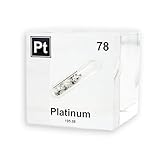
- Authentic Platinum Sample: Own a genuine sample of Platinum, a rare and highly valuable metal known for its exceptional durability and resistance to corrosion. Encased in durable, crystal-clear lucite acrylic, this 2x2x2 inch cube highlights the brilliance of Platinum while ensuring long-term preservation.
- Handmade in the USA: Expertly crafted by Engineered Labs in the USA, this Platinum cube is encased in high-quality lucite acrylic. Every piece is meticulously handmade to ensure superior craftsmanship and authenticity.
- Educational and Captivating: Ideal for science lovers, students, and educators, this Platinum cube provides a tangible connection to the periodic table. Its sleek design and fascinating properties make it a perfect addition to any collection or learning environment.
- Durable and Eye-Catching Display Piece: Encased in lucite acrylic for protection and clarity, this Platinum cube is an elegant display piece. Add a touch of scientific sophistication to your home, office, or classroom decor.
- Engineered Labs Quality: Trust Engineered Labs for premium scientific and educational artifacts. This Platinum cube is more than a collectible; it's a preserved element sample, combining scientific value with aesthetic appeal.
The study behind the headline
The finding was reported by a team from Sandia National Laboratories and Texas A&M University in the 2023 Nature paper “Autonomous healing of fatigue cracks via cold welding” by Brad Boyce and colleagues (DOI: 10.1038/s41586-023-06223-0). Sandia National Laboratories’ account, carried by Phys.org on July 19, 2023, provides the experimental narrative and researcher comments. Boyce said of watching the event: “This was absolutely stunning to watch first-hand.”
Quick Recap
Best Value

- A platinum cube with a surface engraved with the periodic table of elements
- Its size is 7 * 7 * 7mm
- Its weight is approximately 7.3g
- Its purity is ≥ 99.95%
- Package includes: 1pc platinum cube
Rank #4

- Platinum, abbreviated as Pt, is a naturally occurring white precious metal that has been considered one of the most noble metals since ancient times.
- The purity of platinum is ≥ 99.95%
- The weight of platinum is approximately 0.1g
- It is an excellent gift for natural science and element enthusiasts.
Product prices and availability are accurate as of the date/time indicated and are subject to change. Any price and availability information displayed on Amazon at the time of purchase will apply.

