
iTechGuides is reader-supported. When you buy through links on our site, we may earn an affiliate commission. As an Amazon Associate I earn from qualifying purchases. Learn more
Short answer: Samsung has demonstrated processing-in-memory (PIM) designs for HBM and DRAM modules, but ordinary DDR5 modules are not automatically AI processors. Samsung’s original HBM-PIM work used HBM2 Aquabolt and proposed expansion to HBM3 and memory modules. By August 2026, its public AI-memory roadmap had moved on to HBM4E, HBM5 and LPDDR5X-PIM. No current retail HBM3-PIM, DDR5-PIM or AXDIMM SKU, price or Amazon listing is established by Samsung’s announcements.
What Samsung HBM-PIM actually does
Conventional systems keep computation in a CPU, GPU or accelerator and move data back and forth to separate memory. PIM adds programmable compute logic in or beside memory, so selected operations can run where the data is stored. That can reduce transfers, latency and energy for workloads that fit the memory engine’s supported operations; it does not turn a memory module into a general-purpose replacement for a GPU.
Samsung’s February 17, 2021 HBM-PIM announcement put a DRAM-optimized AI engine in each memory bank. The company applied the design to HBM2 Aquabolt and reported more than twice the system performance and over 70% lower energy in its stated test context. Samsung said partner validation was expected in the first half of 2021. Those figures are Samsung-reported results, not an independent benchmark.
Free tools Windows power users keep installed
One-click scans. No signup required.
Where the computation sits
- HBM-PIM: an AI engine in each DRAM bank, enabling parallel processing across banks.
- AXDIMM: an AI engine in the DRAM module’s buffer chip, with parallel work across ranks.
- Conventional HBM or DDR5: memory supplies bandwidth and capacity while an external CPU, GPU or accelerator performs the AI calculations.
Did Samsung expand the plan to HBM3 and DRAM modules?
Yes, as a roadmap and demonstration rather than a confirmed retail product line. On August 24, 2021, Samsung described HBM-PIM testing in a Xilinx Virtex UltraScale+ Alveo accelerator. It reported almost 2.5 times the system performance and more than 60% lower energy in that workload. Samsung said standardization could extend PIM into HBM3 for next-generation supercomputers and AI systems, and into data-center memory modules.
#1 Best Overall
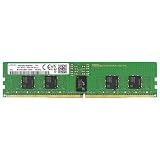
- Samsung DDR5 Memory RAM | Part Number: M321R2GA3BB6-CQK
- Single 16 GB Module; DDR5 DIMM 288-Pin; Speeds up to 4800 MHz, PC5-38400 (PC5-4800B)
- ECC Registered RDIMM; 1Rx8 (Single Rank x8); JEDEC DDR5 standard 1.1V
- Compatible for select DDR5 Servers and Workstations; *Not Compatible with Desktop or Laptop Computers*
- Note: This memory is ECC Registered and cannot be mixed with different ECC types such as ECC Unbuffered, ECC Load Reduced, or Non-ECC Unbuffered; (Refer to your system's manual for memory seating and channel guidelines)
The same announcement introduced AXDIMM. Processing in the module buffer allows multiple ranks to work in parallel while retaining a conventional DIMM form factor. Samsung reported approximately twice the performance for AI recommendation applications and 40% lower system-wide energy. “Drop-in” refers to the physical DIMM form factor; servers still need platform, firmware and workload validation.
Does Samsung DDR5 have AI processing built in?
Not simply because it is Samsung DDR5. Samsung’s March 2021 announcement covered a 512GB HKMG DDR5 module running at up to 7,200Mbps, with more than twice DDR4’s cited speed and approximately 13% lower power. Customer sampling targeted AI and machine learning, exascale computing, analytics and networking, but the announcement did not identify that module as a PIM product.
Rank #2

- Samsung DDR5 Memory RAM | Part Number: M321R8GA0PB0-CWM
- Single 64 GB RAM Module; DDR5 DIMM 288-Pin; Speeds up to 5600 MHz, PC5-44800 (PC5-5600B)
- ECC Registered RDIMM; 2Rx4 (EC8, 10x4); JEDEC DDR5 standard 1.1V
- Compatible for select Server systems ONLY; **NOT COMPATIBLE with Desktop Computers, Laptop Computers, or PCs of any kind**
- Note: EC8 (10x4) ECC Registered modules cannot be mixed with EC4 (9x4) ECC Registered modules or with different ECC types such as ECC Unbuffered, ECC Load Reduced or Non-ECC Unbuffered; (Memory compatibility can vary among different system models and their installed components; please verify compatibility and follow memory channel guidelines to ensure maximum performance)
Samsung’s 2024 DDR5 roadmap focused on capacity, bandwidth and power. It described 32Gb DDR5 at up to 7.2Gbps, about 40% lower power than the cited 16Gb-based 128GB modules, and modules up to 1TB when through-silicon vias (TSV) are used. These are useful server-memory characteristics, not proof that an AI engine is integrated into every DDR5 module.
Do these 3 things before closing this tab:
1Fix the driver behind crashes, sound loss and screen glitches2Repair Windows errors before they cause bigger problems3Scan for outdated or missing drivers - takes under a minuteHow to read a product claim
- “DDR5” identifies a memory standard and does not imply PIM.
- “AI/ML-ready” or “high capacity” generally describes the workload or configuration, not compute inside the DRAM.
- “PIM,” “AXDIMM” or “processing in memory” should be accompanied by a specified compute location, supported operations and host-platform validation.
HBM3, HBM3E and DDR5 for AI servers
| Technology | Where AI work runs | Published Samsung figures | What the figure does—and does not—establish |
|---|---|---|---|
| HBM-PIM (demonstrated on HBM2 Aquabolt) | AI engines in DRAM banks | More than 2× system performance and over 70% lower energy in Samsung’s 2021 application | Demonstrates a PIM architecture; it is not evidence of a current retail HBM3 module. |
| HBM-PIM with Xilinx Alveo test | Memory-side AI engines integrated with the accelerator system | Almost 2.5× performance and more than 60% lower energy in Samsung’s August 2021 test | Customer-system demonstration with workload-specific results. |
| AXDIMM | AI engine in the DRAM module buffer, processing across ranks | Approximately 2× performance and 40% lower system-wide energy for AI recommendation work | Retains a DIMM form factor, but requires server and software validation. |
| HBM3E | Normally an external CPU/GPU/accelerator; “HBM3E” alone does not mean PIM | Up to 1,280GB/s bandwidth and 36GB capacity in Samsung’s 2024 description | High bandwidth and capacity are separate from in-memory compute. |
| DDR5 | Normally an external CPU/GPU/accelerator | Up to 7.2Gbps for the cited 32Gb product; up to 1TB modules with TSV in Samsung’s roadmap | Capacity and transfer rate do not establish an integrated AI engine. |
Samsung also said in 2024 that its PIM work had approximately doubled performance and reduced energy by about 50% on average versus an existing GPU accelerator. That statement is an aggregate company claim across specified comparisons, not a universal result for every HBM3E or DDR5 server.
Rank #3

- Samsung DDR5 Memory RAM | Part Number: M321RAGA0B20-CWK
- Single 128 GB RAM Module; DDR5 DIMM 288-Pin; Speeds up to 4800 MHz, PC5-38400 (PC5-4800B)
- ECC Registered RDIMM; 4Rx4 2S2Rx4 (EC8, 10x4); JEDEC DDR5 standard 1.1V
- Compatible for select Server systems ONLY; **NOT COMPATIBLE with Desktop Computers, Laptop Computers, or PCs of any kind**
- Note: EC8 (10x4) ECC Registered modules cannot be mixed with EC4 (9x4) ECC Registered modules or with different ECC types such as ECC Unbuffered, ECC Load Reduced or Non-ECC Unbuffered; (Memory compatibility can vary among different system models and their installed components; please verify compatibility and follow memory channel guidelines to ensure maximum performance)
What changed in Samsung’s roadmap by 2026?
Samsung’s August 4, 2026 Future Memory Systems (FMS) announcement listed HBM4E, HBM5 and LPDDR5X-PIM among its AI-memory offerings. It said HBM4E samples had begun shipping to global customers and described LPDDR5X-PIM as processing data within memory.
This is why the original phrase “next-generation HBM3 and DDR5 modules” needs qualification in 2026: HBM3 expansion was an announced 2021 direction, while the latest dated public roadmap emphasizes newer HBM generations and LPDDR5X-PIM. “Samples shipping” is not the same as broad mass production or retail availability.
Rank #4

- NEMIX RAM is a Distributor and Manufacturer of Computer Memory and Storage Upgrades. Specializing in Enterprise Storage RAM for Servers and Workstations along with all Standard and Specialty ECC Memory for NAS & PC/Mac based Computers and Laptops.
- Our Memory Delivers Enhanced Performance: No Doubt about it, Memory Upgrades are the Easiest, Most Cost Effective Way to Speed Up, Maximize and Boost the Overall Performance of Your Computing Environment.
- Simple Installation: Typically you can Easily Upgrade the Memory Yourself in a couple of Minutes. Always Refer to your Owners Manual for Detailed Instructions.
- Our Commitment: To Provide only the Best, Highest Quality, Computer Memory Products in the Industry. Back them with a Lifetime Replacement Warranty, and offer Top Tier Support from a Seasoned IT Support Staff that Completely Understands Memory Upgrades.
- Once You Install NEMIX RAM You Won't need Anything Else.
Are Samsung’s PIM modules available to buy?
There is no established current retail SKU, price or consumer listing for Samsung HBM3-PIM, DDR5-PIM or AXDIMM in the announcements covered here. The evidence spans demonstrations, customer testing, sampling and roadmap statements—not a mass-market product catalog.
Quick wins for a faster PC:
Fix the driver behind crashes, sound loss and screen glitchesFind Drivers →Repair Windows errors before they cause bigger problemsFix Now →Enterprise buyers should look for announcements from server OEMs, AI-accelerator vendors, memory distributors and CXL or other data-center memory suppliers that name a qualified module, supported host platform and availability status. A generic “DDR5 RAM module” listing is a normal memory category, not verification that the module contains Samsung PIM logic.
Quick Recap
Best Value

- Samsung DDR5 Memory RAM | Part Number: M321R4GA0BB0-CQK
- Single 32 GB Module; DDR5 DIMM 288-Pin; Speeds up to 4800 MHz, PC5-38400 (PC5-4800B)
- ECC Registered RDIMM; 1Rx4 (EC8 10x4); JEDEC DDR5 standard 1.1V
- Compatible for select DDR5 Servers and Workstations; *Not Compatible with Desktop or Laptop Computers*
- Note: EC8 (10x4) ECC Registered modules can not be mixed with EC4 (9x4) ECC Registered modules
What PIM can and cannot replace
Good candidates
- Bandwidth-heavy, repetitive operations that can be executed by the embedded PIM engine.
- Recommendation, inference or other data-movement-limited stages where moving tensors dominates energy or time.
- Large data sets in which parallel work across HBM banks or DIMM ranks is useful.
Not a drop-in GPU substitute
- PIM supports a defined instruction set and workload model rather than every AI framework operation.
- Training and inference still require a host processor, accelerator, software stack and system interconnect.
- Published gains depend on the exact model, data movement pattern, accelerator, software and measurement boundary.
How to evaluate a claimed Samsung AI-memory product
- Check whether the listing names PIM, AXDIMM or a specific Samsung PIM generation rather than only DDR5, HBM3 or HBM3E.
- Identify the compute location: DRAM bank, module buffer or an external accelerator.
- Confirm the supported host server, accelerator, firmware, driver and software requirements.
- Separate engineering samples, customer sampling, shipping samples and mass production.
- Read performance and energy numbers with their workload, comparison system and measurement scope attached.
- Ask for a part number and distributor or OEM availability before treating a roadmap announcement as purchasable hardware.
Product prices and availability are accurate as of the date/time indicated and are subject to change. Any price and availability information displayed on Amazon at the time of purchase will apply.

