
Free tools Windows power users keep installed
One-click scans. No signup required.
iTechGuides is reader-supported. When you buy through links on our site, we may earn an affiliate commission. As an Amazon Associate I earn from qualifying purchases. Learn more
The Samsung Galaxy S6 was one of 2015’s standout Android phones: its sharp AMOLED screen, fast performance and capable camera arrived in a slim metal-and-glass design. That redesign also removed practical features such as a removable battery and microSD slot. In 2026, obsolete software and the uncertain condition of an eleven-year-old battery make it a poor choice as a primary phone. It can still suit limited offline or nostalgic use, provided the specific unit is in good condition.
What was the Samsung Galaxy S6?
Samsung announced U.S. availability for April 10, 2015, positioning the Galaxy S6 as its standard flagship. The flat-screen S6 launched alongside the Galaxy S6 edge, which had a curved display; the more rugged Galaxy S6 Active and larger Galaxy S6 edge+ were distinct models. The S6 marked a design reset for the Galaxy S line, replacing the earlier plastic-and-removable-battery approach with glass and a metal frame. Samsung’s launch announcement gives the U.S. date; availability differed by market.
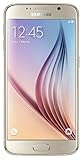
Galaxy S6 specifications
| Feature | Galaxy S6 |
|---|---|
| Display | 5.1-inch Quad HD Super AMOLED, 2,560 × 1,440 pixels, 577 ppi |
| Processor and memory | Samsung Exynos octa-core configuration: four cores at 2.1 GHz and four at 1.5 GHz; 3GB LPDDR4 RAM |
| Storage | 32GB, 64GB or 128GB; no microSD slot |
| Rear camera | 16MP with optical image stabilization (OIS) |
| Front camera | 5MP |
| Battery | 2,550 mAh, sealed |
| Size and weight | 143.4 × 70.5 × 6.8 mm; 138 g |
| Connectivity highlights | LTE Cat.6, dual-band 802.11ac Wi-Fi, Bluetooth 4.1 and NFC; bands and carrier support vary by model |
| Launch software | Android 5.0 Lollipop with Samsung TouchWiz |
These are Samsung’s published specifications; features such as cellular bands can vary across regional and carrier models. Samsung’s specification and design overview lists the hardware, though its source URL uses a curly apostrophe in the path.
Recommended Free Tools
Design: premium feel at the cost of practicality
The S6 felt more upscale than Samsung’s previous plastic Galaxy S phones. Its slim glass front and back sit within a metal frame, and at 138 g it is compact by modern phone standards. The smooth surfaces look elegant but can be slippery and crack if dropped; the rear camera also protrudes. Unlike the Galaxy S5, the S6 has no removable back cover, user-swappable battery or comparable water-resistance positioning. Ars Technica’s launch review noted that the makeover came with practical trade-offs.
#1 Best Overall
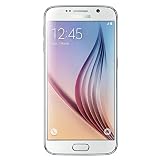
- Display: 5.10-inches
- Camera: 16-MP
- Processor Speed: OCTA Core 64-bit
- OS: Android 5.0 (Lollipop)
Display: the S6’s lasting hardware highlight
The 5.1-inch Quad HD AMOLED panel is exceptionally sharp, with deep blacks and high contrast. Samsung’s Adaptive Display technology and power-efficiency improvements were manufacturer claims, rather than guarantees about every user’s battery life. Color appearance depends on the selected screen mode, so vivid colors may not look the same in every setting. At launch, reviewers counted the display among the phone’s strongest features.
On a used handset, age and damage matter more than the original specification. Check for uneven brightness, burn-in, dead pixels, cracks and touch areas that fail to respond; a colorful home screen can make some display problems harder to notice.
Performance and software
For its time, the S6 was a fast phone. Its Exynos processor, 3GB of RAM and UFS 2.0 storage supported quick app launches and strong performance in contemporary games. TouchWiz, Samsung’s extensive Android customization layer, brought features including themes, S Health, Smart Manager, S Voice, power-saving modes and a quick camera launch. Samsung Pay support was promoted at launch, but that did not guarantee service availability across regions or continued compatibility.
Rank #2
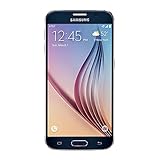
- 5.1-inch Super AMOLED Capacitive Touchscreen, 1440 x 2560 pixel resolution with Corning Gorilla Glass 4
- Android v5.0 Lollipop (Upgradeable), Chipset: Exynos 7420 Octa, Processor: Octa-Core (Quad-Core 2.1 GHz Cortex-A57 & Quad-Core 1.5 GHz Cortex-A53), GPU: Mali-T760MP8
- 16 Megapixel Camera (2988 x 5312 pixels) f/1.9, 28mm, OIS, 1/2.6" Sensor Size + Front-Facing 5 Megapixel Camera with 1/4.1" Sensor Size, f/1.9, 22mm
- Internal Memory: 32GB, 3GB RAM
- WLAN: Wi-Fi 802.11 a/b/g/n/ac, dual-band, Wi-Fi Direct, hotspot; Bluetooth: v4.1, A2DP, LE, aptX; GPS: Yes, with A-GPS, GLONASS, BDS; NFC: Yes; Infrared Port: Yes; USB: microUSB v2.0, USB Host
Some launch-era reviewers also reported memory-management and multitasking complaints. More importantly for a used phone, a 2015 performance assessment cannot predict how a particular unit will feel in 2026: battery degradation, heat, storage wear and newer app demands all affect the experience.
The S6 launched with Android 5.0 Lollipop. Supported variants later received Android 6.0 Marshmallow and Android 7.0 Nougat, but carrier and regional rollouts differed. For example, Cricket’s update documentation records an Android 7.0 update for an applicable model. There is no single final build that applies to every S6.
The phone no longer receives normal official security updates. Android 7 may also limit whether a current app installs or works; compatibility differs by app and variant. A functioning app is not the same as a phone that remains secure enough for sensitive accounts. Do not rely on an S6 for banking, payment, work authentication or other sensitive use.
Rank #3

- Infra: 2G GSM, 3G WCDMA,4G LTE FDD; 2G GSM: GSM850, GSM900, DCS1800, PCS1900; 3G UMTS: B1(2100), B2(1900), B4(AWS), B5(850); 4G FDD LTE: B1(2100), B2(1900), B3(1800), B4(AWS), B5(850), B7(2600), B12(700), B17(700), B20(800)
- Exynos 7420 Octa-core 64-bit
- Android 5.0, Lollipop
- Super AMOLED Main Display Technology
- Accelerometer, Barometer, Fingerprint Sensor, Gyro Sensor, Geomagnetic Sensor, Hall Sensor, HR Sensor, Light Sensor, Proximity Sensor
Camera: excellent for 2015, limited by today’s standards
The 16MP rear camera combines OIS with an f/1.9 lens. The 5MP front camera also has an f/1.9 aperture, while features included Auto HDR, Pro controls, slow- and fast-motion modes, selective focus and quick launch. Samsung described these features in its camera overview. Launch-era reviews praised image quality and usability, especially in good light.
OIS helps reduce hand shake in still photos and video, while HDR can help balance scenes with bright and dark areas. The camera can still be useful for basic daylight shots, but it lacks the processing, low-light modes, HDR and stabilization capabilities found on modern phones. Before buying used, check for scratched camera glass, focus problems and inconsistent image sharpness.
Battery and charging
The 2,550 mAh battery was relatively modest for a flagship and is sealed inside the phone. Contemporary coverage criticized endurance, despite the convenience of fast wired charging and wireless charging. Samsung said ten minutes of wired fast charging could provide up to four hours of use; that was a manufacturer claim, and charging speed depends on the charger, cable, adapter and battery condition. The phone supports wireless charging compatible with WPC and PMA standards. Tech Advisor’s review discusses battery life in the context of the original release.
In 2026, an original battery is about eleven years old. It may drain quickly, overheat, shut the phone down unexpectedly or swell; these are risks to inspect, not inevitable outcomes. Prioritize battery condition over cosmetic appearance. If the battery is swollen, stop charging and using the phone and arrange appropriate repair or electronics recycling. Replacement requires opening the handset, with a risk of damaging glass or internal components, so use a reputable repair service and weigh its cost against the phone’s limited use.
Independent reader supportYour contribution helps us test, update, and keep practical guides available for everyone.Storage, connectivity and missing features
The S6 came with 32GB, 64GB or 128GB of internal storage and no microSD slot. The 32GB model is especially restrictive: system files and app data leave less room for the owner, and that space cannot be expanded with a card. For even light ongoing use, favor 64GB or 128GB if choosing an S6.
Samsung listed LTE Cat.6, dual-band 802.11ac Wi-Fi, Bluetooth 4.1, NFC, USB 2.0, a fingerprint reader, IR remote, ANT+ and sensors including a gyroscope, barometer, compass and heart-rate monitor. The phone also supports wireless charging. Confirm the exact model and its features rather than assuming every regional or carrier version is identical.
LTE data support does not guarantee voice service. On a 2015 phone, calling may depend on a carrier accepting that exact model’s LTE and VoLTE configuration. Network bands, firmware, VoLTE support and update history can vary, so check directly with the carrier using the model number and IMEI before buying. Do not assume an unlocked S6 will work on every network.
Galaxy S6 vs. Galaxy S6 edge
The S6 edge shares the core processor, camera, RAM and storage options with the flat S6 but replaces the flat screen with curved display edges. Samsung listed the edge at 142.1 × 70.1 × 7.0 mm and 132 g, with a 2,600 mAh battery. Its distinctive look did not persuade every contemporary reviewer that the added functionality justified its higher price; TechSpot compared the two versions. For a used buyer, curved glass is also harder to protect and can be more costly to replace, making the edge the riskier choice if durability is the priority.
Quick Recap
Is the Galaxy S6 worth buying in 2026?
- As a primary phone: No. The unsupported software, battery risk, constrained storage and uncertain carrier compatibility make it a poor choice for daily, sensitive or dependable use.
- As a backup phone: Only if the battery is verified healthy or professionally replaced and the exact model works with the intended carrier.
- For offline music or legacy apps: Possibly, if the storage is sufficient and the device is in sound working condition.
- For basic photography: It can take usable pictures in good light, but should not be bought as a substitute for a modern camera phone.
- For nostalgia or collecting: It remains a notable Samsung design milestone; condition, completeness and price matter more than its former flagship status.
Used Galaxy S6 buying checklist
- Identify the model. Check Settings → About device or the handset label. Confirm whether it is the standard S6, S6 edge, S6 Active or a carrier-specific variant.
- Verify network eligibility. Give the carrier the exact model number and IMEI and confirm both data and voice/VoLTE support. Also check that the IMEI is not blocked.
- Inspect the battery and body. Look for swelling, lifted glass, cracks, loose seams or unusual heat. Do not charge a device with a swollen battery.
- Test charging. Check the port with a known-good cable and adapter; if possible, test wireless charging with a compatible pad.
- Check the display and touch. Show bright white, gray and black screens to spot burn-in or unevenness, then test touch response across the full panel.
- Test the camera and fingerprint reader. Check focus, image sharpness, lens glass, flash and whether the fingerprint sensor registers reliably.
- Test the connections you need. Try cellular calls and data, Wi-Fi, Bluetooth, GPS and NFC rather than relying on a seller’s assurance.
- Confirm storage and account status. Check the installed capacity, then ensure the seller removes their accounts and the phone can be factory-reset and activated without a prior-owner lock.
- Prefer a return option. A return window gives you time to check functions that a quick cosmetic inspection cannot establish.
Product prices and availability are accurate as of the date/time indicated and are subject to change. Any price and availability information displayed on Amazon at the time of purchase will apply.

