
iTechGuides is reader-supported. When you buy through links on our site, we may earn an affiliate commission. As an Amazon Associate I earn from qualifying purchases. Learn more
For a Samsung Galaxy phone, start with Samsung Find (also called SmartThings Find), but enable Google Find My Device as a second recovery path. Samsung’s service is most tightly integrated with Galaxy hardware and Samsung-account controls. Google’s service is the Android-wide baseline and can use nearby participating Android devices to help locate an offline phone. Before a loss, configure and test both. After a loss, use whichever service shows the freshest location, ring the phone if it may be nearby, lock it with a return message when appropriate, and erase it only when recovery is unlikely.
Samsung Find and Google Find My Device at a glance
| Decision | Samsung Find / SmartThings Find | Google Find My Device |
|---|---|---|
| Best fit | Galaxy owners who use a Samsung account and other Galaxy products | Supported Android phones using a Google account |
| Offline finding | Nearby Galaxy devices can anonymously report a supported device through Bluetooth when Offline finding was enabled beforehand | Nearby Android devices can contribute to Google’s crowdsourced finding network when the relevant settings are enabled |
| Core recovery actions | Locate, ring, lock, track, erase, and, on supported devices, extend battery life | Ring, locate, secure, and erase supported devices |
| Ecosystem reach | Deep integration with Samsung phones, tablets, watches, earbuds, tags, and other registered products | Android-wide account integration and Google security controls |
| Published recovery rate | No neutral, directly comparable success rate or average recovery time is published in the official material considered here | |
The services are not mutually exclusive. A Galaxy phone can be registered with both accounts, and using both improves your chances of getting a current location. The practical winner depends on the phone model, account access, enabled settings, battery level, network state, and how many participating devices are nearby.
What Samsung Find does
Galaxy-focused controls
Samsung Find, documented in Samsung’s SmartThings Find material, is designed for Galaxy phones, tablets, watches, earbuds, and other devices registered to a Samsung account. Depending on the device and software version, its controls can show the device on a map, play a ring, lock the screen, continue tracking, erase the device, or extend battery life. Availability of an individual control is model- and state-dependent, so a missing option does not necessarily mean the account is misconfigured.
How Samsung offline finding works
Samsung’s Offline finding feature can use nearby participating Galaxy devices to detect a supported missing device over Bluetooth and report an approximate or last-known location anonymously. It is a community network rather than a direct connection to your phone. The missing phone must have been configured for Offline finding before it disappeared, must still have power, and must pass near another participating Galaxy device. A quiet location with few Galaxy users can produce no new position even when the setting was correctly enabled.
#1 Best Overall

- Find your things with ease: The SmartThings Find app uses Bluetooth and ultra-wideband (UWB) technology to locate and keep track of your stuff
- Water and Dust Resistant: IP67 rating offers protection against dust and water immersion between 15 cm and 1 meter for up to 30 minutes
- Compatible with Galaxy Devices Only
Samsung settings that matter
- A Samsung account signed in on the phone.
- Location enabled, with network access available when the service requires it.
- Allow this phone to be found enabled.
- Send last location enabled so the phone can transmit its most recent position before the battery becomes critically low.
- Offline finding enabled if you want the Galaxy community network to help when the phone has no normal data connection.
- A screen lock and current software, which reduce the chance that someone can alter settings or access your data.
What Google Find My Device does
Android-wide recovery
Google Find My Device supports locating, ringing, securing, and erasing supported Android devices associated with a Google account. It is the broad compatibility layer for Android, so it remains useful when a phone is not a Samsung model or when you use Google services as your primary account system.
Recent and offline locations
Google documents encrypted recent-location storage and a crowdsourced network of Android devices that can help locate a phone that is offline when the relevant options were enabled in advance. A recent encrypted position can be more useful than a live fix when the phone has lost power or connectivity. The network still depends on the missing phone being compatible, having had the feature enabled, and coming within range of participating Android devices.
Account-security requirements
Google documents additional security requirements for remote actions. In particular, two-step verification may be required to remotely lock or erase a primary Android device. Keep access to your recovery methods available; otherwise, the anti-theft checks intended to protect the phone can also delay your own response.
Quick wins for a faster PC:
Clear out junk files and repair common Windows errorsFree Scan →Fix the driver behind crashes, sound loss and screen glitchesFind Drivers →Repair Windows errors before they cause bigger problemsFix Now →Which service is better in common situations?
You own a Samsung Galaxy phone
Samsung Find is the logical first check because it is built around Galaxy hardware, Samsung-account registration, and Samsung-specific controls such as battery extension on supported models. Google Find My Device should still be enabled: it provides a separate account path and access to Google’s Android-wide finding network. If the two maps disagree, compare the timestamps and accuracy indicators and act on the newest credible position.
Rank #2
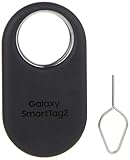
- Find your things with ease: The SmartThings Find app uses Bluetooth and ultra-wideband (UWB) technology to locate and keep track of your stuff
- Water and Dust Resistant: IP67 rating offers protection against dust and water immersion between 15 cm and 1 meter for up to 30 minutes
- Compatible with Galaxy Devices Only.
You use a non-Samsung Android phone
Google Find My Device is the relevant baseline. Samsung Find is intended for registered Galaxy products, so it should not be treated as a universal Android substitute.
The phone appears to be offline
Neither service can create a location from nothing. Samsung can receive a Bluetooth-assisted report from nearby Galaxy devices when Offline finding was enabled. Google can use its Android crowdsourced network when the corresponding settings were enabled. Both paths require battery power and nearby participating devices. If neither service has a fresh report, check the last stored location and move quickly to secure the account and device.
You need to make the phone ring
Both services provide a ring or sound action for supported devices. Use it when the map places the phone in your home, vehicle, office, or another safe nearby area. A ring is useful only while the phone has enough power to receive the command or execute a queued action.
You need to protect data immediately
Use the lock or secure action first. Add a short return message and an alternate contact method if the service offers those fields and you are comfortable displaying them. Locking preserves the possibility of recovery; erasing is the irreversible step that should wait until recovery is unlikely.
Rank #3

- Find your things with ease: The SmartThings Find app uses Bluetooth and ultra-wideband (UWB) technology to locate and keep track of your stuff
- Water and Dust Resistant: IP67 rating offers protection against dust and water immersion between 15 cm and 1 meter for up to 30 minutes
- Compatible with Galaxy Devices Only.
Set up both services before the phone is lost
- Sign in to both accounts. Add a Samsung account and a Google account to the Galaxy phone. Record the account recovery methods somewhere separate from the phone.
- Turn on location. Location is required for a useful map position and for the services’ last-location features.
- Enable Samsung’s finding options. In the phone’s Samsung-account or security settings, enable Allow this phone to be found, Send last location, and Offline finding where those options are available for your model.
- Enable Google’s finding options. In Android settings, search for the Find My Device controls and enable device finding, recent-location storage, and offline-network participation when offered for the phone.
- Keep network access available. Wi-Fi or mobile data is needed for live commands and current positions. Do not routinely disable all connectivity or background activity if you expect remote finding to work.
- Keep a screen lock enabled. A PIN, password, or secure pattern prevents easy access and makes a remote lock meaningful.
- Complete two-step verification. Make sure you can approve Google security challenges without the missing phone itself. Store backup codes or another recovery method securely.
- Verify visibility. While the phone is in your hand, open Samsung Find and Google Find My Device from another device or browser session and confirm that the phone appears, reports a recent position, and exposes the expected ring, lock, and erase controls.
- Record identifying details. Save the IMEI, model, serial number, carrier information, and account support details in a secure location separate from the phone. These details help a carrier or authorities identify the device.
- Recheck after major changes. Repeat the visibility test after a factory reset, account change, major software update, replacement SIM, or any change to location, battery, or privacy settings.
What to do immediately after a loss
1. Check both maps without putting yourself at risk
Use another trusted device to open Samsung Find and Google Find My Device. Note the time of each report, the accuracy radius, and whether the phone is shown as online, recently seen, or offline. A newer low-accuracy report can be more useful than an older pinpoint that is no longer current.
2. Ring it when it may be close
Send the ring command if the phone could be under furniture, in a bag, in a vehicle, or in a familiar building. Listen from a safe position and stop the search if the map leads to a private residence, isolated area, or other place where approaching could be dangerous.
3. Lock and identify it
Use the lock or secure action and display a concise return instruction, such as an alternate phone number or email address. Do not put sensitive information, your home address, or account passwords in the message. Locking also blocks casual access while you decide whether recovery is realistic.
Free tools Windows power users keep installed
One-click scans. No signup required.
4. Contact the carrier and relevant authorities
If the phone was stolen, contact the carrier to suspend service or block the device using its IMEI, and report the theft through the appropriate local channel. If a map points to an unsafe or unknown location, do not confront a suspected holder. Provide the location history and identifying details to law enforcement instead.
Rank #4

- REDESIGNED TO DO MORE: The redesigned Galaxy SmartTag2 is made so you can keep calm and keep track; Its design makes it easy for you to tag and carry your belongings
- EASY TO USE: It's IP67-rated water- and dust-resistant, activates your compatible IoT devices and stays powered for up to 500 days or even up to 40% more on Non-Power Saving Mode
- RELAX, YOU'VE GOT IT TAGGED: Simply register a new Galaxy SmartTag2 and get started right away with SmartThings Find; With its intuitive tracking experience, you now have a way to keep track of things you love right in the palm of your hand
- SEARCH NEAR WHEN IT'S NOT FAR: Lose something. Switch on Search Nearby and get guided instructions to your item's location via Compass View; If you still don't see it, just ring your Galaxy SmartTag2 to have it send out an audible signal
- Type of battery needed: replaceable CR2032 1 ea Lithium battery (not included)
5. Protect accounts from another device
Review sign-in activity for your Google and Samsung accounts, change passwords if you suspect compromise, revoke unfamiliar sessions, and contact financial or messaging services if the missing phone was an authentication device. Keep in mind that changing an account password can alter how easily a finding service authenticates; complete the remote lock and evidence-preservation steps first when possible.
6. Erase only when recovery is unlikely
Remote erasure removes personal data but can prevent later location updates. Use it after checking both services, contacting the carrier, and deciding that the phone is unlikely to return. Once erased, continue monitoring account activity and follow the carrier’s process for replacing the SIM or device.
Independent reader supportYour contribution helps us test, update, and keep practical guides available for everyone.Why a location may be old, wrong, or missing
The phone has no power
A dead battery stops live GPS, Wi-Fi, cellular, and Bluetooth communication. A last-location feature can preserve the final position only if it was enabled and the phone had enough power to transmit it before shutting down.
PC Slower Than It Used to Be?
A free scan shows the junk files, broken settings and background clutter dragging Windows down - then fixes them in one click.Free scan · Windows 10 & 11Crashes, No Sound, or Screen Glitches?
Random freezes, missing sound and display glitches usually trace back to one bad driver. Find and replace yours safely.Free scan · under a minuteConnectivity is blocked
Airplane mode, removed SIM service, disabled mobile data, weak Wi-Fi, or heavy interference can prevent a live update. Offline networks may still help if Bluetooth-based finding remained enabled and the phone passes near a participating device.
Best Value

- REDESIGNED TO DO MORE: The redesigned Galaxy SmartTag2 is made so you can keep calm and keep track¹; Its design makes it easy for you to tag and carry your belongings
- EASY TO USE: It's IP67-rated water- and dust-resistant², activates your compatible IoT devices³ and stays powered for up to 500 days⁴ or even up to 40% more on Power Saving Mode⁵
- RELAX, YOU'VE GOT IT TAGGED: Simply register a new Galaxy SmartTag2 and get started right away with SmartThings Find; With its intuitive tracking experience, you now have a way to keep track of things you love right in the palm of your hand¹
- SEARCH NEAR WHEN IT'S NOT FAR: Lose something? Switch on Search Nearby⁶ and get instructions to your item's location via Compass View⁷; If you still don't see it, just ring your Galaxy SmartTag2 to have it send out an audible signal
- TAGGED & TRENDY: Cover your Galaxy SmartTag2 with a colorful Silicone Case for protection and a smooth touch – or a Rugged Case with a non-slip pattern on the side and additional bumper on the bottom⁸; Both have a carabiner ring attachment
There are too few participating devices
Community finding is strongest where many compatible Galaxy or Android devices pass nearby. A rural road, basement, airplane, or sparsely populated building may produce no new report even though the phone is configured correctly.
The account or setting was changed
A factory reset, account removal, disabled location, or disabled finding option can break the association. A thief who knows the screen PIN may be able to change settings, which is why a strong lock and prompt remote securing matter.
The map is showing an estimate
Location systems can place a phone near a Wi-Fi router, cell tower, or Bluetooth observer rather than at the exact handset position. Treat the accuracy circle and timestamp as evidence, not permission to search someone else’s property.
Do these 3 things before closing this tab:
1Fix the driver behind crashes, sound loss and screen glitches2Clear out junk files and repair common Windows errors3Scan for outdated or missing drivers - takes under a minuteSamsung Find versus Google Find My Device: practical trade-offs
| Need | Preferred first check | Reason |
|---|---|---|
| Recover a Galaxy phone with Samsung services already configured | Samsung Find | It has the deepest Galaxy integration and may expose Samsung-specific controls. |
| Use one method across different Android brands | Google Find My Device | Its account and finding service are designed for supported Android devices broadly. |
| Try an offline community report | Check both | Samsung relies on nearby Galaxy devices; Google relies on its participating Android network. Local device density determines which has an advantage. |
| Preserve the possibility of later recovery | Lock, do not erase | Erasure can stop future location updates. |
| Find keys, luggage, or another non-phone item | A compatible physical tracker | Samsung’s Galaxy SmartTag2 is documented as working with SmartThings Find and the Galaxy Find network for tagged items; it does not replace phone-finding setup. |
Privacy and safety considerations
- Community reports are designed to be anonymous. Samsung describes nearby Galaxy devices reporting a supported device through Bluetooth anonymously. Google describes encrypted recent locations and a crowdsourced Android network. These mechanisms still involve location data, so review the account and device settings you choose to enable.
- Do not publish a live map publicly. Share a location only with a carrier, trusted contact, or appropriate authorities.
- Do not meet a suspected thief alone. A map is not proof of who possesses the phone. Use law-enforcement channels for recovery from an unsafe or unknown location.
- Protect the replacement device. When you replace the phone, remove the lost handset from account and carrier lists only after you have decided that continued tracking is no longer useful and have preserved any evidence you need.
A simple decision rule
- If the phone is a Galaxy, check Samsung Find first.
- Check Google Find My Device immediately afterward, especially if Samsung shows no recent report.
- Use the map with the newest credible timestamp.
- Ring only in a safe, nearby setting.
- Lock and add return instructions before taking further action.
- Contact the carrier and authorities for theft or unsafe locations.
- Erase only after recovery is unlikely and you accept that future location updates may stop.
There is no published neutral statistic showing that one service recovers more phones or does so faster. The strongest preparation is therefore redundancy: maintain both accounts, enable live and offline options, verify visibility while the phone is present, and know how to secure the device without relying on the missing handset for authentication.
Quick Recap
Product prices and availability are accurate as of the date/time indicated and are subject to change. Any price and availability information displayed on Amazon at the time of purchase will apply.

