
iTechGuides is reader-supported. When you buy through links on our site, we may earn an affiliate commission. As an Amazon Associate I earn from qualifying purchases. Learn more
Saab’s autonomy work is a collection of systems and trials, not one fully autonomous weapons platform. Its clearest swarm demonstration was a 2024 AUKUS exercise in which Saab-owned BlueBear’s Centurion mission system let one operator command different autonomous aircraft. Saab also describes a distributed edge-AI architecture, tested Helsing’s Centaur AI in Gripen E flight trials, and is developing autonomy for uncrewed maritime systems and an MQ-9B airborne early-warning concept. These announcements show growing technical capability; they do not establish that every system is operationally deployed or authorized to select and attack targets without human control.
What Saab means by drone swarms and autonomy
Saab’s approach is software-defined and spans several domains. Rather than describe a single drone swarm product, the company presents a mission-autonomy architecture that can connect vehicles, sensors, communications, command-and-control (C2) software and AI components. Particular aircraft or vessels carry out missions; mission software helps coordinate them and distribute information and tasks.
In Saab’s usage, a swarm is a group of autonomous uncrewed aircraft that can cooperate as part of a mission. That does not by itself mean the aircraft are independent of human direction. The strongest public example in the material available is a trial in which a human operator commanded multiple different uncrewed aircraft through a mission system.
Windows Errors? Fix Them Before They Spread
Repair common Windows errors and clear accumulated junk for a smoother, more stable PC - no reinstall needed.Free scan · no reinstallOutdated Drivers Are Slowing You Down
One free scan finds every outdated or missing driver and matches the right update for your exact hardware.Free scan · exact hardware matchWhat happened in the 2024 AUKUS swarm trial?
During Project Convergence 2024, Saab-owned UK company BlueBear, the UK Defence Science and Technology Laboratory (Dstl) and AUKUS partners demonstrated interoperable AI in networked uncrewed aerial-system (UAS) swarms. Saab says a 40-person team from BlueBear and Dstl participated in the work. BlueBear had been acquired by Saab in August 2023.
#1 Best Overall

- It is a large insect-like alien warrior who can fight for the evil covenant
- The figure measures 5" tall
- Has fourteen points of articulation
- It is equipped with plasma pistol
- Drones attack in swarms and are perfect for army building
Centurion coordinated different aircraft
Saab says its Centurion mission system enabled one operator to command a group of diverse autonomous UAS. The RedKite and Ghost aircraft were used together. The point of the demonstration was not simply to fly several of the same drone at once: it was to show that different aircraft and AI components could work together under a shared mission system.
Saab also says the trial demonstrated that AI could be retrained and deployed rapidly, and that the architecture supports hot-swapping AI from different suppliers. That is a claim about the system’s intended interoperability and what was demonstrated in this trial; it is not evidence that every third-party AI package can be integrated without engineering, validation or safety testing.
What “one operator” does—and doesn’t—tell you
The demonstration supports a specific claim: one operator used Centurion to command the participating aircraft in that trial. It does not establish a universal operator-to-drone ratio, the maximum number of aircraft one person can manage in combat, or how workload changes as communications fail or missions become more complex. The number of people in the participating team is not the number of operators needed to control a swarm.
What’s actually slowing this PC down?
Pick the symptom - the matching free tool is one click away.
Rank #2

- ORIGINAL SCOOT DRONE FOR KIDS: Here’s the first, and the most-loved hand operated drone in Force1’s Scoot drone family! Toss to launch this hand drone into the air and enjoy vibrant LEDs light up this UFO flying toy with every flight
- INDOOR HOVER DRONE FOR BEGINNERS: Equipped with smart, obstacle avoidance motion sensors, use your hand to guide its flight, play modern catch with family and friends, and catch it “hamburger-style” once you’re done
- DURABLE AND SAFE WEBBED SHELL DESIGN: This flying toy drone is designed with a webbed shell that protects hands, walls, and furniture from the propellers; this webbed shell also keeps the drone safe from damages as it fly around any indoor space
- US-CERTIFIED STEM TOY: This UFO drone toy is a great beginner drone for kids and kids at heart ages 8 and up; drone measures 4.7” D and includes a USB recharging cable
- QUALITY ASSURED: Fly this cool, self-flying sensor drone with family and friends for up to 8 minutes on a 50-minute charge. This hand-operated drone for kids and adults is designed for thrill and guarantees fun for everyone
How Saab’s edge AI is meant to work
Saab describes its mission-autonomy software as data-driven and built from microservice-oriented components. Those components can run across computing resources from edge nodes—systems close to the sensors or vehicles producing the data—to cloud environments. Saab says the architecture can coordinate dozens or hundreds of assets and adapt to changes in their number, energy levels, payloads and software. This is a description of the architecture’s stated capacity, not a published independent test of a particular swarm’s size or performance.
Distributing processing closer to the aircraft or other equipment can let a system analyze sensor data locally and send selected information rather than continuously transmitting large data streams. Saab engineer Robert Lindegren has said that edge processing can reduce bandwidth demand and radio-frequency (RF) emissions by using onboard analytics and sending data in bursts. This design can be useful when communications capacity is limited or when minimizing transmissions matters. It does not make a system independent of communications: operators and cooperating assets may still need to exchange commands, status or mission information.
The engineering trade-offs
Edge computing shifts some work from remote infrastructure onto vehicles or other field equipment. That can reduce the amount of data that must travel over a network, but it also creates constraints:
Rank #3
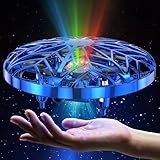
- Glow in the Dark & LED Light Show: This glow-in-the-dark drone features a luminous shell and vibrant LED lights, creating a mesmerizing light show in the dark. The kaleidoscope projection displays light patterns on walls and ceilings, making it a magical flying toy for night play
- Easy to Fly - Perfect for Beginners: Designed for kids and beginners, this mini drone features In-flight stop and auto-hovering for stable flight. No complicated setup—just turn it on and play! Great for ages 6-12, but even adults will love it
- Patent Hand Motion Control - No Remote Needed: No remote control required! Our patent hand-motion technology allows kids to control the drone with simple hand gestures—move left, right, up, or down for effortless flight. Smart anti-collision sensors prevent crashes, making it safe for indoor and outdoor use
- Strong & Safe for Kids: Made with child-safe materials and flexible propeller guards, this drone is built to withstand bumps and falls. The lightweight design ensures safe indoor flights, while the long-lasting battery provides extended playtime
- Ideal Gifts for Boys & Girls: An exciting STEM toy that encourages hand-eye coordination and creativity! Ideal for birthdays, Christmas, holidays, and outdoor adventures. This glowing drone brings endless fun for 5 6 7 8 9 10 11 12 year old boys grils
- Power and heat: More onboard computing increases electrical demand and produces heat, both of which must be managed on a vehicle.
- Training data: AI development can require large quantities of annotated data. Lindegren has noted that such data may be security-sensitive, complicating collection and sharing.
- Interoperability: Modular or swappable software can make integration more flexible, but components still need to work with the vehicles, sensors, networks and mission rules involved.
- Resilience: Local processing can help a system keep analyzing data when bandwidth is constrained; it does not, by itself, prove reliable performance when links are disrupted or other components fail.
Saab and Helsing tested AI on Gripen E
Saab and Helsing’s Project Beyond put Helsing’s Centaur AI through flight tests on a Gripen E. Saab reported tests of autonomous complex beyond-visual-range (BVR) maneuvers, pilot cueing, varied initial conditions and use of real sensor data. The tests also examined behavior with C2 data disabled, a way to assess how the AI responded when that information source was unavailable.
Saab reported that a June 3, 2025 flight involved a dynamic BVR scenario against a real Gripen D. The project was sponsored by Sweden’s Defence Materiel Administration (FMV). Saab said further analysis and training were planned after the flights. These are reported flight-test results, not evidence that Centaur has been fielded for operational combat or that an AI independently controls a Gripen in routine service.
The example differs from the Centurion swarm trial. Centurion coordinated multiple uncrewed aircraft through a mission system; Centaur was tested as AI supporting or acting within a crewed fighter’s flight and decision-making context. Saab’s description includes pilot cueing, but does not establish a general rule for who authorizes any potential use of weapons. It should not be read as proof that Saab has deployed lethal autonomous weapons.
What Saab’s maritime autonomy is designed to do
Saab describes Autonomous Ocean Core as a scalable AI system-of-systems for uncrewed vessels and cooperation between crewed and uncrewed vessels. Its listed functions include autonomous navigation, electronic warfare, sensor AI, intelligence, surveillance and reconnaissance (ISR), and seabed missions.
Rank #4

- Kid-Friendly & Durable Material: Made from lightweight yet sturdy foam material. The durable foam construction helps absorb impact from minor bumps and crashes while keeping the drone lightweight and easy to handle, making it a kid-friendly choice for flying fun.
- Stunning LED Light Show with 4 Modes: Equipped with 24 LED lights in 8 vibrant colors, this UFO drone offers four lighting modes: constant, alternating, flashing, and gradient. Perfect for day or night flights, the colorful lights add a magical effect to every takeoff.
- Beginner-Friendly Operation: Designed for easy flying, with One-Key Takeoff/Landing and Auto-Hovering for stable flight. Headless Mode allows intuitive control regardless of orientation, while 3 speed levels make it suitable for kids, beginners, and hobbyists.
- Fun Flying Tricks & Smooth Controls: This 10-inch RC plane offers exciting stunts including 360° flips, circle flying, auto rotation, and basic directional moves. Operates on a 2.4GHz system with up to 164 ft control range, ensuring responsive, interference-free flying.
- Dual Batteries for Extended Flight Time: Includes 2 rechargeable 3.7V 800mAh Li-polymer batteries, providing up to 15 minutes of combined flight time. A flashing light alert system notifies you when the battery is low, helping prevent unexpected drops or loss.
The Autonomous Ocean Drone is described as able to support ISR, install seabed systems, deliver objects, navigate autonomously, classify targets using sensor AI and synchronize with other vessels. Saab lists torpedo launch as a future capability, not a currently operational feature. The company’s descriptions establish intended functions and system concepts; they do not, on their own, demonstrate deployment or performance in operational service.
What the MQ-9B airborne early-warning concept adds
Saab and General Atomics announced a development cooperation to integrate Saab airborne early-warning (AEW) sensors with the MQ-9B. Saab presents the proposed system as a way to provide persistent surveillance, either independently or as part of manned-unmanned teaming. It is intended to complement Saab’s crewed GlobalEye and other airborne early-warning and control systems (AEW&C).
This is a concept under development, not a delivered operational fleet. It is related to Saab’s wider interest in autonomy and uncrewed platforms, but it is not itself evidence of a drone swarm or of autonomous target engagement.
Best Value
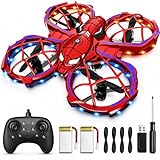
- 【Spider Mini Drone】All functions of the children's remote control drone are controlled by the remote control. With brilliant RED and BLUE lights, this kids drone creates a stunning light show in the darkness, enhancing every flight with dynamic color.
- 【Packaging Description】Mini drone can fly for 8 minutes after being fully charged. The package includes 1 remote controller, 2 battery, 1 screwdriver, 4 spare propellers, 1 USB and 2 user manuals. making orientation of rc plane intuitive for kids, novices alike
- 【Diverse ways to play】The mini drone has 360-degree flips, 3 speed gears, headless mode, automatic obstacle avoidance, and other stunt functions. It supports a group of children to compete without interference, and you can accompany your children to play and interact, which is more interesting and safer.
- 【Safe and durable】The drone adopts a structured design and a sturdy propeller protective cover to ensure flight safety and protect your children from rotating propellers. The fuselage has high-quality ABS material and can withstand countless collisions or falls. Our drone comes with clear instructions, so it is easy for children and beginners to follow.
- 【Ideal Gift for Kids】This children's spider mini RC drone is an ideal gift for Kids aged 3-10. The toy is packaged in an exquisite gift box and can be used as a gift for Christmas, birthdays, holidays and weekend activities. Spend an unforgettable day with your friends and family.
How to judge the maturity of Saab’s autonomy claims
The examples differ in what Saab says has been demonstrated and what remains a design or development aim:
| System or work | Domain and stated role | Evidence and maturity described |
|---|---|---|
| BlueBear Centurion with RedKite and Ghost | Air; command and coordination of diverse autonomous UAS | Saab-reported AUKUS Project Convergence 2024 trial; one operator commanded participating aircraft. |
| Distributed mission autonomy and edge AI | Multi-domain; distribute processing and coordinate assets | Saab architecture description; the stated capacity of dozens or hundreds of assets is not an independently validated maximum. |
| Helsing Centaur on Gripen E | Air; AI tested in fighter flight scenarios | Saab-reported flight tests, including a June 3, 2025 dynamic BVR scenario against a real Gripen D; further analysis and training were planned. |
| Autonomous Ocean Core and Autonomous Ocean Drone | Maritime; vessel autonomy and crewed-uncrewed coordination | Saab-described systems and functions; torpedo launch is identified as a future capability. |
| Saab AEW sensors on MQ-9B | Air; uncrewed airborne early warning and manned-unmanned teaming | Announced development cooperation and proposed solution, not a delivered operational fleet. |
For any autonomy claim, useful questions include where processing and decision-making occur, whether the system can interoperate with other suppliers’ equipment, how much operator attention it requires, how it behaves under communications constraints, what mission it supports, and what human authorization and safety controls apply. A successful demonstration answers some technical questions, but it is not the same as a contracted system in service or proof of combat effectiveness.
Free tools Windows power users keep installed
One-click scans. No signup required.
Quick Recap
Product prices and availability are accurate as of the date/time indicated and are subject to change. Any price and availability information displayed on Amazon at the time of purchase will apply.

