
Free tools Windows power users keep installed
One-click scans. No signup required.
iTechGuides is reader-supported. When you buy through links on our site, we may earn an affiliate commission. As an Amazon Associate I earn from qualifying purchases. Learn more
Richard Garriott has said he expects to recover Ultima copyrights from Electronic Arts in 2027 by using the termination provision in U.S. copyright law, 17 U.S.C. §203. That is his reported expectation, not a completed transfer. The statute does not return rights automatically after 35 years. A termination depends on the specific grant, the date it was executed, and a timely written notice recorded with the U.S. Copyright Office.
What Garriott has said
GamesRadar reported on October 7, 2026 that Garriott told interviewer Jesse Petrilla he expects to recover Ultima rights in 2027. The article quotes him as saying:
| # | Preview | Product | Price | |
|---|---|---|---|---|
| 1 |

|
Ultima Collection - PC | $184.99 | Buy on Amazon |
| 2 |
|
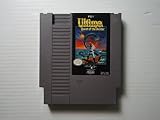
Ultima: Quest of the Avatar (Renewed) | $49.40 | Buy on Amazon |
| 3 |

|
Ultima VI: The False Prophet - Nintendo Super NES (Renewed) | $33.74 | Buy on Amazon |
| 4 |

|
Ultima: Exodus (Renewed) | $51.96 | Buy on Amazon |
| 5 |

|
Ultima: Exodus | $11.70 | Buy on Amazon |
“There’s a really weird United States copyright law that says, if you are the original holder of a copyright and you assign it or sell it to any publisher or any other entity, after 35 years you can just take it back,”
Special offer. See more information about Outbyte and uninstall instructions. Please review EULA and Privacy policy.
The same report says Garriott sold Origin Systems to EA in 1992, together with the Ultima rights, and that he has continued to work on Ultima games since. These are the report’s account of the transaction history. The reporting does not reproduce the underlying agreements, so the 1992 sale tells us when a deal happened, not which works or which grant a termination would reach.
#1 Best Overall
What Section 203 covers
Section 203 of the Copyright Act, 17 U.S.C. §203, lets an author terminate certain grants of copyright. The current text, published by the U.S. House Office of the Law Revision Counsel and retrieved on October 9, 2026, applies to grants an author made on or after January 1, 1978, other than grants made by will. It does not apply to works made for hire. The Copyright Office’s explanatory material from 2000 describes termination as a safeguard against transfers that turned out to be unremunerative, and notes that these rights apply only in the contexts the statute specifies.
The author and statutory successors
The author may terminate a qualifying grant. If the author has died, the statute names specified successors who may act in the author’s place. The statute also sets rules for who must sign a notice and how the termination interest is exercised, and those rules have to be checked against the actual grant.
The buyer’s identity does not decide the question
Garriott’s quotation refers to a sale to “any publisher or any other entity.” The statute does not turn on who the buyer is. It turns on what the author granted, when the grant was executed, and whether the work was made for hire. A sale to a company can be a qualifying grant, and a deal can fall outside the statute if the work was made for hire.
The Tool Desk
Outbyte Driver Updater FREEScan for outdated or missing drivers - takes under a minuteDriver Scan →Outbyte PC Repair FREERepair Windows errors before they cause bigger problemsFix Now →The 35-year mark opens a window
The statute does not end a grant at 35 years. It opens a five-year termination window at a point that depends on the kind of grant:
| Grant type | Window opens | Window closes |
|---|---|---|
| General grant of copyright | End of 35 years from the date the grant was executed | Five years after the window opens |
| Grant covering the right of publication | End of 35 years from publication under the grant, or 40 years from execution, whichever ends earlier | Five years after the window opens |
The termination takes effect on a date chosen inside that window, not on the day the window opens.
Notice and recordation
Termination is a notice procedure, not an automatic return. The written notice must:
Rank #4
- identify an effective date that falls within the applicable window;
- be served no less than two and no more than ten years before that effective date;
- have a copy recorded with the Copyright Office before the effective date.
Because each requirement can be checked against documents, the dates of service and signatures matter as much as the 35-year figure.
Outdated Drivers Are Slowing You Down
One free scan finds every outdated or missing driver and matches the right update for your exact hardware.Free scan · exact hardware matchPC Slower Than It Used to Be?
A free scan shows the junk files, broken settings and background clutter dragging Windows down - then fixes them in one click.Free scan · Windows 10 & 11What the 2027 date would require
The 2027 figure lines up with 35 years after 1992. Testing it against the statute shows what would have to be true:
Best Value
- The operative grant was executed in 1992. If the sale documents were signed on a different date, the window moves. If the grant covers publication rights, the earlier-ending test could also shift it.
- The grant is not a work made for hire. The termination right does not reach works made for hire, so each title and each contributor’s role needs authorship evidence.
- A notice was served no later than 2025. Because the notice must precede the effective date by at least two years, a 2027 effective date required service by 2025. A notice served in late 2026 could take effect no earlier than late 2028, which would still fall inside a 2027–2032 window if the 1992 date holds.
- The notice was recorded before the effective date. Recordation with the Copyright Office is a separate step from service and has to be completed before the effective date.
- The notice was signed by the correct parties. Who must sign depends on whether the author is living and on the statute’s successor rules.
The published reports do not say whether a notice has been served or recorded, so the 2027 claim cannot be checked against those steps from the coverage alone.
Independent reader supportYour contribution helps us test, update, and keep practical guides available for everyone.What a termination would and would not reach
Copyright is not the whole franchise
Trademarks are governed by separate law. A copyright termination would not by itself return the Ultima name, logo, or trademark registrations.
Derivative works made earlier
Termination does not erase work already built on the original grant. Under the statute, a derivative work prepared under the grant before termination may generally continue to be used under the grant’s terms. That privilege does not extend to new derivative works prepared after termination. Which later games, ports, remasters, or expansions fall into each category depends on the chain of grants and on who created each piece.
Recommended Free Tools
What “costs nothing” means
Garriott’s account implies there is no purchase price to pay to regain the rights. That is different from saying the process is free. A termination requires a written notice that is served, signed, and recorded with the Copyright Office. The reporting does not establish what preparing and recording the notice, or obtaining legal advice, would cost. The phrase therefore describes the absence of a buyout in his framing, not the full administrative or legal cost of the claim.
Possible Ultima relaunches are prospective
GamesRadar describes potential relaunches or sequels, including early-game projects, as possibilities if the rights question resolves in Garriott’s favor. The reporting does not announce a release plan, and it does not establish that every game, contribution, or franchise asset would transfer along with the copyrights.
Quick Recap
Product prices and availability are accurate as of the date/time indicated and are subject to change. Any price and availability information displayed on Amazon at the time of purchase will apply.

