
Free tools Windows power users keep installed
One-click scans. No signup required.
iTechGuides is reader-supported. When you buy through links on our site, we may earn an affiliate commission. As an Amazon Associate I earn from qualifying purchases. Learn more
HHS announced a coordinated effort to study and document health problems reported after vaccination. It includes an NIH clinic that opened October 5, 2026, proposed CMS reimbursement for doctors who submit reports to VAERS, a plan to capture adverse events in electronic health records, and a CDC effort to modernize VAERS. These steps address care, research, recordkeeping and safety reporting—not a finding that a vaccine caused any particular health problem.
What HHS announced
In an October 8, 2026 announcement, the Department of Health and Human Services described an agency-wide effort to identify, document, investigate and respond to health problems reported following vaccination. HHS presents the components as connected parts of a system for patient care, clinical research, reporting, medical records and safety monitoring. Expected benefits are the department’s stated aims, not outcomes demonstrated by the announcement. HHS announcement
| Component | Function | Status in HHS announcement |
|---|---|---|
| NIH clinic | Patient evaluation and care alongside research into patient experiences, potential causes and care approaches | Opened October 5, 2026 |
| CMS reimbursement | Reimburse physicians for time spent reporting suspected vaccine-related injuries to VAERS | Proposed; not described as an adopted or effective payment rule |
| EHR standards | Capture vaccine-related adverse events in electronic health records so information can follow patients through the health-care system | HHS says federal standards overseen by ONC will require capture; no implementation date stated |
| VAERS modernization | Improve access and tools for researchers and medical professionals | CDC modernization is underway |
What the NIH clinic does—and does not establish
The clinic is at the NIH campus in Bethesda. HHS says it brings patient evaluation and care together with research: NIH clinicians and researchers are to study patients’ experiences, investigate possible causes and identify better approaches to care. That description states the clinic’s purpose; it does not report research findings or establish that vaccination caused a patient’s condition. NIH clinic announcement
What’s actually slowing this PC down?
Pick the symptom - the matching free tool is one click away.
VAERS reports are not proof of vaccine causation
VAERS, the Vaccine Adverse Event Reporting System, accepts reports from health professionals, patients, caregivers, manufacturers and others. HHS describes the system as a way to help identify potential safety concerns. A report records that an event occurred after vaccination; by itself, it does not determine that vaccination caused the event. The distinction matters because the initiative covers suspected injuries and research into potential causes, not automatic confirmation of them. HHS information on adverse-event reporting
#1 Best Overall

- CDC & VFC Compliant Storage: Purpose-built to meet strict vaccine storage recommendations with a reliable 2-8ºC operating range, buffered temperature probe, and high/low temperature alarms to ensure clinical efficacy
- Space-Saving ADA Design: Sized at just under 32 inches with a slim 20-inch width; features a front-breathing design allowing for seamless built-in installation under ADA-compliant counters or fully freestanding use
- Advanced Temperature Monitoring: Equipped with an external digital thermostat readout and a temperature memory function, allowing users to securely track, adjust, and log internal storage conditions without opening the unit
- Secure and Convenient Construction: Features a factory-installed lock for restricted access, a double pane tempered glass door, energy-efficient LED lighting, and ⅜” access port for user-provided monitoring equipment
- Dimensions & Build: 31.5" H x 19.5" W x 22.75" D, 2.65 cu.ft. (75 L)
Which parts are open, proposed or underway?
CMS’s proposed reporting reimbursement
CMS has proposed reimbursing physicians for the time required to file suspected vaccine-related injury reports with VAERS. HHS says the goal is to reduce barriers to reporting. The announcement describes a proposal, not a payment policy already in effect, so it should not be treated as a current entitlement or a confirmed reimbursement rate. HHS announcement
EHR documentation
HHS says federal health-information technology standards overseen by the Office of the National Coordinator for Health Information Technology (ONC) will require EHRs to capture vaccine-related adverse events, allowing information to follow patients across the health-care system. The announcement does not give an implementation date. HHS announcement
Rank #2

- Purpose-Built For Vaccines: Meets CDC, VFC & VFA guidelines with external high/low temp readout, stable 2 - 8ºC operation and a buffered temperature probe encased in a glass bead-filled bottle
- Slim ADA Compliant Design: Sized at 31.5 inches high to fit under lower ADA counters with a front-breathing system allowing for seamless built-in or freestanding installation in a 20-inch footprint
- Advanced Security & Alarms: Keeps sensitive material secure with a factory-installed keyed lock, self-closing door, audible temp alarms and a hospital-grade cord with green dot plug
- Advanced Security & Alarms: Keeps sensitive material secure with a factory-installed keyed lock, self-closing door, audible temp alarms and a hospital-grade cord with green dot plug
- Dimensions & Build: 31.5" H x 19.5" W x 22.75" D, Capacity 2.65 cu.ft. (75 L)
CDC’s VAERS modernization
HHS says CDC is updating VAERS to make it more accessible and improve tools for researchers and medical professionals. According to the department, CDC solicited bids in August 2026 and announced a contract on September 28, 2026, for mobile access and improved investigation tools. HHS also says CDC added a VAERS QR code to Vaccine Information Statements earlier in 2026. These are modernization steps, not evidence that the system has already produced improved safety findings. HHS announcement
VICP is a separate compensation process
The National Vaccine Injury Compensation Program (VICP) is an existing federal program, distinct from VAERS and the new initiative. Congress created it through the National Childhood Vaccine Injury Act of 1986 as a no-fault alternative to traditional tort litigation. It covers certain vaccines and began accepting petitions in 1988.
Rank #3
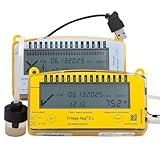
- Vaccine Monitoring Kit Consisting of Berlinger Fridge-Tag2L Vaccine Monitor (Fridge) and Berlinger Fridge-Tag2L-FZR (Freezer) Versions.
- Meets CDC & VFC (Vaccines for Children) Program Recommendations for Safe Vaccine Storage & Handling
- ±0.5°C (±1.0°F) Accuracy
- Includes a 2-Year NIST Traceable Calibration Certificate, Compliant to ISO/IEC 17025:2017
- Includes Attached USB Plug, CR-2032 Lithium Battery, 1.5M External Sensor with Glycol Buffer Vial and NIST Traceable Calibration Certificate
HRSA administers VICP; HHS conducts medical reviews and makes court-ordered payments; the Department of Justice represents HHS; and the U.S. Court of Federal Claims makes final decisions about whether compensation is awarded, and its type and amount. Filing a VAERS report is not the same as filing a VICP petition, and a report alone neither qualifies someone for compensation nor proves causation. HRSA’s VICP overview, reviewed September 2026
Independent reader supportYour contribution helps us test, update, and keep practical guides available for everyone.What is known about experts’ wariness?
KFF Health News’s October 8, 2026 morning briefing summarizes New York Times reporting on the initiative, including the NIH clinic and a new billing code for serious side-effect reports. Its headline and summary characterize experts as wary, but the accessible summary does not provide their specific concerns or quotations. It therefore does not support attributing a particular criticism to experts. KFF Health News morning briefing
HHS Secretary Robert F. Kennedy Jr. said, “We must listen to patients and families who report vaccine injuries—not dismiss or gaslight them.” That is the Secretary’s statement of the department’s position, not an independent scientific finding. HHS announcement
Quick wins for a faster PC:
Fix the driver behind crashes, sound loss and screen glitchesFind Drivers →Clear out junk files and repair common Windows errorsFree Scan →Quick Recap
Product prices and availability are accurate as of the date/time indicated and are subject to change. Any price and availability information displayed on Amazon at the time of purchase will apply.

