
Free tools Windows power users keep installed
One-click scans. No signup required.
iTechGuides is reader-supported. When you buy through links on our site, we may earn an affiliate commission. As an Amazon Associate I earn from qualifying purchases. Learn more
Better retail customer service depends on continuity: shoppers should be able to move between a store, website, messaging channel, and phone without repeating basic information or getting conflicting answers. That takes more than adding channels. Retailers need accurate order and inventory information, trained staff, clear ownership of problems, and a straightforward route to a person when self-service is not enough.
What retail customer service includes
Retail customer service is the help a shopper receives while discovering products, choosing and buying them, arranging fulfillment, and resolving a problem. It can include an associate answering a product question, help locating an item, support with checkout, pickup updates, or assistance with a return. It is one part of the broader customer experience, which also includes factors such as store layout, marketing, and website or app usability.

For retailers, the practical goal is to make each interaction useful in the context of the whole purchase journey. A customer who has already explained an order issue online should not have to start over when calling or visiting a store. Staff need access to the details relevant to their role, and someone must be accountable for moving the issue toward resolution.
Why in-store and online support need to work together
Shoppers may discover a product in one place, ask a question in another, and complete a purchase or return somewhere else. When each channel has a separate view of the customer or transaction, staff may be unable to confirm what was promised, whether an item is available, or what has already been tried.
#1 Best Overall

- Extra Custom Space: Personalize with 40 characters for your business name and 60 per address line. Avoid text cut-offs on custom invoice books tailored for professional quotes, purchase orders, invoices, work orders repair orders and receipts
- Sequential Numbering: Includes 2 books with 50 duplicate sets each (100 total NCR sets). Sequentially numbered pages ensure organized record-keeping for retail shops, contractors, and daily business
- Perforated Carbonless Paper: Get clean, smudge-free duplicate copies without messy carbon sheets. Standard 5.5x8.5 books tear cleanly at the perforation to a 5.5x8 customer receipt
- Wrap-Around Divider Cover: Built-in heavy wrap-around shield slips between the white and yellow paper sets. Safely prevents ink or text transfer to the next carbonless forms below
- Built For Trade Professionals: Low minimum orders suitable for small entrepreneurs. Receipt book with carbon copies for HVAC, plumbing, mobile mechanics, landscaping, and electrical work
Salesforce’s Connected Shoppers Report describes associates taking on varied responsibilities, including service, virtual styling, picking and packing orders, and representing the brand. Those roles are report context, not a universal job description. The report also estimated that a retail organization used an average of 44 systems to engage customers across touchpoints. That figure is an estimate from the report, whose edition and date are not specified on the chapter page; it is not a current census. It illustrates why connected service can require operational work rather than simply adding another channel.
Channel choice matters, but different cases call for different kinds of help. Salesforce’s June 2024 article reported that 57% of surveyed shoppers preferred digital engagement, while 81% of surveyed service professionals preferred voice for complicated shopper questions. These are survey findings reported by a vendor, not universal preferences or proof that one channel is best for every case.
How common support channels differ
| Channel | Useful for | Retailer considerations |
|---|---|---|
| In-store associate | Product questions, finding merchandise, and help that benefits from seeing the item or store context. | Associates need useful product, inventory, order, and policy information, plus clear authority to resolve common issues. |
| Website self-service | Routine information and straightforward tasks, such as checking help content or initiating a return where the retailer supports it. | Make the path to a knowledgeable person visible when a help article or automated flow does not solve the problem. |
| Chat or messaging | Digital questions and updates where customers value a written exchange or can wait for a response. | Keep enough context with the conversation to avoid asking customers to repeat basic details when the issue moves to another team or channel. |
| Issues that can be described in writing and do not require an immediate conversation. | Set realistic expectations for response and provide a way to identify the order or issue without collecting unnecessary information. | |
| Phone | Sensitive, complicated, or difficult-to-explain cases where a conversation may make clarification easier. | Keep escalation to a person available; the Salesforce 2024 voice finding is a survey response, not evidence that phone is always the right choice. |
Improve in-store support
Make knowledgeable help easy to find
Customers should be able to identify how to get help without searching for an available associate or guessing which employee can answer a question. Retailers can make responsibilities visible and ensure there is a practical handoff when the first person approached cannot resolve the issue.
Give associates the information needed to help
Associates are more useful when they can check relevant product details, store inventory, online availability, order status, and applicable policies during the interaction. Access should support the task at hand: a customer asking about pickup needs dependable order and fulfillment information, while someone choosing between products may need clear product guidance.
Rank #2

- Ample Supply: this set includes 5 call log notebooks, each designed to record up to 500 calls; With a convenient size of 5 5/8 x 8 1/2 inches, these notepads provide plenty of pages to handle all your communication tracking needs, keeping your office organized and well-prepared for high call volumes
- Carbonless Duplicate Copies: made from carbonless copy paper, our call log notebook allows you to effortlessly tear off the clean original sheet to share important details while the duplicate stays securely bound; No more lost notes, keep every record intact and communication reliable, efficient, and tidy
- Easy to Use: each call entry is pre-numbered in sequence, making it simple to locate, review, and follow up on past conversations; This convenient telephone message pad helps you stay organized and ensures no important message is ever missed or overlooked
- Ideal for High Traffic and Team Environments: designed to meet the demands of busy offices and sales teams, these durable call notebooks support long-term, efficient call management; Perfect for high-volume settings, they allow every message to be recorded accurately and accessed anytime, promoting seamless workflow and team coordination
- Professional Call Logging for Multiple Fields: featuring a organized layout for capturing caller details, time, message, and action taken, this telephone logbook is the perfect tool for offices, businesses, and service professionals
Information that exists somewhere in the business but is inaccessible at the point of service does not help the customer. Salesforce’s Connected Shoppers Report discusses the challenge of fragmented systems and the value of making data accessible to employees who need it.
Train for service and store-based fulfillment
Some store teams handle online orders as well as in-person assistance. Training should cover the actual tasks associates are expected to perform, including customer questions related to online orders, pickup, and fulfillment. NRF and Forrester’s 2019 report identifies customer-service training, inventory accuracy, store staffing, and pickup service-level commitments as retailer challenges. It is useful for identifying operational issues, not for claiming their current prevalence.
Staffing expectations and incentives also need to reflect the work assigned to a store. If associates are expected to serve walk-in shoppers while picking orders or meeting pickup commitments, those responsibilities can compete for their time. The NRF/Forrester report identifies staff alignment and cultural change as challenges but does not establish a current staffing formula.
Improve online and remote support
Offer channel choice with a clear escalation route
Provide practical channels that the retailer can support reliably, such as email, chat, social messaging, text, or phone. Make it clear which options are available and what kind of response a customer can expect. A self-service article or automated interaction can handle some routine needs, but it should not become a dead end when the case is complicated or the answer is missing.
Rank #3

- PREPRINTED: These receipts are pre-printed with common salon services but also include a blank line for added flexibility. There is a space for operator's name as well as the amount due per service and a total amount due.
- PERFORATED: The pad is perforated on top allowing one for your records and other for check out at the register.
- BULK PACK: Each pad includes 100 sheets that are numbered in sequence for easy reference.
- CONVENIENT SIZE: The pad measures 5.25" tall and 3" wide making it easy to use and store.
Match the channel to the difficulty of the issue
Written channels can work well when a customer needs to share details or wants a record of the exchange. A live conversation may be more suitable when the issue is sensitive, complicated, or difficult to explain through text. Salesforce’s 2024 survey reporting supports offering both digital engagement and voice rather than treating them as competing universal answers.
Keep ownership through handoffs
When a case moves from self-service to an agent, or from online support to a store or phone team, preserve the useful context: what the customer needs, which order or item is involved, what has already been checked, and what was promised. Assign responsibility for the next action so that a handoff does not leave the customer to coordinate the retailer’s internal teams.
Remove friction across the purchase journey
Make inventory and fulfillment promises dependable
Accurate inventory information helps staff and shoppers make sound decisions about what is available and where. If a retailer offers pickup, the information shown to a customer and the store’s ability to fulfill the order need to align. NRF and Forrester’s 2019 report identifies inventory accuracy and pickup service-level commitments as omnichannel challenges; it does not quantify their current frequency.
Recommended Free Tools
Communicate pickup status and delays
Set clear expectations for when an order will be ready and how the customer will be notified. If a delay changes the plan, communicate it rather than leaving the shopper to ask for an update. Pickup messaging is part of customer service because it affects whether the customer knows what to do next.
Make payment options clear
Explain available payment methods before the customer reaches a point where an unsupported option blocks checkout. The National Retail Federation’s summary of the Ayden Index: Retail 2024 reported that 58% of surveyed U.S. consumers said they would abandon a purchase if they could not pay how they wanted. That is a survey finding about respondents, not a prediction for every customer or retailer.
Make returns understandable
Explain the return process in plain language, including the steps a customer needs to take and where to get help if the process does not work as expected. Self-service returns can make routine cases easier, but customers still need a visible path to assistance when a return is disputed, unusual, or blocked.
Independent reader supportYour contribution helps us test, update, and keep practical guides available for everyone.Use customer data carefully, including in AI-assisted discovery
Retailers may use customer and interaction information to support service across channels, but collecting more information is not automatically better. Gather details that are useful for the service being provided, explain their purpose, and handle them carefully.
In its January 2026 summary of an NRF/IBM study, the National Retail Federation reported that 72% of surveyed global consumers still shop in stores, 41% use AI assistants to research products, and 83% report overlapping concerns about privacy, misuse, and unwanted marketing. These findings describe the study’s surveyed population; the privacy concerns should be considered alongside the reported use of AI assistants. Retailers using AI-assisted discovery or support should make its role understandable and provide a route to help when an automated answer is insufficient.
Best Value
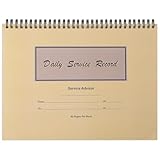
- Record Book: the package includes 1 daily service record book with 80 sheets, offering ample space to meet daily logging needs; It's a practical tool for tracking appointments, managing tasks, and enhancing customer service efficiency
- Ideal Size: measuring 8.5 x 11 inches, this activity log notepad balances portability and capacity; With 80 pages, it's ideal for daily use in the automotive industry, serving as a reliable service record management tool for consistent tracking
- Nice Quality: crafted from quality paper, the activity log book features reliable coil binding for easy page turning and tear-out; Its structured layout provides ample space for detailed entries, supporting effective schedule planning
- Friendly Design: designed for convenience, the daily log book's coil binding allows effortless sheet removal whenever needed; The intuitive layout ensures quick access to logging sections, making daily activity recording simple and efficient
- Versatile Usage: the service log book is a helper for the automotive industry or individuals to record scheduled maintenance, the shop can use it to register the maintenance needs of different customers, individuals can use it to keep track of flat rate hours
How to assess a retail service approach
Before changing a channel, process, or support system, assess how it affects the customer journey and the work employees must do. Compare approaches against practical operating needs rather than channel count alone.
- Continuity: Can relevant interaction context follow a shopper between online support, a store, and phone service?
- Order and inventory access: Can the people answering questions see dependable information for the orders, products, and availability they are discussing?
- Escalation: Can a customer reach an empowered person when a bot, help article, or first contact cannot resolve the issue?
- Channel fit: Does the mix include channels customers can use, while retaining a suitable voice option for complicated cases?
- Operational capacity: Can staffing, training, and service expectations sustain the experience promised to customers?
- Data responsibility: Is the information collected proportionate to the service benefit, and is its use clear to the customer?
These criteria connect service quality to the retailer’s ability to deliver it. A channel that looks convenient but lacks order context, inventory accuracy, trained coverage, or a reliable escalation path can simply move friction to a different part of the journey.
Frequently Asked Questions
What is retail customer service?
It is the assistance a shopper receives while discovering, selecting, buying, receiving, or returning products and resolving related problems, whether that help comes from store staff, remote agents, self-service, or digital channels.
Should retailers prioritize digital support or phone support?
Neither should be treated as the right answer for every customer or issue. Offer suitable digital options for customers who want them and retain a clear voice route for cases that are complicated, sensitive, or hard to explain in writing.
What makes omnichannel retail support difficult?
Customer interactions, order details, and inventory information may sit in separate systems or teams. If relevant information and responsibility do not carry across a handoff, shoppers can receive conflicting answers or have to repeat themselves.
How should retailers use AI in customer service?
Use automation for cases it can handle well, make escalation visible when it cannot, and explain data use clearly. AI-assisted product research is part of the retail landscape, but customer privacy and misuse concerns make transparency and careful data handling important.
Quick Recap
Product prices and availability are accurate as of the date/time indicated and are subject to change. Any price and availability information displayed on Amazon at the time of purchase will apply.
Quick wins for a faster PC:
Fix the driver behind crashes, sound loss and screen glitchesFind Drivers →Clear out junk files and repair common Windows errorsFree Scan →Scan for outdated or missing drivers - takes under a minuteDriver Scan →
