
iTechGuides is reader-supported. When you buy through links on our site, we may earn an affiliate commission. As an Amazon Associate I earn from qualifying purchases. Learn more
Short answer: the 2020 Rain Neuromorphics–Mila collaboration did not fabricate or test an AI chip. It proposed a way to train nonlinear analog neural networks and evaluated the approach in Spectre SPICE circuit simulations. The simulated MNIST results were described as comparable to or better than equivalent-size software networks, but the published summary gives no numerical accuracy figure. Read the original paper on arXiv and the contemporaneous coverage in EE Times.
What the 2020 research actually proposed
The work, Training End-to-End Analog Neural Networks with Equilibrium Propagation, describes a training method for physical analog circuits rather than a completed product. Its authors—Jack D. Kendall, Ross D. Pantone, Kalpana Manickavasagam, Yoshua Bengio and Benjamin Scellier—write: “We introduce a principled method to train end-to-end analog neural networks by stochastic gradient descent.”
The proposed networks are nonlinear resistive circuits:
- Programmable resistive-device conductances represent synaptic weights.
- Nonlinear components such as diodes provide activation functions.
- Kirchhoff’s laws let the circuit be interpreted as an energy-based model.
- Equilibrium propagation supplies a local conductance-update rule that, according to the paper, computes the loss gradient.
Memristors and diodes are examples of elements that could implement this design. Their appearance in the proposal does not mean that a Rain or Mila product containing them was built or sold.
#1 Best Overall

- ✅Powered by 26 Tera-Operations Per Second (TOPS) Hailo-8 AI Processor. 2.5W typical power consumption
- ✅Scalable, enabling simultaneous processing of multi-streams & multi-models
- ✅Enabling real-time, low latency and high-efficiency AI inferencing on the edge devices
- ✅Supports TensorFlow, TensorFlow Lite, ONNX, Keras, Pytorch frameworks
- ✅Supports Linux and Windows. Supports the temperature range of -40°C to 85°C
Was a chip built?
No. The Rain/Mila publication presents mathematical analysis and circuit simulation. Its reported MNIST experiments ran in the Spectre SPICE simulation framework, not on a fabricated Rain/Mila silicon device. The evidence therefore supports a demonstrated method in simulation, not a demonstrated commercial or laboratory chip.
The paper reports qualitative performance comparable to or better than equivalent-size software networks. The available abstract and research summaries do not state a numerical MNIST accuracy, so no percentage can be assigned to this result. Claims that the approach could eventually improve speed, energy use, density or on-device learning are prospective implications—not measured product benchmarks from the 2020 study. See the Mila publication listing and the paper record.
What “end-to-end analog AI” means here
“End-to-end” means that the neural computation and the parameter-learning rule are intended to operate within the same analog network, rather than sending activations to a conventional digital processor for backpropagation. In this proposal, a circuit settles toward an equilibrium state; a small change associated with the training objective provides a local signal for adjusting conductances.
Quick wins for a faster PC:
Repair Windows errors before they cause bigger problemsFix Now →Fix the driver behind crashes, sound loss and screen glitchesFind Drivers →Rank #2
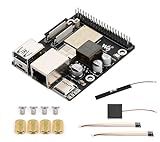
- High-Performance Dual-Core with Ample Memory--- Equipped with a 360MHz dual-core RISC-V processor, 32MB of onboard PSRAM, and 32MB of Flash memory, providing powerful processing capabilities and ample runtime for complex multimedia applications and edge computing.
- Powerful Multimedia Processing Center--- Integrated with a dedicated image processor (ISP), H.264 video encoder, and JPEG codec, perfectly supporting camera input and video processing, making it an ideal choice for developing smart displays, video surveillance, and other projects.
- Hardware-Level Security Protection--- Built-in digital signature, encryption accelerator, and key management unit, providing a one-stop hardware-level security solution from secure boot and data encryption to access control management, ensuring the security of your products and data.
- Full Connectivity Coverage: Wi-Fi 6, Bluetooth, PoE Power Supply--- Onboard with an ESP32-C6 chip, supporting the latest Wi-Fi 6 and Bluetooth 5.0; it also integrates an Ethernet port with PoE functionality, providing high-speed, flexible, and stable network connectivity, and can be powered directly via Ethernet cable, simplifying deployment.
- Rich interfaces and strong expandability--- It provides a MIPI camera/display interface, high-speed USB, SD card slot, microphone/speaker interface and a large number of programmable GPIOs, which greatly facilitates the expansion of external devices and meets the needs of various human-computer interaction and Internet of Things applications. Supports AI Speech Interaction: Allows access to online large model platforms such as ChatGPT, DeepSeek, Doubao, etc.
Why equilibrium propagation matters
Conventional neural-network training commonly stores activations and propagates error gradients through digital software. Equilibrium propagation instead uses the network’s physical settling behavior in two related conditions to estimate the gradient locally. The attraction is architectural: if suitable devices can reliably store conductances and implement the required dynamics, training could be closely coupled to the computation performed by the circuit.
What the paper did not establish
- It did not establish manufacturing yield, endurance, calibration stability or device-to-device variation for a finished chip.
- It did not provide a product power, latency or area measurement.
- It did not show that a complete training system can operate without supporting digital electronics.
- It did not identify a purchasable board, accelerator or consumer device.
How later analog chips relate to the Rain/Mila proposal
Analog AI hardware did advance after 2020, but later physical demonstrations came from separate IBM projects. They should not be presented as a Rain/Mila chip or as a retrospective fabrication of the 2020 design.
| Work | What was demonstrated | Evidence type and scope |
|---|---|---|
| Rain Neuromorphics–Mila, 2020 | Equilibrium-propagation training method for nonlinear resistive networks; MNIST evaluation in Spectre SPICE | Mathematical analysis and simulation; no fabricated chip reported. Primary paper |
| IBM prototype account, 2021 | 14-nm analog-AI prototype using phase-change memory (PCM) | Separate IBM hardware program. IBM Research |
| IBM, 2023 | Inference chip with 35 million PCM devices across 34 tiles; up to 12.4 TOPS/W chip-sustained performance | Fabricated hardware for speech tasks; separate study. Nature |
| IBM, 2025 | ALBERT transformer mapped with 7.1 million unique analog weights across 12 layers on one 14-nm PCM chip; average hardware accuracy 1.8% below floating-point reference | Separate fabricated inference demonstration. Nature Communications |
What IBM’s 2023 results show—and what they do not
The peer-reviewed 2023 IBM study reported up to 12.4 tera-operations per second per watt (TOPS/W) of chip-sustained performance on its 14-nm inference system. The smaller keyword-spotting network reached software-equivalent accuracy. A larger speech-transcription experiment mapped 45 million weights across more than 140 million PCM devices and five chips, with accuracy described as near the software reference.
Rank #3

- Powered by 26 Tera-Operations Per Second (TOPS) Hailo-8 AI Processor.
- 2.5W typical power consumption
- Enabling real-time low latency and high-efficiency AI inferencing on the edge devices
- Supports TensorFlow TensorFlow Lite, ONNX, Keras, Pytorch frameworks
- Supports Linux and Windows.
Those figures belong to IBM’s hardware and workloads, not to the Rain/Mila method. The same study notes that its prototype lacked on-chip digital compute cores and SRAM needed for auxiliary operations and data staging in an eventual marketable product. It is therefore best understood as a research prototype, not a complete commercial system.
What the 2025 ALBERT demonstration adds
IBM’s 2025 study extended analog inference to the ALBERT transformer. It placed 7.1 million unique analog weights across 12 layers on one 14-nm PCM chip and reported average hardware accuracy 1.8% below the floating-point reference. This is evidence that analog memory hardware can support a larger transformer-style model under a defined mapping and evaluation setup; it is not evidence that the 2020 Rain/Mila training proposal became a product or that the chip performed end-to-end analog training.
Independent reader supportYour contribution helps us test, update, and keep practical guides available for everyone.How to interpret the “breakthrough” claim
The defensible breakthrough is conceptual: the 2020 authors showed how a class of analog resistive networks might be trained with a principled, local rule, and they validated the mathematics in circuit simulation. That addresses a major obstacle for analog computing—how to learn weights—without claiming that fabrication, packaging, software tooling and system integration are solved.
Rank #4

- High-Performance AI Processing: The MX3 is designed to handle the most demanding AI computer vision workloads, delivering exceptional performance and efficiency.
- Flexible Integration: The MX3 can be easily integrated into your existing systems via its M.2 M-key form factor and support for Linux operating systems.
- Energy Efficient: The MX3 is designed to provide high performance while minimizing power consumption.
- Comprehensive Software Development Kit (SDK): The MX3 is supported by a comprehensive SDK that simplifies development and deployment.
- Hardware compatability: The MX3 is compatible with the PCI-SIG M.2 M-key 2280 Specification. It can be used with the Raspberry Pi 5 with a M-key 2280 HAT.
For readers evaluating an analog-AI result, check four distinctions:
- Task and model: MNIST classification, keyword spotting, speech transcription and transformer inference stress different parts of a system.
- Simulation or silicon: a SPICE result predicts circuit behavior; a fabricated chip exposes device variation, noise, drift and peripheral overhead.
- Training or inference: the Rain/Mila work centers on a training rule, while the cited IBM chips primarily demonstrate inference.
- System completeness: headline compute efficiency may exclude digital control, memory, conversion and data-staging hardware.
Is there a product to buy?
No purchasable Rain/Mila chip, development board, accessory or replacement part is established by the cited sources. The result is a research paper and simulated circuit work. Generic analog components or unrelated AI accelerators should not be represented as implementations of this specific research.
The Tool Desk
Outbyte PC Repair FREERepair Windows errors before they cause bigger problemsFix Now →Outbyte Driver Updater FREEScan for outdated or missing drivers - takes under a minuteDriver Scan →Quick Recap
Product prices and availability are accurate as of the date/time indicated and are subject to change. Any price and availability information displayed on Amazon at the time of purchase will apply.

