
iTechGuides is reader-supported. When you buy through links on our site, we may earn an affiliate commission. As an Amazon Associate I earn from qualifying purchases. Learn more
Choose RelayPlane if you want a local-first proxy centered on run-level cost visibility and configurable caps; choose LiteLLM if you want a self-hosted gateway with broader budget scopes and are prepared to operate PostgreSQL; choose OpenRouter if you prefer managed routing and less gateway upkeep. The critical distinction is enforcement: LiteLLM says its budgets do not cap spend in a DB-less deployment. RelayPlane’s cap and kill-switch features are described by its own project, while OpenRouter’s plan terms are not the same thing as a guaranteed per-run hard cap.
How the three options differ
These products overlap in model access and routing, but they put operational responsibility in different places. RelayPlane and LiteLLM are local or self-hosted options; OpenRouter is a managed routing service. That difference affects what you operate, how requests flow, and what you need to verify before trusting a spending limit.
| Decision point | RelayPlane | LiteLLM | OpenRouter |
|---|---|---|---|
| Deployment | Local-first proxy, as described in the project repository. | Self-hosted gateway; its pricing page lists an open-source self-hosted option. | Managed routing service, according to OpenRouter’s comparison. |
| Cost controls | Repository lists configurable caps, a kill switch, and local cost telemetry. Exact behavior should be checked against the version you deploy. | Budgets are available at personal, team, team-member, and agent scopes, but enforcement depends on database-backed spend. A DB-less setup does not enforce them. | Pricing and plan features vary; the pricing page does not establish a guaranteed per-run hard cap. |
| Routing | Repository describes provider routing and failover; confirm supported providers and any streaming limitations for your setup. | Pricing page lists fallbacks. | Managed routing with configurable provider constraints and strategies, as described by OpenRouter. |
| Operating work | You operate the local proxy and its upkeep; current deployment requirements are not stated in the cited repository summary. | You operate the gateway and supporting infrastructure. PostgreSQL is required for budget enforcement. | Less gateway-operation work because routing is managed, according to OpenRouter’s comparison. |
| License or plan cost | Repository describes the project as MIT licensed; infrastructure costs remain yours. | Open-source gateway is listed at $0; infrastructure and operating costs are separate. Enterprise pricing is quoted. | Plan-based terms and usage charges apply; BYOK fees depend on plan. |
Capability descriptions in this table come from vendor documentation or project pages, not independent performance tests. Provider support, routing behavior, pricing, and privacy controls can change, so confirm the terms and configuration that apply to your deployment.
Can you rely on the cost caps?
RelayPlane: local cost visibility and configurable limits
The RelayPlane repository lists configurable caps, a kill switch, and local cost telemetry as project features. That makes it a natural candidate when the priority is seeing and controlling costs close to a run. These are project claims, not independently verified results; check the deployed version’s documentation and test what happens at the limit before treating it as a hard boundary.
#1 Best Overall
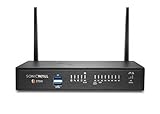
- The latest SonicWall TZ270W series, are the first desktop form factor nextgeneration firewalls (NGFW) with 10 or 5 Gigabit Ethernet interfaces. The series consist of a wide range of products to suit a variety of use cases.
- Reduce complexity and get the business running without relying on IT personnel with easy onboarding using SonicExpress App and Zero-Touch Deployment, and easy management through a single pane of glass
- Drive business growth by investing in next-gen appliances with multi-gigabit and advanced security features, to future-proof against the changing network and security landscape.
- SonicWall 24x7 support provides chat, email, web, and telephone support for technical assistance | Dynamic Support is designed for customers who need continued protection through ongoing firmware updates and advanced technical support
- Hardware: Operating system: SonicOS 7.0 | Interfaces: 8x1GbE, 2 USB 3.0, 1 Console | Management: Network Security Manager, CLI, SSH, Web UI, GMS, REST APIs | VLAN Interfaces: 64 | Access points supported (maximum): 16
LiteLLM: budgets require a database
LiteLLM documents personal, team, team-member, and agent budgets, but its budget documentation says those budgets are enforced against spend read from the database. It explicitly warns that budgets do not cap anything in a DB-less deployment. The global litellm_settings.max_budget check also fails open without the database, so requests can continue after the configured limit.
If you select LiteLLM for budget enforcement, include PostgreSQL in the deployment design and verify that the running gateway is connected to it. A configured budget in a DB-less setup is not a dependable spending stop.
OpenRouter: check plan terms separately from per-run limits
OpenRouter’s pricing page lists a monthly allowance of $25,000 in list-price inference without BYOK fees on Free, Standard, and Business, followed by a 5% fee; Enterprise is custom. These are the plan terms published on the page as of October 7, 2026, and should be rechecked before purchase. They describe BYOK pricing, not a demonstrated hard cap for an individual run, so verify any separate account-level or request-level controls you need.
The Tool Desk
Outbyte PC Repair FREERepair Windows errors before they cause bigger problemsFix Now →Outbyte Driver Updater FREEFix the driver behind crashes, sound loss and screen glitchesFind Drivers →What each option costs beyond the headline price
RelayPlane
The project repository describes RelayPlane as MIT licensed. A license price of zero does not eliminate the cost of the machine, infrastructure, setup, or ongoing maintenance you choose to provide.
LiteLLM
LiteLLM’s pricing page says, “The open-source gateway is free to self-host, forever.” The $0 license entry is not a total-cost estimate: you still account for hosting, database operation, and engineering time. The same pricing page describes Enterprise as a separate offering priced according to gateway request capacity, deployment architecture, and support needs.
Rank #2
- The latest SonicWall TZ270W series, are the first desktop form factor nextgeneration firewalls (NGFW) with 10 or 5 Gigabit Ethernet interfaces. The series consist of a wide range of products to suit a variety of use cases.
- Reduce complexity and get the business running without relying on IT personnel with easy onboarding using SonicExpress App and Zero-Touch Deployment, and easy management through a single pane of glass
- Drive business growth by investing in next-gen appliances with multi-gigabit and advanced security features, to future-proof against the changing network and security landscape.
- SonicWall 8x5 Support provides chat, email, web, and telephone support for technical assistance | Dynamic Support is designed for customers who need continued protection through ongoing firmware updates and advanced technical support
- Hardware: Operating system: SonicOS 7.0 | Interfaces: 8x1GbE, 2 USB 3.0, 1 Console | Management: Network Security Manager, CLI, SSH, Web UI, GMS, REST APIs | VLAN Interfaces: 64 | Access points supported (maximum): 20
OpenRouter
OpenRouter’s published pricing distinguishes plan features and BYOK fees; model inference remains usage-priced. Compare the applicable plan terms and model costs for your expected traffic rather than treating the BYOK allowance as an overall usage cap. OpenRouter also publishes a LiteLLM crossover calculation based on assumed infrastructure and platform costs; it is vendor-published arithmetic, not an independent benchmark or a universal break-even point.
Independent reader supportYour contribution helps us test, update, and keep practical guides available for everyone.Routing and deployment trade-offs
Prefer local control when traffic placement matters
RelayPlane and LiteLLM are described as local or self-hosted choices. That can suit a team that wants to run its gateway in infrastructure it operates, but the label alone does not settle privacy, retention, or regional-compliance questions. Confirm the providers your requests reach, what data is logged, and the applicable controls for each component before making compliance assumptions.
Quick wins for a faster PC:
Scan for outdated or missing drivers - takes under a minuteDriver Scan →Clear out junk files and repair common Windows errorsFree Scan →Prefer managed routing when reducing upkeep matters
OpenRouter handles routing as a managed service, reducing the need for you to run and maintain that gateway. In return, requests pass through its service. Review its current provider constraints, routing options, data handling, and plan features against your requirements; the vendor comparison describes configurable routing, but behavior and availability may vary.
Check fallback behavior, not just the feature name
RelayPlane’s repository describes provider routing and failover, LiteLLM’s pricing page lists fallbacks, and OpenRouter’s comparison describes configurable routing strategies. Those descriptions do not establish identical behavior. Before relying on failover, verify which providers and models are eligible, what triggers a fallback, how errors and streaming responses are handled, and whether switching providers changes cost or data flow.
Quick Recap
Which one should you choose?
- Choose RelayPlane when you want a local-first proxy focused on cost visibility, caps, and a kill switch, and are willing to validate those controls in your deployed version.
- Choose LiteLLM when self-hosting and multiple budget scopes fit your needs, and you can run PostgreSQL as part of the enforcement path. Do not rely on its budgets in DB-less mode.
- Choose OpenRouter when managed routing and lower gateway-operations burden matter more than keeping the routing layer self-hosted, and its current plans and request controls fit your usage.
Checks to make before relying on a limit or route
- Define the boundary. Decide whether you need a per-run cap, a user or team budget, an account-level limit, or only cost reporting. These are different controls.
- Confirm enforcement in the actual deployment. For LiteLLM, verify the database-backed setup; for RelayPlane or OpenRouter, confirm current documented behavior and test what happens when a limit is reached.
- Exercise the failure path. Test what happens at the cap, when the gateway or database is unavailable, and when a provider returns an error. Check whether traffic stops, fails open, or falls back.
- Review cost and data flow together. Identify which provider handles each request and fallback, then check current model pricing, routing terms, and data controls for those services.
Product prices and availability are accurate as of the date/time indicated and are subject to change. Any price and availability information displayed on Amazon at the time of purchase will apply.

