
The Tool Desk
Outbyte Driver Updater FREEScan for outdated or missing drivers - takes under a minuteDriver Scan →Outbyte PC Repair FREERepair Windows errors before they cause bigger problemsFix Now →iTechGuides is reader-supported. When you buy through links on our site, we may earn an affiliate commission. As an Amazon Associate I earn from qualifying purchases. Learn more
Docker Compose can make a multi-service AI development setup easier to recreate by recording its services and build inputs in configuration files. The “four minutes” in the original headline is an author-specific result, not a Docker guarantee: actual build time depends on the project, machine, network, and cache. This guide shows how to structure and rebuild a setup, what must persist outside containers, and how to measure a rebuild honestly.
What Docker Compose captures—and what it does not
Compose describes an application’s services in a YAML file and can build service images from source. That gives you a repeatable recipe for assembling the containers, rather than a record of every detail of the computer that ran them. See Docker Compose documentation.


For an AI development environment, the Compose project might define an API, a worker, and a database, while each service’s build configuration identifies the files needed to create its image. The exact services and dependencies vary by project; Docker’s quickstart, for example, demonstrates Python and Redis, but those are not requirements for AI work. A rebuild can only reproduce inputs that the project actually specifies or that are supplied separately.
Make the project files portable
Keep build inputs in the expected context
A build context is the directory or Git repository whose files are available to the builder. In Compose, a relative context path is resolved in relation to the Compose project or file location. If you move the project, preserve the expected directory layout or update the path; otherwise a build may fail because required files are no longer where the configuration expects them. The Compose Build Specification describes context and build options.
#1 Best Overall
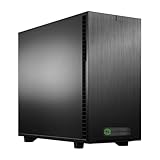
- Ryzen Threadripper PRO 9965WX 4.2GHz (Up To 5.4GHz Turbo) 24 Core
- 256GB DDR5 ECC Reg (4x64GB)
- GeForce RTX 5090 32GB GPU
- 10G + 2.5G Networking + WiFi 7
- Onboard AQtion AQC113C 10GbE LAN
Record dependencies and exclude irrelevant files
Include the Dockerfiles, dependency manifests, lock files, and application source needed by each service. Use a .dockerignore file to keep unnecessary files—such as local caches or secret-bearing .env files—out of the build context. Docker’s Compose Quickstart shows this pattern. A configuration file alone does not establish that dependencies are pinned or that external downloads will remain available; check the project’s actual files and dependency sources.
Use rebuilds for image-level changes
Docker’s build reference says: “If you change a service’s Dockerfile or the contents of its build directory, run docker compose build to rebuild it.” Run the command from the project directory, or specify the relevant Compose file when needed. For example:
docker compose buildTo build one service rather than every buildable service, add its Compose service name, as in docker compose build api. The available flags include --check for build checks and --pull to attempt to pull newer base images. Consult the docker compose build reference for current options. Disabling cache is not required for reproducibility; it changes build behavior and can make builds slower.
Choose between syncing code and rebuilding
During active development, rebuilding an image for every source edit may be unnecessary. Compose Watch supports rules that synchronize selected files or trigger a rebuild when specified paths change. The Compose Develop Specification documents Watch for Compose 2.22.0 and later.
| Change action | What happens | Useful when |
|---|---|---|
sync |
Selected files are synchronized while the existing container keeps running. | Editing files that the running service can consume without changing its image. |
rebuild |
The image is rebuilt and the service is recreated. | Changing files or dependencies that are part of the image build. |
These actions serve different purposes: syncing can speed up an edit-and-run loop, while rebuilding checks that the image can be assembled from its declared inputs. Neither one automatically preserves data stored only inside a container.
Keep secrets and important data out of disposable containers
Supply credentials deliberately
Docker advises against using environment variables to pass sensitive information and points to secrets as an alternative. A host-side .env file can provide values for Compose interpolation, but a value reaches a container only if the service configuration passes it into that container. Do not assume that defining a variable on the host makes it available to a service. See Docker’s guidance on setting environment variables in a container and Compose environment variables.
Persist state separately
Containers can be recreated, so data stored only in a container’s writable layer may disappear when that container is removed. Decide which state must survive—such as model files, database contents, or user configuration—and store it in an appropriate persistent location. Docker’s quickstart uses a named volume for Redis data so it is not tied to the lifetime of the Redis container. The right storage arrangement for model weights or other AI data depends on the project; the Compose documentation does not establish one universal layout.
Quick wins for a faster PC:
Clear out junk files and repair common Windows errorsFree Scan →Fix the driver behind crashes, sound loss and screen glitchesFind Drivers →Repair Windows errors before they cause bigger problemsFix Now →Make repeated environments distinct
If you run multiple copies of a project—for example, separate branches or CI jobs—set a project name to isolate their Compose resources. Compose also allows multiple configuration files to be combined, with later files adding to or overriding earlier configuration. In a multi-file workflow, paths are resolved relative to the first Compose file. These details matter when a setup is shared across environments, since a path or project-name mismatch can change what gets built or where state is kept. See Docker’s pages on specifying a project name and Compose configuration.
Independent reader supportYour contribution helps us test, update, and keep practical guides available for everyone.How to measure a four-minute rebuild
A time claim is meaningful only when its start and end points are clear. Docker documentation does not promise a particular rebuild duration, and the four-minute result belongs to the author’s setup rather than being a general benchmark. To produce a useful, repeatable measurement, document the conditions alongside the result:
- Define the starting condition. Say whether the build cache and images already exist, whether the run is from a clean checkout, and whether required model or dependency files are already downloaded.
- Define the timed operation. For an image-build measurement, start the timer immediately before
docker compose buildand stop when the command finishes successfully. If the claim means the whole environment is ready, include service startup and the check used to establish readiness. - Record the setup. Identify the machine, Docker Engine and Compose versions, network conditions, and whether the run uses cached layers. These factors can change elapsed time.
- Separate first-run downloads. State whether base images, packages, or model files had to be fetched. A later cached run is not equivalent to a clean setup on another machine.
With those boundaries stated, readers can tell what “four minutes” means and whether their own setup has comparable inputs. A rebuild command is reproducible only to the extent that the files, versions, external inputs, and persistent state are accounted for.
Production is a separate deployment concern
A Compose file used for local development may need adjustments before production use. Docker’s production guidance covers adapting Compose for that context. Recreating a development environment is not, by itself, a production deployment or a guarantee that operational concerns have been addressed.
Free tools Windows power users keep installed
One-click scans. No signup required.
Quick Recap
Product prices and availability are accurate as of the date/time indicated and are subject to change. Any price and availability information displayed on Amazon at the time of purchase will apply.

