
The Tool Desk
Outbyte PC Repair FREERepair Windows errors before they cause bigger problemsFix Now →Outbyte Driver Updater FREEFix the driver behind crashes, sound loss and screen glitchesFind Drivers →iTechGuides is reader-supported. When you buy through links on our site, we may earn an affiliate commission. As an Amazon Associate I earn from qualifying purchases. Learn more
Raytheon’s “heat ray” was Silent Guardian, a millimeter-wave Active Denial Technology system that EE Times reported the company had brought to market in 2007. It was not a laser: its focused radio-frequency energy was described as causing a painful heating sensation in people’s skin. Raytheon’s later laser and high-power microwave systems are different technologies aimed at different targets.
What was Raytheon’s heat ray?
Silent Guardian was presented as a product, not just a laboratory experiment. In a 2007 report, EE Times said Raytheon’s Missile Systems division had designed, developed, and manufactured it. The system was intended to direct energy at people to make them move away or take cover, without using a conventional projectile or explosive.
| # | Preview | Product | Price | |
|---|---|---|---|---|
| 1 |
|
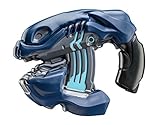
Halo Plasma Blaster Costume Accessory | $25.06 | Buy on Amazon |
| 2 |

|
Halo Plasma Rifle Costume Accessory | $35.44 | Buy on Amazon |
EE Times described a focused 95-GHz millimeter-wave beam that penetrated the skin to about 1/64 inch and produced what the report called an “intolerable heating sensation.” Those are figures and descriptions reported in 2007, not fresh measurements or an independent present-day performance assessment. The article also stated a range in excess of 250 meters, while noting that beam geometry and range details had previously been classified.
What’s actually slowing this PC down?
Pick the symptom - the matching free tool is one click away.
The report said development of the underlying Active Denial Technology involved the Air Force Research Laboratory and the Marine Corps Joint Non-lethal Weapons Directorate. It quoted an AFRL fact sheet as putting development spending at about $40 million. That is a historical figure cited in the 2007 article, not a current program budget.
#1 Best Overall
- Halo (Microsoft)
- Officially Licensed
- From the award-winning video game series comes this cool cosplay Plasma Blaster replica
- Plastic construction
How Silent Guardian differs from Raytheon’s later directed-energy systems
| System | Energy modality and intended target | Platform or integration | Range or engagement evidence | What the cited source establishes |
|---|---|---|---|---|
| Silent Guardian | Millimeter wave; intended to create a heating sensation in people | Not stated in the 2007 EE Times report | EE Times reported a range in excess of 250 meters in 2007 | EE Times described it as a product Raytheon had brought to market |
| HELWS | High-energy laser; intended to detect, track, and defeat airborne threats | RTX says it can be integrated on trucks, armored vehicles, ships, aircraft, or in containerized systems | Range not stated on the RTX product page described here | RTX claims more than 25,000 operational hours and combat-use certification; a UK government program separately reported vehicle-based demonstrations |
| CHIMERA | High-power microwave; intended for layered defense against aerial targets | Transportable system | Range not stated in the 2024 Raytheon and AFRL report | Raytheon and AFRL reported a three-week field test at White Sands Missile Range in January 2024 |
Is the heat ray a laser?
No. Silent Guardian’s reported 95-GHz beam was millimeter-wave energy, not laser light. The name “heat ray” describes the sensation the system was intended to cause; it does not mean that it used the same technology as a laser weapon.
HELWS is the laser system in this comparison. RTX describes it as a high-energy laser that uses photons to detect, track, and defeat airborne threats. CHIMERA is different again: it uses high-power microwaves. Treating all three as interchangeable “heat rays” obscures differences in their energy sources, target sets, and evidence of maturity.
What do recent tests say about Raytheon’s laser and microwave systems?
HELWS in UK vehicle demonstrations
The UK Ministry of Defence reported that a Raytheon HELWS was fired from a British Army Wolfhound vehicle in July 2024. In December 2024, the British Army conducted live firing against moving aerial targets in Wales. Government updates describe this work as a Land Laser Directed Energy Weapon demonstrator; the stated purpose was to learn lessons for future frontline requirements, not to announce universal battlefield deployment.
Free tools Windows power users keep installed
One-click scans. No signup required.
Raytheon UK chief executive James Gray said the firing showed the system could “track, engage and defeat targets whilst mounted on a vehicle.” The UK Defence Equipment & Support directed-energy team leader Stephen Waller described the technology as “still an emerging technology.” The Ministry of Defence reported a £16.8 million contract for the demonstrator in 2024.
CHIMERA’s field test
Raytheon and AFRL reported that CHIMERA completed a three-week field test at White Sands Missile Range in January 2024. Their account says the system acquired and tracked aerial targets and is intended to contribute to layered defense. Raytheon Advanced Technology president Colin Whelan called high-power microwave systems “cost-effective and reliable solutions” for that role; this is a company executive’s characterization, not an independent comparative cost assessment.
Rank #2
- Product includes: one toy weapon.
- Halo (MICROSOFT)
- Officially licensed
- 13"X8"
Are Raytheon’s laser weapons operational?
RTX’s current HELWS product page claims more than 25,000 operational hours and combat-use certification. Those are corporate claims, not independent combat statistics. The UK demonstrations add government-reported evidence of vehicle-mounted testing and live firing, but they are described as a demonstrator and experimentation program. The sources cited here do not establish independent current figures for battlefield effectiveness or the number of systems deployed.
So “operational” needs context: RTX uses the term in describing HELWS experience and certification, while the UK government describes its 2024 work as testing intended to inform future capability decisions. Neither statement means that every armed force fields the system, or that it is proven effective in every battlefield condition.
Can a directed-energy weapon stop drones?
The evidence described here supports a limited answer. The UK reported live firing of HELWS against moving aerial targets, and Raytheon and AFRL said CHIMERA acquired and tracked aerial targets during its field test. Those reports show trials involving aerial targets; they do not by themselves establish a general success rate against drones or prove performance across different ranges, weather, target types, or combat conditions.
Silent Guardian had a different stated purpose: its reported effect was to make targeted people feel intense skin heating and leave or take cover. It should not be confused with the later systems described as engaging airborne threats.
Quick Recap
Product prices and availability are accurate as of the date/time indicated and are subject to change. Any price and availability information displayed on Amazon at the time of purchase will apply.

