
Do these 3 things before closing this tab:
1Scan for outdated or missing drivers - takes under a minute2Repair Windows errors before they cause bigger problems3Fix the driver behind crashes, sound loss and screen glitchesiTechGuides is reader-supported. When you buy through links on our site, we may earn an affiliate commission. As an Amazon Associate I earn from qualifying purchases. Learn more
The 2026 ASUS ROG Zephyrus G14 looks like an unusually capable compact gaming laptop during a period of sharply rising memory prices—but “buck the trend” describes its performance, not a proven bargain. Tom’s Guide’s October 1, 2026 review found strong results from its tested RTX 5070 Ti configuration and redesigned cooling, while also flagging a $3,599 U.S. starting price, loud fans under load, and 8 hours 32 minutes of battery life in its web-surfing test.
What is the 2026 ASUS ROG Zephyrus G14?
It is a 14-inch gaming laptop that ASUS also positions for creator workloads. Tom’s Guide’s review describes an Intel Core Ultra 9 386H processor, a 2880 × 1800 OLED display with a 120Hz refresh rate, and graphics options up to an NVIDIA GeForce RTX 5080. The reviewed configuration used an RTX 5070 Ti, so its test results should not be read as results for every G14 configuration. Tom’s Guide’s review and specifications list memory up to 32GB DDR5 and storage up to 2TB; check the precise regional SKU before buying, since configurations can differ.
Why does it seem to buck the RAMageddon trend?
The laptop stands out in the review for the performance it delivers in a compact design, not because there is evidence its price avoided memory inflation. Tom’s Guide reports that redesigned ventilation lets the GPU run at 130W, up from 110W in the previous design, helping sustain performance. In the publication’s benchmark table, the tested 2026 RTX 5070 Ti G14 scored 12,428 in 3DMark on average, narrowly ahead of 12,370 for the 2025 G14 with an RTX 5080. That comparison is specific to the review’s tests; results vary by game, settings, and configuration.
Quick wins for a faster PC:
Clear out junk files and repair common Windows errorsFree Scan →Scan for outdated or missing drivers - takes under a minuteDriver Scan →Tom’s Guide’s August 2026 memory-market context is dramatic. Its August 17 report compared approximate U.S. PCPartPicker average retail prices for selected desktop DDR5 kits in August 2025 and August 2026:
#1 Best Overall
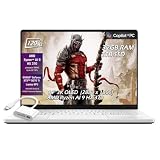
- ✔【Screen】 14 inches 2880 x 1800 OLED 3K 120Hz G-SYNC 500 nits;
- ✔【Memory & Storage】 32GB LPDDR5X 8000MHz megahertz and 2TB Solid State Drive (SSD) storag;
- ✔【Processor】 AMD Ryzen AI 9 HX 370 Processor 2 GHz (up to 5.1 GHz, 12-cores);
- ✔【Graphics】 NVIDIA GeForce RTX 5070 Ti 12GB GDDR7, DLSS 4 (Deep Learning Super Sampling), Ray tracing;
- ✔【Connectivity】 2 x USB-A 3.2, 1 x USB-C 3.2, 1 x USB-C 4, 1 x HDMI 2.1, Headphone Jack, Wireless Standard BE, WiFi 7, Bluetooth;
| Desktop memory kit | August 2025 average | August 2026 average | Reported change |
|---|---|---|---|
| 2×16GB DDR5-6000 | $108 | $572 | 429% increase |
| 2×32GB DDR5-5600 | $191 | $1,118 | 485% increase |
| 2×32GB DDR5-6000 | $222 | $1,272 | 473% increase |
| 128GB DDR5-6400 kit | Reported lowest-ever price: $329 | Best U.S. price: $3,399 | Not stated |
These are Tom’s Hardware’s approximate figures for desktop retail kits, not laptop memory pricing or the cost of components installed in the G14. They do not explain ASUS’s price or show that this laptop is better value than competing machines. Tom’s Hardware’s August 17, 2026 comparison attributes the kit averages to PCPartPicker.
More broadly, Insight’s 2026 explainer attributes its account of supply and contract prices to TrendForce, describing manufacturers as prioritizing higher-priced AI memory while scaling back standard DRAM and SSD production. That is industry context, not a breakdown of the G14’s manufacturing costs. Insight’s Ian Murray, Director of Device Lifecycle Strategy, advises: “The best approach right now is using data — not panic — to drive device refresh decisions.”
Rank #2

- The AMD Ryzen AI 9 HX 370 Processor Blends Power and Performance with Ease Armed with 12 cores and 24 threads, AMD Ryzen AI 9 HX 370 Processor powers your laptop with ease. With up to 50 TOPS in AI Performance, its integrated AI Accelerators are ready to enhance your experience.
- Experience Cutting Edge Graphics With NVIDIA GeForce RTX 5080 Laptop GPU Maximize your gaming and creativity with NVIDIA GeForce RTX 5080 GPU. Game-changing features like DLSS 4 and ray racing technology bring game graphics to life by simulating sunlight and creating a realistic environment for an immersive gaming experience.
- OLED ROG Nebula Display and NVIDIA G-SYNC Uplevel your visual experience with the Zephyrus G14's OLED Display certified with the ROG Nebula Display standards. Enjoy rapid 0.2ms response times, a vivid 3K resolution, and a smooth 120Hz refresh rate. With NVIDIA G-SYNC, eliminate visual tearing, minimize stuttering, and reduce input lag.
- Windows Copilot+ AI Acceleration Meet Copilot+ in Windows – your AI-accelerated assistant for quick answers, creative inspiration, and focused tasks without breaking a sweat. Boost productivity with fast answers, image generation, and more. Elevate your Windows 11 experience and unleash creativity!
- Enjoy Seamless Multitasking With 32GB of LPDDR5X RAM Equipped with 32GB of LPDDR5X RAM running at up to 8000MHz speed, the Zephyrus G14 effortlessly handles multitasking demands whether you're gaming, creating, or simply browsing.
How fast is it, and what are the trade-offs?
The review reports strong gaming, rendering, and productivity performance from its RTX 5070 Ti test unit. Its comparisons show that results differ by game and settings rather than establishing a universal performance lead over other laptops. Sustained GPU power is one reason the redesigned airflow matters, but it comes with practical downsides:
- Fan noise: Tom’s Guide says the fans become loud during demanding AAA gaming and heavy Blender rendering. That can be distracting in meetings, classrooms, or shared spaces.
- Battery life: The G14 lasted 8 hours 32 minutes in the review’s continuous web-surfing test. The compared MSI Stealth 16 AI+ (2026) lasted 10 hours 49 minutes in the same review’s test. These are test results, not guaranteed everyday runtimes.
- Display and portability: The 14-inch OLED panel combines a 2880 × 1800 resolution with a 120Hz refresh rate, making the format attractive to users who want a compact screen without giving up high refresh rate.
Tom’s Guide suggests noise-cancelling headphones for the loud-fan scenario, but the review does not test or endorse a particular model.
Rank #3

- 14" 3K OLED ROG Nebula display with 120Hz refresh rate and 0.2ms response for vivid, ultra-smooth visuals.
- Powered by AMD Ryzen 9 270 (8C/16T, up to 5.2GHz) with DDR5/LPDDR5X support and Radeon 780M graphics.
- NVIDIA GeForce RTX 5060 with 3,840 CUDA cores, 8GB GDDR7, DLSS 4, and 23–25% uplift over RTX 4060.
- Premium aluminum chassis, just 0.63" thin and 3.31 lbs, combining portability and durability.
- ROG Intelligent Cooling with liquid metal and 2nd Gen Arc Flow Fans for sustained performance.
What does it cost, and is it worth buying now?
Tom’s Guide lists a U.S. starting price of $3,599. The same review page showed a UK Amazon listing at £2,464.99 when it was crawled. These are dated snapshots from different markets and may not refer to equivalent configurations; neither is a live quote. Check current local pricing and match the exact GPU, memory, storage, and display configuration before comparing offers. The review notes that previous-year G14 models remain available at lower prices.
Whether to buy now depends more on your workload and the price of the exact configuration than on alarming desktop RAM-kit averages. Consider the G14 if you specifically want a compact OLED gaming system with strong reviewed performance and can accept its price, fan noise, and test-bench battery result. If value is the priority, compare current machines in the same market and configuration class, including older discounted models. For a meaningful comparison, weigh price, GPU and sustained performance, display, portability, battery life, and noise—not one benchmark or a broad memory-price headline.
Quick Recap
What should you check before ordering?
- Confirm the SKU: Verify the processor, GPU, RAM, storage, and display listed by the seller. The review tested an RTX 5070 Ti model, while its specification table lists graphics up to RTX 5080 and memory up to 32GB DDR5.
- Check the local price: Compare live prices in your country and confirm that competing offers have comparable configurations. The review’s U.S. and UK figures are not a like-for-like comparison.
- Match the laptop to where you will use it: If you regularly play demanding games or render projects near other people, account for the reported fan noise. If you need long stretches away from an outlet, compare battery results from the same test method.
- Compare against the previous generation: Tom’s Guide says older G14 models remain available for less. A lower-priced prior model may be the more sensible purchase if its performance and configuration meet your needs.
Product prices and availability are accurate as of the date/time indicated and are subject to change. Any price and availability information displayed on Amazon at the time of purchase will apply.

