
iTechGuides is reader-supported. When you buy through links on our site, we may earn an affiliate commission. As an Amazon Associate I earn from qualifying purchases. Learn more
“Quick-release store for light” refers to a 2006 laboratory experiment, not a product: researchers used visible light to drive a chemical reaction in lipid vesicles and create a proton gradient across their membranes. The result was an artificial-photosynthesis-inspired molecular system, but the reported design could discharge only once.
What did “quick-release store for light” mean?
The phrase was the headline of a July 6, 2006 Chemistry World report about research into capturing light through molecular charge separation. The underlying paper, “Photoproduction of Proton Gradients with pi-Stacked Fluorophore Scaffolds in Lipid Bilayers,” appeared in Science on July 7, 2006. Its bibliographic record lists volume 313, issue 5783, pages 84–86; those are publication details, not performance measurements. PubMed’s record and the University of Geneva repository entry describe the study.
Calling it a “store” is best understood as shorthand for converting absorbed light into chemical changes that establish a gradient. The experiment did not demonstrate a commercial battery, a consumer device, or a quantified energy-storage capacity.
Do these 3 things before closing this tab:
1Scan for outdated or missing drivers - takes under a minute2Repair Windows errors before they cause bigger problems3Fix the driver behind crashes, sound loss and screen glitchesHow did the molecular system capture light?
Fluorescent stacks crossed the membrane
The researchers used rigid p-octiphenyl rods as scaffolds for helical stacks of fluorescent naphthalene diimides. In the experimental lipid vesicles, these assemblies could span the membrane. The arrangement was designed to collect light and support charge transfer across the membrane, as described in the paper’s PubMed record.
#1 Best Overall
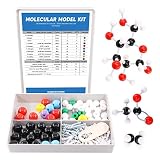
- ★ BASIC TO ADVANCED LEARNING --- Perfect for 16 years and over student, whoever you are senior student or college student(16 Years and Over). Fantastic learning aid for your. If you have had one at home you can practice with your family. Meanwhile if you are student to playing with it by yourself to brush up on defunct chemistry skills. The pieces all to be sturdy and well made, and can use it for years to come.
- ★ FALL IN LOVE WITH CHEMISTRY --- These are so much fun to play with and they help you understand the relationship between molecules. Let you learn the shapes and chemical makeup of all the functions groups you'v so far learned in O-Chem and Inorganic chemistry.
- ★ HIGH QUALITY --- Made from high quality durable materials designed for easy construction and perfect fit. These molecular model kit pieces are color coded to national standards for easy ID. Organic chemistry model kit includes box for easy storage and transport with your other textbooks, notes, and books. Excellent for the classroom.
- ★ MOLECULE SCIENCE IN 3D --- We have prepared 125 Pcs molecular model set for you, This model contains C, H, O, N, P, S, Halogen, and other metals and a variety of single and double bonds, long bonds, long keys. Can be put high school, university chemistry in most of the organic or inorganic molecular structure model for the study of experimental operation.
- ★ CONVENIENT STORAGE --- The pieces come in a slim plastic box for convenient storage. See the pictures on this listing for a full understanding of what's inside!
Light drove a chemical reaction and proton gradient
When illuminated with visible light, the system reduced quinone electron acceptors in the vesicles. That reaction generated a proton gradient across the lipid bilayer. In other words, the reported output was a difference in proton concentration across a membrane—not electricity delivered to a device.
The Geneva repository says femtosecond fluorescence and transient absorption spectroscopy confirmed quantitative ultrafast and relatively long-lived charge separation, which underpinned the observed photosynthetic activity. These measurements describe the molecular mechanism; the sources do not provide a system efficiency or energy capacity to compare with batteries or solar cells. University of Geneva repository record.
Rank #2

- Build, scan, and identify molecules: the simplest way to learn about atoms, bonding, and chemistry
- 50-Atom set includes these atoms: 14 H, 1 he, 2 li, 2 Be, 6 C, 3 N, 6 O, 2 fl, 1 ne, 2 NA, 2 mg, 2 Si, 2 p, 2 SU, 2 cl, and 1 AR
- Includes the free happy atoms app (free download), scanning mat, quick start manual, and drawstring storage bag
- A digital and physical chemistry set, tested with teachers and students
- The app is available for Android, and iOS devices. Parents' Choice silver award winner, kapi award winner for innovation
Why was it described as “quick-release”?
The key limitation in the 2006 account was repeatability. Chemistry World reported that, after the naphthalene-diimide stacks transformed into ion channels, they could no longer absorb light. The system could therefore discharge only once at that stage. That limitation helps explain the headline: the work explored a light-triggered chemical store with a release mechanism, but not a rechargeable storage technology.
Was it a practical technology?
No practical or commercial application is established by these cited accounts. The researchers were still working to improve efficiency and explore possible applications. Chemistry World quoted team leader Stefan Matile of the University of Geneva saying, “We are now learning how to create our multifunctional nanoarchitecture on gold,” in the context of future possibilities such as photovoltaic devices. This was a research direction, not evidence that a working photovoltaic product had been developed. Chemistry World, July 6, 2006.
Rank #3
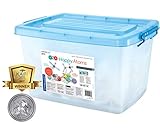
- Build, scan, and identify molecules: the simplest way to learn about atoms, bonding, and chemistry
- The 250-atom set includes these atoms: 70 Hydrogen, 5 Helium, 10 Lithium, 10 Beryllium, 30 Carbon, 15 Nitrogen, 30 Oxygen, 10 Flourine, 5 Neon, 10 Sodium, 10 Magnesium, 10 Silicon, 10 Phosphorus, 10 Sulfur, 10 Chlorine, and 5 Argon
- Includes the happy atoms app (free download), 5 scanning mats, 5 quick start manuals, and a durable plastic storage bin
- A digital and physical chemistry set, tested with teachers and students
- The app is available for Android and iOS devices
A later comparison with other artificial-photosynthesis experiments would need to distinguish how each system captures light, separates charge, what chemical or electrical output it produces, and whether it can operate repeatedly. The 2006 report supplies no comparable performance figures for ranking this system against other technologies.
Quick Recap
Rank #4

- llano 5-in-1 camera cleaning kit - integrates cleaning brush*1, 2 in 1 cleaning pen*1, air blower*1, nano-fiber cloth*1, wet wipe*10 and storage bag*1, supporting a systematic cleaning process of "blow - brush - wipe - store".
- Professional nano carbon lens pen, precise cleaning - Using molecular adhesion technology and anti-static ultra-soft bristles, it can remove 99.8% of particles, protecting the lens surface from scratches. Suitable for quick cleaning during breaks in shooting, keeping the lens in clear image quality.
- The soft silicone camera air blower is precise and safe - its integrated slender nozzle design reduces the risk of friction and can quickly and precisely remove dust from narrow gaps or deep inside equipment. Suitable for outdoor shooting or travel.
- Nano-fiber cleaning cloth, highly efficient in adsorption - vacuum packaging, nano capillary channel design, no shedding of fibers, no water marks left, reusable, suitable for long-term maintenance indoors or outdoors.
- Portable lens cleaning kit, essential for photography - Comes with 10 single-use lens cleaning wipes and a dust-proof storage bag. Easy to carry, it meets the cleaning needs during weddings, outdoor trips and professional shooting breaks, keeping your photography equipment always in perfect condition.
What the result established—and what it did not
- Established: A scaffolded assembly of fluorescent naphthalene-diimide stacks in lipid membranes could use visible-light excitation to reduce quinone and produce a transmembrane proton gradient.
- Mechanistic evidence: Spectroscopic measurements supported ultrafast, relatively long-lived charge separation as part of the process.
- Not established: A rechargeable device, practical energy-storage capacity, system efficiency, or present-day commercial application.
Product prices and availability are accurate as of the date/time indicated and are subject to change. Any price and availability information displayed on Amazon at the time of purchase will apply.

