
The Tool Desk
Outbyte Driver Updater FREEScan for outdated or missing drivers - takes under a minuteDriver Scan →Outbyte PC Repair FREEClear out junk files and repair common Windows errorsFree Scan →iTechGuides is reader-supported. When you buy through links on our site, we may earn an affiliate commission. As an Amazon Associate I earn from qualifying purchases. Learn more
The three large squares at a QR Code’s upper-left, upper-right and lower-left corners are finder patterns, also called position detection patterns. Their distinctive nested geometry lets a reader recognize a likely QR symbol, locate its boundaries and determine which way it is rotated. The pattern is specified by ISO/IEC 18004:2015 and is one reason DENSO WAVE describes QR Codes as readable from any direction. That does not mean every blurry, reflective or partly blocked photograph will scan, and no authoritative source establishes a universal sub-millisecond detection time.
What the three corner squares are
A standard QR Code has three identical finder patterns: one in the upper-left corner, one in the upper-right and one in the lower-left. The lower-right corner is deliberately left without a finder pattern. That asymmetric arrangement gives the decoder a map: once it finds three matching landmarks, it can infer the symbol’s location and rotational orientation in the camera image.
Each finder pattern is built from concentric square regions. Read across its center, the dark and light runs follow a 1:1:3:1:1 ratio measured in module widths: a dark run one module wide, a light run one module, a dark central run three modules, another light run one module and an outer dark run one module. The central dark square is therefore wider than each surrounding band, producing a visual signature that is hard to confuse with ordinary text or graphics.
What’s actually slowing this PC down?
Pick the symptom - the matching free tool is one click away.
The geometry is functional rather than decorative. ISO/IEC 18004:2015 specifies the placement and construction of these patterns, and notes that a signature with a low probability of occurring elsewhere in the symbol supports reliable identification. The standard is available through the ISO/IEC 18004:2015 listing.
#1 Best Overall

- Continuous Usage All Day: The EY-H2 USB barcode scanner is designed to always be ready for the next scan, which significantly reduces downtime and repair costs; it shortens checkout lines, improves customer service, and boosts business productivity
- Plug and Play: Eyoyo wired barcode scanner is connected via a USB cable, with no need to install any driver or software; It offers effortless connection and is compatible with Windows, Mac, Android, and Linux; Seamlessly works with Quickbook, Word, Excel, Novell, and all common software
- Supports Multiple 1D/2D Barcodes: Eyoyo QR code scanner scan with most 1D 2D barcodes with ease; 1D Barcodes: EAN, UPC, Code 39, Code 93, Code 128, UCC/EAN 128, Codabar, Interleaved 2 of 5, ITF-6, ITF-14, ISBN, ISSN, MSI-Plessey, GS1 Databar, Code 11, Industrial 25, Matrix 2 of 5, etc. 2D Barcodes: QR, DataMatrix, PDF417, and so on
- Supports Screen Scanning: The Eyoyo 2D scanner is capable of reading barcodes from smartphone screens, such as mobile coupons, digital wallets, and digital loyalty cards; Before scanning, simply turn your screen brightness to the maximum
- Sturdy Anti-Shock and Durable Design: The Eyoyo 2D barcode scanner features an ergonomic design made of high-quality ABS, enabling it to withstand repeated drops from 5 ft/1.5 m high onto the concrete ground; The durable plastic material ensures a long service life
How finder patterns establish orientation
A camera does not need to see a QR Code upright before it can analyze it. It first searches the image for groups of nested square transitions that match the expected run ratio. Finding three instances with the correct spacing and arrangement is strong evidence that the image contains a QR symbol.
- Candidate detection: The reader scans image rows and columns for dark-light transitions resembling the 1:1:3:1:1 signature.
- Pattern grouping: It tests whether three matching candidates have the relative positions expected for the upper-left, upper-right and lower-left corners of one symbol.
- Corner assignment: Because there are three markers rather than four, their arrangement is asymmetric. The decoder can distinguish the three corners and determine the code’s rotation, including an upside-down view.
- Grid mapping: With the symbol’s orientation and approximate boundaries known, the reader maps the QR modules onto the camera image before interpreting format information and payload data.
DENSO WAVE states that “The three corner position markers identify the pattern as a QR code.” That statement concerns recognition of the pattern; the markers are not the part that stores the entire message. Data modules elsewhere in the symbol carry the encoded payload, while error-correction codewords help recover information from damage.
Why three markers work from different angles
Three matching landmarks provide both a recognizable signature and an asymmetric orientation reference. Rotate the symbol 90, 180 or 270 degrees and the same three markers appear in a different arrangement, but the decoder can still assign their roles. DENSO WAVE describes QR Code reading through 360 degrees and explains the role of the three markers in making the pattern identifiable; see its QR Code overview and the QR Code history.
Rank #2

- 【Battery Level Indicator and 2200mAh Capacity】Larger battery enables longer continuous usage and twice the stand-by time of others. With the unique battery indicator light showing the remaining battery level, no more Low Battery Anxiety.
- 【Ergonomic Design】 The curved handle is extended and thickened, tailor-made for North America customers. Specially designed smooth and flat trigger for better grip. 【Package Includes】Barcode Scanner x1, USB Cable x1, Dongle x1, User Manual x1.
- 【Anti-Shock Silicone】 The orange anti-shock silicone protective cover can avoid scratches and friction while falling from the height of 6.56 feet. IP54 technology protects the wireless barcode scanner from dust.
- 【2.4 GHz Wireless plus USB 2.0 Wired Connection】 Plug and play with the USB receiver or the USB cable, no driver installation needed. Easy and quick to set up. Wireless transmission distance reaches up to 328 ft. in barrier free environment.
- 【Digital and Printed 1D 2D QR Bar Code Symbologies】1D: Codabar, Code 11, Code93, MSI, Code 128, UCC/EAN-128, Code 39, EAN-8, EAN-13, UPC-A, ISBN, Industrial 25, Interleaved 25, Standard25, Matrix 2D: QR, DataMatrix, Aztec, Hanxin, Micro PDF417. (Note: Not compatible with Square.)
“Readable from any direction” is an orientation capability, not a promise that every photograph succeeds. A steep perspective, motion blur, glare, insufficient contrast, tiny printed modules, dirt or an object covering a finder pattern can prevent detection. A 45-degree view may scan if the image retains enough detail and contrast, but the documented rotational tolerance should not be treated as a guarantee for every camera angle or condition.
What happens after the corner squares are found
Finder patterns solve the first localization problem: where is the symbol and which way is it facing? Other QR structures then support geometric correction and module sampling.
| QR Code element | Primary job | What it does not do |
|---|---|---|
| Finder (position detection) patterns | Identify a likely QR Code, locate its three reference corners and establish rotational orientation. | They do not contain the complete payload or perform every image-correction step. |
| Timing patterns | Provide alternating dark and light modules between finder patterns so the decoder can estimate the symbol’s module grid and spacing. | They do not replace the three-corner orientation map. |
| Alignment patterns | Offer additional reference points, especially in larger symbols, to compensate for positional or angular distortion and curved surfaces. | They are not present in the same way on every small QR version and are not the primary three-corner identifier. |
The overview from DENSO WAVE associates timing patterns with the module grid and alignment patterns with distortion handling. The technical definitions and placement rules are specified in ISO/IEC 18004:2015. Keeping these roles separate avoids the common mistake of attributing all perspective correction to the corner squares alone.
Rank #3

- 【Battery Level Indicator and 2200mAh Capacity】Larger battery enables longer continuous usage and twice the stand-by time of others. With the unique battery indicator light showing the remaining battery level, no more Low Battery Anxiety.
- 【Ergonomic Design】 The curved handle is extended and thickened, tailor-made for North America customers. Specially designed smooth and flat trigger for better grip. 【Package Includes】Barcode Scanner x1, USB Cable x1, Dongle x1, User Manual x1
- 【Anti-Shock Silicone】 The orange anti-shock silicone protective cover can avoid scratches and friction while falling from the height of 6.56 feet. IP54 technology protects the wireless barcode scanner from dust.
- 【2.4 GHz Wireless + USB 2.0 Wired Connection】 Plug and play with the USB receiver or the USB cable, no driver installation needed. Easy and quick to set up. Wireless transmission distance reaches up to 328 ft. in barrier free environment.
- 【Digital and Printed 1D 2D QR Bar Code Symbologies】1D: Codabar, Code 11, Code93, MSI, Code 128, UCC/EAN-128, Code 39, EAN-8, EAN-13, UPC-A, ISBN, Industrial 25, Interleaved 25, Standard25, Matrix 2D: QR, DataMatrix, PDF417, Aztec, Hanxin, Micro PDF417. (Note: Not compatible with Square.)
Why the 1:1:3:1:1 ratio is distinctive
The ratio gives a reader a compact, scale-independent signature. Whether a printed code is large on a poster or small on a label, the relative run lengths remain the same when measured in modules. A scanner can therefore look for the pattern at different sizes instead of relying on one absolute pixel dimension.
The ratio is a structural specification, not a speed statistic. DENSO WAVE’s historical account says the design team surveyed printed matter when selecting a distinctive ratio, but it does not publish a frequency calculation or a benchmark proving that detection always finishes within a particular number of milliseconds. The standards and official overview likewise do not establish a universal “under one millisecond” result. Actual latency depends on the reader implementation, camera exposure, resolution, focus, lighting, processor and image-search strategy.
How a phone scanner handles a photographed code
Consumer scanning apps usually process a live camera stream or a still image in stages. Exact algorithms differ by vendor, but the functional sequence is consistent with the QR structure:
Rank #4

- 【Unique Designed Screen Setting】It allows you to customize the screen display according to your preferences. With this innovative feature, you can easily set the language, adjust volume settings, select connection options, and view stored and total barcodes. Experience unparalleled convenience and flexibility as you personalize the settings of your Tera HW0009 to suit your specific needs. 【Package Includes: Barcode Scanner x1, Charging Cradle x1, Charging Cable x1, User Manual x1】
- 【Superior Global CMOS Imaging Scanning】This advanced scanner excels in fast and accurate reading of both ordinary and high-density barcodes, including challenging formats like PDF417 found on driver's licenses. Its exceptional performance effortlessly handles various scanning scenarios, including underwater scanning, reading barcodes on silver paper, reflective materials, and more.
- 【Charging Cradle & 2500mAh Large Battery】Designed with a convenient charging cradle, the HW0009 barcode scanner allows you to easily charge it whenever it's not in use. In addition, the scanner itself is equipped with a powerful 2500mAh battery, ensuring seamless all-day operation without the need for frequent charging.
- 【3-in-1 Connections & Widely Compatible】 Tera HW0009 wireless barcode scanner can work with bluetooth & 2.4G wireless & usb wired. The transmission distance can be 328ft in barrier free environment and 114ft in obstacles environment using 2.4G USB dongle. It can be connected with a variety of devices, such as smartphones, computers, POS, tablets. In addition, it is also compatible with various operating systems, such as windows 11/10/8/7/xp, Mac OS, iOS, android, linux.
- 【1D 2D QR code Programmable】2D: QR code, Data Matrix, PDF417(including PDF417 on driver’s license), Aztec, Maxicode, Micro QR, Micro PDF417; 1D: UPC/EAN, Code 128/EAN128, GS1-128, ISBT-128, Standard 2 of 5, Matrix 2 of 5, Code 39, Code 32, Code 93, Code 11, Codabar, PLESSEY, MSI, GSI Databar, ITF-14, GS1.
- Acquire an image: The app receives camera frames or a selected photograph and may resize, denoise or adjust contrast.
- Search for finder signatures: It examines candidate dark-light transitions for the 1:1:3:1:1 run pattern at multiple scales.
- Validate the three-corner layout: Candidates that do not fit the expected relative geometry are rejected as text, logos or unrelated square shapes.
- Estimate the projective transform: The decoder maps the quadrilateral symbol area into a normalized grid, using timing and, where available, alignment references to improve sampling.
- Read format and data: It interprets the QR format information, samples data modules, applies the specified error correction and returns the decoded content if the result passes validation.
This explains why a QR Code can be recognized when it is upside down: orientation is established before the payload is interpreted. It also explains why recognition can fail even when all three squares are visible; blur or perspective may make the module grid too uncertain for later sampling.
What makes a photograph easier or harder to scan
Conditions that help
- Even lighting with minimal glare across the finder patterns and quiet zone.
- Sharp focus and enough pixels per module for the dark and light runs to remain distinct.
- Strong contrast between the dark modules and their background.
- A complete quiet zone around the symbol so nearby text or borders do not resemble finder transitions.
- A view in which the code is not severely compressed, smeared by motion or hidden by an object.
Conditions that cause failures
- Glare or reflections: A bright streak can erase a dark run or merge adjacent light and dark regions.
- Motion blur: The 1:1:3:1:1 signature becomes a set of soft, ambiguous bands.
- Extreme perspective: Modules near one edge become much smaller than those near the other, challenging grid estimation.
- Occlusion: Covering one of the three finder patterns can remove the orientation evidence needed for initial detection, even though QR error correction may tolerate some missing data after localization.
- Low resolution: If each module occupies too few pixels, neighboring runs cannot be separated reliably.
- Visual interference: Decorative elements placed inside the finder patterns or in the surrounding quiet zone can create false candidates or hide the real ones.
Design rules if you are creating a QR Code
Do not redraw the corner squares as a stylistic icon. Generate the symbol with a standards-compliant encoder and preserve the finder geometry, module spacing and quiet zone. A logo or color treatment should not reduce the contrast needed to distinguish the nested squares.
Crashes, No Sound, or Screen Glitches?
Random freezes, missing sound and display glitches usually trace back to one bad driver. Find and replace yours safely.Free scan · under a minuteWindows Errors? Fix Them Before They Spread
Repair common Windows errors and clear accumulated junk for a smoother, more stable PC - no reinstall needed.Free scan · no reinstall- Keep all three finder patterns intact and at their specified corner positions.
- Leave a clear margin around the entire symbol; nearby borders, text and illustrations can interfere with candidate detection.
- Use sufficient contrast and avoid glossy finishes or patterns that produce reflections over the markers.
- Test the final printed or displayed size at the distance and lighting where people will scan it.
- If the code will be wrapped around a curved object, retain enough module size and contrast for alignment references to compensate for the expected distortion.
A QR Code can remain decodable after some damage because of error correction, but error correction does not eliminate the need to locate and orient the symbol first. Protecting the three finder patterns and the quiet zone is therefore a priority.
Best Value
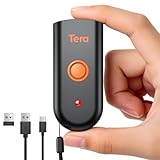
- 【IP66 Waterproof Dustproof Mini Pocket 2D Scanner】Just bring this scanner with you. Anytime you want to collect data, just connect it with your device via Bluetooth or use the storage mode. 【Package Includes】Barcode Scanner x1, USB Cable x1, Dongle x1, User Manual x1.
- 【Waterproof Dustproof Silicone Port Plug】Newly designed waterproof and dustproof silicone port plug on marketplace, it enables better performance of the scanner in every working conditions. The silicone button on the scanner body enables every soft and smooth scanning experience.
- 【3-in-1 Connection Ways】This scanner works with Bluetooth, 2.4GHz wireless and USB 2.0 wired mode. The transmission distance can be 656ft in barrier free environment and 98 ft in an environment with obstacles using a 2.4G USB dongle. In addition, it is also compatible with various operating systems, such as windows 11/10/8/7/xp, Mac OS, iOS, android, linux.(Note: Not Compatible with Square)
- 【Vibration Alert】: When you need a quiet working environment, just turn the volume off and the vibration function will let you know if a barcode is detected.
- 【1D 2D QR Scanner】:Supports Both Digital and Printed 1D 2D QR Bar Code Symbologies: 1D Decode Capability: Codabar, Code 11, Code93, MSI, Code 128, UCC/EAN-128, Code 39, EAN-8, EAN-13, UPC-A, ISBN, Industrial 25, Interleaved 25, Standard 25, 2/5 Matrix 2D Decode Capability: QR, PDF417, Data Matrix, Aztec code, Maxi Code.
How to troubleshoot a code that will not scan
- Check the image: Retake the photograph without flash glare, motion and severe tilt. Tap to focus on the code rather than the background.
- Inspect the corners: Confirm that all three finder patterns are visible, have square edges and retain clear dark, light and dark bands.
- Increase effective size: Move closer or use a higher-resolution image instead of enlarging a tiny, blurry crop.
- Remove interference: Clear hands, labels, text and decorative borders from the quiet zone and the finder patterns.
- Try a different frame or reader: Implementations vary in exposure handling, preprocessing and tolerance for distortion; a failure in one app does not prove that the symbol is invalid.
- Regenerate the symbol: If the artwork altered the corner geometry, reduced contrast or removed the quiet zone, create a clean standards-compliant version and retest it in its final medium.
For repeated scanning in a warehouse, production line or kiosk, fixed industrial 2D scanners are available; for example, DENSO WAVE documents QR-capable FD2 fixed scanners. That is an equipment option for controlled, high-volume work, not a requirement for ordinary phone scanning.
What the evidence says about scan speed
It is tempting to attach a precise time to finder-pattern detection, but the authoritative material does not support one universal figure. ISO/IEC 18004:2015 defines the symbol’s geometry and decoding framework; DENSO WAVE explains orientation and pattern roles. Neither establishes that every phone or scanner identifies the three markers in less than one millisecond.
In practice, a modern phone may appear to recognize a clear code almost instantly because camera frames are processed continuously and the search is highly optimized. That observation is not a standards guarantee. Lighting, image quality, processor load, implementation details and the distance or angle of the camera all affect when a usable decode appears.
The key takeaway
The three corner squares are finder patterns: a deliberately distinctive 1:1:3:1:1 nested-square signature placed at three corners of the symbol. Their asymmetric arrangement lets a reader identify a QR Code, locate it and determine its rotation before the rest of the grid is decoded. Timing patterns then help establish the module spacing, and alignment patterns provide additional references when distortion matters. Rotation tolerance is real and documented, but a successful scan still depends on focus, contrast, unobstructed markers and a usable photograph.
Quick Recap
Product prices and availability are accurate as of the date/time indicated and are subject to change. Any price and availability information displayed on Amazon at the time of purchase will apply.

