
iTechGuides is reader-supported. When you buy through links on our site, we may earn an affiliate commission. As an Amazon Associate I earn from qualifying purchases. Learn more
A stronger speech model cannot by itself prevent a voice agent from cutting callers off, talking over them, or waiting too long to answer. Production quality also depends on orchestration: detecting when a caller has finished, managing interruptions and playback, deciding when tool results should be spoken, and keeping conversation state aligned with what the caller actually heard. Vendor documentation describes controls for these behaviors, but does not prove that scheduling is categorically more important than model size in every workload.
What scheduling means in a live voice conversation
Here, scheduling means coordinating events across the interaction—not merely assigning work to a queue. The system must decide when an utterance is complete, whether incoming speech interrupts the agent, when generated audio plays, and whether a tool result should interrupt, wait, or remain silent. It also has to reconcile the model’s generated response with audio that was actually played.
OpenAI documents a Realtime session flow in which an application server can create an ephemeral client secret for a browser connection over WebRTC, while a server-side application can connect over WebSocket. The session can handle audio turns, tools, interruptions, and handoffs. The transport and client playback logic therefore form part of the interaction design, not just the model choice. OpenAI’s Realtime guide
What’s actually slowing this PC down?
Pick the symptom - the matching free tool is one click away.
How turn detection changes the caller experience
Turn detection decides when the system believes the caller has finished. Speech activity detection and end-of-turn detection are related, but not identical: noticing that speech is happening does not alone determine whether a pause means “I’m done” or “I’m thinking.” Microsoft summarizes the distinction as: “Turn detection determines when the agent believes the caller finishes.” Microsoft Learn’s voice-agent best practices
#1 Best Overall
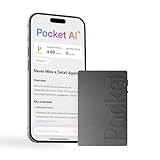
- YOUR AI PERSONAL ASSISTANT FOR EVERYDAY PRODUCTIVITY: More than a voice recorder, Pocket works as your AI personal assistant to capture, transcribe, and summarize meetings, calls, and ideas instantly. Core features are included out of the box, with optional advanced tools available for power users.
- ONE-TAP RECORDING FOR REAL-LIFE MOMENTS: Capture meetings, phone calls, and in-person conversations instantly with a simple tap, no typing, no interruptions, just effortless note-taking anywhere you go.
- SMART AI INSIGHTS & ORGANIZATION: Pocket automatically turns recordings into clear summaries, key action items and structured conversation maps so you can quickly review what matters without digging through audio.
- TURN CONVERSATIONS INTO ACTION WITH “ASK POCKET”: Don’t just record, understand. Instantly ask questions across your meetings, extract key insights and generate next steps in seconds. All grounded in your recordings, so answers stay accurate and reliable.
- MAGSAFE COMPATIBLE FOR SEAMLESS USE: Easily attach Pocket to your iPhone or other MagSafe compatible devices for convenient, hands-free recording on the go. Perfect for capturing meetings, calls, and ideas without needing to hold your device.
Semantic detection versus silence-based detection
Semantic detection uses context to estimate whether the speaker’s thought is complete. OpenAI describes semantic VAD as allowing more time when the speaker appears unfinished. Silence- or threshold-based modes instead use signal and timing controls to decide when a turn ends. OpenAI’s server VAD exposes settings such as threshold, prefix padding, silence duration, and idle timeout; Microsoft likewise contrasts context-oriented semantic detection with a server mode based on silence and signal. Neither mode is universally best: a thoughtful pause, a dictated account number, and a short, structured answer can call for different behavior. OpenAI’s turn-detection guide · Microsoft Learn’s voice-agent best practices
Product-specific settings are not universal targets
Amazon Connect documents a streaming recognizer that predicts end of turn while the caller speaks, with a confidence threshold and a silence-timeout fallback. Its current guidance lists a default confidence threshold of 0.7 and a default silence timeout of 640 ms. In that product, higher settings wait longer and can reduce premature cutoffs at the cost of latency; lower settings can end turns sooner but raise the chance of cutting off a caller who pauses. These are Amazon Connect configuration values, not general voice-AI benchmarks. Amazon Connect voice best practices
Microsoft Copilot Studio lists a 750 ms silence-duration default and recommends 750–1000 ms for the documented configuration. Those figures are product-specific guidance, not universal targets for other platforms, channels, or caller populations. Microsoft Copilot Studio voice configuration
Rank #2
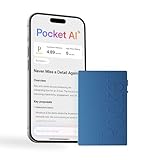
- YOUR AI PERSONAL ASSISTANT FOR EVERYDAY PRODUCTIVITY: More than a voice recorder, Pocket works as your AI personal assistant to capture, transcribe, and summarize meetings, calls, and ideas instantly. Core features are included out of the box, with optional advanced tools available for power users.
- ONE-TAP RECORDING FOR REAL-LIFE MOMENTS: Capture meetings, phone calls, and in-person conversations instantly with a simple tap, no typing, no interruptions, just effortless note-taking anywhere you go.
- SMART AI INSIGHTS & ORGANIZATION: Pocket automatically turns recordings into clear summaries, key action items and structured conversation maps so you can quickly review what matters without digging through audio.
- TURN CONVERSATIONS INTO ACTION WITH “ASK POCKET”: Don’t just record, understand. Instantly ask questions across your meetings, extract key insights and generate next steps in seconds. All grounded in your recordings, so answers stay accurate and reliable.
- MAGSAFE COMPATIBLE FOR SEAMLESS USE: Easily attach Pocket to your iPhone or other MagSafe compatible devices for convenient, hands-free recording on the go. Perfect for capturing meetings, calls, and ideas without needing to hold your device.
When tuning detection, change one parameter at a time and evaluate both premature cutoffs and response delay. Include callers who think aloud, dictate numbers, speak a second language, or use noisy connections; a setting that works for crisp, short replies may fail for those patterns. Microsoft explicitly recommends changing one setting at a time. Microsoft Learn’s voice-agent best practices
Barge-in is a playback and state-management problem too
Barge-in means allowing a caller to speak while the agent is talking. Detecting the caller’s new speech is only the first step: the application must stop or clear queued playback and ensure the conversation history represents what the caller could actually hear.
OpenAI’s Agents SDK documentation says that with VAD enabled, caller speech can interrupt an agent response. In a WebSocket setup, the SDK observes the speech-start event and truncates assistant audio to match what the user heard, while the application must stop local playback. With WebRTC, buffered output audio is cleared for the application. That transport-specific behavior makes it important to test the complete client path, not only server-side detection. OpenAI Agents SDK voice-agent guide
Rank #3

- Designed for Home Assistant Voice & Music Workflows: Preloaded with Home Assistant Voice Assistant and Music Assistant. Functions as both a voice input terminal and an audio playback endpoint.
- Dual Microphones for Voice Capture: Built with dual digital microphones for wake word or button-activated voice capture. Audio is streamed to the Home Assistant voice pipeline.
- Integrated 3W Speaker for Direct Playback: The built-in 3W/4Ω speaker supports TTS playback, Music Assistant streaming, and system audio without external speakers.
- Linux-Based Local Operation: Runs a lightweight Linux system on a quad-core ARM A53 CPU with 256MB RAM and 512MB flash for local audio processing.
- Development & Debugging Capabilities: Supports firmware flashing, and also provides access to live logs, on-device editing—suitable for routine development or issue diagnosis.
Amazon Connect enables barge-in by default and says it should generally remain available for ordinary interactions, though it may be disabled for prompts that must be heard in full, such as a legal or recording disclosure. It also distinguishes interruption from a timeout-triggered reprompt: “A timeout-driven re-prompt is not real barge-in.” Amazon Connect voice best practices
Microsoft advises treating a rising barge-in rate as a possible sign that responses are too long; shortening the response may be a better first adjustment than making detection more aggressive. After interruption, the agent’s record of its turn may contain truncated text rather than all the text the model generated. Microsoft Learn’s voice-agent best practices
Choose when tool results should interrupt speech
A tool can return while the agent is speaking. The result should not automatically become another spoken interruption: its timing should reflect whether it changes the answer the caller is hearing.
Rank #4

- 🎙️ Hands-Free Voice Typing for Windows & Mac – Powered by iOS & Android dictation technology, AI VoiceWriter allows fast, accurate speech-to-text directly on your desktop. Simply speak, and your words appear in real time. Compatible with Windows 10 & above, macOS 13 & above.
- ✍️ AI Writing Assistant for Effortless Editing – Boost productivity with AI proofreading, rephrasing, and formatting. Perfect for emails, reports, creative writing, and professional content.
- 💻 Works Seamlessly in Any Desktop App – Type with your voice in Microsoft Word, Google Docs, PowerPoint, Teams, emails, and more. Just place your cursor in any text field and start speaking!
- 📱 Mobile App for Enhanced Voice Input – The AI VoiceWriter mobile app enhances voice recognition by using your phone’s microphone as an input device for clearer, more accurate dictation—while typing on your desktop. Supports iOS 15 & above, Android 9.0 & above.
- 🌎 Multilingual Voice Typing & AI Assistance – Supports 33 languages for dictation, plus AI-powered features in Chinese, English, Japanese, Korean, French, German, Spanish, Italian and, Swedish.
| Schedule | Use it when | Effect |
|---|---|---|
when_idle |
The result is useful, but does not invalidate the current response. | Wait until the agent is idle before responding; Microsoft Foundry describes this as the default suited to most cases. |
interrupt |
The result makes the current response wrong or unsafe to continue. | Interrupt the current speech to deliver the updated information. |
silent |
The tool performs a side effect, such as logging, that should not produce spoken output. | Complete the operation without having the agent announce the result. |
Microsoft Foundry also recommends returning small tool results, making operations idempotent where possible, and defining explicit spoken behavior for failures. Idempotency matters when an interruption or retry could otherwise repeat an action. A clear failure response prevents the caller from being left in silence. Each attached tool also adds context to every turn and can add latency even when it is not called, so keep the tool inventory focused and favor fast operations. Microsoft Learn’s voice-agent best practices
Independent reader supportYour contribution helps us test, update, and keep practical guides available for everyone.Compare architectures on more than model size
Speech-to-speech systems process audio directly through a realtime model path. A cascaded system transcribes speech, reasons over text, then synthesizes speech. Microsoft’s product guidance describes a latency advantage for native speech-to-speech and greater voice customization or regional flexibility for its documented cascaded option. Those are product-specific comparisons, not a universal head-to-head result across providers or workloads. Microsoft Learn’s voice-agent best practices · Microsoft Copilot Studio voice configuration
PC Slower Than It Used to Be?
A free scan shows the junk files, broken settings and background clutter dragging Windows down - then fixes them in one click.Free scan · Windows 10 & 11Outdated Drivers Are Slowing You Down
One free scan finds every outdated or missing driver and matches the right update for your exact hardware.Free scan · exact hardware matchWhen both approaches are viable, compare the operational properties that affect the actual call:
Best Value

- | Comulytic AI Voice Recorder Notes Assistant | — Lifetime Free Starter Plan Comulytic Note Pro is a smart voice recorder, AI note taker, and AI recorder built for professionals, students, and journalists. One tap captures calls, interviews, lectures, and voice memos. Get Unlimited Transcription and Basic Summaries free on the Starter Plan (0/mo). Upgrade anytime to the optional Premium Plan to unlock Deep Dive Analysis, Ask Comulytic Assistant, and Contact Insight Hub (14.99/mo or $120/yr)
- Comulytic AI Recorder — Magnetic, Ultra-Slim, Always Ready This mini voice recorder is just 3 mm thin and slips into any pocket, notebook, or shirt. The 0.78-inch display is shielded by Corning Gorilla Glass, and the aluminum body feels premium in hand. Three magnetic accessories let you snap it to your phone, laptop, or meeting notebook — one tap and the AI starts recording. Pocket-sized power, office-quality sound
- Digital Voice Recorder with 10× Faster Wi-Fi Sync & 64GB Local Storage | Forget slow Bluetooth. Transfer recordings to the Comulytic app over Wi-Fi at up to 10× Bluetooth speed while you keep talking. 64GB of built-in storage holds thousands of hours of recordings, giving you room to record, review, and export files locally. Cloud sync and storage are available through the Comulytic app and depend on your plan
- AI Adaptive Recording with Triple-Mic Array, Noise Cancellation & 45-Hour Battery The AI note taker automatically detects calls, meetings, video conferences, and interviews — no manual mode switching. A triple-mic array with AI noise reduction captures every word clearly within 5 meters, even in a crowded room. 45 hours of continuous recording, 107 days of standby, and a full charge in just 90 minutes — built for back-to-back workdays
- AI Transcription — 98% Accurate, 113 Languages & Spanish Translator Built-In A vertical knowledge base (Insurance, Real Estate, Auto Sales, Financial Advisor, Lawyer, Headhunter, Consultant) captures industry terms precisely. The Comulytic app delivers fast transcription, AI summaries, action items, and to-do lists. Includes a real-time language translator device mode — a pocket traductor de idiomas and traductor de ingles espanol — for global travelers, ESL students, and bilingual pros
- Caller-experienced time to first audio and measured latency at each stage.
- Interruption behavior and how much control the application has over local playback.
- Whether the application needs visible transcripts or custom voices.
- Regional deployment requirements.
- How much control is needed over transport and business logic.
- Tool count, response scheduling, and recovery behavior when a tool fails.
OpenAI documents browser WebRTC and server WebSocket options for Realtime sessions, while Microsoft describes product-specific tradeoffs between native and cascaded voice paths. The available guidance does not establish an independent benchmark that settles which architecture—or model size—wins across workloads. OpenAI’s Realtime guide · Microsoft Learn’s voice-agent best practices · Microsoft Copilot Studio voice configuration
Measure changes in a live interaction path
Microsoft recommends tracking time to first audio and stage latency after each release. As its guidance puts it: “Time to first audio, not total response time, is what a caller experiences.” A system can finish processing quickly overall and still feel slow if the first audible response is delayed. Microsoft Learn’s voice-agent best practices
For a practical evaluation, log time to first audio and latency across the stages in your own pipeline. Also review turn-end timing, interruption frequency, and task outcomes as implementation measures: these help reveal whether a faster response is arriving at the cost of cutoffs, unwanted overlaps, or incomplete tasks. Compare representative calls before and after a change, and keep the channel and caller mix in view.
Free tools Windows power users keep installed
One-click scans. No signup required.
No universal latency target, VAD threshold, or tool schedule is established by the cited platform guidance. Treat configuration values as starting points for the named products, then tune against the callers, audio conditions, and failure costs of your deployment.
Quick Recap
Product prices and availability are accurate as of the date/time indicated and are subject to change. Any price and availability information displayed on Amazon at the time of purchase will apply.

