
Do these 3 things before closing this tab:
1Clear out junk files and repair common Windows errors2Fix the driver behind crashes, sound loss and screen glitches3Repair Windows errors before they cause bigger problemsiTechGuides is reader-supported. When you buy through links on our site, we may earn an affiliate commission. As an Amazon Associate I earn from qualifying purchases. Learn more
Start with Requests and Beautiful Soup if the price is present in the retailer’s returned HTML or an authorized endpoint. Use Playwright when the page needs browser JavaScript or interaction to reveal the offer. The right choice depends on how the specific price is exposed and what access the retailer permits—not on how dynamic the page looks. A browser can add useful capabilities, but also resource and maintenance costs.
What each tool does
Requests retrieves; Beautiful Soup parses
Requests makes an HTTP request and obtains a response; Beautiful Soup lets Python traverse and query the returned markup. Together they provide a browserless workflow when the needed price is already in the response HTML. The workflow is lightweight compared with launching a browser, but it still depends on validating that the page and your extraction logic identify the intended offer. iTechGuides’ Python crawler tutorial describes this distinction between parsing a server response and executing a browser.
Playwright automates a browser—and can inspect its network activity
Playwright can execute page JavaScript and interact with controls, which is useful when those actions are required to expose a price. Its Python API also documents request and response events, redirects, and resource types, allowing you to inspect what a page loads. That capability can help diagnose where a price comes from; it does not mean every monitor needs browser automation. Playwright’s network documentation covers these browser request lifecycle events.
Playwright has an HTTP-request API, too
Playwright’s APIRequestContext can send HTTP requests without rendering a page. A context associated with a browser context shares its cookies; an isolated request context has separate cookie storage. That makes browser automation and HTTP access options you can combine, rather than mutually exclusive choices. A request API does not, by itself, make browser rendering necessary. See the official APIRequestContext and APIRequest documentation.
#1 Best Overall
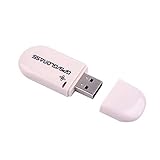
- Works with Windows,Andorid,Linux,Raspberry pi.Support Google Earth.It can not work with IOS system
- Windows and Andorid need driver, Raspberry pi and linux no need driver
- The default output is the product GPs protocol data. You can test the software or serial commands to modify switch PS / GLONASS protocol data
- Note: This dongle only can work outdoor. If you want to let it work indoor, you need have GPS amplifier. Otherwise the GPS can not lock
- If you need some driver links and using videos for VK-172,Please contact us
Compare the approaches for your target offer
| Question | Requests + Beautiful Soup | Playwright |
|---|---|---|
| Does it execute page JavaScript? | No; it retrieves a response for parsing. | Yes, when using browser automation. |
| When is it useful? | When the price is in returned HTML or an authorized endpoint. | When browser execution or interaction is needed to expose the price. |
| Can it make HTTP requests? | Yes; HTTP retrieval is the core of the workflow. | Yes; APIRequestContext sends HTTP requests, with cookie behavior depending on the context. |
| Resource and rule-maintenance trade-off | Browserless extraction may be faster in principle but can require site-specific rules. | Browser methods can handle dynamic content but use more resources; browserless versus browser trade-offs depend on the target and implementation. |
The qualitative trade-offs above do not establish a universal speed or accuracy ranking for these libraries. In a 2026 paper, Evgeniia Kositsyna and Jorge Lloret-Gazo describe browserless HTTP extraction as faster in principle but dependent on site-specific rules, while browser-based approaches can handle dynamic JavaScript at greater computational cost. The paper discusses Selenium and Puppeteer in its quoted characterization; it is not a controlled head-to-head benchmark of Playwright, Requests, and Beautiful Soup. Read the 2026 preprint.
Choose a method for the price you need to track
- Define the offer. Record the product and variant, seller, region, and currency you intend to monitor. A displayed price for a different variant or seller is not the same observation.
- Check the permitted access path. Look for an authorized endpoint or determine whether the needed price is in the retailer’s returned HTML. A page’s visual appearance alone does not show where its price is supplied.
- Try HTTP retrieval and parsing when sufficient. If the price is available in the response, extract it with an HTTP client and parser. Validate that the selected field or markup still refers to the intended offer.
- Evaluate Playwright when the browser is required. Use it if JavaScript execution or interaction is needed to expose the offer. Avoid the additional browser step when it adds no required capability.
- Store context with every observation. Keep product and variant identity, seller, currency, and timestamp alongside the price so that later values can be compared meaningfully.
- Recheck extraction after page changes. A successful page load does not guarantee that the monitor found a price—or the right offer. Validate the extracted value and update rules when the page changes.
What published performance figures do—and do not—show
The 2026 preprint by Kositsyna and Lloret-Gazo reports that its adaptive browserless method increased precision from 77.2% to 87.3% and reduced average per-page processing time by approximately 14% relative to that paper’s baseline. These are results for the paper’s method and experiment, not a general promise about price monitors or a direct comparison of the three named libraries. The preprint describes its method and results.
Rank #2

- Broadcom BCM2711, quad-core Cortex-A72 (ARM v8) 64-bit SoC @ 1. 5GHz
- 2. 4 GHz and 5. 0 GHz IEEE 802. 11b/g/n/ac wireless LAN, Bluetooth 5. 0, BLE
- 2 × USB 3. 0 ports, 2 x USB 2. 0 Ports
- 2 × micro HDMI ports supproting up to 4Kp60 video resolution
- Micro SD card slot for loading operating system and data storage
Check access rules before deploying a monitor
No single tool choice settles whether a particular monitoring use is permitted. Check the target retailer’s current access policies and terms for your intended use. Neither the choice of a scraping library nor a robots.txt directive alone resolves every legal or contractual question; the applicable answer depends on the retailer and use case.
The Tool Desk
Outbyte PC Repair FREEClear out junk files and repair common Windows errorsFree Scan →Outbyte Driver Updater FREEFix the driver behind crashes, sound loss and screen glitchesFind Drivers →Further reading
Ryan Mitchell’s Web Scraping with Python is a general reference for scraping fundamentals, but its examples and edition are older. Treat it as background rather than a current Playwright API manual; use the official Playwright documentation for current API details. Check the book listing and edition.
Quick Recap
Best Value

- 💎【IR Infrared Sensor】:Widely Used Robot obstacle avoidance, obstacle avoidance car, assembly line counting and black and white line tracking and many other occasions.
- ⚡【Operating Voltage】:3.3-5V (3.3V Recommended)
- 🥇【Detection angle】:35°
- 🥈【Detection Distance】:2~30cm
- 🥉【Adjustable potentiometer】:Adjust clockwise to increase the detection distance; adjust the potentiometer counterclockwise to decrease the detection distance.
Rank #4
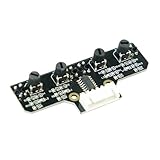
- This tracking module equipped with high-quality infrared tracking probe &1.6 thickness impact-resistant PCB& 4-channel operation comparator circuit.
- This tracking module adopts four tracking probes, and optimized spacing layout. The inner two probes can accurately identify the black line. The outer two probes can assist the inner probe to identify the black line and provide early warning.
- This tracking sensor help smart robot car recognize the 90°curved road and other difficult tracks. Knob-type adjustable resistors plus professional operational amplify circuits allow us to adjust the sensitivity of the sensor.
- Different from ordinary adjustable resistors, we use Knob-type resistors, combined with our professional operational amplifier circuit,disperse the distance adjustment to every degree. The effective adjustment range is linearly distributed throughout the rotatable angle, and every time you twist a section, the distance increases slowly, adjusting the sensitivity is made easy.
- The module uses 6Pin pins and the interface anti-reverse connection design can effectively prevent the positive and negative poles from being reversed, avoid module damage, and is simple and convenient to use.Users can connect a cable or DuPont cable to the smart car or expansion board for various experiments. And there are holes reserved for installing the copper columns and screws that users can expand it by themselves.
Rank #3

- This car based on Raspberry Pi Pico has multiple functions. (Assembly required. Battery NOT included.)
- Provides a step-by-step assembly tutorial and complete code -> The download link can be found on the product box. (No paper tutorial.)
- Control methods -> Controlled wirelessly by your Android phone or tablet, iPhone (with Freenove App) and computer (run Windows or macOS). (Only for Pico W, NOT for this purchase option.)
- Raspberry Pi Pico -> A tiny, fast, and versatile board built using dual-core processor. (Included in this kit.)
- Needs battery -> Refer to "About_Battery.pdf" in downloaded file to buy.
Product prices and availability are accurate as of the date/time indicated and are subject to change. Any price and availability information displayed on Amazon at the time of purchase will apply.

