
Outdated Drivers Are Slowing You Down
One free scan finds every outdated or missing driver and matches the right update for your exact hardware.Free scan · exact hardware matchPC Slower Than It Used to Be?
A free scan shows the junk files, broken settings and background clutter dragging Windows down - then fixes them in one click.Free scan · Windows 10 & 11iTechGuides is reader-supported. When you buy through links on our site, we may earn an affiliate commission. As an Amazon Associate I earn from qualifying purchases. Learn more
Better photos come from choosing settings and composition for the image you want—not from one universal camera recipe. These ten practical tips explain how to control exposure, depth of field and motion, and when to stabilize or adjust your setup. The cited guidance offers starting points, not guarantees; your camera, lens, subject and available light all matter.
1. How do aperture, shutter speed and ISO work together?
These three settings jointly determine exposure, so changing one may require changing another to maintain the brightness you want. Nikon photography teacher Reed Hoffmann puts it plainly: “The three elements—aperture, shutter speed and ISO—are always linked.” Nikon’s exposure guide explains the relationship.
- Aperture controls how much light passes through the lens and affects how much of the scene appears in focus.
- Shutter speed controls how long the sensor receives light and affects how movement is rendered.
- ISO adjusts the camera’s sensitivity to light; raising it can help in dim conditions, but may make image noise more visible.
Think about the visual effect you need first, then balance the other settings to get an appropriate exposure.
What’s actually slowing this PC down?
Pick the symptom - the matching free tool is one click away.
2. How should I choose aperture for depth of field?
A wider aperture, represented by a lower f-number, can help separate a subject from a soft background. A narrower aperture can keep more of the scene in focus. The result also depends on factors such as lens, subject distance and framing, so no single f-number guarantees a particular look.
#1 Best Overall
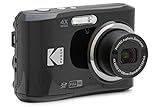
- 16MP Sensor: Captures detailed photos with a CMOS sensor for everyday shooting
- Optical Zoom: 4x optical zoom with a 27mm wide angle lens for flexible framing indoors or outdoors
- Full HD Video: Records 1080p video for travel clips, family moments, or simple vlogging
- Memory Support: Works with Class 10 SD, SDHC, or SDXC cards up to 512GB
- LCD Screen and Battery: 2.7in LCD screen with 2 AA alkaline batteries for convenient on-the-go use
For a portrait with a softly blurred background, try opening the aperture and check the captured image. If you need more of a group or landscape to appear in focus, try a narrower aperture. Adjust based on the result rather than treating either choice as a fixed rule.
3. What shutter speed should I use to freeze or show motion?
Use a faster shutter speed when you want to reduce motion blur; use a longer one when you want movement to appear as a streak or blur. Longer exposures also let in more light, but camera or subject movement can soften the image.
Adobe’s exposure guide gives 1/400 second or faster as an example for candid event subjects and around 1/1000 second for fast sports action. Those are starting examples, not guarantees: the subject’s speed, direction, lens and light all affect the shutter speed you need. Adobe’s exposure guide discusses these trade-offs.
Free tools Windows power users keep installed
One-click scans. No signup required.
4. When should I raise ISO?
Raise ISO when the available light or the shutter speed you need makes a properly exposed image difficult to capture. For example, a faster shutter speed may help freeze a moving subject, while a higher ISO can help maintain exposure in dim light.
Rank #2

- 16MP Sensor: Captures detailed photos with a CMOS sensor for everyday shooting
- Optical Zoom: 5x optical zoom with a 28mm wide angle lens for flexible framing indoors or outdoors
- Full HD Video: Records 1080p video for travel clips, family moments, or simple vlogging
- Memory Support: Works with Class 10 SD, SDHC, or SDXC cards up to 512GB
- Rechargeable Battery: Included LB-012 lithium-ion battery charges in the camera over USB with the supplied adapter in about 2 hours; charge it for at least 4 hours before first use to maximize battery life
The trade-off is that higher ISO can increase visible noise. Rather than avoiding it categorically, decide whether a little more noise is preferable to motion blur or an image that is too dark for your purpose. Check the result at the image size you expect to use.
5. Should I use aperture priority, shutter priority or manual mode?
Choose a mode that gives you control over the setting that matters most for the shot. Priority modes can simplify that choice without requiring you to set every exposure value yourself.
- Aperture priority: useful when depth of field is your main concern. You choose the aperture and the camera selects a shutter speed for exposure.
- Shutter priority: useful when you need to target a shutter speed to freeze or show movement. You choose the shutter speed and the camera selects an aperture.
- Manual: gives you direct control of aperture and shutter speed, with ISO also set or allowed to vary depending on your camera’s options. It can be useful when you want consistent control, but it is not mandatory for professional photography.
Check your camera’s manual for the exact mode names and behavior.
Recommended Free Tools
6. What settings should I use for portraits?
Start by focusing carefully on the subject’s eyes and choosing enough depth of field for the result you want. A very wide aperture may create a soft background, but it can also leave parts of a face outside the focused area depending on framing and distance.
Rank #3
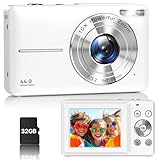
- Latest Digital Camera Built-in Fill Light : This compact digital camera is paired with a powerful CMOS processor and image stabilization to help you take & record the most exciting moments in 44 MP quality images & FHD 1080P quality videos anywhere, anytime. Plus, there is also a built-in fill light to help you take high quality pictures even in low light&dark settings, making this the perfect camera for all indoors/outdoors situations.
- Long-Lasting Battery Life & 16X Digital Zoom :This point and shoot camera will retain its battery charge even after long use. The controls and functions are easy to operate making this the perfect choice for children, teens and younger. This kids camera supports 16x digital zoom, you can zoom in or out the subject by pressing the W/T button for taking still photos to zoom in or out on distant objects and capture all the details you need.
- Multifunctional & Portable Digital Camera: This cheap digital camera is slim enough to fit in your pocket. You'll easily be able to take it with you on all your indoor/outdoor activities and adventures and ideal for beginners, children and teenagers. This kids digital camera is equipped with 20 filters, anti-shaking, self-timer, continuous shooting, date stamp, time-lapse recording, smile capture, internal MIC and speaker (recording sound videos), great for your daily photography needs.
- WEBCAM & PAUSE FUNCTION : More than just a FHD 1080p digital camera, it also works as a webcam for video calls and vlogging. Connect the camera to the computer, press shutter and power button at the same time and the camera will automatically turn on webcam mode for all your video calling and live streaming needs. The pause function allows you to pause when seeing playback videos.
- A Must Have Photography Device : This digital camera with SD card made from high-quality materials, this retro camera is safe and durable. Perfect for all ages to develop & improve their photographic abilities and observation skills. Our dedicated and experienced 24/7 support team is available for all after purchase troubleshooting, questions and technical help.
Nikon’s portrait guidance offers ISO 400, f/5.6 and a minimum shutter speed of 1/100 second as a starting point, with adjustments for the available light. These settings are not universal: subject movement, lens, distance and desired background blur can call for different choices. See Nikon’s portrait tips for its guidance.
7. How do I freeze sports and fast action?
Begin with a fast shutter speed, then adjust ISO as needed to get the exposure you want. Nikon suggests trying 1/500 second as a minimum starting point and 1/1000 second or faster for more action-freezing power. Adobe also gives around 1/1000 second as an example for fast sports. Actual requirements vary with the sport, subject speed, light and the amount of motion you want to retain.
If the image is too dark at your chosen shutter speed, raising ISO may help, at the cost of potentially more visible noise. Nikon’s sports photography guidance covers indoor and outdoor conditions.
8. How do I take sharp night photos with a long exposure?
Stabilize the camera when using a long exposure: a tripod can reduce blur caused by camera movement. Nikon lists 1/15, 1/8, 1/4 second or longer as examples where vibration reduction or a tripod may be needed, and includes a two-second exposure example. These are illustrative situations, not promises about what can be held sharply by hand.
Rank #4
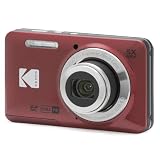
- 16MP Sensor: Captures detailed photos with a CMOS sensor for everyday shooting
- Optical Zoom: 5x optical zoom with a 28mm wide angle lens for flexible framing indoors or outdoors
- Full HD Video: Records 1080p video for travel clips, family moments, or simple vlogging
- Memory Support: Works with Class 10 SD, SDHC, or SDXC cards up to 512GB
- Rechargeable Battery: Included LB-012 lithium-ion battery charges in the camera over USB with the supplied adapter in about 2 hours; charge it for at least 4 hours before first use to maximize battery life
For a Nikon lens with vibration reduction, Nikon’s night guidance says to turn VR off when using a tripod in that setup. Lens behavior can differ, so follow the manual for your own equipment. Read Nikon’s dusk and night photography advice.
9. When should I use an ND filter?
A neutral-density (ND) filter reduces the light entering the lens. That can make a longer exposure possible when there is too much light—for example, when you want moving water to blur in daylight. It is a tool for a particular exposure effect, not a general requirement for long exposures.
Match the filter’s diameter or holder system to your lens setup, and choose an appropriate filter for the intended use. Nikon’s ND-filter guide explains the basic function.
10. How should I compose and review a photograph?
Decide what the viewer should notice first, then arrange the frame to support that intent. Pay attention to the subject’s position, distracting elements near the edges and whether the background helps or competes with the subject.
After taking the shot, review the image and refine composition or exposure if needed. A histogram can help you assess tonal distribution, but its shape depends on the subject: a dark subject against a dark background and a bright subject in snow can produce very different histograms. Adobe notes, “There is no single ideal shape for a histogram.” Use it alongside the image, not as a target shape to force every photograph toward.
Quick Recap
Product prices and availability are accurate as of the date/time indicated and are subject to change. Any price and availability information displayed on Amazon at the time of purchase will apply.

