
The Tool Desk
Outbyte Driver Updater FREEFix the driver behind crashes, sound loss and screen glitchesFind Drivers →Outbyte PC Repair FREERepair Windows errors before they cause bigger problemsFix Now →iTechGuides is reader-supported. When you buy through links on our site, we may earn an affiliate commission. As an Amazon Associate I earn from qualifying purchases. Learn more
Neither a phone nor a compact camera wins every night-telephoto shot. A phone can be faster to use and may combine a dedicated telephoto lens with multi-frame night processing; a compact with a larger sensor and a bright, stabilized optical zoom may have more hardware headroom for a distant, stationary subject. The result depends on the specific camera modules, lens, processing and subject movement—not simply on whether a device is a phone or a compact.
What determines low-light telephoto quality?
At night, a telephoto lens has to gather enough light while keeping a distant subject detailed and the framing steady. Sensor size and lens aperture affect how much light reaches the sensor; a larger sensor can capture more light, but it does not guarantee a better image by itself. Google explains these factors in its camera specifications overview.
- Sensor and aperture: Compare the sensor size and the lens aperture at the focal length you will actually use. A zoom lens’s aperture may change across its range.
- Optical reach and module selection: A phone’s zoom behavior can change when it switches between camera modules. A zoom number alone does not tell you which camera is being used or how much detail it will retain.
- Stabilization: Telephoto framing makes small hand movements more noticeable. Optical or electronic stabilization can help, but it does not freeze a moving subject.
- Processing and autofocus: Night modes may brighten an image by combining frames, while autofocus and subject movement affect whether those frames capture usable detail.
DXOMARK’s comparison of selected older flagship phones found that preferred results varied by tested zoom factor, and that one phone did not always use its long telephoto camera in low light. These findings apply to those devices and conditions, not to all current phones. See DXOMARK’s smartphone night-photography comparison.
Recommended Free Tools
How the two camera types compare
| Priority or scene | Phone telephoto | Compact camera |
|---|---|---|
| Convenience | Usually easier to have ready and share from immediately; this is a practical format difference, not a measured test result. | Requires carrying and operating another device. |
| Distant, stationary subject in very low light | Depends on the specific telephoto module, the selected camera and night processing. Native optical positions are a safer starting point than assuming digital zoom will preserve detail. | A larger sensor and bright optical zoom may provide more light-gathering headroom. Check the particular camera; compact models vary substantially. |
| Multi-frame night processing | Some phones combine frames to brighten a scene and reduce noise. Features and supported cameras vary by model. | Do not assume the camera uses equivalent multi-frame processing; check its specifications and behavior. |
| Moving subject | Frame combining can be less reliable if the subject changes position between exposures, so a brightened image is not necessarily a sharp one. | A faster lens or higher usable sensitivity may help, but results depend on the model. There is no verified model-to-model comparison here. |
| Zoom choice | Use native optical camera positions where possible in deep low light. Zoom performance can change when the phone switches camera modules. | Check the lens’s optical range and aperture at the long end; “zoom” by itself is not a low-light quality measure. |
What phone night modes can—and cannot—do
Night modes can combine multiple exposures and computational processing to brighten a scene and reduce visible noise. Google’s explanation of Pixel 7-generation Night Sight describes HDR+ bracketing and machine-learning noise reduction; Samsung describes selecting and merging frames on supported Galaxy devices. Those are manufacturer descriptions of particular feature implementations, not proof that every phone will produce the same result. See Google’s Pixel 7 camera feature overview and Samsung’s Nightography and enhanced zoom support page.
#1 Best Overall

- 16MP Sensor: Captures detailed photos with a CMOS sensor for everyday shooting
- Optical Zoom: 5x optical zoom with a 28mm wide angle lens for flexible framing indoors or outdoors
- Full HD Video: Records 1080p video for travel clips, family moments, or simple vlogging
- Memory Support: Works with Class 10 SD, SDHC, or SDXC cards up to 512GB
- Rechargeable Battery: Included LB-012 lithium-ion battery charges in the camera over USB with the supplied adapter in about 2 hours; charge it for at least 4 hours before first use to maximize battery life
Multi-frame processing needs usable frames. If a person, animal or vehicle moves during the sequence, the result may show blur or inconsistent detail even when a static background looks bright. For a stationary scene, steady the phone and try its dedicated Night mode or automatic low-light mode if available. Samsung notes that feature support varies by device.
How to test your phone at the scene
- Try the native telephoto positions. At the actual location and light level, test the phone’s listed optical camera steps. Do not assume an intermediate zoom value uses the long telephoto module.
- Compare the main camera with telephoto. In a very dark scene, take a shot with the main camera and another at the native telephoto position. A crop from the brighter main camera can sometimes retain more useful detail than a dimmer telephoto image.
- Use the available night mode and stabilize the phone. Keep it still while the phone captures and combines frames. Check whether the subject itself—not just the background—looks sharp.
- Be cautious with digital zoom. DXOMARK recommends avoiding digital zoom at night based on its tested phones. Treat this as qualified guidance, not a rule established for every current device.
- Repeat the test with movement. If the subject is moving, compare ordinary and night-mode captures; the brightest image may not be the sharpest.
When a compact camera is the better bet
Consider a compact camera if you regularly photograph distant, mostly stationary subjects in very low light and are willing to carry a separate device. Look beyond the “compact” label: assess sensor size, lens aperture across the zoom range, optical reach, stabilization, autofocus and usable high-ISO output. A larger sensor can help gather light, but a slow lens, limited reach or weak stabilization may reduce its advantage.
Rank #2
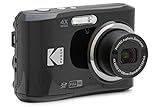
- 16MP Sensor: Captures detailed photos with a CMOS sensor for everyday shooting
- Optical Zoom: 4x optical zoom with a 27mm wide angle lens for flexible framing indoors or outdoors
- Full HD Video: Records 1080p video for travel clips, family moments, or simple vlogging
- Memory Support: Works with Class 10 SD, SDHC, or SDXC cards up to 512GB
- LCD Screen and Battery: 2.7in LCD screen with 2 AA alkaline batteries for convenient on-the-go use
There is no controlled, current comparison here between a named compact and a named phone under matched telephoto-night conditions. So the sound choice is device-specific: compare the actual phone and camera you are considering, at the focal length and in the kind of light you expect to use.
Free tools Windows power users keep installed
One-click scans. No signup required.
Quick Recap
Rank #4
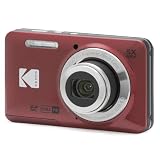
- 16MP Sensor: Captures detailed photos with a CMOS sensor for everyday shooting
- Optical Zoom: 5x optical zoom with a 28mm wide angle lens for flexible framing indoors or outdoors
- Full HD Video: Records 1080p video for travel clips, family moments, or simple vlogging
- Memory Support: Works with Class 10 SD, SDHC, or SDXC cards up to 512GB
- Rechargeable Battery: Included LB-012 lithium-ion battery charges in the camera over USB with the supplied adapter in about 2 hours; charge it for at least 4 hours before first use to maximize battery life
Rank #3
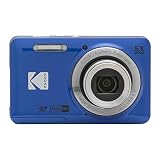
- 16MP Sensor: Captures detailed photos with a CMOS sensor for everyday shooting
- Optical Zoom: 5x optical zoom with a 28mm wide angle lens for flexible framing indoors or outdoors
- Full HD Video: Records 1080p video for travel clips, family moments, or simple vlogging
- Memory Support: Works with Class 10 SD, SDHC, or SDXC cards up to 512GB
- Rechargeable Battery: Included LB-012 lithium-ion battery charges in the camera over USB with the supplied adapter in about 2 hours; charge it for at least 4 hours before first use to maximize battery life
Product prices and availability are accurate as of the date/time indicated and are subject to change. Any price and availability information displayed on Amazon at the time of purchase will apply.

