
The Tool Desk
Outbyte PC Repair FREERepair Windows errors before they cause bigger problemsFix Now →Outbyte Driver Updater FREEFix the driver behind crashes, sound loss and screen glitchesFind Drivers →iTechGuides is reader-supported. When you buy through links on our site, we may earn an affiliate commission. As an Amazon Associate I earn from qualifying purchases. Learn more
Pentax’s K mount dates to 1975, but a lens that physically fits a Pentax DSLR does not necessarily retain every modern feature. Check the exact camera and lens to determine autofocus, aperture control, metering, settings, and image coverage before relying on compatibility.
What the Pentax K mount tells you—and what it doesn’t
Ricoh Imaging says that interchangeable-lens mounts designed for Pentax since 1975 have been based on the bayonet-type K mount. The design’s continuity helps explain why many older lenses can be used on newer bodies, but “K mount” alone is not a promise of full feature support. A lens may attach yet require manual focus, an aperture ring, a menu setting, or a different exposure workflow.
Check compatibility in separate layers: whether the lens attaches directly or needs an adapter; whether focus is manual or autofocus; how the diaphragm is controlled; what metering and exposure behavior is available; and whether the lens covers the camera’s sensor. These details depend on the precise body and lens.
How K, KA, KAF, KAF2, KAF3, and KAF4 differ
The mount labels are clues to successive interfaces and features, not universal compatibility guarantees. Newer mechanisms added diaphragm control and autofocus capabilities while retaining the K-mount foundation. Consult the specification and FAQ for the body in question rather than assuming that a feature works because the lens fits.
#1 Best Overall

- 【Manual Focus】 No electronic contacts. Don't support auto focus or aperture control. With the manual adapter, aperture of your lens will be defaulted the maximum.
- 【Lens Mount】 Compatible with Pentax K screw mount lens.
- 【Camera Mount】 Designed for L mount cameras, include Leica SL SL2 T TL TL2 CL cameras; Panasonic Lumix S1 S1R S1H cameras; Sigma FP cameras, etc.
- 【First Use】 Enable the setting of your camera as "release shutter without lens" when first use with a manual adapter, otherwise the camera will not recognize your lens and cannot take pictures.
- 【Pre-purchase Verification】 Please ensure your lens mount and camera mount before purchase in case of unnecessary returning. We are here for help if you have any question about adapters.
Mechanical versus electronic aperture control
Aperture control is a key difference. KAF4 lenses use an electrically controlled diaphragm rather than the mechanical lever used by earlier lens types. Ricoh’s K-70 FAQ says the K-70 and later bodies support KAF4, while some earlier bodies may require a firmware update. Confirm support and any firmware requirement for your specific camera before buying or using a KAF4 lens.
Autofocus and other lens functions
Autofocus behavior and other features can vary across lens and body generations. A compatible mount does not establish that a body can drive every autofocus mechanism, control every aperture system, or support functions such as power zoom. For example, Ricoh lists the Pentax KF as accepting KAF4, KAF3, KAF2, KAF, and KA lenses, but states that power zoom is not compatible on that model. The body’s own specification is the relevant check.
Rank #2

- 【One adapter, so many options】Compatible with Pentax K lens, Compatible with Canon EOS EF mount cameras. Using the PHOLSY adapter, you can mount the PK-lens on your digital EOS EF-camera instead of the EF-lens
- 【No loss of image quality or speed】Infinity focus allowed. When using the PHOLSY-adapter, no mechanical or electrical functions, signals or data are transferred between EOS EF system cameras and lenses. So have to manually adjust all settings (no autofocus)
- 【New exterior design, solid & durable】Built from aviation grade aluminum and copper, the MOUNT ADAPTER is strong and lightweight with a durable finish, really very resistant and performing for vintage lenses
- 【Precisely matched】The lens mount adapter compatible with Canon EOS EF mount camera is well constructed and makes a tight fitting connection to the lens and camera body, to preserve the performance of pro-level cameras and lenses. And it makes a precise fit with the camera and lens, crucial for meticulous performance. Attaches and detaches to the camera body smoothly and cleanly. No light leakage. Keep using the lenses you love with the most innovative camera bodies available
- 【Clever design】Easy to mount and dismount. Travel lighter, use one set of lenses with two camera bodies. Best of new and old, use vintage lenses with your digital camera.【Note】You must set in the camera menu to "shoot with no lens attached"
Check compatibility on a specific Pentax body
Start with the camera’s exact model name, then identify the lens’s mount class and features. Ricoh’s specifications for the K-70 list a KAF2 bayonet mount and compatibility with KAF4, KAF3, KAF2, KAF, and KA lenses. That is a useful example, not a compatibility statement for every Pentax body.
Recommended Free Tools
- Physical fit: Is it a native K-mount lens, or does it require an adapter?
- Focus: Is focus manual, or does the lens’ autofocus system work with the body?
- Aperture: Is the diaphragm controlled by the camera mechanically or electronically, or by a ring on the lens?
- Metering and exposure: Which modes and readings does the body support with that lens or adapter?
- Coverage: Is the lens designed for APS-C or for 35mm/full-frame coverage? A lens can mount without covering the entire sensor area.
- Setup: Does the body require a menu setting, firmware update, or manually entered focal length for a function such as stabilization?
Read the exact camera’s specification and FAQ alongside the lens documentation. If those sources do not confirm a feature, do not infer it from the mount label alone.
Rank #3

- Mounts M42 Screw Mount Lenses to PK Mount Cameras; infinity focus or beyond allowed
- Enhanced craftsmanship and high-tolerance construction for demanding professionals
- Precise fit and solid connection; lens has no play, gap or wiggling when mounted on adapter and no adjustments required
- Precision all-metal construction with chrome plated brass mounts for secure and solid fit
- Limited 2-Year Manufacturer Warranty
Using M42 screw-mount lenses with a Pentax body
Pentax’s K-70 and K-1 FAQs say M42 S (screw) mount lenses can be used with the PENTAX Mount Adapter K. Adaptation does not turn an M42 lens into a native autofocus lens or guarantee full electronic communication; operation depends on the body, lens, and setup.
K-70 setup
For the K-70, Ricoh says the focus indicator will not operate unless the “Using Aperture Ring” setting is enabled. Consult the K-70 FAQ and camera manual for the applicable setup. The FAQ is the authority for this model-specific behavior.
Rank #4

- 【One adapter, so many options】PK mount lens to EOS RF-mount camera body, explore new lens combinations, compatible for Pentax K mount lens to EOS RF mount cameras compatible with Canon EOS R6 Mark II, EOS R7, EOS R8, EOS R50, EOS R10, EOS R3, EOS R5, EOS R5C, EOS R6, EOS R, EOS RP
- 【No loss of image quality or speed】Infinity focus allowed. There is no electronic contacts or glass inside of this lens adapter, so have to manually adjust all settings (no autofocus) and no need to worry about optic degradation of your lenses. Connected lenses retain all of their superb image quality with no loss of brightness, contrast or speed
- 【New exterior design, solid & durable】Aesthetics and streamlined exterior design means comfortable shooting in any direction, including vertically. The adapter, with Difficult-To-Machining tooth design, matched the nice look of your cameras and lenses. Built from aviation grade aluminum and magnesium alloy, the MOUNT ADAPTER is strong and lightweight with a durable finish, really very resistant and performing for vintage lenses
- 【Precisely matched】The lens mount adapter compatible with Canon EOS RF mount is well constructed and makes a tight fitting connection to the lens and camera body, to preserve the performance of pro-level cameras and lenses. And it makes a precise fit with the camera and lens, crucial for meticulous performance. Attaches and detaches to the camera body smoothly and cleanly. No light leakage. Keep using the lenses you love with the most innovative camera bodies available
- 【Clever design】Easy to mount and dismount. Travel lighter, use one set of lenses with two camera bodies. Best of new and old, use vintage lenses with your digital camera.【Note】You must set in the camera menu to "shoot with no lens attached"
K-1 setup
For the K-1, Ricoh specifies enabling “Using Aperture Ring” and selecting manual focus when using a screw-mount lens with the adapter. Do not assume the K-70’s instructions or behavior apply identically to another body.
Free tools Windows power users keep installed
One-click scans. No signup required.
Adapting Pentax 645 and 67 lenses
Ricoh’s K-70 and K-1 FAQs also describe adapter routes for Pentax 645 and 67 lenses. These are conditional options, not a guarantee that every lens in those systems works on every K body. The K-70 FAQ, for example, excludes certain 645 lenses that lack an aperture ring and documents menu and focus-mode conditions. Check the FAQ for your camera and the documentation for the exact lens and adapter before purchasing.
Best Value
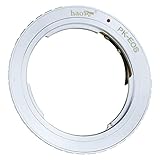
- Manual Lens Adapter for Pentax K mount Lens to Canon EOS Cameras
- There are no electrical contacts in the adapter ring. Exposure and focus has to be adjusted manually.
- Compatible with Lens: Pentax K mount Lens
- Compatible with Cameras: Canon EOS 1D/1Ds, Mark II, III, IV, X, C, 5D, 5D Mark II/III/IV, 7D, 10D, 20D, 30D, 40D, 50D, 60D, 60Da, Rebel xt, xti, xs, xsi, T1i, T2i, T3, T3i, T4, 300D, 350D, 400D, 450D, 500D, 550D, 1000D…
What changes when a lens is adapted?
Native K-mount lenses and adapted lenses differ in more than how they attach. Use this comparison to identify the questions to resolve; it does not promise that every lens in a category behaves alike.
| Lens route | Mounting | Focus and aperture | What to verify |
|---|---|---|---|
| Native K-mount lens | Designed for the K mount; verify the body’s supported lens classes. | Depends on the lens generation and the body’s supported drive and diaphragm systems. | Autofocus drive, aperture control, metering, power zoom, and image coverage. |
| M42 S (screw) lens | Requires the PENTAX Mount Adapter K for the body-specific uses described in the K-70 and K-1 FAQs. | Do not expect native autofocus or full electronic communication. Body settings affect operation. | “Using Aperture Ring” setting; on K-1, manual focus mode; exact lens and body instructions. |
| Pentax 645 or 67 lens | Requires an appropriate adapter; Ricoh documents routes for the K-70 and K-1. | Restrictions depend on the body and individual lens; certain K-70 645 combinations without an aperture ring are excluded. | Exact adapter, lens restrictions, menu settings, focus mode, and body FAQ. |
How large is the Pentax lens ecosystem?
Ricoh Imaging reported more than 380 compatible lens types as of February 2017. Its count included genuine PENTAX lenses only, counted products with minor changes separately, and excluded third-party lenses. It is a historical figure, not a current count of available lenses.
Quick Recap
Product prices and availability are accurate as of the date/time indicated and are subject to change. Any price and availability information displayed on Amazon at the time of purchase will apply.

