
Do these 3 things before closing this tab:
1Fix the driver behind crashes, sound loss and screen glitches2Clear out junk files and repair common Windows errors3Scan for outdated or missing drivers - takes under a minuteiTechGuides is reader-supported. When you buy through links on our site, we may earn an affiliate commission. As an Amazon Associate I earn from qualifying purchases. Learn more
Panasonic’s TOUGHBOOK 34 and TOUGHBOOK G3 are being positioned as rugged computers that connect frontline workers to vehicle fleets, drone data and operational systems—not as computers that autonomously run them. At a 2026 demonstration, a TOUGHBOOK received drone imagery for local analysis and displayed police-vehicle information in a fleet dashboard. Those demonstrations show the proposed role of an “AI hub”; they do not establish better emergency outcomes or independently measured AI performance.
What “AI hub” means in a police car or drone workflow
Here, “hub” means a rugged computer that can receive, display, process or connect operational data and services. It may bring information from a vehicle, a drone or a fleet platform into a place where a worker can review it. That is different from controlling every connected system or making dispatch decisions on its own.
In a hands-on account published by Windows Central in October 2026, Panasonic demonstrated two examples: a drone-data workflow and a police-fleet information interface. They illustrate possible uses, but they are event demonstrations rather than independent evaluations of field performance. Windows Central’s hands-on report
Drone imagery, with separate flight controls
The demonstration involved Teledyne FLIR ION-series tactical reconnaissance drones. The TOUGHBOOK served as an intelligence terminal for imagery and reconnaissance data that could be recorded, analyzed and processed locally. Separate controls handled the aircraft’s flight; Windows Central explicitly reported that the drone did not take flight during the event. The distinction matters: the computer was shown as a ground-side data tool, not as the drone’s pilot or autonomous flight controller.
#1 Best Overall

- Relentless durability: The Panasonic Toughbook FZ-55 MK1 with unmatched durability, MIL-STD-810H certified, IP53 sealed, plus a 4G LTE multi-carrier, stay connected where ever you go
- Powerful Graphics & Display: The 14-inch (1920 x 1080) FHD touchscreen with up to 1000 nit LCD display type on the FZ-55 MK1 provides stunning visuals, complemented by Intel UHD graphics 620 for a graphics precision. Whether you're crunching numbers or enjoying multimedia content, this laptop delivers exceptional clarity
- Powerful Processor: Equipped with an Intel Core i7-8665U vPro processor and speeds of up to 4.8GHz with Turbo Boost technology. With its sizable 8MB cache, 16GB RAM and 512GB M.2 SSD the laptop efficiently handles data for smooth multitasking and seamless performance
- Advanced Camera and Interface: The Toughbook 55 boasts a 1080p webcam with privacy cover, infrared camera with Windows Hello support for secure login, and tetra-array microphone for crystal-clear video calls. The interface includes a docking connector, USB-A 3.1, USB-C 3.1, MicroSDXC, HDMI, 1Gbps Ethernet, audio in/out, and Nano SIM
- Complete Package: Your purchase comes with a stylus pen, AC adapter AC 100V-240V, and Windows 11 Pro operating system preinstalled
Police vehicles, presented in a shared dashboard
In the police-fleet demonstration described by Windows Central, a central interface surfaced vehicle identification numbers (VINs), odometer readings, fuel, speed, maintenance information and faults. The report also describes Command Intelligence as allowing fleet managers to query systems in natural language using AI. These are observations from the demonstration; they do not establish the accuracy of AI answers or show how the system would behave across a live agency deployment.
How the TOUGHBOOK fits into Panasonic’s fleet software
Panasonic’s separate Tough Command announcement, dated May 19, 2026, describes a software-first, vendor-agnostic fleet platform. The company says it uses compute, connectivity and GPS already built into deployed TOUGHBOOKs to capture data from vehicles, IoT devices and infrastructure, then centralize data in the cloud for analytics. Panasonic identifies police, fire and EMS fleets among its intended public-safety users. Panasonic’s Tough Command announcement
Rank #2

- Powerful Intel i7 Performance – Equipped with an Intel Core i7-7600U (2.8 GHz, vPro), this fully rugged Toughbook delivers fast, reliable performance for demanding field applications, diagnostics, and enterprise workflows.
- Ultra-Bright 13.1” Touchscreen – 13.1" XGA touchscreen with Panasonic CircuLumin technology, anti-glare/anti-reflective coating, and an incredible 1200-nit brightness for full sunlight readability in any environment.
- Fully Rugged & Field-Ready – MIL-STD-810G, MIL-STD-461F and IP65-rated durability including shock, vibration, water, dust, sand, drop, and extreme temperature resistance. Reinforced ports ensure long-lasting durability in harsh conditions. Featuring a Backlit Emissive Keyboard – Designed for night operations and low-light environments with an emissive backlit keyboard for improved visibility and usability in any setting.
- Advanced Connectivity & GPS – Includes Intel Wi-Fi, Bluetooth, 4G LTE (EM7455), DGPS, and dual-pass through antennas. Ideal for mobile workers, fleet use, public safety, and remote field operations.
- Long Battery Life + Hot Swap – Lithium-ion battery with hot-swappable capability to keep you powered through long shifts without downtime.
Tough Command and the Command Intelligence feature in the Windows Central demonstration should not be treated as interchangeable descriptions. The official Tough Command announcement lays out the fleet platform’s stated architecture and goals; the hands-on account describes a particular interface and natural-language query feature. Neither source independently measures operational results.
Recommended Free Tools
TOUGHBOOK 34 and G3: the practical differences
Panasonic announced both fully rugged 2-in-1s on September 30, 2026, describing them for mission-critical work including public safety and federal use. The company’s specifications suggest different deployment fits: the larger 34 for vehicle or command-center work, and the more compact G3 for highly mobile users and tighter spaces, such as smaller public-safety vehicles. Panasonic’s TOUGHBOOK 34 and G3 launch details
Rank #3
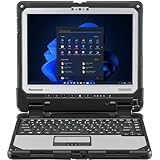
- IP65 dust and water resistance. Certified MIL-STD-810G, built to withstand a 4-foot gravity drop
- Intel Core i5-7300U processor, 3.5GHz with Turbo Boost,16GB DDR4 RAM, and generous 512GB SSD
- 12 inch QHD screen with a high-resolution of 2160 x 1440, Gloved Multi Touch + Digitizer, 1200 nit brightness, and anti-reflective screen treatment
- Tablet ports: USB-3.0, HDMI, Nano-SIM, Ethernet Port, and Audio In/Out
- Keyboard Base Ports include: USB-3.0, USB-2.0, SDXC, HDMI, VGA, and Serial Port
| Specification or use | TOUGHBOOK 34 | TOUGHBOOK G3 |
|---|---|---|
| Display | 12.4-inch FHD+, 1,000-nit display | 10.1-inch WUXGA, 1,000-nit display |
| Deployment fit described by Panasonic | Use in or out of vehicles and in command centers | Highly mobile work and space-constrained settings, including smaller public-safety vehicles |
| Expansion | Four expansion areas, including two user-replaceable xPAK areas | Two configurable expansion areas |
| Battery configurations and stated life | Panasonic lists 9 hours with one 40Wh battery and 18 hours with the optional second battery; measured using MobileMark 30 | Up to 23 hours with the 99Wh battery, measured using MobileMark 30 |
| Operating range stated by Panasonic | 14°F to +122°F | 14°F to +122°F |
These are manufacturer-published specifications, not independent test results. The stated battery-life figures are tied to Panasonic’s MobileMark 30 measurements and specified battery configurations; they should not be read as guaranteed runtime in a particular vehicle or field workload. Panasonic also lists optional dual hot-swappable batteries for the 34 and three battery-capacity options for the G3.
Choosing between them for an agency deployment
The useful comparison is not a simple performance ranking: the available sources do not provide independent benchmarks for these models. Instead, deployment teams can assess the trade-offs that Panasonic’s published specifications make visible:
Rank #4

- The Panasonic Toughbook CF-54 MK3 is MIL-STD-810G and IP51 certified, ensuring rugged durability for industrial use. It’s waterproof, dustproof, shock-resistant, and capable of withstanding extreme temperatures
- Equipped with 4G LTE, dedicated GPS, and Contactless Smartcard reader, LAN Port, USB 3.0 x3, HDMI, SD Card (SDXC), Audio In/Out, DVD Super MULTI Drive, and Docking Connector, offering a range of options for peripheral devices
- Intel Core i5-7300U vPro Processor, 2.6GHz with Intel Turbo Boost up to 3.5GHz, 3MB Cache, 8GB RAM, and 256GB SSD
- 14" FHD Touch (1920x1080) 1000-nit Display with Anti-reflective (AR) and anti-glare (AG) screen treatments, and triple monitor support
- Windows 11 Pre-Installed: Uses a 7th generation Intel processor, Windows updates are only available through a fresh Windows installation
- Display and workspace: The 34’s larger screen may suit a vehicle installation or command-center desk where more display area is useful. The G3 is smaller for workers carrying a device between locations or working in a confined cabin.
- Vehicle space and mobility: Measure the mounting location and consider how often the device must be carried before choosing a form factor.
- Power needs: Compare the planned battery configuration and the workday’s charging opportunities with the stated MobileMark 30 results. Real runtime depends on workload and configuration.
- Expansion and network requirements: Confirm the specific modules, connectivity options and agency networks needed for the intended deployment; the number of expansion areas alone does not establish that a particular configuration is available.
- Software stack: Check compatibility with dispatch, records, fleet-management and security systems. A rugged computer is only one element in an operational system.
What Panasonic says the computers support
Panasonic lists in-vehicle dispatch, records management, mobile command, 5G and private-network use for both devices. It also describes unmanned-systems control and UAV ground-control use in federal settings. Those are manufacturer-described capabilities and intended applications, not independent demonstrations of performance in every agency’s setup.
The company says both models are tested to MIL-STD-810H/461G and states an operating range of 14°F to +122°F. Panasonic also lists TOUGHBOOK Total Defense, modular multifactor authentication and quick-release SSDs designed to support data isolation. Actual availability, configuration and certification details can vary; agencies should verify requirements for the exact system and deployment rather than infer them from a product-family description.
Best Value

- Relentless durability: The Panasonic Toughbook FZ-55 MK1 with unmatched durability, MIL-STD-810H certified, IP53 sealed, plus a 4G LTE multi-carrier, stay connected where ever you go
- Powerful Graphics & Display: The 14-inch (1920 x 1080) FHD touchscreen with up to 1000 nit LCD display type on the FZ-55 MK1 provides stunning visuals, complemented by Intel UHD graphics 620 for a graphics precision. Whether you're crunching numbers or enjoying multimedia content, this laptop delivers exceptional clarity
- Powerful Processor: Equipped with an Intel Core i7-8665U vPro processor and speeds of up to 4.8GHz with Turbo Boost technology. With its sizable 8MB cache, 32GB RAM and 1TB M.2 SSD the laptop efficiently handles data for smooth multitasking and seamless performance
- Advanced Camera and Interface: The Toughbook 55 boasts a 1080p webcam with privacy cover, infrared camera with Windows Hello support for secure login, and tetra-array microphone for crystal-clear video calls. The interface includes a docking connector, USB-A 3.1, USB-C 3.1, MicroSDXC, HDMI, 1Gbps Ethernet, audio in/out, and Nano SIM
- Complete Package: Your purchase comes with a stylus pen, AC adapter AC 100V-240V, and Windows 11 Pro operating system preinstalled
What the demonstrations do—and do not—show
The examples make the “nerve center” idea concrete: a computer mounted in a vehicle or carried into the field could provide a local point for reviewing operational data, while fleet software connects information across vehicles and other systems. Panasonic’s broader UAV material likewise presents rugged computers as ground-side tools for mapping, imaging and data processing in difficult field settings. Panasonic’s overview of TOUGHBOOK use in UAV operations
But the evidence here stops short of showing that the TOUGHBOOK 34 or G3 improves response times, safety, AI accuracy or total cost of ownership. No independent measurements for those outcomes are provided in the available event report or product announcements. A demonstration of data arriving in one interface is not proof that an agency’s devices, networks, software, security controls and procedures will work together reliably at scale.
Panasonic’s wider product-line claims should also stay with the products they describe. Its April 2026 TOUGHBOOK 56 announcement gives model-specific claims about edge AI, connectivity and existing vehicle-dock compatibility; its 2024 TOUGHBOOK 40 Mk2 announcement gives processor-comparison figures for that model. Those figures are not specifications or test results for the 34 and G3. TOUGHBOOK 56 announcement · TOUGHBOOK 40 Mk2 announcement
Likewise, Panasonic’s October 2025 statement that its TOUGHBOOK lineup gained Verizon Frontline Verified status refers to testing for use on that responder network; it is not a general certification of emergency outcomes. Panasonic’s Verizon Frontline Verified announcement
Quick Recap
Product prices and availability are accurate as of the date/time indicated and are subject to change. Any price and availability information displayed on Amazon at the time of purchase will apply.

