
Frequent deployments can make a service look healthy by repeatedly clearing accumulated state. In Sergey Shinder’s incident account, restarting pods concealed a slow memory leak until an internal reconciliation service went about seven months without a deployment and began failing. The lesson is not to deploy less or more: it is to detect when routine replacement has become an undocumented reliability control, then find and fix the defect it is masking.
How deployments concealed the failure
At four on a Sunday morning, an internal reconciliation service went down. Shinder reports that all four pods were killed for memory within about twenty minutes, restarted, and failed again a few hours later. They had last been deployed in February, giving them roughly seven months of uptime.
The leak came from creating an SDK client for each request. Each client registered a listener on a static registry, but nothing removed those listeners. The retained objects accumulated for as long as the process lived. Shinder estimated growth at about 40 megabytes per pod per day and reports finding roughly 1.2 million listener objects in a heap comparison. These are observations from this incident, not independently verified measurements or typical values for other services.
The same library was used elsewhere, and Shinder says memory rose with pod age across services. Yet the fleet’s median pod age was under 30 hours because deployments were frequent. Those short-lived instances were being replaced before the slow accumulation became as visible as it did in the long-lived service. As Shinder put it, “Deploying often had become a reliability control, and we had never decided to have it.”
Recommended Free Tools
#1 Best Overall

- Ventilation Fan: Designed to quietly ASUS GT/RT- AC5300 , cool Xboxs, CPU/ GPU, Playtations, Rokus, TVs, receivers, mondems, routers, DVRs, window fans ,network appliances, DIY aquarium cooling and other audio video electronics
- Variable Speed Control: 110V - 220V Fan power supply with speed control function, turn the knob to adjust the speed, 4V - 12V adjustable fan speed,and can turn off the fan . | Input: 100V - 240V 50/60Hz | Output: DC 3-12V 200-2000ma
- DIY Vertical Window Fan: Can both vertical and horizontal, provide efficient cooling and ventilation. Mining rigs rely on the cooling power of fans for optimal operation.Double Metal Protective, the fan is equipped with double metal protective net
- Easy to Install: Draw out air in refrigerators, provide ventilation in greenhouses, prevent amplifier overheating, and vent hot air from living room consoles like PS4. Y cable connects 2 fans, two fans can be 42cm/16.5 in far away from each other
- Dual Ball Bearing: 240mm x 240mm x 25mm / 9.45in(L) x 4.72in(W) x 1in(H) in in total. | Rated Voltage :12V | Rated Current: 0.93A at full speed | Airflow: (82CFM)x4 at 12V | Speed: 2500 RPMx4
Why a restart is not a fix
A process restart discards its in-memory state, including leaked objects. That can restore headroom and make symptoms disappear temporarily, but it does not correct the code path that creates and retains the objects. If the process runs long enough again, the same defect can return.
This distinction matters when assessing operational health. A service can appear stable because routine replacement keeps resetting its age, not because it remains healthy over long periods. Shinder’s warning is pointed: “Anything that hides a defect is load bearing.” A quiet period after a restart may therefore say more about the reset than about whether the underlying problem is gone.
Rank #2
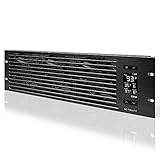
- An intelligent fan system designed for cooling audio video, DJ, server, network, and IT equipment racks.
- Protects rack-mount equipment from overheating, performance issues, and shortened lifespans.
- Programmable thermostat controller with automated speed control, alarm warnings, and backup memory.
- Premium anodized aluminum construction with CNC-machined detailing for a professional appearance.
- Size: 3U Rack Space | Design: Intake | Airflow: 60 to 300 CFM | Noise: 12 to 38 dBA | Bearings: Dual Ball
Track memory growth in the context of pod age
An absolute memory threshold is useful for protecting a workload from exhausting its limit, but it may only alert shortly before a pod is killed. To expose age-dependent behavior earlier, Shinder recommends tracking memory growth as a rate normalized by pod age, alongside memory usage itself.
- Memory level: How much memory is the pod using now, and how close is it to a configured limit?
- Growth over time: How quickly is memory increasing as the pod ages? A persistent upward trend can be more informative than a single reading.
- Age distribution: How long have the current pods been running? A fleet dominated by recently started pods may not have tested long-lived behavior.
These views answer different questions. A high-water alert helps identify immediate pressure; a growth-rate view can reveal gradual accumulation; and age data helps explain whether the service has been observed long enough for that accumulation to matter. Shinder recommends putting pod-age distribution on the platform dashboard so teams can see whether the fleet includes enough long-lived instances to expose age-related problems.
Rank #3

- [Adjustable] Adjustable temperature control helps ensure optimal performance for your rackmount such as network, server, music, and AV cabinets
- [Quiet and powerful] Equipped with three powerful 4” (120mm) noise control ball bearing fans capable of pumping 225 CFM of air, preventing overheating of expensive equipment
- [Optimal Airflow] This three fan cooling system will provide excellent cooling with its high-performance fans, which keep the hot air stream away from your setup with its top exhaust cool air system.
- [Compact Design] Device is standardized to mount to any 19" server rack or cabinet while taking only a single unit (1U) of space and has a wide variety of applications.
- [Programmable] Equipped with a programmable thermostat sensor controller for better temperature monitoring that will trigger fans based on your parameter configuration.
Use a long-duration soak to look for age-dependent faults
Shinder proposes running one instance of each service for 30 days in a soak environment, sending it synthetic traffic, and graphing its memory. The point is to observe what happens “on day thirty,” not to treat 30 days as a universal threshold or proof that a service is leak-free.
- Choose a representative service instance. Keep one instance running in a controlled soak environment rather than relying only on the normal fleet, where routine replacement may keep pod ages low.
- Exercise realistic code paths. Send synthetic traffic that causes the service to do meaningful work; an idle process may not trigger the allocations or lifecycle behavior that matter.
- Record memory against elapsed pod age. Graph the trend over the full run so gradual growth is visible, rather than looking only at the final reading.
- Investigate persistent growth. Use heap comparisons or profiling to identify what is retained and why. In Shinder’s incident, the key clue was the accumulation of listener objects registered by per-request SDK clients.
A soak is a detection technique, not a substitute for fixing a confirmed defect. It also complements production monitoring: synthetic traffic in a controlled environment can reveal a long-duration trend without waiting for a production pod to survive an unusually long interval.
Rank #4

- Adjustable temperature control helps ensure optimal performance for rackmount such as network, server, music, and AV cabinets
- Noise controlled fans makes the cooling system useful for a quiet office or business space
- Compact design mounts to any 19" inch cabinet and takes up only 1 unit of space
- Simple and easy to use LCD display allows user to control temperature
- Air pumped through to the top exhaust system of the fan
Distinguish Kubernetes restarts, pod replacement, and rollout
“Restart” can describe different Kubernetes events, and they should not be conflated when diagnosing a service. Kubernetes applies a pod’s restart policy to container exits and uses backoff when a container repeatedly restarts. A workload controller replacing a pod is a separate action; a Deployment update replaces pods according to its rollout strategy.
| Mechanism | What it does | What it does not establish |
|---|---|---|
| Container restart policy | Controls restart behavior after a container exits; repeated restarts use backoff. | It does not repair an application defect that caused memory to accumulate. |
| Pod replacement | A controller or operator can replace a pod, creating a new pod instance. | It is not the same as restarting a container within an existing pod. |
| Deployment rollout | A Deployment update replaces pods according to its configured rollout strategy. | It is not an application-level diagnosis or a guarantee that every container is restarted in the same way. |
Exact behavior depends on the workload and its configuration. Kubernetes’ Pod Lifecycle documentation describes container restart policy and backoff, while its Deployment update guide explains the rollout model.
Quick wins for a faster PC:
Fix the driver behind crashes, sound loss and screen glitchesFind Drivers →Repair Windows errors before they cause bigger problemsFix Now →Scan for outdated or missing drivers - takes under a minuteDriver Scan →Best Value
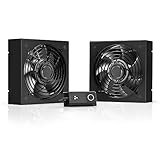
- A quiet fan kit designed for standard 19” racks, to be mounted on the roof or to replace existing fans.
- Features a speed controller utilizing PWM which can control the fan's speed without generating noise.
- Compatible with CLOUDPLATE series rack fans and can be linked to share the same programming.
- Heavy-Duty steel construction with spiral fan guards, mounting hardware, and power adapter.
- Size: Standard 120mm Rack Fans | Fans: 2 | Airflow 200 CFM | Noise: 26 dBA | Bearings: Dual Ball
Do not use liveness probes to disguise a leak
Liveness and readiness probes serve different purposes. A liveness probe can cause Kubernetes to restart a container that it judges unhealthy. A readiness probe controls whether a pod is considered ready to receive service traffic. Neither probe removes leaked listeners or fixes faulty client lifecycle management.
A liveness probe that restarts a process as memory rises may temporarily clear the symptom while making the underlying age-dependent failure less obvious. Poorly designed liveness checks can also contribute to cascading failures under load. Use probes for the conditions they are meant to detect, and use memory trends, pod-age context, and long-duration observation to investigate gradual resource growth. See the official Kubernetes guide to liveness, readiness, and startup probes for their roles and configuration cautions.
The operational lesson
Frequent deployment can be a useful practice, but it should not quietly become the mechanism that keeps a leaking service alive. When interpreting healthy-looking fleet metrics, ask whether the instances have lived long enough to reveal gradual failure. As Shinder’s essay warns, “a quiet fortnight is a risk and not a rest.”
Quick Recap
Product prices and availability are accurate as of the date/time indicated and are subject to change. Any price and availability information displayed on Amazon at the time of purchase will apply.
The Tool Desk
Outbyte PC Repair FREEClear out junk files and repair common Windows errorsFree Scan →Outbyte Driver Updater FREEScan for outdated or missing drivers - takes under a minuteDriver Scan →
