
What’s actually slowing this PC down?
Pick the symptom - the matching free tool is one click away.
iTechGuides is reader-supported. When you buy through links on our site, we may earn an affiliate commission. As an Amazon Associate I earn from qualifying purchases. Learn more
An AI incident response agent learns from production incidents by building curated operational memory. It does not retrain its foundation model after each outage. Responders’ notes, commands, decisions, evidence, and outcomes are captured, checked against what actually worked, and stored with the context needed to reuse them. In a later investigation, the agent retrieves relevant cases and shows them with source links so an engineer can judge whether they apply.
That framing changes what you build. A team that expects the model to absorb lessons skips the capture and validation work that makes past incidents usable. A team that treats memory as a governed knowledge loop can measure whether it helps, trace why a recommendation was made, and keep the agent inside an approved scope.
A Reddit discussion on the OpsMind idea put the reader’s question directly: when a production incident happens again, how does an AI agent actually use what the engineering team learned the first time? The short answer is that it uses the stored record, and only as far as that record has been validated. This article describes that design approach. It does not report a tested OpsMind deployment or its performance.
Recommended Free Tools
The learning loop in four stages
Google SRE describes operational memory as structured incident-response trajectories and evaluated datasets. Microsoft’s incident-response documentation describes an agent that searches memory for similar incidents and relevant documentation. Combined, the loop has four stages:
#1 Best Overall

- Built for Local AI Development: AMD Ryzen AI Halo is designed for local AI development and inference, featuring 128GB unified memory and support for up to 200B parameter models to build and run intensive AI workloads locally.
- 128GB Unified Memory: Features 128GB LPDDR5x unified memory at 8000 MT/s with 256 GB/s memory bandwidth, providing a shared memory pool across the CPU, GPU, and NPU to support larger AI models.
- AMD Ryzen AI Max+ 395 Processor: Features 16 cores, 32 threads, and Zen 5 architecture, paired with AMD Radeon 8060S integrated graphics featuring 40 RDNA 3.5 compute units and an AMD XDNA 2 NPU with up to 50 TOPS.
- Linux AI Developer Platform: Purpose-built for Linux-based AI development with full AMD ROCm software support and preloaded tools, models, and workflows optimized for local AI development.
- Compact, Connected Design: Includes a 2TB M.2 SSD, 10GbE LAN, Wi-Fi 7, Bluetooth 5.4, USB-C connectivity, and HDMI 2.1b.
- Capture what responders observed, asked, ran, and decided.
- Validate which outcome actually resolved or contained the problem, and which only looked plausible at the time.
- Preserve the evidence, service context, and risk classification that made the outcome meaningful.
- Retrieve relevant cases during a later investigation, presented with their source links and the conditions under which they were resolved.
Each stage can fail on its own. Capture that misses the commands, validation that accepts a fix nobody confirmed, or retrieval that ignores service context each produces an agent that sounds informed without being reliable.
Context the agent needs before memory is useful
Memory retrieves text that resembles the current symptoms, and resemblance alone can mislead. Microsoft’s documentation describes investigations built on operational signals, and Google Cloud says its incident agents use observability data and system topology, taxonomy, and dependency data before forming hypotheses. In practice, the agent needs access to:
- Alerts and their history for the affected service.
- Logs, metrics, and traces from the observability platform.
- Recent deployments and code changes.
- Service topology and dependencies, so it can see when an upstream change could explain a downstream symptom.
- Runbooks and documentation for the affected components.
- Earlier incident records, including how each one ended.
Consider a past incident whose alert text matches today’s, but whose root cause was a dependency version this service no longer runs. Without deployment history and topology, the agent cannot tell the two apart. Those inputs are what separate a relevant precedent from a coincidental one.
Outdated Drivers Are Slowing You Down
One free scan finds every outdated or missing driver and matches the right update for your exact hardware.Free scan · exact hardware matchPC Slower Than It Used to Be?
A free scan shows the junk files, broken settings and background clutter dragging Windows down - then fixes them in one click.Free scan · Windows 10 & 11Building the loop, stage by stage
Intake and scope
Incidents enter from an incident-management platform or directly from a monitoring alert. Microsoft’s incident response setup tutorial documents Azure Monitor, PagerDuty, and ServiceNow as intake options, along with severity and service filters. Define which events the agent may investigate using response plans, severity routing, affected-service filters, and an explicit run mode. Start narrow. One service or one severity band is far easier to evaluate than the whole estate.
Gather evidence
Pull incident metadata, logs, metrics, and traces, alert history, relevant deployments or code changes, service topology, and the runbooks for the affected service. Timestamp every item so the investigation can be reconstructed later, and record the time range each query covered. An agent that cannot say what window it examined cannot be audited.
Recall operational memory
Search previous incidents and documentation, then show each match with its source link and the conditions under which it was resolved. A retrieved fix is a lead, not an instruction. If a past fix applied to a configuration this service no longer uses, the agent should surface that mismatch rather than apply the old fix.
Investigate with evidence
Form hypotheses, test each against current signals, and state the verification step that would confirm or reject it. Google SRE describes surfacing each hypothesis with relevant dashboard or log links, and Microsoft says its agent validates hypotheses with evidence. A hypothesis without a verification step is an opinion that a responder cannot check quickly.
Do these 3 things before closing this tab:
1Fix the driver behind crashes, sound loss and screen glitches2Clear out junk files and repair common Windows errors3Scan for outdated or missing drivers - takes under a minuteRecommend or mitigate under policy
Present a scoped action plan. Ask for review where the run mode requires it, and execute only what the run mode, access controls, and risk class permit. Google Cloud emphasizes transparent data use and controls against unwanted production mutations. The Google SRE guidance reports partial automation with human acceptance for critical operations and high automation for minor incidents, within the system it describes.
Verify, record, and improve
After resolution, record the timeline, evidence, action taken, approvals, result, and follow-up. Convert verified learning into reviewed knowledge, updated playbooks, and new evaluation examples. Google Cloud describes agents that review and improve playbooks and draft postmortems. An outcome nobody confirmed should be stored as unconfirmed, because the next investigation will treat it as a precedent.
Rank #2

- EVOLUTION AMD RYZEN AI MAX+ 395 MINI PC - GMKtec EVO-X2 is the next evolution in AI mini PC Ryzen Strix Halo series. Thanks to AMD Simultaneous Multithreading (SMT) the core-count is effectively doubled, to 32 threads. Ryzen AI Max+ 395 has 64 MB of L3 cache and can boost up to 5.1 GHz, depending on the workload. The Ryzen AI Max+ 395 is currently rated as the "most powerful x86 APU" on the market for AI computing.
- AI NPU with XDNA 2 ARCHITECTURE - Powered by 16 “Zen 5” CPU cores, 50+ peak AI TOPS XDNA 2 NPU and a truly massive integrated GPU driven by 40 AMD RDNA 3.5 CUs, the Ryzen AI MAX+ 395 is a transformative upgrade and delivers a significant performance boost over the competition. The Ryzen AI Max+ 395 excels in consumer AI workloads like the llama.cpp-powered application: LM Studio. Shaping up to be the must-have app for client LLM workloads, LM Studio allows users to locally run the latest language model without any technical knowledge required and unleash their creativity and productivity.
- AMD RADEON 8090S iGPU GAMING PC - The AMD Radeon RX 8060S offers all 40 CUs with up to 2.9 GHz graphics clock and uses the new RDNA 3.5 architecture. The powerful iGPU is positioned between an RTX 4060 and 4070 laptop GPU and therefore enables gaming in FHD at maximum details in most demanding games. The 8060S can also utilize the full 64GB pool, which is perfect for running LLMs such as Deepseek 32B, which runs comfortably on this machine.
- EIGHT CHANNEL LPDDR5X - LPDDR5X is a new ground breaking memory small form factor installed on-board. With blazing speeds up to to 8000MT/s, it runs 1.5x faster than the DDR5 SODIMMs; 90% better performance over DDR5 SODIMMs in video conferencing and photo editing; 30% better performance in productivity apps; 4% better performance in digital content workloads.
- QUAD SCREEN 8K DISPLAY SUPPORT - EVO-X2 AI Mini PC support 4-screen 4K/8K output via HDMI 2.1 (8K@60Hz), DisplayPort 1.4 (4K@60Hz), and dual USB 4 40Gbps Transfer speed (supporting PD3.0/DP1.4/DATA). Ideal for gaming, video editing, and multitasking, it provides expansive and crisp multi-display support.
What to capture from responders
Google SRE notes that the information needed to learn from an incident is often fragmented across tools, and that reconstructing it afterward is time-consuming and incomplete. Capturing it while the work happens is the most reliable way to build trajectories. For each incident, store the following:
| Record | What to store | Why later retrieval needs it |
|---|---|---|
| Incident notes | Summary, severity, affected services, timeline | Lets a future search match on service and symptom, not only alert text |
| Chat and handoffs | Messages in the incident channel, with timestamps | Shows which hypotheses were rejected and why |
| Commands and changes | Commands run, configuration changes, rollbacks | Separates what was tried from what worked |
| Decisions and approvals | Who approved what, and the risk classification at the time | Shows whether an action was permitted, and under which policy |
| Evidence links | Dashboard, log, and trace links with time ranges | Lets a reviewer re-check reasoning against the original signal |
| Outcome and follow-up | Verified result, the signal that confirmed it, open actions | Gives the validation stage something concrete to check |
Chat and command records can contain credentials and customer data. Redact before storage, and restrict who can retrieve incident memory to the people and agents who need it.
Validating what the memory contains
Not every stored record deserves equal weight. Google SRE distinguishes three tiers of evaluation data, and the same logic applies to incident memory:
| Tier | Meaning in Google SRE’s description | How to treat it in incident memory |
|---|---|---|
| Bronze | Heuristic labels | Useful for broad coverage and search. Do not treat as proof that a fix worked. |
| Silver | Programmatically generated and calibrated data | Useful for trends and ranking once calibrated against reviewed samples. |
| Gold | Human-verified data | The reference for judging whether the agent’s recommendations were correct. |
Google SRE describes stratified manual review as the calibration step for the other tiers. Stratified means sampling across incident types, severities, and services rather than only the straightforward cases, so the review covers where the agent is most likely to fail. Keep the tier visible on every record so a retrieved case always shows how much it has been checked.
Governing autonomy
Run modes and review gates
Microsoft’s setup tutorial recommends choosing Review autonomy when you create a trigger. Start every new trigger there. In review-required mode, the agent investigates and drafts the action, and a responder approves the change before anything runs. Keep that mode until evaluation results for that trigger justify a change.
Graduated autonomy by risk class
Google SRE’s AI Engineering for Reliable Operations guidance makes the principle explicit:
“Before AI agents can safely operate at higher levels of autonomy, they require a deep, structured understanding of production environments and rigorous frameworks for evaluation.”
Put that into practice as a ladder, and move one risk class at a time:
- Recommendation only. The agent investigates and proposes. No change is made.
- Review required. The agent may prepare an action. A responder approves and executes it.
- Autonomous for evaluated classes. The agent may act only in risk classes whose evaluation meets a threshold your team set in advance, and only within the permissions granted to it.
A class with a poor record of unsupported or hazardous actions should move back down the ladder rather than leave the agent autonomous across the board.
Rank #3
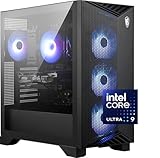
- Intel Core Ultra 9 285 Processor: Newly developed cores deliver ultra-smooth and responsive gameplay. AI accelerators prepare users for the next era of gaming on an AI PC.
- Simplistic Design: Enjoy the latest generation of Windows 11 Home for your everyday needs. *MSI recommends Windows 11 Pro for business use.
- NVIDIA GeForce RTX 5070 Ti GPU
- Cool While Gaming: In conjunction with an RGB CPU Air Cooler, the Aegis RS features four system cooling fans; three in the front and one in the rear to pull in cool air and push heat out of the PC.
- Turn on the Bright Lights: With the built-in RGB lighting, take your gaming experience to the next level by pressing the MSI LED button to cycle through lighting options. Customize lighting even further with MSI Center software.
Evaluating the agent
Run the evaluation against curated or replayed incident cases with known outcomes before any autonomy change. Repeat it after every change to the model, prompts, retrieval index, or tools. The plan should cover:
- Replayed or curated incident cases with known outcomes.
- Human review of a stratified sample of agent outputs.
- Evidence quality: whether each hypothesis links to a signal that actually supports it.
- Safe escalation: whether the agent hands off when evidence is weak or the risk class is outside its scope.
- Unsupported hypotheses, and how often responders rejected them.
- Duplicate or hazardous actions, including repeated remediation of the same fault.
- Outcome verification: whether the action was followed by the signal the team expected.
Compare results against a baseline from the same team, such as time to first hypothesis or time to verified mitigation before the agent was introduced. Measure in your own environment. Another organization’s result does not predict yours.
Failure modes the incident plan must cover
Japan’s AI Safety Institute notes that conventional incident-response guidance was not designed around dynamic AI model behavior and external dependencies such as retrieval-augmented generation (RAG) and agents. Its approach book is a conceptual framework. It does not show that any particular architecture is compliant or complete, but it supports adding agent-specific categories to incident preparedness:
- Agent failure. The agent produces a wrong hypothesis, a stale recommendation, or an action outside its scope.
- Model behavior change. An upstream model update changes how the agent reasons, so a previously validated workflow starts producing different output. Re-run the evaluation set after each change.
- Dependency failure. The telemetry source, incident platform, search index, or runbook store is unavailable or returns partial data. The agent should state what it could not check rather than guess.
- Unvalidated or superseded memory. A record that was never reviewed, or a runbook that has since been replaced, is retrieved as if it were current.
Assign an owner to each category and give it its own runbook. The agent is part of the production system that responders are already operating, so its failures belong in the same incident process.
Comparing the systems you can evaluate
The published material describes three different approaches rather than a controlled head-to-head test. Microsoft documents its Azure SRE Agent in product documentation. Google describes its internal systems, which are not presented as a commercial offer. Splunk describes its AI SRE product on a product page. All three are vendor or organizational accounts, so treat product pages as claims to verify, not independent comparisons. Feature availability changes, so confirm current capabilities with each vendor before committing.
The Tool Desk
Outbyte PC Repair FREEClear out junk files and repair common Windows errorsFree Scan →Outbyte Driver Updater FREEScan for outdated or missing drivers - takes under a minuteDriver Scan →| Axis | Azure SRE Agent (Microsoft documentation) | Google SRE AI systems (Google’s account) | Splunk AI SRE (product page) |
|---|---|---|---|
| Intake | Azure Monitor, PagerDuty, and ServiceNow options | Not stated | Not stated |
| Investigation inputs | Integration with incident platforms and observability sources | Observability data, system topology, taxonomy, and dependency data | Anomaly detection and telemetry-based troubleshooting |
| Memory | Searches prior incidents and relevant documentation | Structured incident-response trajectories and evaluated datasets | Not stated |
| Evidence traceability | Timestamped findings and recommendations | Hypotheses with verification steps and dashboard or log links | Not stated |
| Memory evaluation | Not stated | Bronze, Silver, and Gold datasets with stratified manual review | Not stated |
| Autonomy controls | Configurable run modes; Review autonomy recommended when creating a trigger | Partial automation with human acceptance for critical operations; high automation for minor incidents, in the described system | Guided remediation plans with human review and execution |
“Not stated” means the cited page does not describe that capability. It does not mean the product lacks it. When you compare options, also weigh integration fit with your incident platform, how memory is curated, permission boundaries, review and rollback controls, incident communication, and support for postmortem and playbook work.
Reading vendor customer figures
Splunk’s AI SRE page presents customer-story results from Repay: a 50% faster triage figure and a 30% reduction in transaction latency. The page gives no publication date, so the 2026 attached to these figures is the year the page was accessed, not when the results were published. It also does not describe how either number was measured. Treat them as one vendor’s account of one customer, not as an expected effect of an incident agent.
What is and is not established
- Established: the operational context an agent needs, the capture, validate, and retrieve loop, and the governance patterns that vendors and Google describe.
- Not established: a general benchmark for how much an incident agent shortens investigations or reduces repeat incidents. None of the published material applies its results across organizations.
- Not established: the architecture or measured performance of any system called OpsMind. Build and evaluate your own implementation against your own baseline.
Frequently Asked Questions
Do I need a specific product to build this incident learning loop?
No. The published descriptions are of approaches and particular systems, and none shows that one product is required. A team can implement the loop on its existing incident platform and observability stack, as long as it can capture responder activity, retrieve from that record, and enforce run modes and approvals.
What if we have no historical incident records yet?
Start capturing from the next incident, and backfill only what postmortems and chat exports already contain. Keep backfilled records in the heuristic tier until a reviewer checks them against human-verified outcomes, so they do not carry the same weight as validated cases.
Quick wins for a faster PC:
Scan for outdated or missing drivers - takes under a minuteDriver Scan →Clear out junk files and repair common Windows errorsFree Scan →Quick Recap
Product prices and availability are accurate as of the date/time indicated and are subject to change. Any price and availability information displayed on Amazon at the time of purchase will apply.

