
iTechGuides is reader-supported. When you buy through links on our site, we may earn an affiliate commission. As an Amazon Associate I earn from qualifying purchases. Learn more
NVIDIA announced its Volta-based TITAN V on December 7, 2017, at a launch price of $2,999 in participating countries. The company called it “the world’s most powerful GPU for the PC,” positioning the card for scientific simulation, artificial intelligence, deep learning and high-performance computing. Those superlatives and performance figures were NVIDIA’s launch claims, not independent benchmark results.
What NVIDIA announced
NVIDIA introduced TITAN V on December 7, 2017, in connection with the Neural Information Processing Systems (NIPS) conference. The card used the company’s Volta architecture and was presented primarily as a tool for demanding scientific and computing workloads, including simulation, AI, deep learning and high-performance computing.
| # | Preview | Product | Price | |
|---|---|---|---|---|
| 1 |

|
NVIDIA TITAN V VOLTA 12GB HBM2 VIDEO CARD | $556.99 | Buy on Amazon |
| 2 |

|
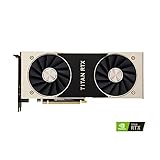
NVIDIA Titan RTX Graphics Card | $949.95 | Buy on Amazon |
| 3 |
|
NVIDIA Titan RTX Graphics Card (Renewed) | $1,149.97 | Buy on Amazon |
| 4 |

|
Nvidia GTX TITAN X 12GB GDDR5 PCI-e x16 3 x DisplayPort | DVI | HDMI Graphics Video Card | Buy on Amazon |
The launch release gave a price of $2,999 and said the card was available immediately through the NVIDIA store in participating countries. That figure describes the 2017 launch price; it is not a current price or evidence of present-day availability. NVIDIA’s announcement is the source for the launch details below.
Quick wins for a faster PC:
Scan for outdated or missing drivers - takes under a minuteDriver Scan →Repair Windows errors before they cause bigger problemsFix Now →Fix the driver behind crashes, sound loss and screen glitchesFind Drivers →TITAN V launch specifications and claims
| Item | What NVIDIA stated in 2017 |
|---|---|
| Architecture | Volta |
| Transistors | 21.1 billion |
| Memory | 12GB HBM2 |
| Manufacturing process | Customized TSMC 12-nanometer FFN process |
| Compute figure | 110 teraflops of “raw horsepower,” as NVIDIA described it; the release also framed this as deep-learning horsepower |
| Predecessor comparison | NVIDIA said the deep-learning horsepower was 9x that of its predecessor; the release did not supply an independent test supporting the comparison |
| Launch price | $2,999 in participating countries |
| Launch availability | Immediately through the NVIDIA store in participating countries, according to the announcement |
The figures in this table are manufacturer statements from the launch release, not independently verified measurements. In particular, the 110-teraflop figure should not be treated as a general real-world performance guarantee or as a direct comparison with current graphics cards.
#1 Best Overall
- Original box, manual, adapter, and static shield bag included
What Volta was designed to do
NVIDIA described Volta as a redesign of its GPU architecture, with features intended to support compute-heavy work alongside graphics workloads.
- Tensor Cores: dedicated hardware NVIDIA introduced for deep learning. The company said these delivered up to 9x higher peak teraflops for deep learning; “up to” is a peak architectural claim, not a promise of a ninefold improvement in every application.
- Reworked streaming multiprocessor: NVIDIA said Volta had a redesigned streaming multiprocessor and independent integer and floating-point data paths.
- Memory and cache changes: the architecture combined the L1 data cache and shared memory unit. TITAN V’s memory subsystem used 12GB of HBM2.
- Efficiency: NVIDIA said Volta doubled energy efficiency compared with its previous-generation Pascal design. The launch material does not establish how that claim translates to a particular system or workload.
These design descriptions and comparisons reflect NVIDIA’s launch material. The release does not provide independent benchmark results with which to assess application-level performance.
Rank #2
- OS Certification : Windows 7 (64 bit), Windows 10 (64 bit) (April 2018 Update or later), Linux 64 bit
- 4609 NVIDIA CUDA cores running at 1770 MegaHertZ boost clock; NVIDIA Turing architecture
- New 72 RT cores for acceleration of ray tracing
- 577 Tensor Cores for AI acceleration; Recommended power supply 650 watts
Who TITAN V targeted
The announcement emphasized scientific simulation, AI, deep learning and high-performance computing rather than presenting TITAN V simply as a gaming upgrade. Its Volta features and HBM2 memory were part of NVIDIA’s case for using the card in compute-intensive work. The launch release does not, by itself, show how the card performs in any specific scientific, AI or gaming application.
What’s actually slowing this PC down?
Pick the symptom - the matching free tool is one click away.
At launch, NVIDIA also said TITAN V owners could sign up at no charge for an NVIDIA GPU Cloud account. NVIDIA described the service as providing GPU-optimized deep-learning frameworks, third-party managed HPC applications, NVIDIA HPC visualization tools and TensorRT. This records the offer as announced in 2017; it does not establish current eligibility, availability or service terms.
Rank #3
- OS Certification-Windows 7 64-bit, Windows 10 64-bit (April 2018 Update or later),Linux 64-bit
- 4608 NVIDIA CUDA cores running at 1770 MHz boost clock. NVIDIA Turing architecture
- New 72 RT cores for acceleration of ray-tracing
- 576 Tensor Cores for AI acceleration
What “world’s most powerful” means here
“The world’s most powerful GPU for the PC” was NVIDIA’s own launch description. The source for the claim is the company’s announcement, and it is not an independent ranking. Its stated specifications and architectural claims explain how NVIDIA positioned TITAN V, but they are not enough to rank it against today’s GPUs or establish a current performance lead.
NVIDIA founder and CEO Jensen Huang said: “Our vision for Volta was to push the outer limits of high performance computing and AI. We broke new ground with its new processor architecture, instructions, numerical formats, memory architecture and processor links.” The statement expresses NVIDIA’s rationale for Volta; it is not a third-party assessment of TITAN V’s results.
Rank #4
- [Engine Specs] CUDA Cores: 3072 | Base Clock (MHz): 1000 | Boost Clock (MHz): 1075 | Texture Fill Rate (GigaTexels/sec): 192
- [Memory Specs] Memory Clock: 7.0 Gbps | Standard Memory Config: 12 GB | Interface: GDDR5 | Interface Width: 384-bit | Bandwidth (GB/Sec): 336.5
- [Display Support] Max Digital Resolution: 5120x3200 | Max VGA Resolution: 2048x1536 | Standard Display Connectors: Dual Link DVI-I, HDMI 2.0, 3x DisplayPort 1.2 | Multi Monitors: 4 Displays | HDCP: Yes | Audio Input for HDMI: Internal
- [Graphic Card Dimensions] Height: 4.376 Inches | Length: 10.5 inches | Width: Dual-Width
- [Thermal & Power Specs] Max GPU Temperature (in C): 91 C | Graphics Card Power (W): 250 W | Recommended System Power (W)**: 600 W | Supplementary Power Connectors: 6-pin + 8-pin
Price and availability are historical
The $2,999 price and immediate store availability apply to NVIDIA’s December 2017 announcement and participating countries. They should not be read as today’s retail price, a current offer, or a guarantee that the card can still be purchased new. The launch release does not establish present resale prices, stock, or software terms.
Quick Recap
Product prices and availability are accurate as of the date/time indicated and are subject to change. Any price and availability information displayed on Amazon at the time of purchase will apply.

